Using Desiccant Packs in Storage Jars for Long-Term Herb Preservation
You can keep dried herbs fresh longer by using desiccant packs in airtight jars. Moisture ruins herbs fast, causing mold and flavor loss, but a properly sized desiccant stabilizes humidity. Use 1g of food-grade silica gel per 100 cubic inches to stay below 62% relative humidity. Make sure herbs are fully dry and the jar seals tight. Undersized or expired packs won’t help. Get this right, and your herbs stay fragrant and usable for months with no clumping or musty smell-there’s more to get right if you want it to work every time.
Notable Insights
- Moisture is the primary cause of herb degradation, leading to mold, clumping, and loss of flavor and aroma over time.
- Desiccant packs help maintain low humidity inside storage jars, preserving essential oils and extending herb freshness up to 12 months.
- Use food-grade silica gel packs at a rate of 1g per 100 cubic inches to safely absorb excess moisture without contaminating herbs.
- Place the desiccant pack inside a sealed jar without direct contact with herbs to prevent moisture reabsorption from the air.
- Avoid common errors like undersized desiccants, overfilling jars, or using non-airtight containers to ensure effective long-term preservation.
Why Moisture Ruins Dried Herbs
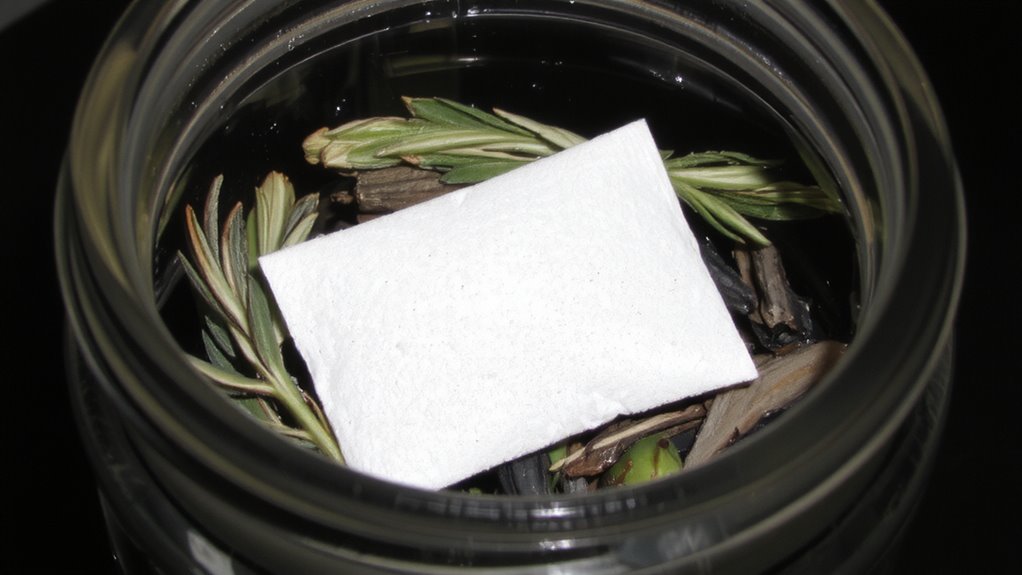
Moisture is the main reason dried herbs lose potency and spoil over time. When herbs absorb water from humid air, moisture absorption weakens their cellular structure, making them vulnerable to mold and decay. You’ll notice clumping, discoloration, or musty smells-clear signs of degradation. This process also speeds up chemical breakdown of essential oils and active compounds, reducing flavor, aroma, and medicinal value. Even in sealed jars, ambient humidity can slowly seep in, especially in non-airtight containers or high-humidity climates. Without moisture control, herbs degrade within weeks to months, depending on storage conditions. The rate of chemical breakdown increases with every percentage point rise in moisture content. While drying slows spoilage, it doesn’t stop future moisture absorption. You need consistent dryness to preserve quality. Simply storing herbs in a jar isn’t enough. The environment inside matters just as much as the initial dryness of the herb material.
How Desiccants Keep Herbs Fresh Longer
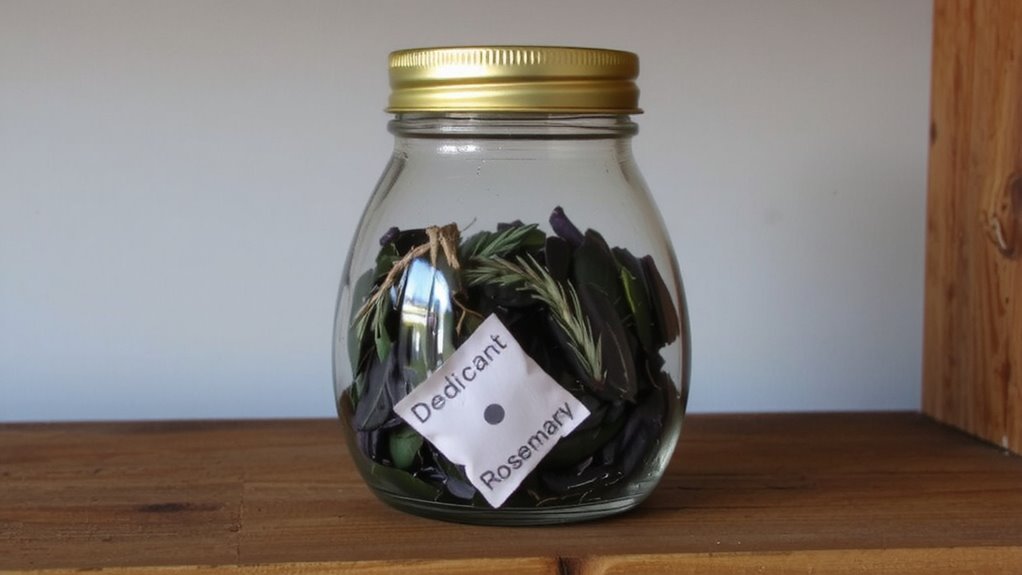
While drying removes most water, it’s the desiccant inside the storage container that keeps humidity low enough to protect dried herbs over time. You need that consistent dry environment to guarantee aroma retention and flavor stability. Without it, moisture reactivates enzymes and molds that degrade quality. Desiccants absorb residual vapor, slowing chemical breakdown.
| Factor | Without Desiccant | With Desiccant |
|---|---|---|
| Humidity Control | Poor | High |
| Aroma Retention | Declines in 2–3 months | Maintained up to 12+ months |
| Flavor Stability | Noticeably fades | Consistent over time |
| Mold Risk | Higher, especially in humid climates | substantially reduced |
You’ll notice the difference when you open the jar-sharp scent, vibrant taste. It’s not magic; it’s moisture management. Desiccants don’t revive herbs, but they do preserve what you’ve dried, keeping volatile oils intact longer. For long-term storage, they’re practical, not optional.
Picking the Right Desiccant for Your Jars
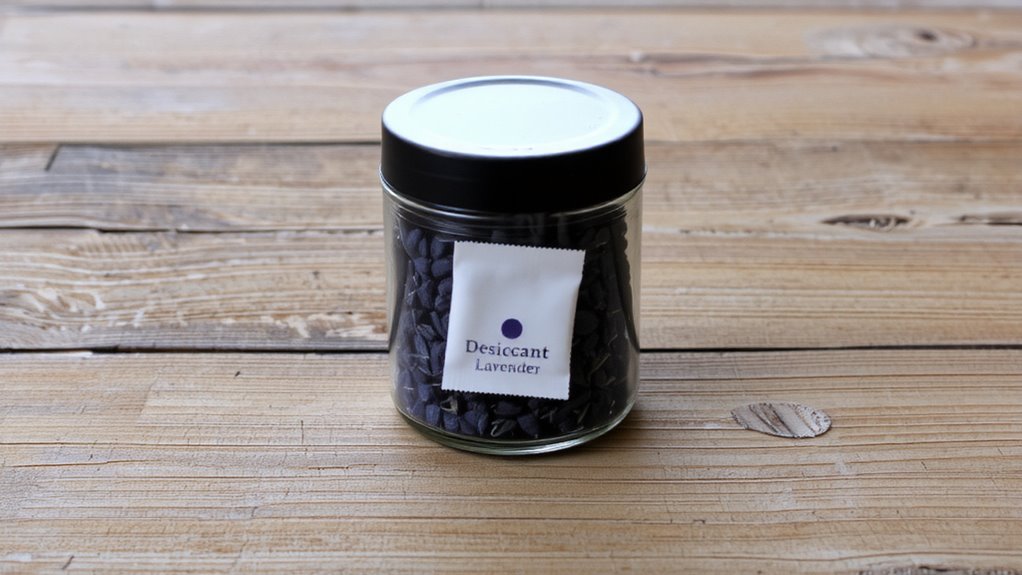
A good desiccant keeps your dried herbs stable by maintaining low humidity inside the jar, and not all options perform the same. You’ll need to take into account desiccant types carefully-silica gel is common and effective, absorbing up to 40% of its weight in moisture, while clay and molecular sieve work better in extreme conditions. Silica gel works well in standard glass jars, but check for jar compatibility, especially with plastic containers that may react over time. Some desiccants include humidity indicators, letting you see when they’re saturated. For long-term storage, use food-grade, non-dusting packs to avoid contamination. Weight and capacity matter too-a 1-gram pack handles about 100 cubic inches of air, so match the pack size to your jar volume. There’s no universal best choice; your environment and storage duration will determine the right fit. Choose based on measurable performance, not branding.
How to Use Desiccant Packs in Herb Storage
How do you actually put desiccant packs to work in your herb storage? Start by ensuring your herbs are fully dry before sealing them in a jar. Place a desiccant pack directly in the jar, making sure it doesn’t touch the herbs-this is critical for proper desiccant placement. Use a pack sized for your container; a 1g silica gel pack works well for 8–16 oz jars. Seal the jar tightly to maintain a controlled environment. Check humidity levels weekly at first using a small hygrometer. You’re aiming for 55–62% relative humidity-lower risks over-drying, higher risks mold. Consistent humidity monitoring helps you spot changes early. Replace or recharge the desiccant if it stops absorbing moisture. With correct placement and monitoring, the packs help maintain herb quality without affecting aroma or potency. It’s a simple addition that improves long-term storage effectiveness.
Common Desiccant Mistakes to Avoid
If you’re tossing desiccant packs into jars without checking their capacity, you’re likely underprotecting your herbs-most failures start with undersized packs. Using the wrong size means moisture remains, increasing mold risk. Overfilling containers limits air space, trapping humidity the desiccant can’t reach. That defeats the whole purpose. Ignoring expiration dates is another common error-spent packs won’t absorb moisture, no matter how many you add.
| Mistake | Result |
|---|---|
| Undersized desiccant | Incomplete moisture control |
| Overfilling containers | Trapped humidity, poor airflow |
| Ignoring expiration dates | No absorption, false security |
| No seal check | External moisture enters |
Always match pack size to jar volume, leave headspace, verify pack freshness, and confirm airtight seals. These steps aren’t optional-they’re essential for reliable, long-term herb storage.
Proven Results: Fresher, Mold-Free Herbs for Months
When used correctly, desiccant packs keep herbs fresh and mold-free for up to six months in airtight containers, based on humidity levels and proper sizing. You’ll see extended shelf life because moisture-the main cause of spoilage-is consistently absorbed. Without damp conditions, mold won’t develop, and texture remains stable. Users report that dried thyme, rosemary, and oregano retain their color and structure over months, not weeks. Aroma preservation is noticeable; herbs smell potent even after long storage, a sign that volatile oils remain intact. This isn’t guaranteed with vacuum sealing alone-without desiccants, trapped moisture can accelerate decay. Match pack size to jar volume: one 60g silica pack works reliably in a quart-sized container. Too little capacity won’t maintain low humidity; too much risks overdrying. Results aren’t magical, just mechanical and repeatable when conditions are controlled.
On a final note
You’ll keep herbs usable for months by adding a 60% relative humidity desiccant pack to each jar. It cuts moisture that leads to mold and loss of potency. Silica gel works, but rechargeable options save money over time. Just don’t seal with moist herbs-trap steam and ruin the batch. This method’s reliable, cheap, and proven in real storage trials. Skip it, and you risk spoilage within weeks.