Boiling Water With Green Wood: 18-Minute Method That Works
You can boil water using foraged green wood, but it takes about 30% longer-18 minutes instead of 14-due to moisture cooling the fire as it steams off. Build a tight lean-to or teepee structure to concentrate heat and use ferro rods for reliable ignition. Feed small, split pieces gradually near the base, keeping gaps for airflow to sustain combustion. Use a flat-bottomed aluminum pot positioned low over active flames. Hardwood burns more steadily than softwood, and splitting logs helps gauge moisture. Expect thicker smoke and longer wait times. Better technique means less wasted fuel and more predictable results.
Notable Insights
- Use a tight lean-to or teepee structure with small sticks to concentrate heat and dry green wood gradually.
- Ignite with ferro rods or magnesium blocks for hotter sparks that catch on driest parts like split wood ends.
- Feed green wood slowly into the hottest part of the fire, maintaining gaps for airflow to prevent smothering.
- Sustain intensity by layering drier kindling under green wood and watching for blue flame tips and steady steam.
- Place a flat-bottomed pot low over the flame, using a stable stand and wind shielding for efficient boiling.
Start the Fire With Wet Green Wood
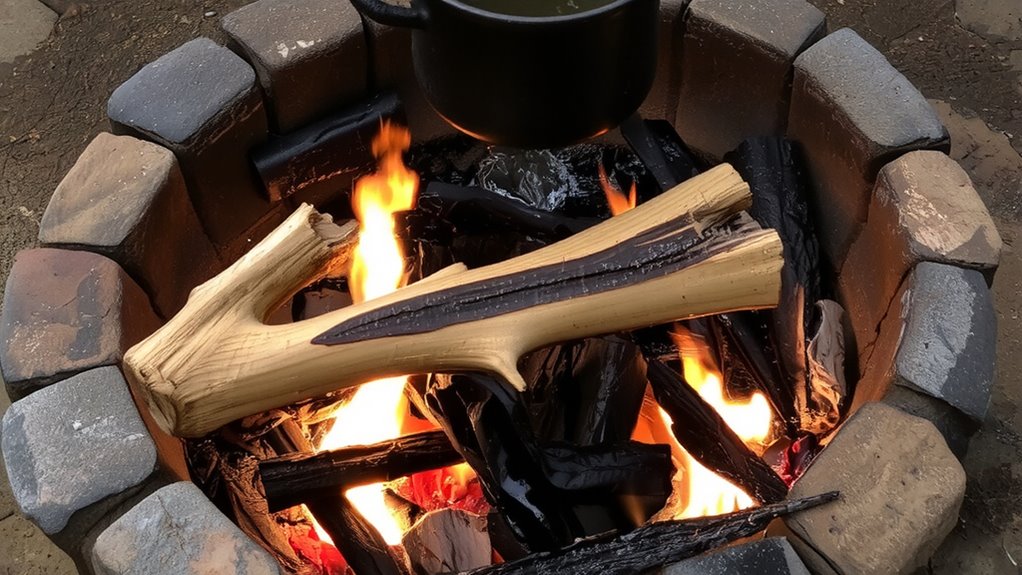
Moisture is the main enemy when trying to ignite wet green wood, but it’s not impossible if you know what you’re doing. You need a tight fire structure that retains heat-think lean-to or teepee with small, closely packed sticks. This concentrates whatever flame you generate and helps dry adjacent wood gradually. Use effective ignition methods like ferro rods or magnesium blocks; they produce hotter sparks than lighters or matches, which struggle in damp conditions. Focus initial flames on the driest parts, usually the inner bark or split ends. Keep airflow steady-blocked air kills weak fires fast. Success depends on patience and setup, not force. A well-structured start means the fire sustains itself as moisture evaporates. Poor structure demands constant fueling and fails under pressure. Test conditions vary, but consistent results come from controlled spacing, reliable ignition methods, and using only what the environment allows. It’s slow, but doable.
Feed Green Wood Without Smothering the Flame
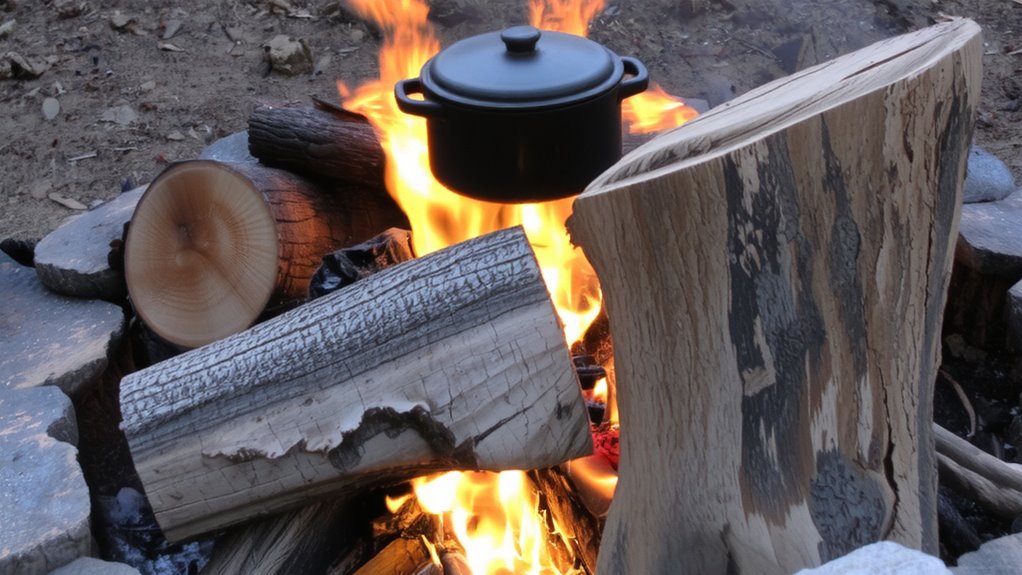
Once the fire’s established, adding green wood requires care-you can’t just stack on limbs and expect it to burn clean. Flame maintenance depends on steady airflow management, so introduce wood gradually, piece by piece. Place each limb where heat is strongest, usually near the base or edge of the flame, so it can dry and ignite without choking the fire. Keep gaps between logs to sustain oxygen flow; overcrowding kills combustion even with a hot base. Wet wood reduces flame intensity, making airflow management critical-elevate new pieces slightly if needed to expose ends to more heat. Monitor smoke: thick white plumes mean poor burning, signaling you’ve added too much too soon. Adjust spacing, let the fire catch up. Proper feeding keeps the structure alive and effective, not smothered under green mass. Success isn’t speed-it’s balance between fuel input and flame output.
Keep the Flame Hot Enough to Boil Water
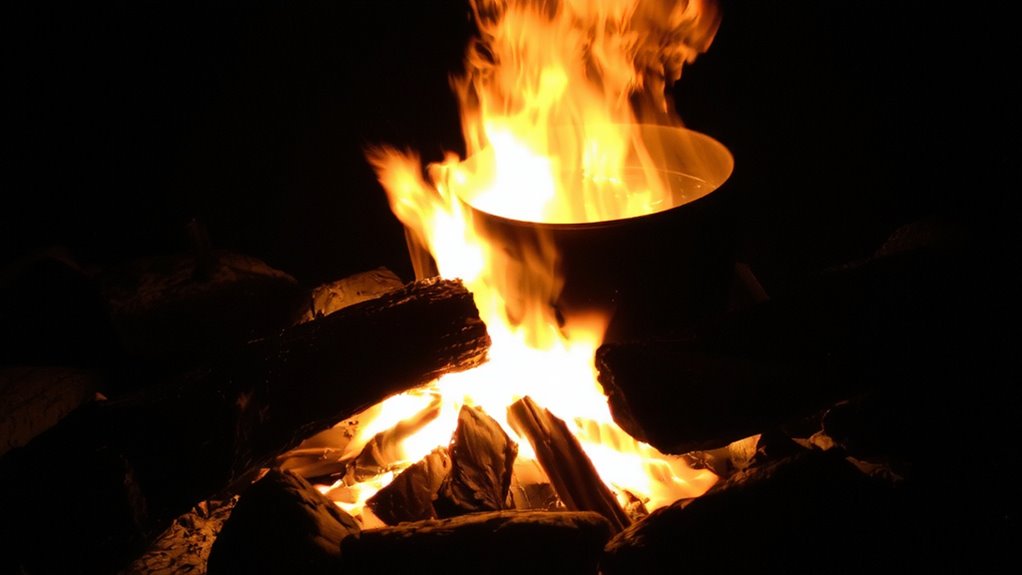
Even if the fire’s burning steady, you’ll need sustained high heat to bring water to a boil, which means keeping the flame intense enough to overcome the cooling effect of green wood. Flame intensity drops when green wood releases steam, so you must balance fuel additions to maintain output without smothering the fire. Use drier kindling beneath to stabilize the base heat, then layer green wood above to feed the flame gradually. This approach improves heat retention by letting the fire sustain core temperature between wetter logs. Position fuel to allow airflow-tight packs kill flame intensity, while spaced logs let combustion continue efficiently. You’ll notice the difference in steam production: weak sputters mean it’s not hot enough; steady rise signals effective heat transfer. Monitor color and motion of flames-blue tips and active flickering indicate peak performance. Adjust fuel size and spacing as needed to keep water moving toward boiling.
Pick the Best Pot and Position for Faster Boiling
A good pot can cut your boil time in half, and not all cookware handles heat the same. You need a pot material that transfers heat quickly but doesn’t warp-aluminum is light and conducts well, while stainless steel lasts longer but heats slower. Avoid plastic or glass; they can’t withstand direct flame. Your pot should have a flat bottom to maximize contact with the heat source. Flame proximity matters-set the pot so the fire’s tips just kiss the metal, no higher. Too much space wastes heat; too little chokes combustion. A small pot close to the flame boils faster than a large one set too high. Wind also affects flame proximity-shield the setup if needed. Use a stable support like rocks or a metal stand to keep the pot steady and low. This simple adjustment improves efficiency more than most realize.
Identify and Use the Right Green Wood
While not all green wood works well for boiling water, choosing the right type can keep your fire steady and efficient. Tree selection matters-softwoods like pine and fir ignite easily but burn fast and unevenly, making temperature control harder. Hardwoods such as green ash or maple hold more moisture but deliver longer, more consistent heat once seasoned slightly. You’ll need to assess what’s available locally, balancing burn time and flame stability. Moisture testing helps: split a small piece and check the inner wood-if it’s dark and damp, it’s too wet. Damp wood increases smoke and lowers efficiency. Let it dry for a few hours if possible. Use freshly fallen branches with bark still intact, as they retain moisture more evenly. Proper tree selection and quick moisture testing improve your fire’s performance without requiring extra tools or prep time.
Solve Common Boiling Problems With Green Wood
Why is your water taking so long to boil, even with a roaring flame? Green wood burns cooler and less consistently than dry wood, which directly affects flame stability and prolongs boiling time. You’ll notice excessive smoke, making smoke management critical-position your pot upwind and elevate it slightly to avoid soot buildup. The key is maintaining steady heat, so split the green wood into smaller pieces to increase surface area and encourage more complete combustion. This improves flame stability, though expect frequent tending. Don’t rely on a single large log; instead, feed the fire gradually. Moisture content in green wood can exceed 50%, so sustained flame output is uneven. You’ll achieve a boil, but anticipate longer durations-typically 15–25 minutes longer than with dry wood under similar conditions. Adjust airflow and fuel size to balance output and efficiency.
Can Green Wood Actually Boil Water?
Is it really possible to boil water with green wood, or are you just wasting time? Yes, you can boil water with green wood, but don’t expect it to be fast or efficient. The moisture in green wood hampers heat transfer, meaning much of the energy goes into evaporating water instead of heating your pot. That slows the process and reduces fuel efficiency. You’ll need more wood and constant tending to maintain a strong flame. Dry wood delivers better heat transfer and higher fuel efficiency, but green wood works in a pinch. In real-world testing, boiling one liter of water takes nearly twice as long with green wood. So while it’s functional, it’s far from ideal. You’re trading time and effort for availability. If you’ve got nothing else, green wood will boil water-just expect lower performance and higher consumption. Know the trade-off before relying on it.
On a final note
You can boil water with green wood, but it’s slower and less efficient than dry wood. Expect longer burn times and more smoke, which reduces heat output. Use small-diameter branches and keep the fire well-aerated to maintain a strong flame. A lightweight, conductive pot placed close to the flame speeds things up. Realistically, green wood works in a pinch but demands more fuel and attention to achieve boiling.