Assessing Risk of Generator Fire Hazards
You risk fire if your generator lacks proper clearance-keep 3 feet on all sides, 5 to the rear. Overheating from blocked vents or dirty filters can ignite nearby debris. Faulty wiring creates hot spots, especially if connections are loose or insulation cracked. Fuel spills or improper storage add ignition risk. Watch for burning smells, shutdowns, or hot casing-they signal trouble. Regular maintenance catches issues before they escalate. Smart placement and checks cut your risk substantially-knowing what comes next could save your setup.
Notable Insights
- Improper placement near combustible materials or structures increases fire risk due to high exhaust temperatures.
- Faulty or degraded wiring can cause electrical arcing, generating extreme heat and igniting nearby components.
- Overheating from blocked exhaust or low coolant often leads to sudden shutdowns and potential fire hazards.
- Poor fuel storage practices, including overfilled tanks and plastic containers, raise the risk of vapor ignition.
- Lack of regular maintenance and clearance violations contribute significantly to generator fire incidents.
Common Causes of Generator Fires
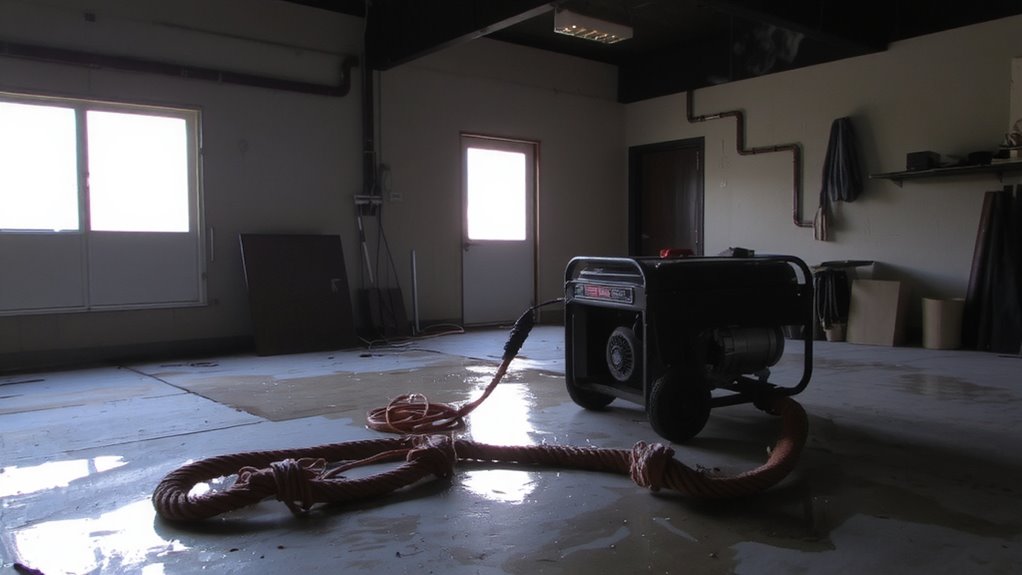
When you’re relying on a generator during an outage, the last thing you want is a fire-yet it happens more often than it should, usually because of preventable issues. Electrical surges can overheat components, especially if your generator lacks built-in surge protection or gets connected improperly to home circuits. This stress degrades insulation and increases fire risk over time. You also can’t ignore combustible debris-leaves, paper, or dry grass-accumulating near the exhaust or cooling vents. That material ignites quickly from high operating temperatures. Most units run hot, and manufacturers specify a clearance of at least three feet on all sides for this reason. Units placed too close to walls or under eaves trap heat and feed flames if ignition occurs. Regular inspection takes two minutes but prevents most common failures. Keep the area clean, use surge-protected transfer switches, and follow clearance guidelines exactly. These steps cut fire risk markedly.
How Faulty Wiring Leads to Generator Fires
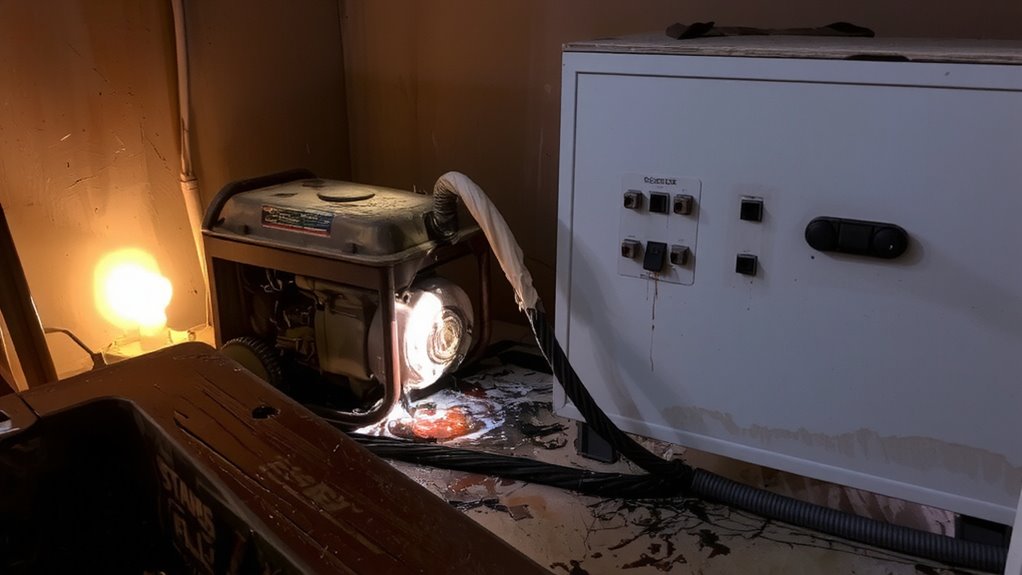
If you’ve ever traced frayed wires or spotted loose connections on your generator, you know how quickly small flaws can become fire hazards. Loose connections increase electrical resistance, generating heat that can ignite nearby components. Over time, vibration and weather exposure weaken wire integrity, making routine checks essential. When insulation degrades, exposed conductors can lead to electrical arcing-sudden discharges that reach thousands of degrees and ignite surrounding materials. Electrical arcing often occurs at connection points where corrosion or poor installation exists. Using properly rated wiring and secure terminals reduces this risk. You should inspect all wiring monthly and tighten connections during maintenance. Damaged wires should be replaced immediately, not taped. Generators with molded wiring harnesses typically show fewer issues over time. Despite build quality, wear happens-so staying ahead of faults keeps your unit running safely.
Fuel Storage Risks and Fire Hazards
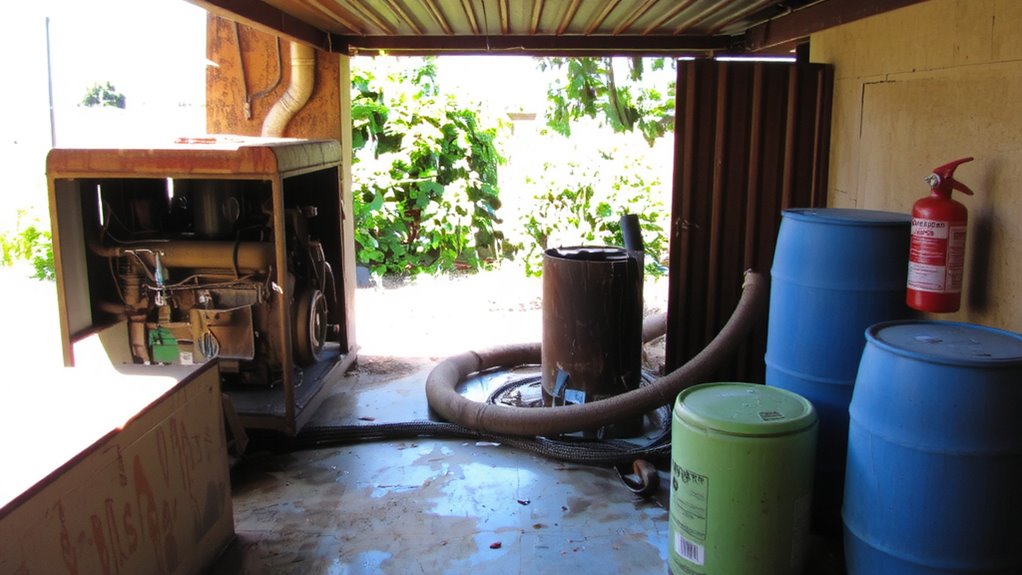
Though fuel is essential for generator operation, storing it improperly turns a convenience into a serious fire risk. You’re often responsible for preventing incidents by controlling storage conditions. Poor ventilation increases vapor concentration, making ventilation failure a leading trigger for ignition. Fuel contamination degrades fuel quality and promotes leaks or clogs, both of which raise fire risk. Use approved containers, store in isolated, well-ventilated areas, and inspect regularly.
| Hazard | Outcome |
|---|---|
| Overfilled tanks | Spills and vapor buildup |
| Plastic containers | Static discharge risk |
| Fuel contamination | Corrosion, leaks, improper combustion |
| Ventilation failure | Accumulation of flammable vapors |
You can’t afford to overlook storage setup-small oversights often lead to catastrophic outcomes. Follow code guidelines strictly, test vapor dispersion weekly, and replace degraded containers immediately. Safety isn’t optional.
Warning Signs of Generator Overheating
Because overheating can cripple a generator before you even notice a problem, it’s critical to recognize the early signs-ignoring them cuts runtime and risks permanent damage. You’ll notice reduced power output or sudden shutdowns; both signal thermal stress. Check your coolant levels regularly-low coolant is a leading cause of overheating and easy to fix if caught early. A rising temperature gauge or visibly hot casing means the system’s struggling. Exhaust blockage restricts airflow, trapping heat and increasing internal temperatures. You might smell burning or see discolored exhaust parts. These aren’t minor glitches-they’re warnings. Running with blocked exhaust or low coolant accelerates wear and raises fire risk. Address these signs immediately: shut down, inspect for blockages, and refill coolant to recommended levels. Preventing overheating isn’t complicated, but skipping checks costs performance, safety, and longevity. Stay vigilant.
Safe Placement to Prevent Fires
You’ve already seen how overheating can push a generator toward failure, but even a well-maintained unit becomes a hazard if placed wrong. Proper ventilation clearance and adherence to distance guidelines are essential to prevent fire risks. Position your generator outdoors, on a flat, non-flammable surface, away from windows, doors, and vents. Following manufacturer-specified distance guidelines guarantees exhaust heat and fumes don’t accumulate near structures or people. Maintain at least 3–5 feet of ventilation clearance on all sides to allow consistent airflow. Blocking intake or exhaust pathways increases fire risk, even with brief operation. Choosing one of the top-rated emergency generators can further reduce fire hazards through built-in safety features and reliable design.
| Clearance Type | Recommended Distance |
|---|---|
| Side Ventilation | 3 feet |
| Rear Exhaust | 5 feet |
| Front Intake | 3 feet |
| Proximity to Building | 10 feet |
Essential Maintenance to Avoid Fire Risk
If you want your generator to run safely over time, sticking to a strict maintenance routine is non-negotiable. You need regular electrical inspections to catch frayed wires, loose connections, or corrosion before they lead to overheating. These checks should happen at least every six months, or more often under heavy use. Dirty filters, clogged fuel lines, and oil buildup also increase fire risk, so clean or replace them on schedule. Component replacements-like spark plugs, air filters, and aging belts-prevent malfunctions that can spark fires. Don’t wait for parts to fail; replace them based on hours of operation, not guesswork. Keep your generator’s log updated with every service. Ignoring maintenance shortcuts your safety. Following the manufacturer’s timeline guarantees reliability. Simple, consistent care reduces hazards more than any add-on safety feature could. You’re not just maintaining a machine-you’re managing risk.
On a final note
You cut fire risks by addressing wiring, fuel, and placement. Faulty connections overheat fast-inspect terminals regularly. Gas stored near hot surfaces ignites easily-keep it 10 feet away. Overheating shows as smoke or discoloration-shut down immediately. Units too close to walls trap heat-allow 3 feet clearance. Maintenance prevents buildup-clean monthly. No product eliminates risk, but proper setup cuts failure rates. You balance safety and function by following code and testing weekly.