Assessing Scene Safety During a Lightning Storm While Administering First Aid
You need real shelter first-get inside a closed building or hard-topped vehicle. Avoid water, trees, and open fields, and don’t touch plumbing or wiring if indoors. Don’t approach a victim near downed power lines, standing water, or unstable structures-wait until the scene is safe. Lightning can strike twice, so stay protected until 30 minutes after the last thunder. Your safety comes before aid, and knowing when to act could change the outcome.
Notable Insights
- Seek enclosed buildings or hard-topped vehicles for safety before approaching a victim during a lightning storm.
- Avoid downed power lines, standing water, and metal objects that may conduct electricity near the scene.
- Do not approach victims if active lightning, flooding, or electrical hazards are present-wait for emergency crews.
- Lightning does not leave residual charge; victims are safe to touch once the immediate hazard has passed.
- Use bystanders to call emergency services and retrieve an AED while maintaining a safe visual distance from the victim.
Find Safe Shelter Immediately
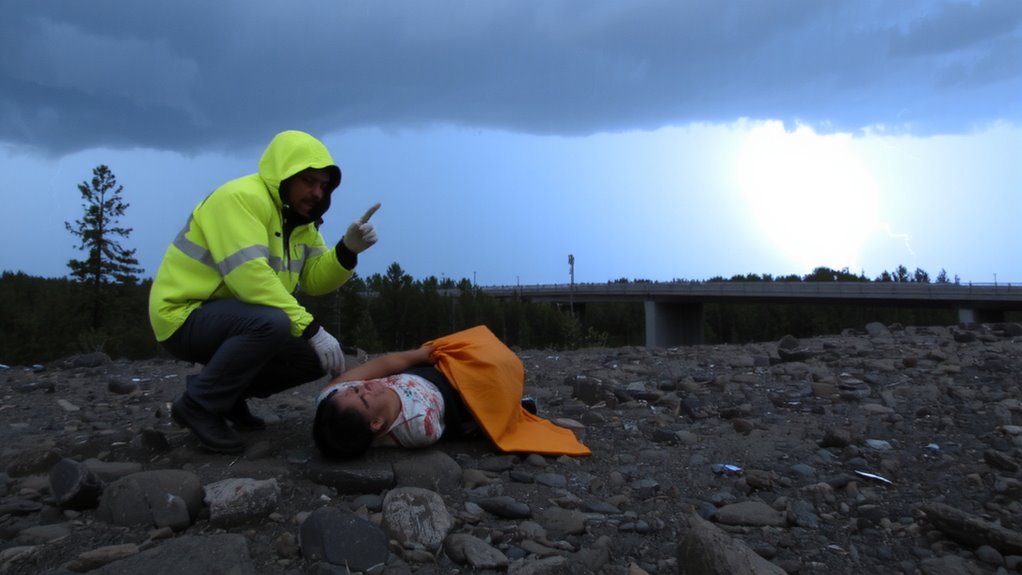
If you’re caught outside when lightning starts flashing, you need to find safe shelter fast-every second counts. Your best option is an indoor shelter with enclosed walls and a roof, like a building or hard-topped vehicle. These structures provide reliable protection by directing lightning current around you, not through you. Avoid sheds, picnic shelters, or open structures-they don’t count as safe. If you’re in a group administering first aid, prioritize immediate evacuation to the nearest suitable indoor shelter. Do not wait for rain to start. Lightning can strike over 10 miles from a storm’s center. Once inside, stay away from windows, plumbing, and electrical fixtures. The risk drops markedly indoors, but only if the building is fully enclosed. Mobile homes and tents offer no protection. Speed and structure type determine survival odds-choose wisely and act fast.
Avoid Water, Trees, and Open Areas
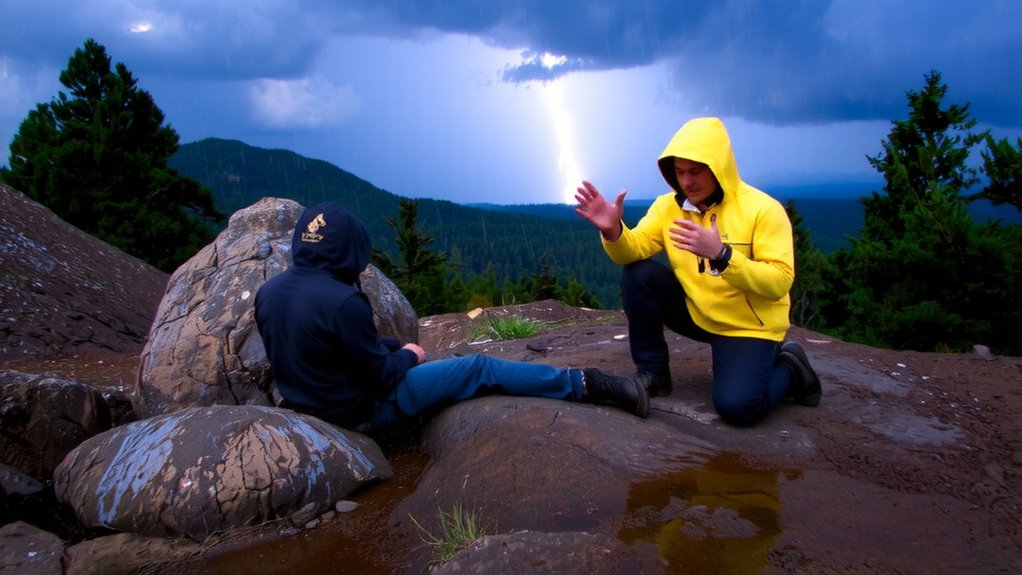
Three key hazards to skip during a lightning storm are water, tall trees, and wide-open fields-each dramatically increases your risk of a direct strike. Water conducts electricity, so avoid lakes, puddles, and wet ground. Tall trees and isolated objects attract lightning due to their height and position on elevated terrain. Open areas make you the tallest target, especially if you’re near metal objects like fences or tools. Seek lower ground and crouch low if caught outside, but keep moving toward safe shelter. Avoid elevated terrain and anything metal, as both facilitate strikes.
| Hazard | Why to Avoid |
|---|---|
| Water | Conducts electricity rapidly |
| Tall trees | Likely strike points |
| Open fields | Increases your exposure |
| Elevated terrain | Attracts lightning |
| Metal objects | Conducts current efficiently |
Check Responsiveness Without Risking Your Life
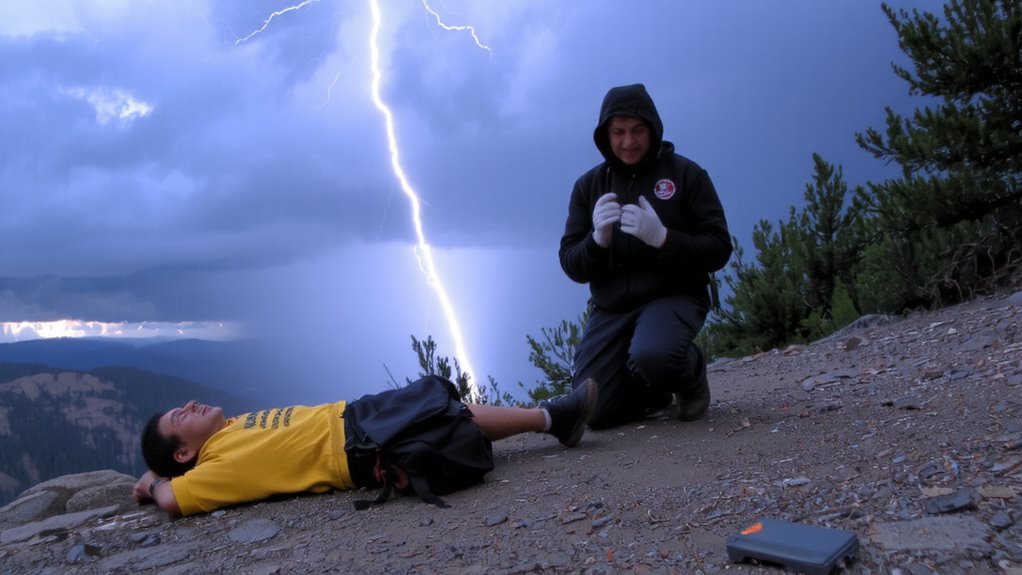
While the storm’s immediate danger may have passed, checking on someone struck by lightning requires caution-your safety comes first. Don’t rush in; assess the scene for hazards like downed power lines or standing water. You can’t help if you become a victim. Use personal protective equipment like gloves if available, though it’s secondary to situational awareness. Call for bystander assistance immediately-one person dials emergency services, another retrieves an AED if nearby. Stay at a safe distance until you’re sure the area is secure. Speak loudly and tap the person’s shoulder from a low crouch to check responsiveness without exposing yourself. Lightning doesn’t leave residual charge, so victim contact is safe once the environment is clear. Bystander assistance improves response time and reduces error. Rely on calm, coordinated effort-not heroics.
When to Wait for Help Instead of Approaching
Since lightning can strike the same place twice and conditions may still be volatile, you wait for help when hazards like active electrical arcing, flooded terrain, or unstable structures make approach risky. You assess personal risk first-no rescue is worth becoming a second victim. If power lines are down or water shows signs of energization, staying back is the only safe move. Your presence won’t help if you’re injured. Bystander safety depends on clear judgment, not impulse. Wait for emergency crews equipped to handle electrical and structural dangers. Use a loud voice or phone to check on the victim from a safe distance. Maintain visual contact without closing the gap. Delayed intervention is better than reckless action. You’re responsible not just for aiding someone, but for keeping the scene stable until professionals arrive with the right tools and training.
Why Lightning Can Strike Twice: And How to Stay Safe
Even though lightning striking the same spot twicethe same spot twicesounds like a myth, it’s a real danger-tall structures and isolated objects often get hit multiple times in a single storm because they offer the easiest path to ground. You can’t rely on Lightning myths to keep you safe; the truth is, lightning follows electrical conductivity, not patterns people assume. If you’re the highest point in an open area, you become that path. Seek shelter in a fully enclosed buildingfully enclosed buildingor a metal-topped vehicle with windows up-both provide proven protection. Avoid trees, poles, or rocky overhangs, as they increase strike risks. Stay inside for at least 30 minutes after the last thunderclap. You won’t get struck every time you’re caught outside, but ignoring these rules drastically increases your odds. Safety isn’t about luck-it’s about reducing exposure using facts, not fiction.
On a final note
You assess the storm, then act. If lightning’s close, shelter matters more than aid-your safety comes first. Wait if the risk outweighs help. Metal, water, and height increase strike chances. A car or building is safer than under a tree. CPR won’t matter if you’re hit. Seconds count, but survival means staying alive to give care. Storms pass. People don’t if they take reckless risks.