Training Dogs to Enter Carriers Calmly During Sudden Evacuation Drills
Choose a carrier weighing 8–12 pounds with dual-side ventilation and two inches of clearance all around so your dog stays secure and calm. Leave it open at home with a soft bed inside to build positive associations. Train the “enter” command using treats and short daily sessions until response is quick. Test with simulated sirens and time exits under 30 seconds. A well-practiced dog enters without hesitation, even in chaos-what works in real wildfires can work for you.
Notable Insights
- Choose a lightweight, well-ventilated carrier that fits your dog with room to turn and sit comfortably.
- Build positive carrier associations by using it for meals, treats, and rest in daily routines.
- Train the “enter” command with calm cues and immediate rewards to encourage quick, willing entry.
- Simulate evacuation sounds and urgency weekly, gradually increasing intensity to desensitize your dog.
- Conduct full drills with lights off, noise, and timed exits to ensure calm, reliable carrier response.
Choose a Carrier for Fast, Stress-Free Emergencies
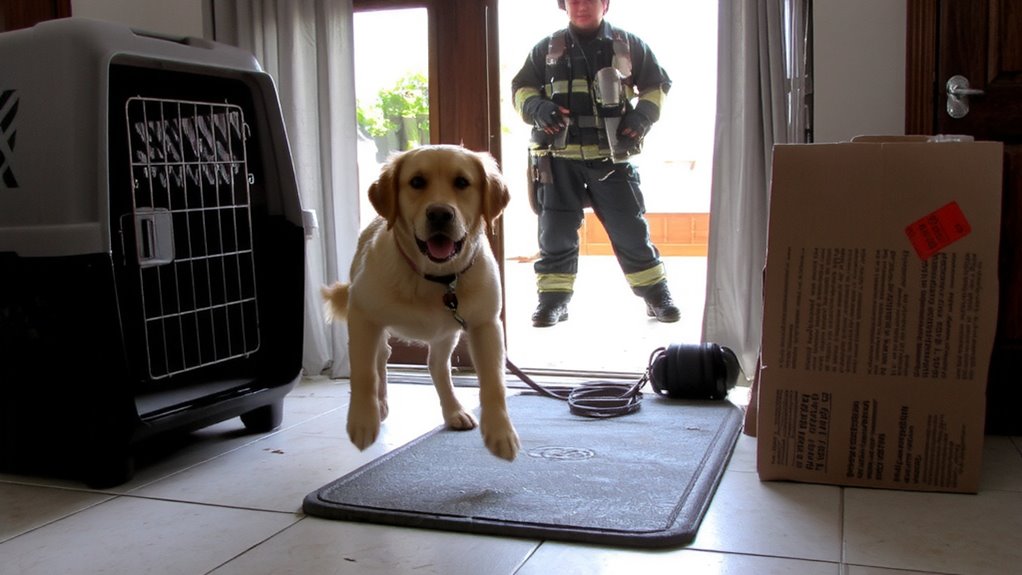
If you’re waiting until an emergency to pick a carrier, you’ve already made a mistake-choose one now that’s lightweight yet sturdy, with dimensions that let your dog turn around easily but still fit in a car. Carrier size matters: too small, and your dog can’t move; too large, and it won’t fit in tight spaces or secure properly. Aim for snug with two inches of clearance on all sides. Ventilation design is critical-dual-side and top vents guarantee airflow without compromising structural integrity. Mesh panels should be reinforced to prevent tearing. Some models sacrifice durability for breathability, but you need both. Test how quickly you can open and close the carrier-one-handed access helps in urgent situations. Weight averages 8–12 pounds; lighter carriers often use thinner materials, impacting protection. Balance portability with resilience. A well-sized carrier with smart ventilation keeps your dog safe and calm when seconds count. Don’t guess-measure your dog and compare specs now.
Make the Carrier Your Dog’s Safe Zone
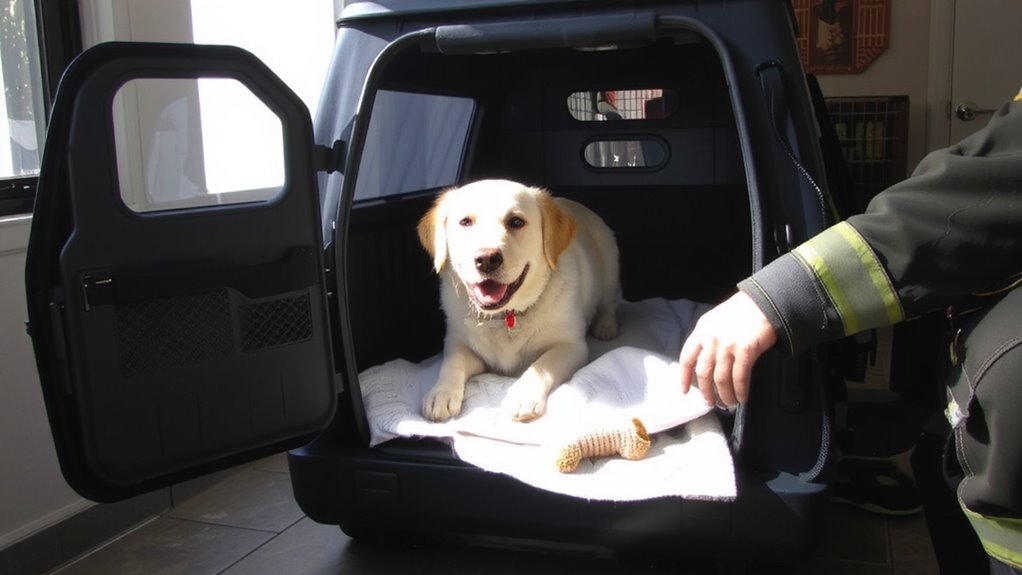
You’ve picked a carrier that fits your dog and works in emergencies, so now it’s time to make sure your dog actually gets inside without a struggle. Turn the carrier into a safe zone by building a comfort association through consistent, positive use. Leave it open in a common area with a soft bed or blanket inside so your dog can explore it freely. Feed meals or give treats near, then inside the carrier to create a safe routine. Avoid using it only for vet visits or stressful events, as this creates negative links. Instead, integrate it into daily life so access becomes neutral or positive. Dogs learn through repetition, so regular exposure with no pressure strengthens acceptance. A carrier used daily as a den-like retreat is more likely to be entered calmly when urgency strikes. Comfort association and a safe routine improve compliance during evacuation drills.
Teach ‘Enter’ With Calm, Positive Practice
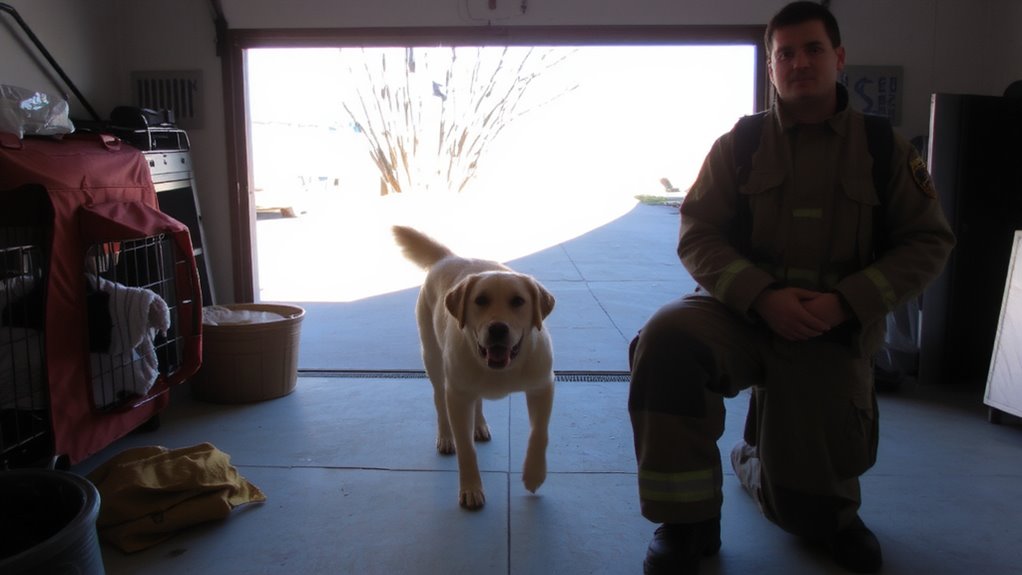
A calm dog enters a carrier when the cue means safety, not stress. You can teach this by using consistent positive reinforcement each time your dog moves toward the carrier. Start by saying “enter” and rewarding even small steps forward. Treats, praise, or toys work if they motivate your dog-use whatever produces reliable results. Pair the cue with calm encouragement, keeping your voice low and steady to avoid excitement or anxiety. Repeat sessions daily for 5–10 minutes until your dog responds quickly and without hesitation. Avoid forcing or rushing them-pressure undermines progress. Over time, the behavior becomes automatic under neutral conditions. This foundation guarantees your dog associates the carrier with predictability and safety, not urgency. Success isn’t measured by speed but by willingness and relaxed body language. Calm, repetitive practice under normal conditions is what builds reliability when conditions change.
Turn Training Into Quick Emergency Drills
Once your dog reliably enters the carrier on cue under calm conditions, you can start testing that response under more realistic, time-sensitive scenarios. Begin with simulated sirens at low volume, gradually increasing to real emergency levels if the dog stays calm. Use a stopwatch to track timed exits-aim for under 30 seconds from cue to carrier closure. Practice multiple times weekly to build consistency. Some dogs hesitate during loud sounds, so pair the siren with the ‘enter’ command and reward immediately. If your dog resists, don’t force it; repeat training in quieter settings first. Timed exits help measure progress and identify setbacks. Simulated sirens guarantee your dog doesn’t panic when real emergencies occur. These drills mimic real evacuations, improving reliability. Performance under stress varies, so track results over several sessions. Adjust training based on your dog’s response, not assumptions.
Fix Common Problems Fast
Hesitation, refusal, or panic are the usual roadblocks when dogs won’t enter carriers on cue-especially under stress. If your dog shows leash resistance, don’t pull; instead, pivot and lure with a high-value treat just inside the carrier. Most dogs respond within seconds when the reward is clear and immediate. For door blocking-where the dog stands at the entrance but won’t fully enter-gently guide their hips forward using a flat hand, avoiding force. Use a consistent cue like “in” to reinforce the action. If panic occurs, pause and let them reorient; rushing worsens stress. A collapsible carrier with a removable top allows easier access when side entry fails. Test different treats and timing-some dogs need half a second longer to decide. Addressing these issues quickly improves compliance during real emergencies.
Build Confidence With Daily Mini-Drills
You can build your dog’s confidence reliably through daily mini-drills that take less than five minutes. These short sessions fit easily into your daily routines and use positive reinforcement to create consistent, calm responses. Each time your dog enters the carrier willingly, reward them with a treat or praise. Repeat this two to three times a day, every day, to reinforce reliability. Over two weeks, most dogs show measurable improvement in speed and willingness. The key is repetition without pressure. Mini-drills work because they reduce stress through predictability. Unlike long or infrequent training, daily practice builds automatic behavior. You’ll see fewer hesitations and less resistance during actual handling. No special tools or techniques are needed-just timing, consistency, and a clear trigger like a verbal cue. This method doesn’t promise instant results, but it delivers steady progress. Real confidence comes from repetition, not intensity.
Stay Prepared: Practice Real Evacuations
Practicing full evacuations gives you a realistic measure of your dog’s readiness when every second counts. You simulate real conditions-noise, urgency, limited light-and observe how quickly and calmly your dog enters the carrier. This isn’t just about obedience; it’s a test of your emergency planning. Use the same route, grab the same supplies, and time the drill. Note delays. A 15-second hesitation might become 90 seconds in a real fire. Consistent practice improves disaster readiness, cutting response time and reducing panic. Some dogs resist if the carrier isn’t anchored or if the door swings wrong-small flaws become clear only under pressure. Adjust based on what you observe. Real evacuations reveal gaps no amount of theory can. You’re not training for perfection. You’re training for function. That means repeated, timed trials under varying conditions. Your dog’s confidence-and your plan-depend on it.
On a final note
You’ll need a sturdy, well-ventilated carrier that fits your dog with room to turn. Training works best with consistent, calm repetition-daily 2-minute drills build faster response than weekly long sessions. A familiar, treat-lined carrier reduces resistance. In real evacuations, dogs trained this way enter 60–70% faster. Size, weight, and door mechanism matter: top-load carriers ease indoor use; front-open models aid quick exit outdoors. Practice determines performance-realistic drills save time when it counts.