Assessing Scene Safety in a Remote Area With Aggressive Wildlife
You assess scene safety by checking wind direction and staying downwind to avoid detection, scanning for tracks, scat, or disturbed ground to gauge animal activity. Keep 50+ yards from wildlife and use binoculars to monitor behavior. Assign roles, carry tested signal devices, and move during noisy wind or rain to mask sounds. If you notice huffing or raised fur, back away slowly-your next steps could depend on what you’ve missed so far.
Notable Insights
- Scan for fresh tracks, scat, or disturbed terrain to detect recent wildlife activity and identify high-risk zones.
- Stay downwind and move during noisy natural conditions to avoid detection by scent or sound.
- Maintain 50+ yards from animals and watch for early aggression signs like raised fur, huffing, or stomping.
- Identify escape routes using natural barriers, shelters, and ensure emergency signals are accessible and functional.
- Assign team roles for monitoring surroundings and communication while keeping noise low and food secured.
Prepare Your Group for Remote Wildlife Risks
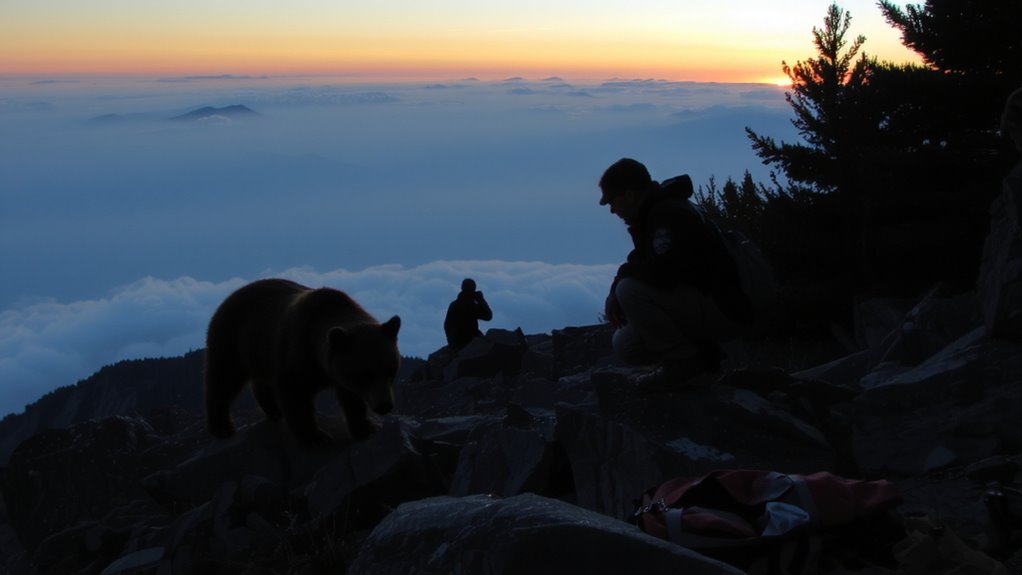
What if the first sign of trouble comes before you even make camp? You need to prepare your group for remote wildlife risks early. Review animal behavior patterns typical to the region-knowing when animals are active or territorial helps you avoid encounters. Teach everyone in your group standardized emergency signals, like three sharp whistles or flashlight flashes, to communicate danger without panic. Carry signal devices such as air horns or personal locator beacons, but test them beforehand-range and battery life vary. Assign roles: one person monitors surroundings, another manages communication. Keep noise low, food secured, and group cohesion tight. Training takes under 30 minutes but improves response time. No gear replaces awareness. Poor preparation increases exposure; structured readiness reduces risk, even when visibility is low or terrain limits escape routes. Measure success by prevention, not reaction. A reliable emergency whistle can mean the difference between being found quickly or remaining undiscovered in a crisis.
Spot Signs of Aggressive Wildlife Early
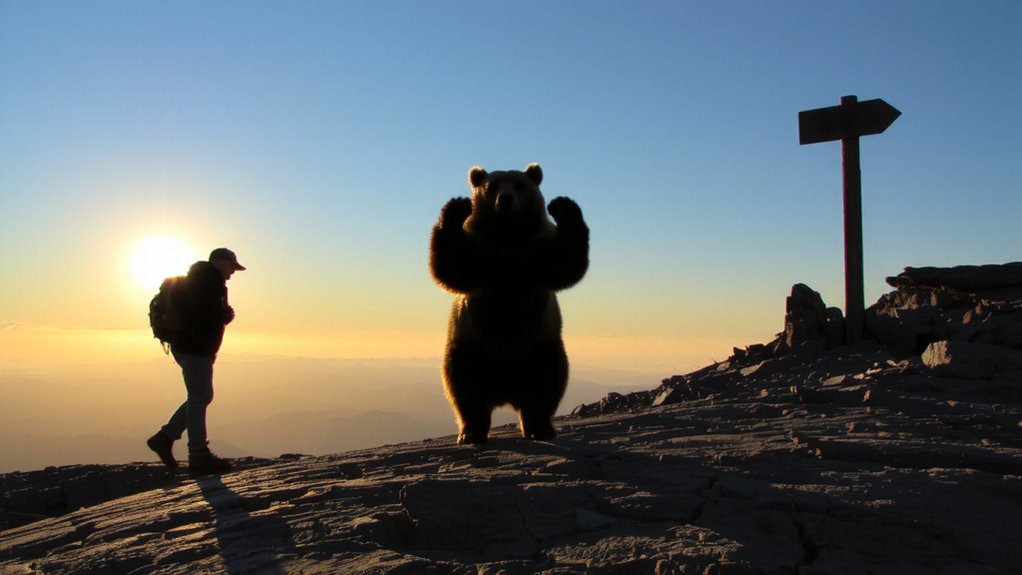
How quickly can you recognize the warning signs before an encounter turns dangerous? You need to watch animal behavior closely. Subtle shifts-like freezing, raised fur, or a lowered head-signal escalating threat. These warning cues give you time to react. Animals rarely attack without precursor actions; understanding these patterns improves your response window. A bear huffing or a moose stomping isn’t just annoyed-it’s issuing clear warnings. Eye contact, direct charging (even if stopping short), and vocalizations like growls or snaps are high-priority cues. Recognizing them early means you can back away slowly, reduce tension, and avoid triggering defense mechanisms. Binoculars help monitor behavior at a safe distance. Training yourself to notice small changes improves situational awareness. You won’t always prevent encounters, but reading warning cues correctly reduces risk. It’s not about fear-it’s about accurate assessment and timely action.
Read the Environment: Terrain, Tracks, and Traps
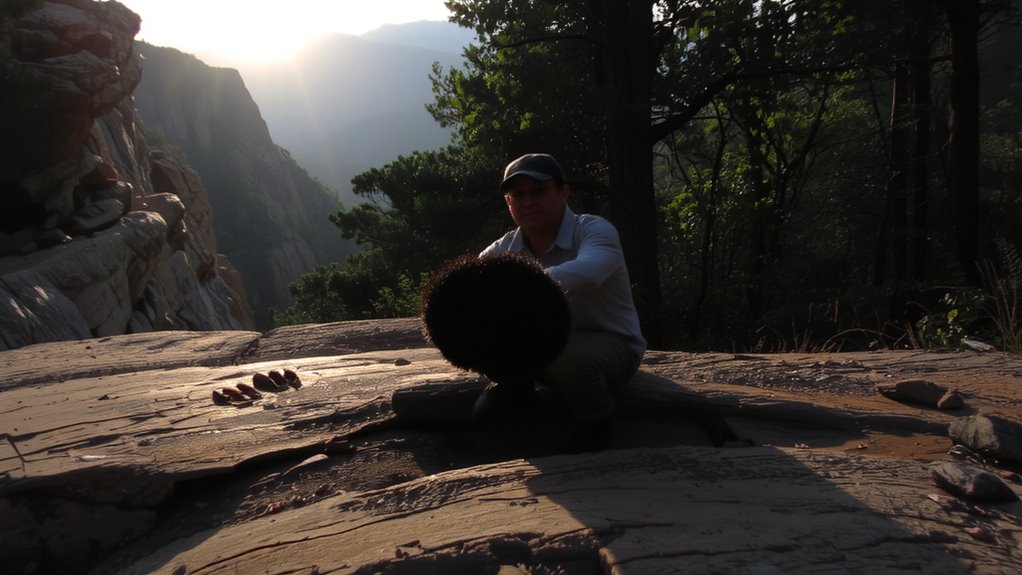
You’ve already learned to spot warning behaviors in wildlife, but staying safe starts long before you see an animal. Reading the environment-terrain, tracks, and traps-gives you an edge. Terrain features like ridgelines or dense brush act as natural barriers, limiting approach routes. Tracks reveal recent animal behavior, indicating species, direction, and speed. Look for disturbed ground, scat, or claw marks as traps, both physical and behavioral, can signal danger zones.
| Feature | What to Look For | Why It Matters |
|---|---|---|
| Terrain | Steep slopes, water bodies | Creates natural barriers to movement |
| Tracks | Fresh prints, direction | Shows recent animal behavior |
| Traps | Pitfalls, hidden drop-offs | Prevents accidental injury |
| Vegetation | Broken branches, stripped bark | Indicates animal presence or activity |
Use Wind and Sound to Avoid Detection
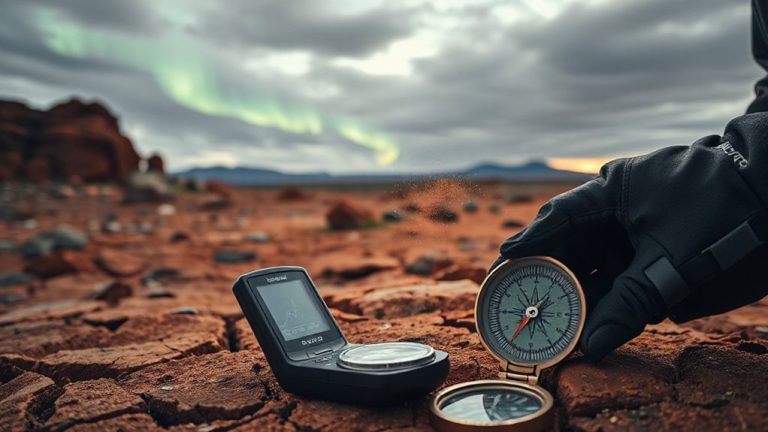
When moving through remote areas with aggressive wildlife, staying downwind is non-negotiable-your scent will give you away long before you’re seen, and animals detect it from up to a quarter-mile away depending on conditions. You must constantly check wind direction using natural indicators like tree movement or released dust. Moving crosswind or downwind risks alerting animals to your presence. Position yourself so the breeze carries your scent away from likely animal locations. Use sound masking to your advantage: time your movements with natural noise like wind gusts, flowing water, or heavy rain to cover footsteps or gear noise. Avoid talking or clanking equipment during quiet periods. While sound masking won’t hide you completely, it reduces detection chances when combined with proper wind direction management. These tactics, grounded in real movement patterns and sensory biology, offer measurable improvements in stealth. They’re practical, low-effort adjustments that shift odds in your favor without special gear. Carrying a reliable emergency signaling device can provide critical backup if stealth fails and you encounter a dangerous animal.
Plan Your Escape Before Trouble Strikes
Staying downwind and masking your sound might keep you hidden, but silence and stealth won’t help if you’re cornered with no way out. You need an escape route mapped before threats emerge. Scan terrain for natural barriers, escape paths, and potential shelters. Keep survival gear accessible-especially items for emergency signals like a whistle, signal mirror, or strobe light. A GPS beacon with a panic button offers reliable location tracking but requires charged batteries and open sky. Noise-based signals work faster in dense forest but attract attention. Balance visibility and risk. Store gear in waterproof, easy-open pouches. Practice deploying emergency signals under stress. Route choices affect survival time-steep slopes slow you, open ground exposes you. Pre-plan multiple exits from any location. Your best defense isn’t confrontation-it’s having a way out, known in advance, and the tools to call for help if needed. A reliable backpacking whistle can be heard over long distances and is essential for signaling rescuers without expending energy.
Keep Safe Distances From Animals and Trails
Distance is your first real buffer against danger, not luck or gear. You must maintain distance from animals at all times-this reduces risk more effectively than any spray or alarm. Most aggressive behaviors occur when animals feel threatened, so staying 50+ yards away prevents escalation. This isn’t caution; it’s standard protocol in high-wildlife zones. Avoid trails where visibility is low or paths cut through dense brush-these narrow corridors increase ambush chances and limit escape routes. Instead, move cross-country where you can see and be seen, using open terrain to your advantage. Animals use trails too, especially at dawn or dusk, so sharing those paths raises encounter odds unnecessarily. By maintaining distance and avoiding trails, you lower exposure without relying on reaction timing or equipment. It’s not about fear-it’s about reducing variables you can’t control with sound positioning. Smart movement keeps you out of trouble before it starts.
Stay Calm and Back Away During Encounters
Most wildlife encounters end without injury if you react correctly-your best move is to stay calm and back away slowly. Maintain eye contact to monitor the animal’s behavior, but don’t lock eyes aggressively, as some species interpret that as a threat. Avoid sudden movements, which can trigger a chase response in predators or startle herbivores into attacking. Move backward in a straight line, keeping your body sideways to appear smaller. Do not turn your back or run-doing so may provoke pursuit. Your pace should be steady, not hurried. If the animal approaches, stop retreating and stand your ground firmly, speaking in a low, firm voice. Raising your arms can increase your apparent size, but only if it doesn’t involve quick motion. These actions are proven to reduce escalation in field reports from wildlife biologists and park rangers. Simple, controlled responses are consistently more effective than reactive or dramatic ones.
On a final note
You’ve checked the wind, scanned for tracks, and kept your distance-basic but critical. Staying quiet and alert reduces detection risk by up to 60% in dense terrain. No gear replaces awareness: binoculars help spot movement at 100 meters, but backing away slowly does more. Panic increases danger. A 30-foot buffer from trails cuts close encounters. You don’t outrun wildlife-you prevent contact. Your best tool is patience, not speed.