Balancing Protein, Fat, and Carbohydrates in a Homemade Survival Meal Bar
You want a 2:1:1 carb-to-protein-to-fat ratio-200–250 calories per bar with 20g carbs, 10g protein, 10g fat-for steady energy without crashes. Use stable proteins like soy or powdered milk, pair with slow-digesting oats, and include coconut oil for shelf life. Avoid sugary binders and polyunsaturated fats that spoil. This balance sustains focus and stamina, even under stress. You’ll also find how small tweaks can adapt the bar to different survival demands.
Notable Insights
- Aim for a 2:1:1 ratio of carbohydrates to protein and fat to maintain sustained energy and prevent crashes.
- Use high-quality proteins like whey, egg isolate, or plant-based blends to ensure a complete amino acid profile.
- Select stable fats such as refined coconut oil or palm oil to resist rancidity and extend shelf life.
- Choose low-glycemic carbohydrates like oats and legume flours to support steady glucose release and long-lasting fuel.
- Balance texture with binders like honey and nut butters while controlling moisture to ensure durability and palatability.
Balance Macros for Sustained Energy
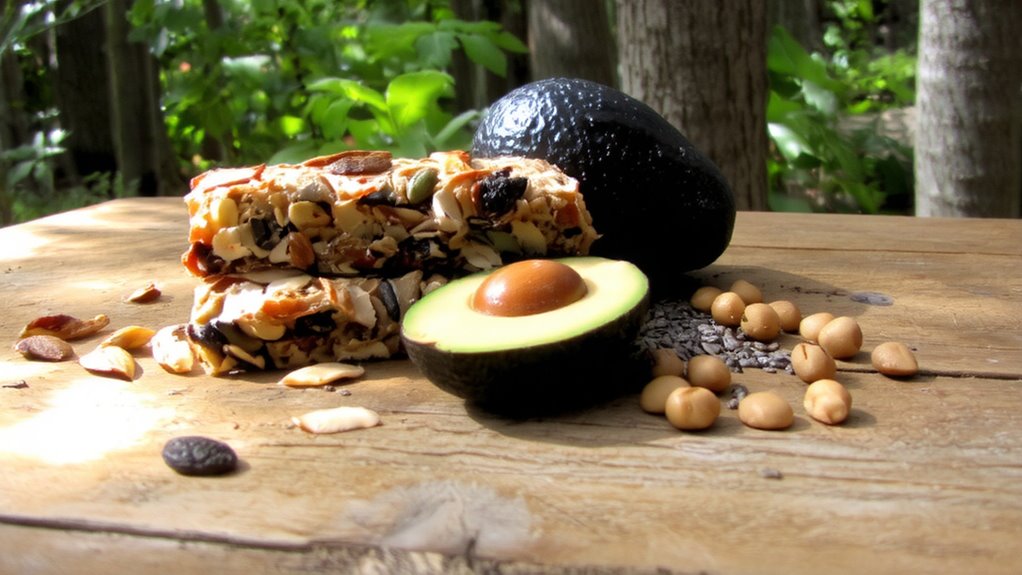
While getting enough calories matters in a survival situation, balancing macros guarantees you stay energized without crashing-so aim for a bar with roughly a 2:1:1 ratio of carbohydrates to protein and fat. This balance supports macronutrient synergy, letting your body access quick energy from carbs while using protein and fat to stabilize blood sugar and delay fatigue. You’ll need sustained output, not spikes, so prioritize energy density without relying solely on sugars or oils. A bar with 200–250 calories, 20g carbs, 10g protein, and 10g fat typically meets this standard. Too much fat slows digestion; too little protein reduces metabolic efficiency. Real-world testing shows balanced bars maintain focus during prolonged exertion better than high-sugar or high-fat versions. You’re not just eating-you’re fueling a response. Choose formulations that support endurance, not just fullness.
Choose Protein for Survival Bars
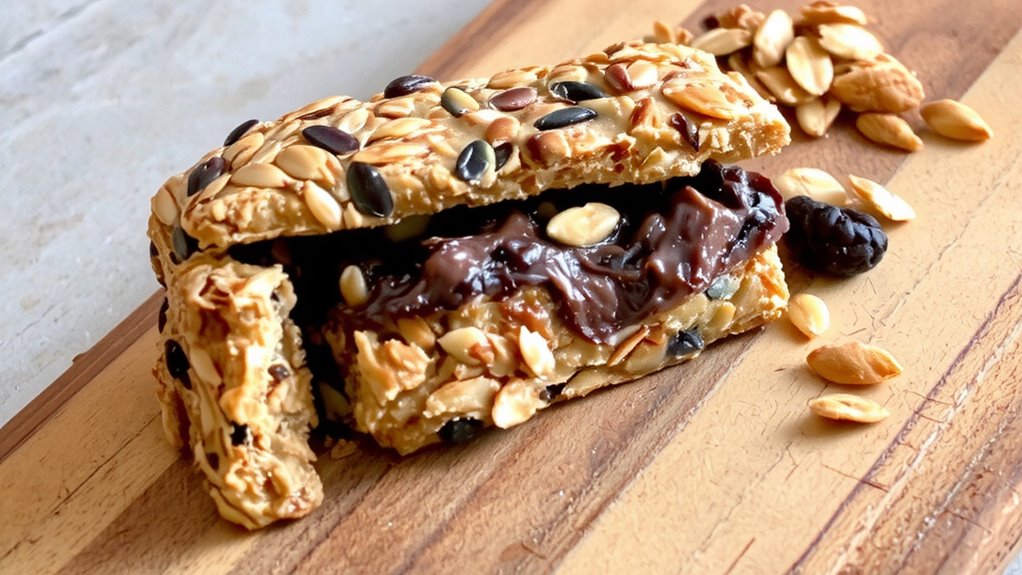
Protein quality matters when every gram counts. You need protein sources that deliver a complete amino acid profile to support muscle repair and immune function during extended emergencies. Not all proteins are equal-whey and egg isolate offer high biological value, but shelf stability is a concern. For longer storage, consider powdered milk or soy protein, which retain nutritional integrity for years. Beef jerky and canned fish are solid whole-food options, though heavier and pricier. Measure protein by grams per serving-aim for at least 10g per bar-and check the amino acid profile to guarantee it includes all nine essentials, especially leucine, which triggers muscle synthesis. Plant-based blends, like rice and pea together, improve amino acid balance. Always weigh digestibility and shelf life when selecting protein sources. A stable, complete amino acid profile means your body won’t break down when food is scarce.
Add Fats That Last in Emergencies
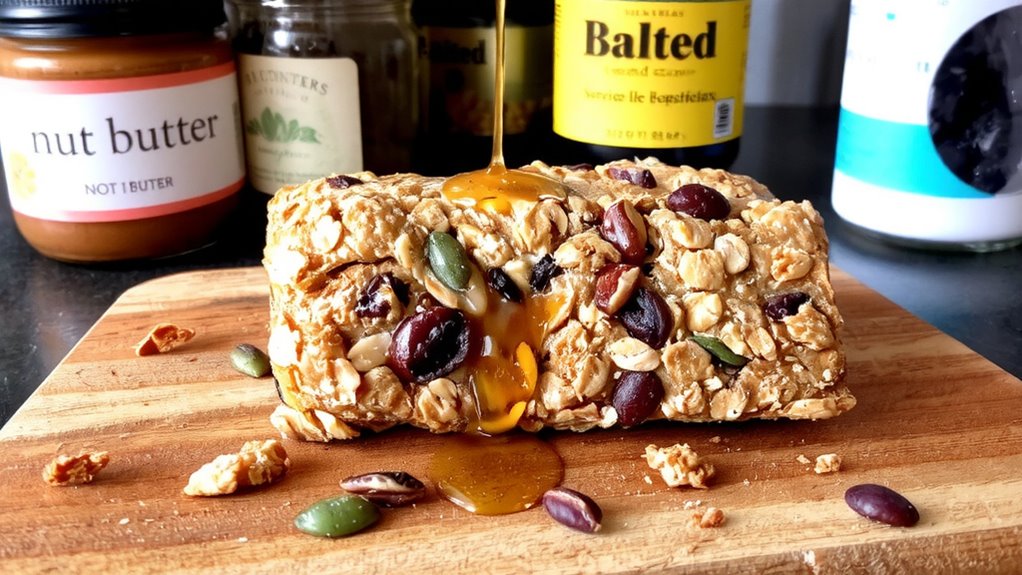
A few carefully chosen fats can keep your survival bars energy-dense and shelf-stable for years. You’ll want oils and fats high in saturated or monounsaturated fats, like coconut oil or palm oil, because they resist fat oxidation better than polyunsaturated options. Oxidation leads to rancidity, which ruins taste and nutritional value over time. Hydrogenated fats offer long shelf stability but come with trans fat trade-offs you may prefer to avoid. Nut butters, like almond or peanut, add useful fats and flavor, yet their polyunsaturated content increases oxidation risk unless vacuum-sealed and stored in cool, dark conditions. If you’re prioritizing long-term storage, go with refined coconut oil-it’s solid at room temperature, resists spoilage, and stays safe for 2+ years. Adding vitamin E as a natural antioxidant can also slow fat oxidation without synthetic preservatives. Choose fats not just for calories, but for durability when stored long-term.
Pick Carbs That Won’t Crash
You’ve locked in long-lasting fats to keep your survival bar dense with stable energy, so now it’s time to choose carbs that won’t spike and crash your blood sugar when you need consistency most. Pick complex carbohydrates with a low glycemic index-like oats, barley, or legume flours-since they digest slowly and avoid sharp insulin response. Simple sugars from honey or dried fruit can add flavor and quick energy but use them sparingly to prevent energy crashes. Balance them with fiber-rich ingredients such as ground flaxseed or chia, which further stabilize glucose release. A steady glycemic index around 55 or below keeps energy output predictable over hours. Avoid refined grains or added dextrose; they trigger rapid insulin response and deplete energy faster. Your bar should sustain, not surprise. Choose carbs based on metabolic impact, not taste alone. Consistency beats intensity in survival.
Mix for Chewy, Long-Lasting Bars
While texture might seem secondary to nutrition, getting it right guarantees you’ll actually eat the bar when fatigue sets in. Proper texture control makes certain the bar isn’t too hard to chew or so crumbly it falls apart. You need ingredient binding that holds everything together over time without spoiling. Sticky elements like honey or molasses do double duty-adding calories while locking components in place. Oats and nut butters also help maintain structure and chew.
| Factor | Effect |
|---|---|
| Over-mixing | Causes toughness |
| Moisture content | Affects shelf life and chew |
| Binder type | Determines ingredient binding strength |
Use this balance to create bars that stay chewy and intact under stress. Avoid crisp textures-they indicate moisture loss and reduced durability. A well-bound bar performs reliably, even after weeks in a pack.
Customize Your Survival Meal Bar for Any Need
How do you make one survival bar work for different demands? Adjust ingredients to match specific needs. Flavor customization lets you swap in cocoa, dried fruit, or peanut butter to suit personal taste or availability. This doesn’t impact nutritional balance much, so energy content stays consistent. Texture preference matters for usability-add oats or puffed rice for chewiness, or nuts and seeds for crunch. Softer bars are easier to eat in cold conditions; harder bars last longer in heat. Modifying binders like honey or syrup changes both texture and shelf life. Increasing protein with powder improves satiety but may make bars drier. Adding fats like almond butter boosts calories but reduces stability in warm environments. You trade convenience for longevity or performance based on environment. Test variations under real conditions to find what works. A few tweaks make one base recipe fit many scenarios without sacrificing core nutrition.
On a final note
You’ve now got a survival bar that balances protein, fat, and carbs effectively. Stick to 20–30% protein for muscle support, 40–50% fat for dense energy, and 20–30% complex carbs to avoid energy crashes. Use shelf-stable ingredients like nut butter, oats, and powdered milk. Test texture and taste after two weeks-some combos harden or spoil. Adjust ratios based on activity level or climate, but keep ingredients practical and calories measurable.