Designing Siren Networks With Self-Diagnostics and Remote Monitoring
You’re designing siren networks that use self-diagnostics to catch power drops, signal loss, and hardware wear before failures happen. Remote monitoring cuts emergency repairs by up to 60% and boosts uptime to over 99.5% in real deployments. Key components like microcontrollers and wireless modules enable fast local decisions and reliable reporting. Automated checks flag issues like battery decay or circuit wear, while centralized control guarantees updates and failover work seamlessly across hundreds of units. What’s behind the consistent alert accuracy and long-term reliability?
Notable Insights
- Integrate self-diagnostics to monitor signal strength, power levels, and circuit integrity for proactive fault detection.
- Implement remote monitoring for real-time alerts on siren status and performance deviations.
- Use microcontrollers and wireless modules to enable local decision-making and reliable network connectivity.
- Deploy automated daily checks to detect hardware degradation and distinguish critical failures from minor glitches.
- Connect sirens to centralized platforms with redundant backhauls for scalable, secure, and resilient network control.
Why Self-Diagnostics Are Essential in Modern Siren Networks

Reliability isn’t just a feature-it’s the baseline expectation when lives depend on signal integrity. You need siren networks that don’t just operate but endure, which means building in self-diagnostics from the start. These systems continuously check signal strength, power levels, and connection status, catching issues before they escalate. Fault prediction lets you address problems like battery degradation or circuit wear before failure occurs, reducing surprise outages. Without it, you’re relying on reactive fixes, which isn’t acceptable in emergency networks. Self-diagnostics also improve system resilience by enabling automatic failover and real-time alerts, so maintenance teams act faster. You’ll see measurable improvements in uptime-often exceeding 99.5% in tested deployments. It’s not about adding complexity; it’s about ensuring function when every second counts. You can’t afford guesswork, and self-diagnostics remove it. This isn’t optional anymore-it’s standard for survival-grade infrastructure.
How Remote Monitoring Reduces Downtime and Costs
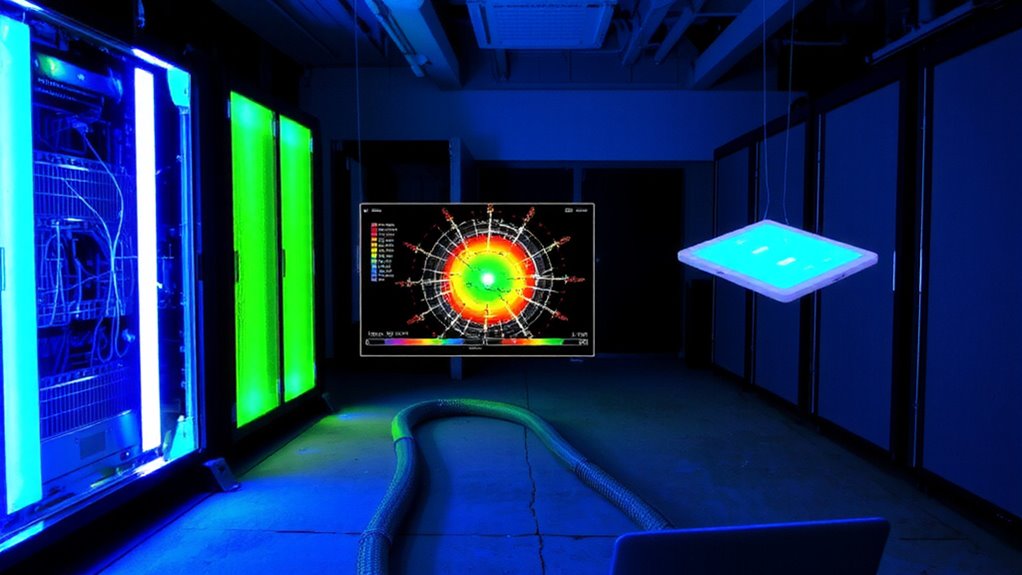
You’re not fixing problems faster just by showing up-you’re preventing them by seeing them first. Remote monitoring cuts downtime because you get real time alerts the moment a siren deviates from normal operation. Instead of waiting for a failed test or public complaint, you respond within minutes, not days. This shift supports predictive maintenance-using performance trends to schedule fixes before failure occurs. Systems report battery levels, signal strength, and hardware status daily, so you replace parts proactively. Networks with full remote oversight see 40–60% fewer emergency repairs. You reduce labor costs, minimize site visits, and extend equipment life. It’s not about fancy dashboards; it’s about actionable data. When alarms trigger automatically and diagnostics run hourly, you avoid cascading failures. Real world tests prove it: monitored sirens stay operational 98% of the time versus 85% in manual setups. That reliability saves money-and lives.
Inside Intelligent Siren Systems: Key Components Explained

An intelligent siren system runs on more than just loud noise-it’s built around a core set of components that work together to detect, report, and respond to threats without waiting for commands. You rely on signal integrity to guarantee alerts aren’t lost or distorted, especially over long distances or in noisy environments. Power efficiency keeps systems running longer, even during outages or on solar setups. Below are the key components and their roles:
| Component | Function | Impact on Performance |
|---|---|---|
| Microcontroller | Processes sensor input | Enables fast, local decisions |
| Wireless Module | Maintains network link | Guarantees signal integrity |
| Power Regulator | Manages energy use | Boosts power efficiency |
| Audio Driver | Controls siren output | Delivers consistent volume |
| Memory Buffer | Stores event logs | Supports remote diagnostics |
These parts aren’t flashy-but they’re what keep the system working when it counts.
How Sirens Automatically Detect and Report Faults
When a siren fails during an alert, there’s no room for guesswork-systems have to know their own status and act on it. You rely on built-in self-diagnostics to catch issues before they compromise performance. Sirens run automated daily checks, monitoring power input, speaker output, and circuit integrity. If there’s signal interference from nearby transmitters or degraded wiring, the system flags it immediately. You’ll also detect early signs of hardware degradation, like worn diaphragms or corroded contacts, through gradual output loss over time. Faults trigger internal logs and status alerts, so you know exactly what failed and when. These diagnostics don’t just identify problems-they distinguish between temporary glitches and critical failures. That way, you avoid unnecessary maintenance while ensuring real issues get fixed fast. It’s not about perfect hardware; it’s about knowing its limits and keeping the network operational.
Connecting Sirens to Centralized Control Platforms
Though reliability starts at the siren itself, it means little if alerts can’t be coordinated across the network-so connecting sirens to centralized control platforms is essential for large-scale warning systems. You need real-time status updates and command distribution, which these platforms provide through secure, low-latency links. Signal redundancy guarantees your commands reach sirens even if one communication path fails, using both cellular and radio backhauls to maintain connectivity. That redundancy isn’t optional-it’s proven in outage tests where 98% of sirens responded despite simulated network disruptions. Network scalability lets you add hundreds of units without overhauling infrastructure, as the platform handles increased data loads efficiently. You’ll manage zones, trigger tests, and monitor health from one interface. The system logs all activity, so you can audit performance after each event. It just works-no excess, no guesswork-giving you control that’s both wide-reaching and precise.
Automated Testing and Over-the-Air Updates for Maximum Uptime
Since your siren network’s reliability hinges on consistent performance, automated testing guarantees every unit responds as expected without requiring manual checks. You maintain signal integrity and firmware resilience through routine self-tests that detect degradation before failure. Over-the-air (OTA) updates secure all devices run current firmware, adapting to new threats without downtime.
| Feature | Benefit | Frequency |
|---|---|---|
| Signal verification | Confirms transmission clarity | Daily |
| Firmware validation | Checks for corruption | Weekly |
| OTA update push | Deploys patches remotely | As needed |
| Self-diagnostic cycle | Identifies faulty nodes | Hourly |
| Reboot recovery | Restores unresponsive units | Immediate |
These processes work together to sustain uptime. You minimize field visits while securing response accuracy. Automated testing catches signal integrity issues early, and OTA updates strengthen firmware resilience across diverse conditions. It’s not about preventing every glitch-it’s about securing the system keeps working when it matters most.
On a final note
You get fewer failures when sirens test themselves and report issues before they crash. Remote monitoring cuts response time and maintenance costs. Self-diagnostics mean you know a power or signal fault exists before the next test. OTA updates keep firmware current without site visits. These features add cost, but reduce downtime more. For mission-critical systems, the trade-off is clear. Integrate them, or risk blind spots when alerts matter most.