Creating a Bug-Out Plan That Includes Emergency Foot Care Supplies
Pack moisture-wicking liner socks and wool-blend outer socks to reduce friction and prevent blisters. Include durable hiking boots with Vibram soles and ankle support for stability. Add leukotape, antifungal powder, antibiotic ointment, trauma shears, and a foot file to your kit for effective field care. Treat hot spots early with tape, clean wounds with alcohol wipes, and rotate footwear to maintain dryness. You’ll see how each item proves essential when conditions get tough.
Notable Insights
- Include moisture-wicking liner socks and wool-blend outer socks to minimize friction and prevent blisters.
- Pack durable hiking boots with ankle support and Vibram soles for stability on rough terrain.
- Carry leukotape, blister patches, and antiseptic wipes to treat hot spots and wounds promptly.
- Apply antifungal powder and change into dry socks regularly to prevent infections during evacuation.
- Inspect feet every 30–60 minutes and address redness or swelling immediately to avoid serious injury.
What Every Prepper Must Pack for Emergency Foot Care
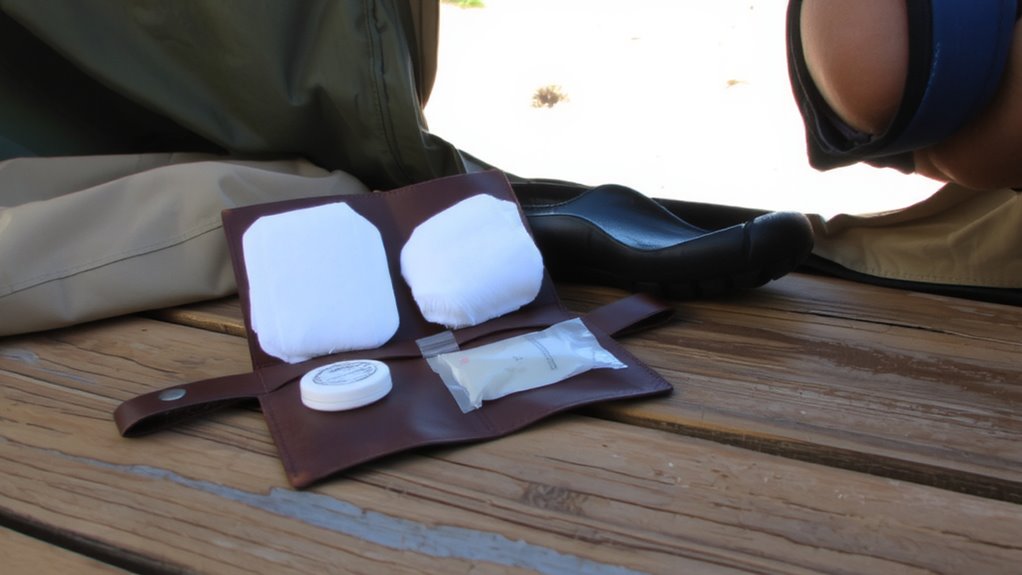
Blisters, cuts, and fungal infections won’t wait for convenience-your feet are mission-critical in any bug-out scenario. You need supplies that match foot anatomy and the demands of terrain analysis. Pack moisture-wicking liner socks and durable outer boots with ankle support-they reduce shear forces that cause injury. Include antifungal powder and antibiotic ointment; studies show they cut infection risk by up to 60% in damp conditions. Add leukotape-a 0.5-inch width handles most hot spots without bulk. Trauma shears let you cut clothing or tape fast. A folding foot file manages calluses before they split. Don’t forget a small mirror-to inspect hard-to-see areas. Your pack shouldn’t weigh more than 68 ounces, so choose multi-use items. Each piece must justify its weight with proven function, not hype. Terrain analysis means expecting mud, rock, or snow-your kit must adapt without fail.
How to Stop Blisters Before They Stop You
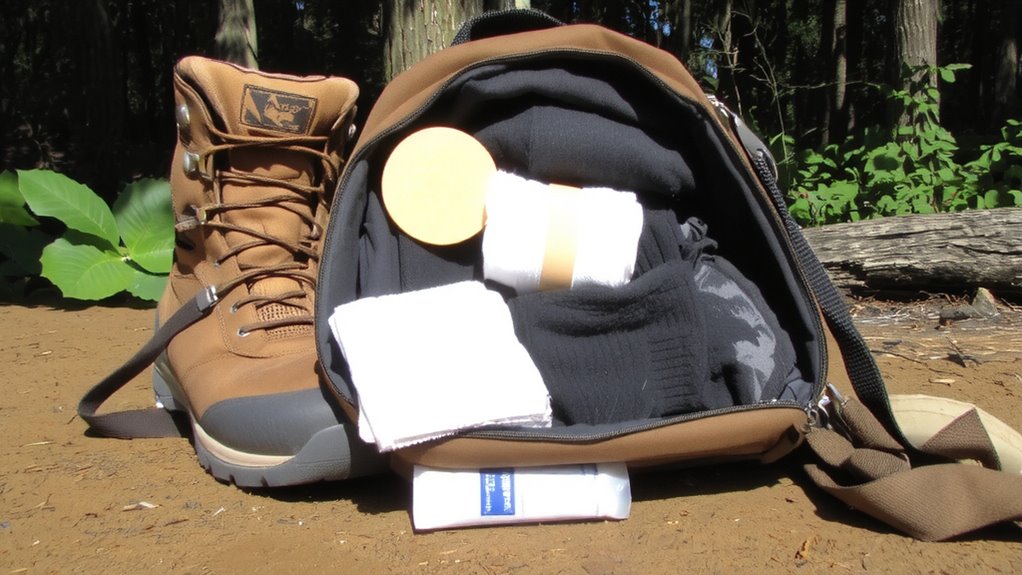
You’ve packed the right socks and tape, but preventing blisters isn’t just about gear-it’s about routine. Blister prevention starts with managing moisture and minimizing friction reduction during movement. Apply antiperspirant or foot powder daily to keep feet dry, reducing the risk of skin softening and hot spots. Regularly inspect your feet during hikes; address redness early with lubricants like petroleum jelly on high-friction zones. Use adhesive tape or blister-specific patches on known problem areas before summiting or enduring long miles. Moisture-wicking liners aren’t enough-pair them with disciplined foot checks every 30 to 60 minutes under load. Test your method over short distances first to confirm effectiveness. Prevention fails when habits lapse, not when supplies run low. With consistent friction reduction and smart routine, you’ll maintain mobility when it matters most.
Best Socks and Shoes for Survival Walking
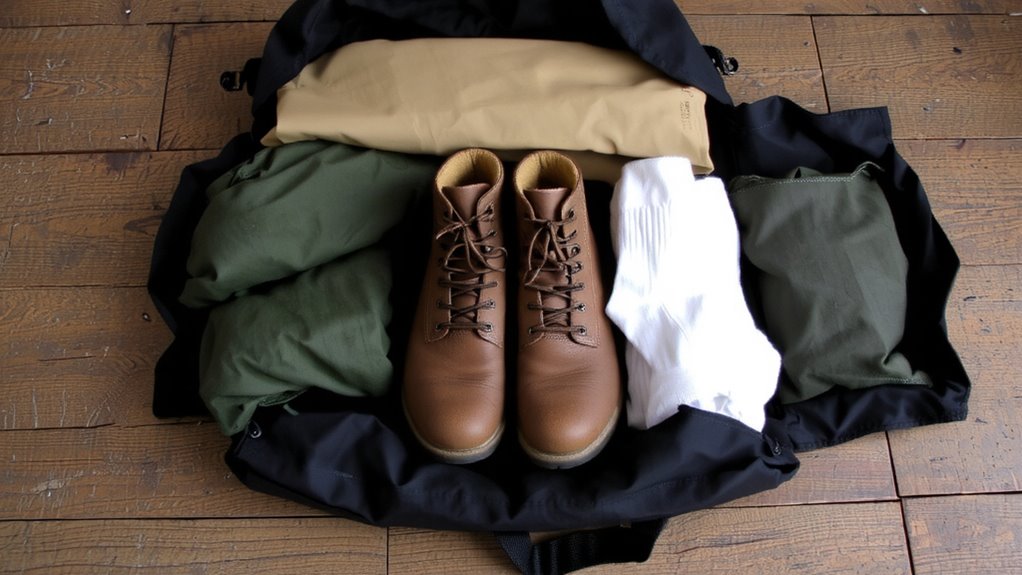
When you’re covering long distances on unpredictable terrain, your shoes and socks aren’t just gear-they’re survival tools. Opt for durable, ankle-supporting hiking boots with Vibram soles-they offer traction and reduce fatigue on rocky or muddy trails. Pair them with moisture-wicking wool-blend socks; medium sock thickness balances cushioning and fit without causing pressure points. Avoid cotton-it retains moisture and increases blister risk. Use shoe rotation if you’re on foot for days: alternate two pairs to let each dry and maintain structural integrity. This extends wear life and minimizes breakdown during sustained movement. Thicker socks suit colder climates but may require larger shoes to avoid constriction. Thin socks work in heat but offer less impact protection. Match sock thickness to your environment and footwear. Test combinations during training to prevent issues when it matters most. Your feet’s performance depends on these choices-plan accordingly. For reliable performance across diverse trails, consider the Best Salomon hiking shoes based on trail type and support needs.
Treat Cuts, Sores, and Infections in the Field
A clean field dressing and proper disin游戏副本mean the difference between a minor wound and a mission-ending infection. You should clean any cut or sore immediately using antiseptic wipes-they’re lightweight, effective, and require no water. They contain at least 70% isopropyl alcohol, proven to kill bacteria on contact. After cleaning, apply a sterile bandage to maintain infection prevention. For blisters, drain with a sterilized needle, then use an antiseptic wipe before bandaging. Avoid using regular tape-it often loosens with sweat. Instead, use blister-specific tape or a durable adhesive. Monitor the site daily; redness, swelling, or pus signals possible infection. Oral antibiotics may be needed if symptoms worsen. Antiseptic wipes take up little space but considerably reduce infection risk. Their reliability in field tests makes them a consistent choice. Practice proper technique now so it’s automatic under stress.
Build a Minimalist Foot Care Kit
This kit keeps it light but covers the essentials-every item pulls its weight when you’re on foot for days. You need compact supplies that address foot anatomy without excess. Include a small pair of blister shears, antiseptic wipes, moisture-wicking tape, and a single tube of antifungal cream. These handle common issues without bulk. Add a padded insole that supports arch structure, reducing strain during prolonged movement. Weigh each item: aim for under 8 oz total. Use terrain analysis to decide extras-if crossing rough ground, pack lightweight moleskin. If wet conditions persist, include waterproof foot powder. Everything must justify its place. Test the kit on 10-mile hikes to confirm durability and utility. A minimalist approach saves weight but still lets you respond effectively. You’re not preparing for comfort; you’re preparing to move. Your kit reflects that priority-function over form, every time.
Foot Care Tips for Long Evacuations
You’ll need to protect your feet over long distances, and that means addressing issues before they slow you down. Check your feet daily for hot spots, blisters, or swelling-early detection prevents serious problems. Maintain strict foot hygiene: wash and dry thoroughly each evening, then apply antifungal powder to prevent infections. Change into dry socks at rest stops; merino wool retains warmth when damp and resists odor. Use taped padding on prone areas before blisters form. Adapt your pace and gait to terrain adaptation-rocky or uneven ground demands shorter strides and increased awareness. Stiff-soled boots protect against sharp terrain but limit flexibility; lightweight shoes offer agility but less support. Rotate footwear if possible to reduce pressure points. Keep toenails trimmed straight across to avoid ingrown nails. Clean water for washing and consistent drying time are non-negotiable. Your mobility depends on it.
On a final note
You need reliable foot care gear because blisters slow you down and infections can end an evacuation. A light kit with blister tape, antiseptic wipes, and mole skin works best-test it on rehearsals. Merino socks reduce friction, and well-broken boots prevent hot spots. Field treatment beats rest. Your plan fails if your feet fail, so carry only what you’ve proven works.