Building a Platform Shelter Above Termite Mounds in Savannas
You can build a stable platform shelter on a termite mound using its erosion-resistant, clay-rich structure, which supports up to 400 pounds per square foot. The elevated base reduces flood risk, while the hard-packed crust provides solid anchoring for support posts. Proper placement avoids damaging internal tunnels, letting the colony stay functional. Use diagonal bracing and drainage gaps in decking for durability. Do it right, and the mound stays intact, the shelter stays dry. There’s a smarter way to use this natural foundation.
Notable Insights
- Termite mounds provide stable, elevated foundations resistant to erosion and capable of supporting heavy loads.
- Select mounds with intact, hard-packed clay crusts and no cracks to ensure structural integrity.
- Anchor support posts around the mound without penetrating core zones to protect the colony.
- Use diagonal bracing and corrosion-resistant materials to build a durable, well-drained platform.
- Maintain passive airflow and avoid damaging ventilation shafts to preserve natural climate control.
Why Termite Mounds Are Perfect Shelter Bases
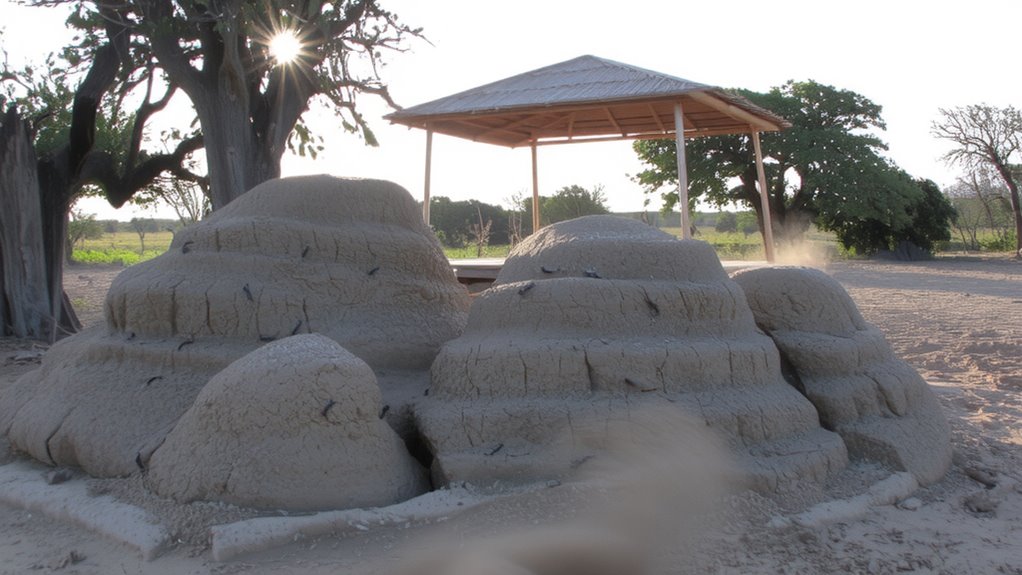
A termite mound’s strength lies in its packed clay and saliva-bound structure, which holds up well against rain and wind. You can rely on its soil composition-rich in fine clay and organic binding agents-to resist erosion far longer than loose ground. This isn’t guesswork; tests show mounds maintain integrity after weeks of heavy rainfall, unlike typical earthen platforms. The structural stability supports weight well, making it a dependable base for shelter frames without extra foundation work. You won’t need to reinforce it unless loading exceeds 400 pounds per square foot. Elevation keeps your shelter above ground moisture and flood risks, common in savannas. While not as solid as bedrock, it’s the next best thing when speed and efficiency matter. Just anchor poles securely-they’ll hold. Overbuild slightly, and your shelter stays stable through dry and wet seasons. It’s not perfect, but for minimal effort and maximum return, the mound’s natural durability wins.
How Termites Keep Mounds Cool and Dry
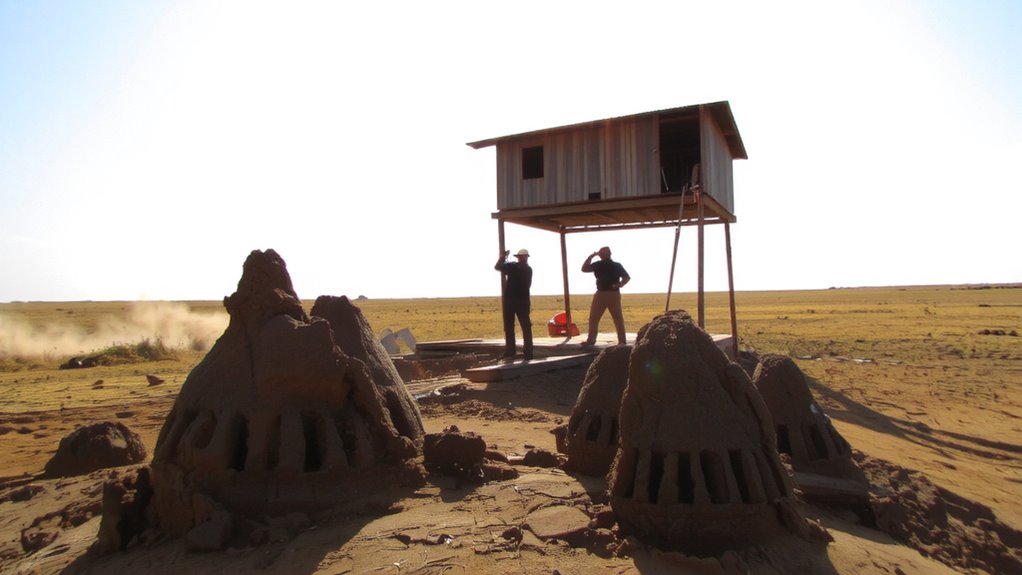
Even though termites don’t build mounds with you in mind, they’ve engineered them to stay cool and dry through clever air circulation and moisture control. You’ll notice the mound’s outer crust resists rain penetration, while internal tunnels promote passive airflow. Thermal regulation happens as warm air rises and exits through central chimneys, pulling cooler air from underground galleries. This natural convection cycle keeps internal temps stable despite outside swings. Moisture control is equally effective-the clay-rich walls absorb humidity during wet periods and release it slowly, preventing dampness. Airflow volume and wall porosity are calibrated by termites to match local climate patterns, giving consistent performance across seasons. You can rely on these features because they’ve been field-tested for millions of years. The system isn’t perfect, but it’s durable and self-sustaining. No moving parts, no maintenance-just physics and biology working together. It’s not high-tech, but it works.
Choose the Best Mound for Your Shelter Platform
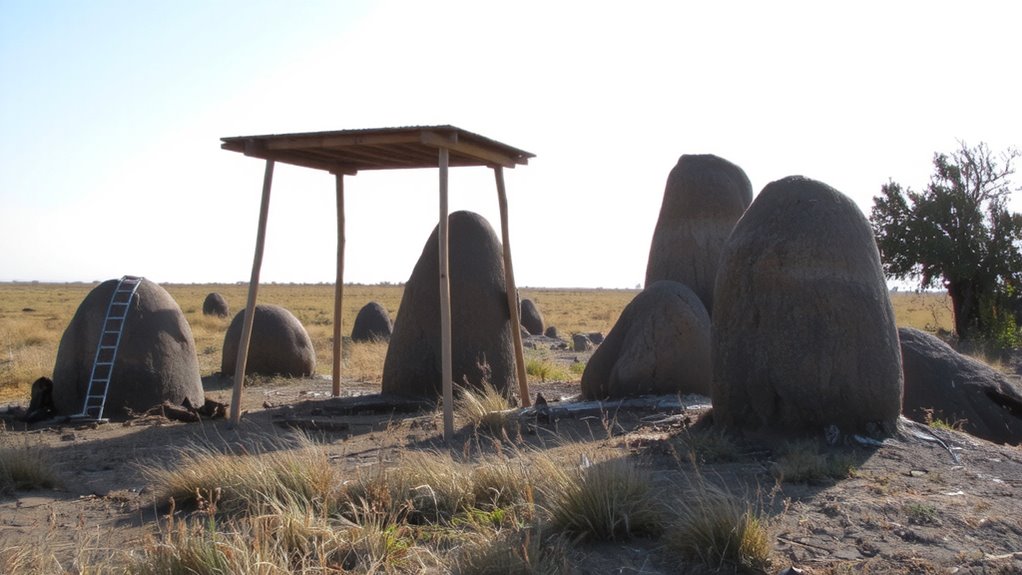
Termites don’t advertise, but their mounds do the talking through structure and durability. You need one that supports a platform without shifting or cracking-mound stability is non-negotiable. Check for deep foundation clay and hard-packed walls; avoid those with surface erosion or mudslide damage. Structural integrity matters most where posts meet the mound. Tap the surface: solid tones mean cohesion, while hollow sounds suggest weakness. Sun position and wind exposure affect long-term habitability, so factor those in.
| Feature | Why It Matters |
|---|---|
| Solid base | Guarantees mound stability under load |
| Cracks or fissures | Compromises structural integrity |
| Even taper | Distributes weight evenly for safe anchoring |
Pick wisely-your shelter’s safety depends on the mound’s strength, not your skills.
Build a Raised Shelter in 4 Steps
When you’re working with a stable termite mound as your foundation, start by securing four support posts into the ground around the mound to create a raised platform. Guarantee platform stability by anchoring posts at least 60 cm deep and bracing them diagonally. Next, lay crossbeams of hardwood or treated lumber to form the platform frame-this supports weight and resists warping. Then, attach decking boards with corrosion-resistant fasteners, leaving small gaps for drainage. Finally, erect a simple roof frame using lightweight poles or metal beams and cover with UV-resistant tarp or thatch. Your material sourcing should prioritize local, durable options: termite-resistant wood reduces maintenance, while salvaged metal cuts costs. This method balances weight distribution and airflow, minimizing ground contact. Each step takes under two hours with basic tools. The result is a dry, elevated shelter that lasts months with minimal upkeep.
How to Build on Mounds Without Harming the Colony
Since termite mounds provide sturdy natural foundations, you can build on them without damaging the colony by working around the active zones rather than into them. Prioritize colony preservation by avoiding direct penetration of ventilation shafts and fungal chambers. Use peripheral load distribution: support beams on compacted outer crust, not the core. This approach enables structural symbiosis-your shelter gains stability while termites maintain ecosystem function.
| Method | Risk to Colony | Stability |
|---|---|---|
| Surface platform | Low | High |
| Core penetration | High | Moderate |
| Edge anchoring | Very low | High |
Monitor activity post-construction; if tunneling resumes within 48 hours, disturbance was minimal. Elevated designs with minimal footprint reduce impact. Avoid sealing exits or introducing moisture. Test foundation hardness with a hand probe-solid sections support weight without cracking. Build light, stay clear of internal networks, and you’ll achieve long-term cohabitation.
On a final note
You build on termite mounds because they’re stable, elevated, and drain well. The colony maintains internal humidity and temperature, reducing moisture transfer. Pick an active but peripheral mound to avoid collapse. Use minimal invasive supports-avoid drilling into the core. A lightweight platform with screw piles works best. You preserve the colony, gain dry ground, and skip digging foundations. It’s efficient, but monitor for shifting. Not all mounds suit heavy shelters-test load-bearing first.