Using the Glasgow Coma Scale in Pre-Hospital Wilderness Care
You use the Glasgow Coma Scale in the wilderness to assess eye, verbal, and motor responses quickly, scoring 3 to 15 to spot neurological decline. It works without power or training, making it ideal for remote use. Track changes every 15–30 minutes, since trends matter more than single scores. A score ≤8 means immediate evacuation. Watch for distractions, spinal risks, and environmental effects that skew results-your next call depends on accurate, repeatable assessments.
Notable Insights
- Use GCS to standardize neurological assessments in remote settings where advanced tools are unavailable.
- Assess eye, verbal, and motor responses in sequence, ensuring spine protection if trauma is suspected.
- Reassess every 15–30 minutes to detect subtle neurological changes over time.
- Evacuate immediately if GCS is ≤8 due to high risk of airway compromise.
- Account for environmental factors like hypothermia or altitude, which may worsen outcomes and influence evacuation decisions.
What Is the Glasgow Coma Scale and Why It Matters in the Wild
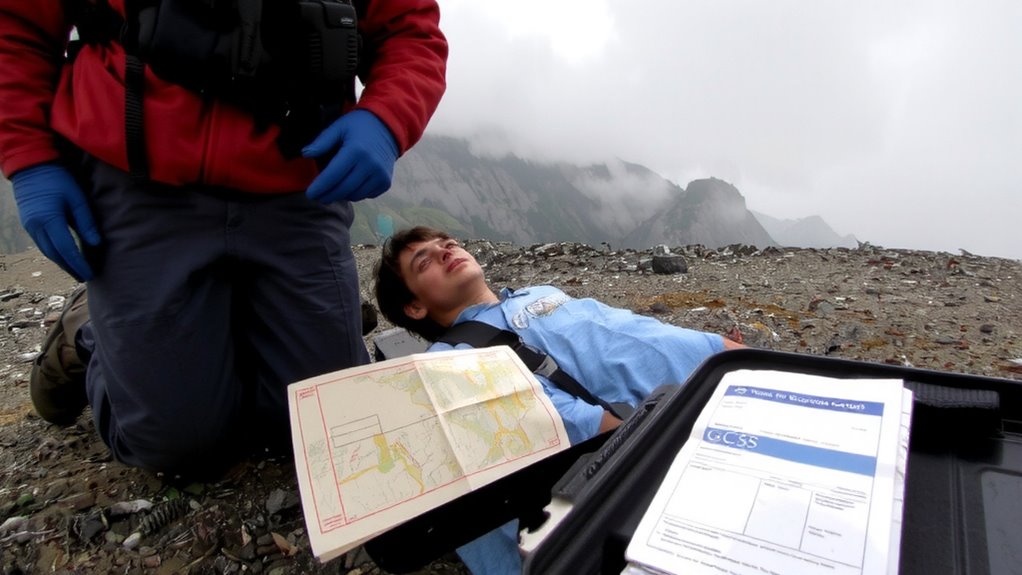
A tool, not a guess-that’s what the Glasgow Coma Scale (GCS) is when you’re miles from help. You’re evaluating someone after a fall or head injury, and you need a reliable way to track brain function. GCS gives you a standardized method for neurological assessment, breaking down eye, verbal, and motor responses into a score from 3 to 15. It’s not fancy, but it works. In remote settings, where imaging or specialists aren’t an option, this score helps you detect deterioration early. It’s a core part of trauma screening-simple, repeatable, and objective. You can compare scores over time, which matters when deciding whether to evacuate. No power, no training beyond basics. It’s lightweight in practice but heavy on usefulness. You won’t know the exact injury, but you’ll know if the person’s getting worse. That’s what counts out there.
How to Perform a GCS Assessment in the Field
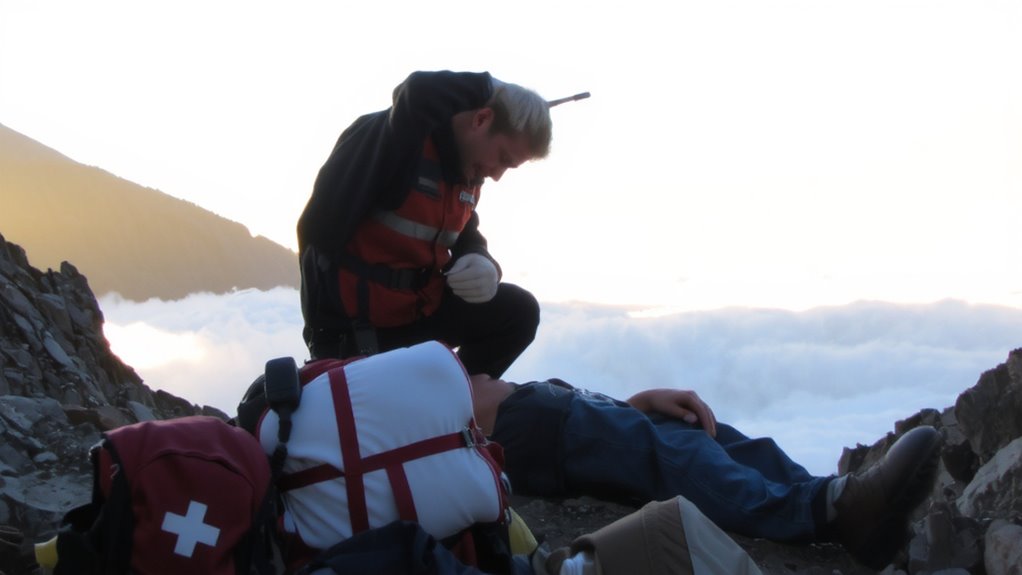
How do you know if someone’s mental status is declining when you’re hours from medical help? You use the Glasgow Coma Scale in the field, where conditions aren’t ideal. Start with proper patient positioning-keep the spine neutral if trauma’s suspected. Clear airways gently; obstructions skew results. Use field lighting wisely-shield your headlamp to avoid startling the patient, and shine it indirectly to check eye response without glare. Assess each component systematically, but don’t rush. Poor lighting or awkward positioning leads to inaccurate scoring. Perform the exam in the same order every time to reduce errors. Reassess every 15–30 minutes to catch subtle changes. Your observations must be consistent and objective. Even slight delays in recognition can impact outcomes. Document each assessment clearly. Good technique compensates for lack of equipment.
Score the Three GCS Responses: Eyes, Verbal, Motor
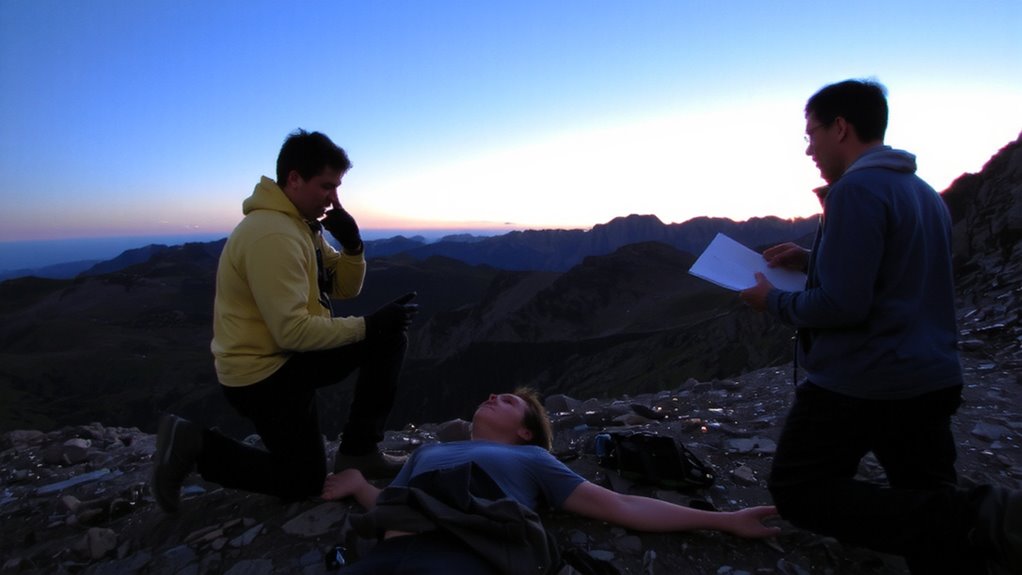
You’ve positioned the patient, cleared the airway, and set up your lighting-now it’s time to score the three components of the Glasgow Coma Scale: eyes, verbal response, and motor function. You observe eye opening first-spontaneous, to sound, pain, or none. Score each accordingly, then assess verbal response by noting orientation, coherence, and whether speech is possible. Finally, test motor response by applying appropriate stimulus and watching for purposeful movement or posturing. You’ll also check pupil reactivity during this process-equal, brisk constriction indicates intact brainstem function. Note capillary refill time when examining peripheral perfusion; while not part of GCS, it informs overall neurological and circulatory context. Each category has specific criteria that leave little room for interpretation. Be consistent-your score guides evacuation urgency. Record findings clearly, as changes over time matter more than a single measurement. Accuracy now improves decision-making later.
When to Evacuate Based on GCS Scores
If the patient’s GCS score is 8 or below, initiate immediate evacuation-this indicates severe brain injury and high risk of airway compromise. You can’t manage intubation or advanced care in the backcountry, and delays increase mortality. Even a score of 9–12 warrants evacuation due to moderate brain injury risk, especially if neurological monitoring reveals instability. Consider environmental hazards like altitude, hypothermia, or difficult terrain-these complicate outcomes and limit your response capacity. A score of 13–15 may not require urgent evacuation if stable, but only if safe to monitor.
| GCS Score | Evacuation Priority | Reason |
|---|---|---|
| ≤8 | Immediate | High aspiration and brain herniation risk |
| 9–12 | High | Moderate injury; potential deterioration |
| 13–15 | Watchful monitoring | Only if no worsening and minimal environmental hazards |
Track GCS Trends to Detect Deterioration
While a single GCS score gives you a snapshot, tracking trends over time is what reveals whether the patient’s condition is stabilizing or worsening. You should reassess every 15–30 minutes, noting even small declines-like a drop from 13 to 11-that signal neurological deterioration. A consistent downward trend often precedes major declines in consciousness, giving you critical time to act. Always compare changes against the patient history, since pre-existing conditions like dementia or alcohol use can skew baseline scores. Environmental factors such as altitude, hypothermia, or dehydration may also influence mental status and must be accounted for when interpreting trends. Don’t rely on one measurement; instead, use serial assessments to filter out transient variations. This approach gives you an objective way to detect true decline, guiding decisions about evacuation urgency and treatment needs in remote settings where resources are limited.
Avoid Common GCS Mistakes in Remote Settings
Tracking changes in the Glasgow Coma Scale gives you an edge in spotting deterioration, but even accurate trends can’t help if the scores themselves are flawed. In remote settings, environmental distractions-like wind, rain, or panicked companions-can interfere with your assessment. You must minimize noise and shield the patient to get reliable responses. Limited lighting at night or under dense canopy makes it hard to assess pupil reaction and eye movement, so use a headlamp with a red-light mode to preserve night vision while checking responses. Don’t skip verbal warnings before stimuli; applying pressure without warning skews motor response scores. Confirm eye-opening by ensuring it’s not just a reflex. Misjudging these components by even one point affects the total score markedly. Double-check each category, document clearly, and retest if anything seems off. Consistency matters when help is hours-or days-away.
Combine GCS With Field Triage Tools
A solid triage system is only as good as the tools you build into it, and the GCS is one of your most reliable instruments when combined with field-proven protocols like START or CARE. You can’t rely on GCS alone-pair it with rapid assessments of patient history and environmental factors to prioritize care effectively. For instance, a low GCS score in a hypothermic patient may improve with warming, unlike in traumatic brain injury. Environmental factors like altitude or exposure time shift your treatment priorities. START helps sort patients quickly, but adding GCS refines your assessment of neurological status. You need both to distinguish between altered mental status from shock, toxins, or head trauma. Patient history, if available, clarifies timelines and mechanisms. Together, these tools reduce guesswork. You’ll make better decisions about evacuation urgency and resource use-critical when help is hours or days away.
On a final note
You should use the Glasgow Coma Scale in the wild because it gives you a clear, repeatable way to assess consciousness. A score of 8 or below means immediate evacuation-neurological decline is likely. Track changes: a drop of two points in any category signals trouble. Don’t skip verbal checks just because the patient groans. Pair GCS with AVPU for better triage. It’s not perfect, but it works when seconds count.