Preparing an Emergency Kit Specifically for Infants Including Formula and Diapers
You’ll need 30 diapers and 300 wipes for a 72-hour infant kit, as babies average 10–12 changes daily. Use powdered formula for long shelf life, but mix it with clean water when needed. Store it with ready-to-feed options for reliability. Pack a vacuum flask to warm bottles without power. Include a digital thermometer, infant pain reliever, and zinc oxide cream. Keep everything in a labeled, waterproof container. Rotate supplies every 90 days. More details on optimizing each component follow.
Notable Insights
- Choose powdered, ready-to-feed, or liquid concentrate formula based on storage, safety, and water access needs.
- Store at least 30 diapers and 300 wipes in sealed, waterproof containers to prevent moisture and odor.
- Pre-sterilize bottles and use insulated vacuum flasks to warm formula safely during power outages.
- Include infant-specific first aid items like fever medication, thermometers, saline drops, and hypoallergenic bandages.
- Rotate all kit supplies every 90 days and store the complete kit in a labeled, waterproof container near an exit.
Choose the Right Formula for Your Infant Emergency Kit
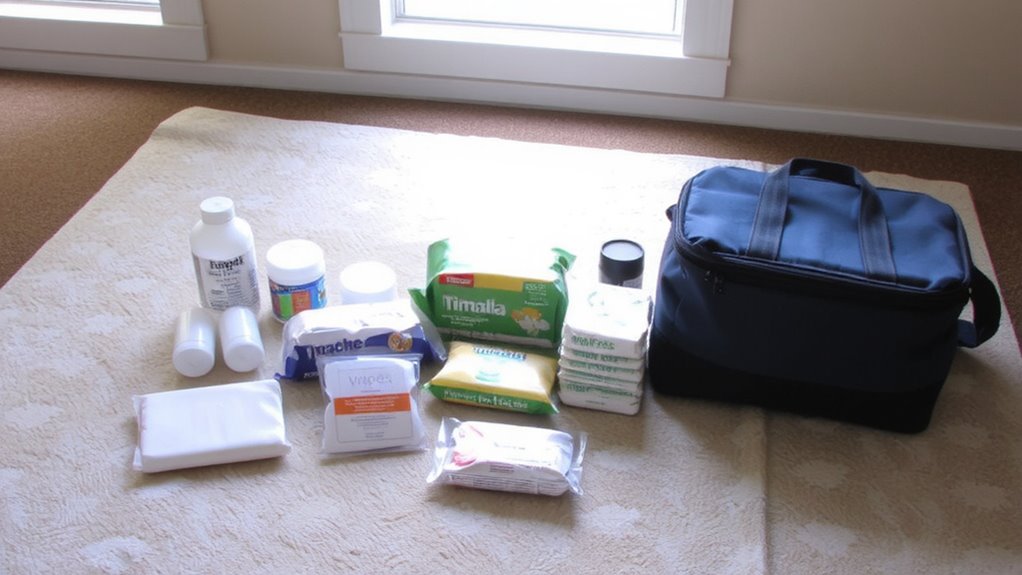
If you’re stocking an emergency kit for an infant, picking the right formula matters-because when utilities fail and supply chains break, you can’t afford guesswork. You’ll need to evaluate formula types carefully: powdered is lightweight and stores long-term, but requires clean water and isn’t sterile. Ready-to-feed is convenient and safe for immediate use, though heavier and more expensive. Liquid concentrate balances cost and portability but demands precise mixing. For Storage safety, keep formula in a cool, dry place away from light and temperature swings. Avoid storing in cars or garages. Rotate stock every few months to maintain freshness. Use only unopened, undamaged containers. Check expiration dates regularly. Each type has trade-offs in shelf life, prep time, and space. Match your choice to your expected emergency scenario, water access, and storage conditions. Your infant’s health depends on consistency and safety-plan accordingly.
Pack Diapers, Wipes, and Diaper Cream for 3+ Days
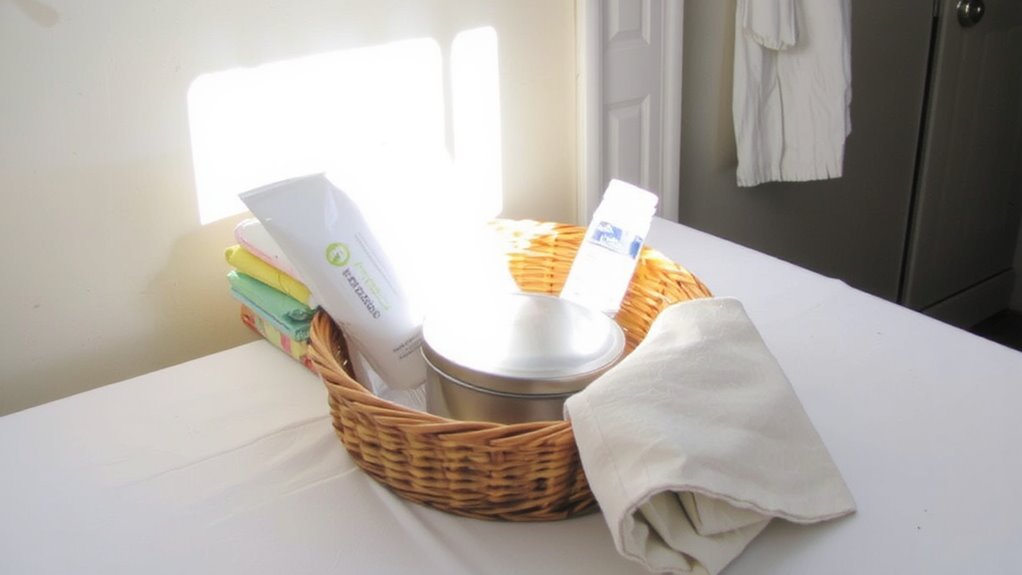
Plan for at least 30 diapers per infant when packing a 72-hour emergency kit-newborns may need changing up to 12 times daily, and access to supplies could be limited. Include an equal number of wipes, about 300, since multiple wipes may be needed per change. Opt for thick, alcohol-free wipes to reduce irritation during prolonged use. For wipe warmth, store them in an insulated container or wrap the pack in a cloth to maintain comfort in cold conditions. Diaper storage matters: use a resealable, waterproof bag or airtight bin to block moisture and odors. Include a small tube of zinc oxide diaper cream to prevent rashes, applying it every few changes. These items must be compact, sealed, and separated from other kit contents to avoid contamination. Realistic testing shows sealed wipes dry out after two hours without insulation, so preserve moisture. You’re prioritizing function, not convenience.
Prepare Bottles and Feeding Gear for Power Outages
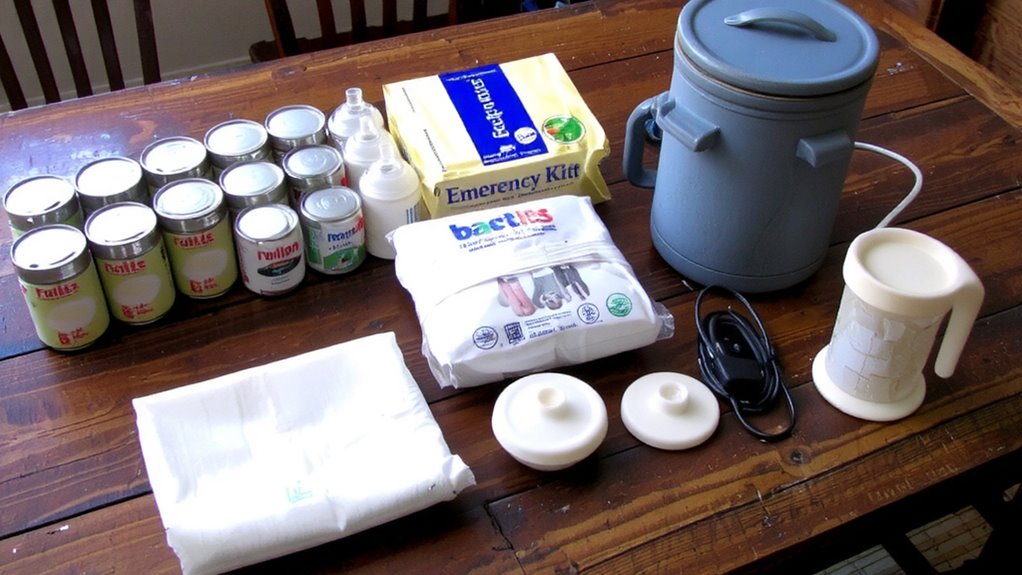
Since you can’t rely on electricity during an outage, having a power-independent way to prep and deliver infant formula is critical-sterilizing bottles and warming milk without a stove or electric warmer means you’ll need a backup heat source like a propane camping stove or a thermos-based warming system. Pre-sterilize multiple bottles and store them sealed; use boiled water cooled to safe temperatures when reheating formula. A vacuum flask holds hot water for hours, letting you warm bottles on demand. Include wide-mouth jars or pre-portioned formula containers that fit your bottle tops. Manual pumps are quiet, require no charging, and work consistently-use them to express breast milk if needed. Test your setup beforehand: boiling time, cooling duration, and flow rate from manual pumps affect feeding efficiency. Sterilizing bottles with a portable UV device works but requires batteries-boiling remains more reliable. Plan for at least 8 feedings per day; pack accordingly.
Include Baby-Specific First Aid and Hygiene Supplies
When assembling a first aid kit for an infant, choose items tailored to their size and sensitivity, because standard adult supplies can be too harsh or improperly sized. Include infant medications like acetaminophen or ibuprofen in correct concentrations, with a dosing syringe for accuracy. Fever management is critical, so pair medications with a reliable digital thermometer designed for babies. Use hypoallergenic adhesive bandages, saline nose drops, and sterile gauze pads that fit small bodies. Add alcohol-free wipes, diaper rash cream, and a soft bulb syringe for nasal suction. These supplies address common issues without irritation. Avoid multi-use products with strong chemicals-they’re less predictable on sensitive skin. A compact, labeled container keeps everything accessible. Test the kit annually: check expiration dates on medications and replace worn items. This approach guarantees functionality without excess, focusing on proven essentials that support rapid, effective care when routines are disrupted.
Add Comfort Items to Calm Your Baby in Emergencies
You’ve covered the medical basics, but calming a distressed baby during an emergency matters just as much. Include a favorite blanket-it provides familiar scent and texture, reducing stress in unfamiliar environments. Test it beforehand; some fabrics retain odors or shed lint, which could irritate sensitive skin. A worn, soft cotton blanket typically performs best. Pack at least two clean pacifiers in sealed bags to maintain hygiene. Pacifiers help regulate breathing and heart rate during moments of crying or discomfort. Choose orthodontic models with ventilation holes to reduce skin contact and irritation. Avoid those with movable parts that could detach. Label each item with your baby’s name to prevent mix-ups in shelters or shared spaces. These additions don’t increase weight markedly-usually under 8 ounces combined-but improve behavioral stability when routines collapse. Comfort isn’t optional here; it’s functional. A calmer baby conserves energy, aids sleep, and eases caregiver burden when resources are tight.
What Makes a Baby Emergency Kit Different
While general emergency kits focus on broad survival needs, a baby-specific kit accounts for dependencies unique to infants-smaller size, limited mobility, and higher vulnerability to temperature shifts and dehydration. You need more than just food and water. Your baby requires frequent diaper changes, so pack a two-week supply. Formula-fed infants need ready-to-feed bottles or powdered formula with precise mixing instructions. Breastfeeding mothers may need nursing supplies. Baby clothing must include at least three sets of weather-appropriate outfits, including hats and socks, to regulate body temperature. Sleep solutions like portable crib liners or compact swaddles provide safe, familiar rest spaces. Unlike adult kits, every item must meet strict safety standards-no loose bedding, small parts, or choking hazards. These kits prioritize function over convenience. You’re preparing for scenarios where basic care isn’t guaranteed, so each component must perform reliably.
Keep Your Infant Emergency Kit Fresh and Accessible
Because infants rely on consistent access to safe, functional supplies during emergencies, you’ll need to rotate and inspect your kit every 90 days-formula loses potency, diapers degrade, and fabric items may develop odors or mildew. Practice regular storage rotation to maintain supply integrity. Use waterproof, labeled containers that support easy kit portability during sudden evacuations. Including a best 2-way radios for emergencies ensures communication readiness when cell networks fail.
| Item | Check Frequency | Notes |
|---|---|---|
| Formula | Every 90 days | Check expiration; store in airtight containers |
| Diapers | Every 90 days | Look for material brittleness or moisture |
| Bottles | Every 60 days | Inspect seals and nipple wear |
| Blankets | Every 90 days | Ensure no mildew or odors; air out if needed |
Replace expired or compromised items immediately. Label all contents with dates. Keep the kit near an exit but out of direct sunlight or damp areas to preserve usability. Kit portability guarantees quick access when time matters.
On a final note
You need a dedicated infant emergency kit because babies rely on consistent feeding, frequent diaper changes, and temperature control. Standard kits don’t account for formula storage, bottle prep without power, or diaper rash risks during prolonged outages. Your kit must include 3+ days of formula, pre-portioned for easy prep, enough diapers and wipes for changing every 2–3 hours, and a compact first aid supply with infant-safe items.