Rainwater Harvesting Laws by State: Permits & Limits Explained
You can collect and store rainwater in most areas, but rules depend on your location. Western states like Colorado restrict harvesting due to water rights, while Texas and parts of California allow it with fewer limits. Permits are often needed for cisterns over 100 gallons. Local zoning may cap storage size, dictate placement, or require screened inlets. What’s allowed on your property varies by state, county, and even municipality. Know the trade-offs between system size and compliance. Rules change, and details matter-checking them could save you fines or forced removal.
Notable Insights
- Rainwater collection legality varies by jurisdiction, with some U.S. states allowing it freely while others restrict or require permits.
- Water rights doctrines like prior appropriation may prohibit rainwater harvesting if it affects senior water rights holders.
- Permit requirements often depend on system size, with small rain barrels exempt and larger cisterns needing approval.
- Local ordinances may limit storage volume, placement, and design to control runoff and maintain aesthetic or safety standards.
- International regulations differ, with countries like Germany mandating filtration and Bermuda requiring rooftop catchment systems.
Where Rainwater Collection Is Illegal or Restricted
Why worry about legality when all you’re doing is catching rain? Because in some places, even that’s restricted. You might face limits under federal regulations, especially if your system affects waterways or endangered species. While the U.S. generally allows rainwater harvesting, certain states impose permit requirements or volume caps. You’re better off checking local mandates before installing tanks or gutters. Internationally, comparisons show stricter rules in arid regions-Germany mandates filtration systems, while Australia ties collection to building codes. Some countries, like Bermuda, require homes to use rooftop catchment as a primary water source. These examples highlight how policy shapes practice. You won’t always find uniformity, even within national borders. What works in one watershed may be banned in another. Ignoring rules risks fines or forced system removal. Compliance isn’t optional-know your area’s stance to avoid costly mistakes.
Why Water Rights Determine Your Harvesting Rights
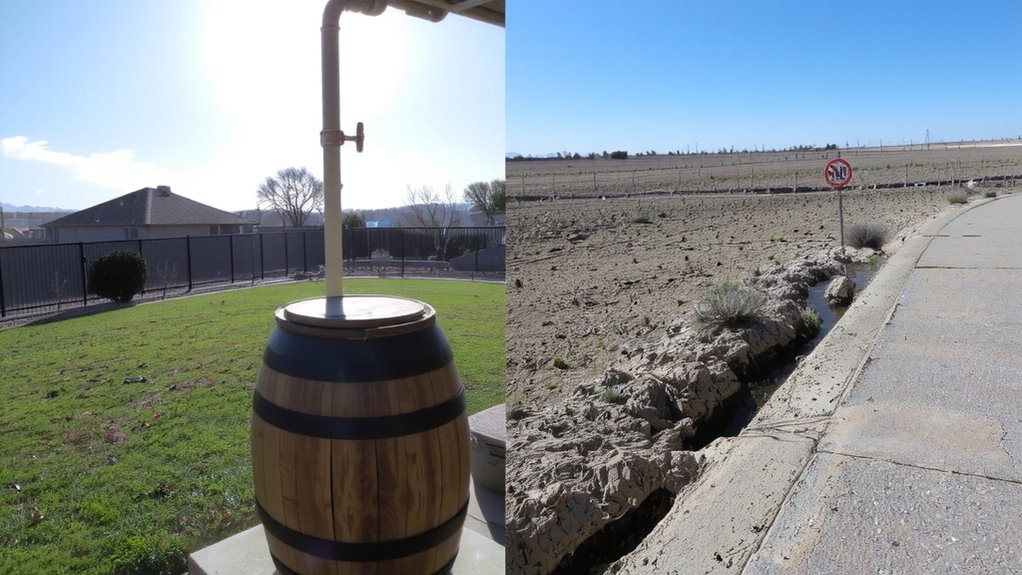
Rain doesn’t belong to you just because it falls on your roof-someone else might already have a legal claim to it. Water ownership isn’t automatic, even when it lands on your property. In many areas, especially in the western U.S., water is governed by prior appropriation, meaning earlier users hold rights over later ones. You might capture rain legally, but if your harvesting interferes with a senior water right, you could face penalties. Your ability to collect rain depends heavily on your legal jurisdiction. Some states treat rainwater as public resource; others grant limited private use. Ignoring these rules risks fines or forced system removal. Always check how your state defines water ownership and allocates usage. What’s allowed in one county may be restricted in another, even within the same state. Knowing your legal jurisdiction prevents costly mistakes and guarantees compliance from the start.
Which Permits Apply to Rain Barrels and Cisterns?
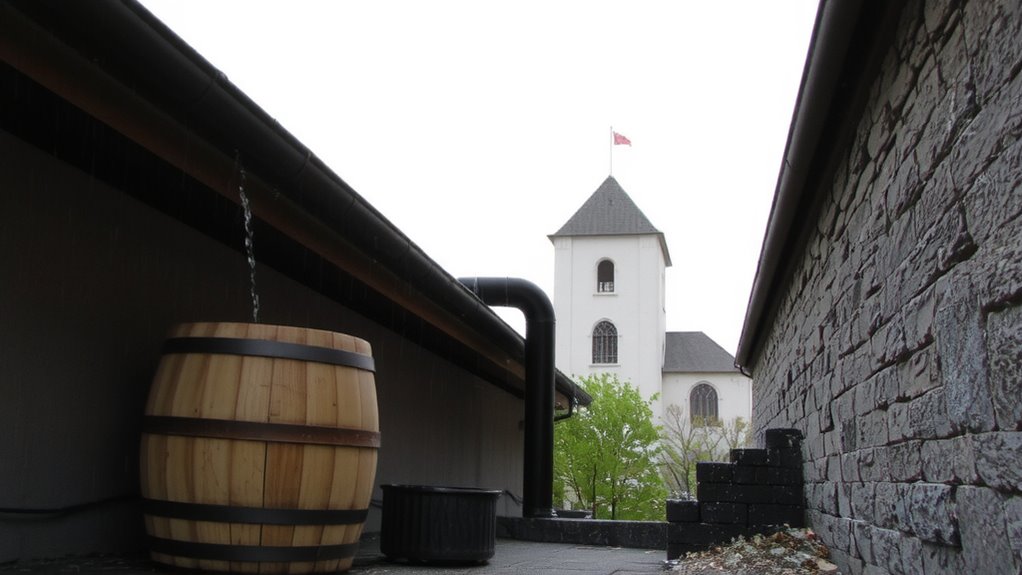
Where do you stand legally if you install a rain barrel or cistern without checking local rules? You risk fines or removal orders. Many areas offer permit exemptions for small-scale systems like single rain barrels, but size and setup matter. Larger cisterns usually require permits, especially if connected to gutters or used for irrigation. Some jurisdictions allow collection only during certain times of year due to seasonal restrictions, particularly in drought-prone regions. You must verify whether your system falls under exempt categories or needs approval. Even with permit exemptions, local codes may limit capacity or placement. Ignoring seasonal restrictions can void compliance. Always check with your municipal or state water office before installing. Assumptions lead to violations. Simple systems aren’t always exempt. Know the thresholds-typically 50 to 100 gallons-and design accordingly.
How Local Laws Limit Home Rainwater Systems
Your rain barrel might meet state guidelines, but local ordinances often set stricter limits that can restrict how much water you collect, where you place the system, and what you use it for. Some cities limit rainwater storage to a few hundred gallons, regardless of your roof’s catchment capacity. Placement matters-systems must stay within your property boundaries and can’t redirect stormwater runoff in ways that affect neighbors. You might need space setbacks from foundations or fences, which reduces placement options. Certain areas prohibit using collected water for irrigation if it creates pooling or runoff beyond your lot. Others ban above-ground tanks entirely for aesthetic or safety reasons. These rules often override broader state allowances. Ignoring them risks fines or removal orders. Local zoning or housing codes may also require screened inlets or secure lids. Check your municipal code early to avoid wasted effort.
How to Check If You Can Legally Collect Rainwater?
Wondering whether you’re allowed to set up a rainwater collection system? Start by checking your state and local regulations-rules vary widely. Rainwater ownership often depends on water rights laws; some states treat it as public property, restricting collection without permits. Others offer legal exemptions for limited residential use, like rooftop harvesting for irrigation. Contact your local environmental or health department to confirm what’s allowed.
| Jurisdiction | Permits Required | Legal Exemptions |
|---|---|---|
| Texas | No | Up to 5,000-gallon storage |
| Colorado | Yes (capped) | 1-2 barrels allowed without permit |
| California | No | Compliance with AB 2523 suffices |
Verify specifics-some areas regulate based on roof size or end use. Don’t assume; unapproved systems risk fines.
7 Steps to Install a Rainwater Harvesting System
How do you set up a rainwater harvesting system that works without running afoul of practical or legal limits? Start by reviewing local regulations to guarantee compliance. Choose a system design that matches your roof size, rainfall average, and water needs-undersized tanks waste water, while oversized ones raise installation costs unnecessarily. Use durable, food-grade storage tanks and install first-flush diverters to improve water quality. Position gutters and downspouts for efficient flow, avoiding debris with mesh filters. Connect overflow lines to drainage or dry wells to prevent pooling. Installation costs vary widely-basic barrel systems run a few hundred dollars, while whole-house setups with pumps and purification can exceed several thousand. Permits may be required, affecting both timeline and budget. Test the system during rainy periods to verify collection efficiency and identify leaks. Regular maintenance keeps performance consistent over time.
On a final note
You can collect rainwater in most places, but laws vary by state and municipality. Check local regulations first-some areas restrict barrel size or require permits. Water rights in western states often limit harvesting. Systems work best where rainfall is consistent and rules are lenient. Even where legal, codes may require overflow controls or first-flush diverters. Know the rules, follow them, and size your system to match supply and demand.