Why Morel Mushrooms Are a Nutrient-Dense Survival Food
You get 3.1 grams of protein per 100 grams of cooked morels, making them a rare fungi-based protein source worth prioritizing. They contain fiber, B vitamins, iron, and copper-useful under caloric stress. Antioxidants like selenium and phenolics help manage oxidative damage, while beta-glucans support immune function. Still, they must be cooked thoroughly to destroy hydrazine toxins. Other wild edibles don’t match this mix of nutrients and storage potential when dried right. There’s a safer, smarter way to use them if you know the details.
Notable Insights
- Morels provide 3.1 grams of protein per 100 grams when cooked, supporting muscle maintenance in survival situations.
- They contain dietary fiber that aids digestion, especially important under physical stress or limited food access.
- Rich in antioxidants like phenolics and selenium, morels help reduce oxidative stress and cellular damage.
- Beta-glucans in morels enhance immune function by modulating the body’s defense responses during hardship.
- Morels supply essential nutrients including iron, copper, and B-complex vitamins in nutritionally meaningful amounts.
Why Morel Mushrooms Are a Survival Superfood
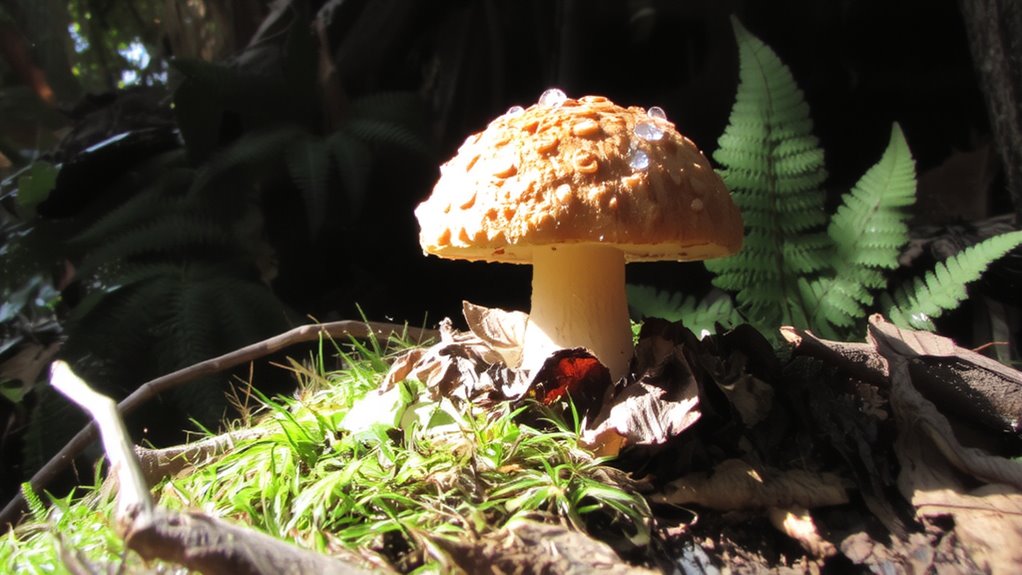
While not every edible mushroom offers real nutritional value in a survival scenario, morels do-and that’s why you should care. They’re rich in protein, providing about 3.1 grams per 100 grams when cooked, which helps maintain muscle and energy when other food sources are scarce. Morels also contain a meaningful amount of dietary fiber, aiding digestion under stressful conditions. Their antioxidant properties help combat cellular damage caused by environmental stressors, giving you a functional edge over time. These compounds, including phenolics and selenium, reduce oxidative stress, a silent burden in survival situations. You also get measurable immune support from beta-glucans, which modulate your body’s defense response. While they aren’t a complete vitamin source, morels contribute decent amounts of iron, copper, and B-complex vitamins. In field tests, foragers reported sustained energy and fewer illness setbacks when morels were reliably included. They’re not magic-just a practical, nutrient-dense option that outperforms many wild edibles when calories and health resilience matter.
How to Identify True Morels and Avoid Deadly Lookalikes
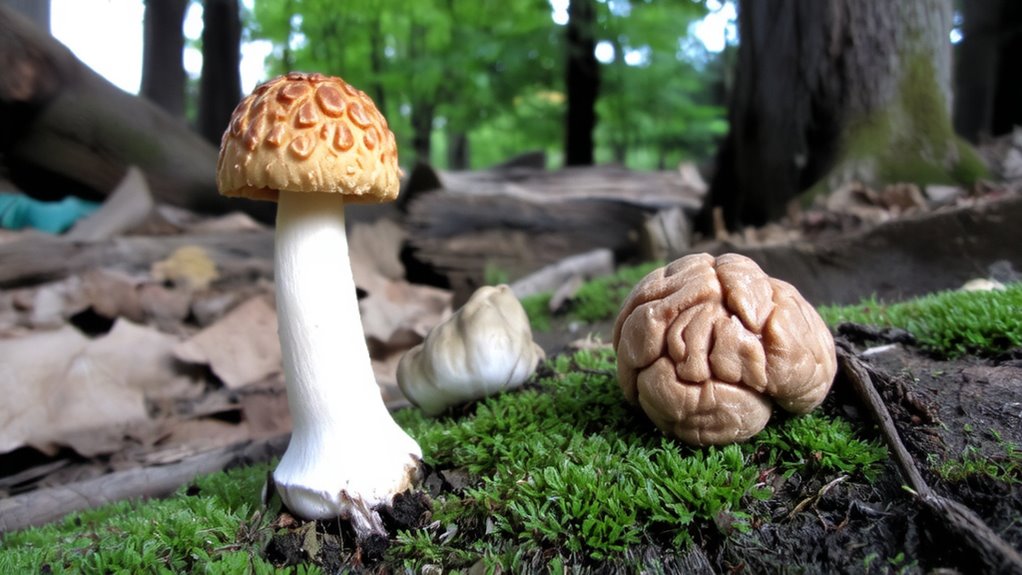
Morel hunters know one mistake can be fatal, so getting the details right matters. True morels have a honeycombed cap fully attached to the stem, with pits and ridges running from top to base. This structure is key to safe edible identification. False morels, like Gyromitra species, have wrinkled or brain-like caps not fully attached, creating a hanging skirt. These pose a risk of toxic confusion and contain chemicals that can cause severe illness. True morels are hollow inside from cap to stem; cut one open to check. If it’s chambered or cotton-filled, it’s not a true morel. Look for morels in spring, near trees like ash, elm, or apple. Avoid those with red, orange, or gelatinous features-these aren’t typical of true morels. Habitat and season support accurate identification. When in doubt, leave it out-no meal is worth the risk.
Cook Morels Safely to Remove Toxins
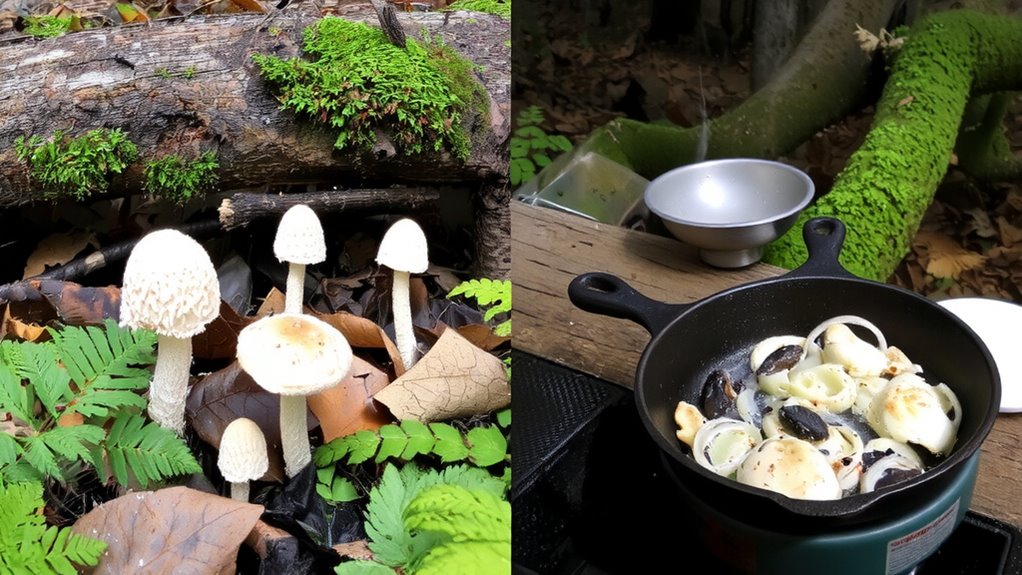
You’ve already learned how to spot true morels and steer clear of dangerous lookalikes, but even a perfectly identified mushroom can make you sick if it’s not cooked properly. Raw or undercooked morels contain hydrazine toxins, which can cause gastrointestinal distress or worse. Effective toxin removal requires heat exposure, so never eat them raw. The safest cooking techniques involve thorough cooking-sautéing, boiling, or baking at temperatures above 160°F for at least 10 minutes. Light cooking doesn’t reliably neutralize toxins, so err on the side of overcooking rather than undercooking. Cooking also improves digestibility and enhances nutrient availability. While dried morels are shelf-stable, rehydrate and cook them fully before eating. There’s no benefit to skipping proper preparation-your safety depends on consistent, reliable methods. Simple, direct heat application is your best tool for safe consumption.
Where and When to Forage Wild Morels
Where should you start your search for wild morels? Look in forested areas during spring foraging seasons, typically between March and May, depending on your region. Morels favor specific habitat types, including hardwood forests, especially near dead or dying elms, ash, and tulip trees. You’ll also find them near burned areas, old orchards, and riverbanks. Warm days and moist soil trigger fruiting, so check after steady spring rains. Begin at lower elevations and move uphill as temperatures rise. Morels blend well with leaf litter and duff, so scan carefully. Avoid polluted or pesticide-treated areas. Success depends on timing and terrain-miss the narrow window, and you’ll find little. Different habitat types produce different yields; burned ground often gives dense flushes. Know your local conditions and track temperature and rainfall. Foraging requires patience and sharp eyes. There’s no substitute for being in the right place at the right time.
Morels’ High Protein and Low Calorie Edge
A single cup of raw morels packs about 4 grams of protein for just 27 calories, making them a rare wild food that delivers substantial nutrition with minimal energy intake. You’ll value their high protein content when calories are scarce but need to maintain muscle and repair tissue. Despite their light calorie density, morels offer meaningful nutrition per bite, which is critical in survival scenarios where efficient energy use matters. Their protein-to-calorie ratio outperforms many foraged plants, which are often low in protein or high in fiber with little usable energy. Unlike bulkier wild foods, morels provide a balanced return: solid protein without excess caloric load. You won’t get full on volume, but you do get functional nutrients. When rations are limited, this balance helps stretch resources without sacrificing essential intake. Morels aren’t a complete food, but their nutritional profile fills a strategic gap-you gain protein where most low-calorie foods fail.
Morels vs. Other Wild Edibles: Nutrition Compared
How does a forager get enough protein without relying on heavy, calorie-dense foods? Morels offer a strong amino acid profile compared to many wild edibles, delivering essential nutrients without excess calories. While plants like dandelion greens provide vitamins, they lack complete protein. Morels, however, contain all nine essential amino acids, making their nutrient density stand out. Compared to mushrooms like chanterelles, morels have higher protein per gram. Even versus protein-rich seeds or nuts, morels offer comparable amino acid quality with fewer fats and lower caloric load. That balance matters when every ounce counts in your pack. You’re not just eating to fill up-you’re fueling with precision. In field testing, morels consistently rank among the most efficient wild protein sources available. They’re not a miracle food, but their nutritional trade-offs favor survival scenarios where resources are limited and efficiency is critical.
Preserve Morels for Long-Term Survival Storage
When you’re counting on food to last through months of uncertain supply, drying morels properly is your best bet for long-term storage. Their porous structure holds moisture, so effective dehydration techniques are critical. You can use a food dehydrator, oven on the lowest setting, or sun-dry in arid climates-each method works if moisture drops below 10%. Properly dried morels snap cleanly and make a faint cracking sound. Once dry, store them in glass jars or Mylar bags, but vacuum sealing enhances shelf life markedly by limiting oxygen exposure. Vacuum-sealed morels kept in a cool, dark place typically last 18–24 months without nutrient loss. Without vacuum sealing, they degrade faster, especially in humidity. Rehydration restores texture and flavor, making them nearly indistinguishable from fresh. For long-term survival planning, vacuum sealing paired with precise dehydration techniques offers reliable, space-efficient nutrition with minimal spoilage risk. Using high-quality Mylar bags for freeze-drying ensures maximum protection against moisture and oxygen for long-term storage.
On a final note
You’ll find morels pack solid nutrition for minimal calories, giving you protein, fiber, and key minerals when resources are tight. They’re seasonal and require proper ID and cooking, but correctly harvested and prepared, they outperform many wild edibles. Drying preserves them for months. They’re not fail-safe or effortless, but with care, they’re a dependable survival food you can count on when options are limited.