Creating a Water Reserve That Supports Long-Term Survival Garden Irrigation
You’ll need about 1 inch of water per week for most vegetables, so start by calculating your garden’s weekly demand. Set up gutters with mesh screens to channel rainwater into storage via downspouts, using first-flush diverters to keep contaminants out. Choose UV-resistant polyethylene or fiberglass tanks-they’re durable and reduce algae growth. Place them on stable, elevated platforms for gravity-fed irrigation. Use a 5-micron filter and sanitize yearly with bleach. Timers cut water use by 20–50%, especially with soil sensors. Smart controllers adjust flow based on actual need, cutting waste. Oversized tanks help buffer dry spells. With the right setup, you’ll maintain supply even when the grid fails. More details follow.
Notable Insights
- Size your water storage to meet garden needs, assuming 1 inch of water per week for vegetables.
- Use durable, UV-resistant tanks like polyethylene or fiberglass placed on level, elevated foundations.
- Harvest rainwater efficiently with clean gutters, downspout extenders, and first-flush diverters.
- Prevent contamination by sanitizing tanks annually and using opaque, shaded, or insulated containers.
- Automate irrigation with timers or smart controllers to conserve water and ensure consistent delivery.
Calculate Your Garden’s Water Needs
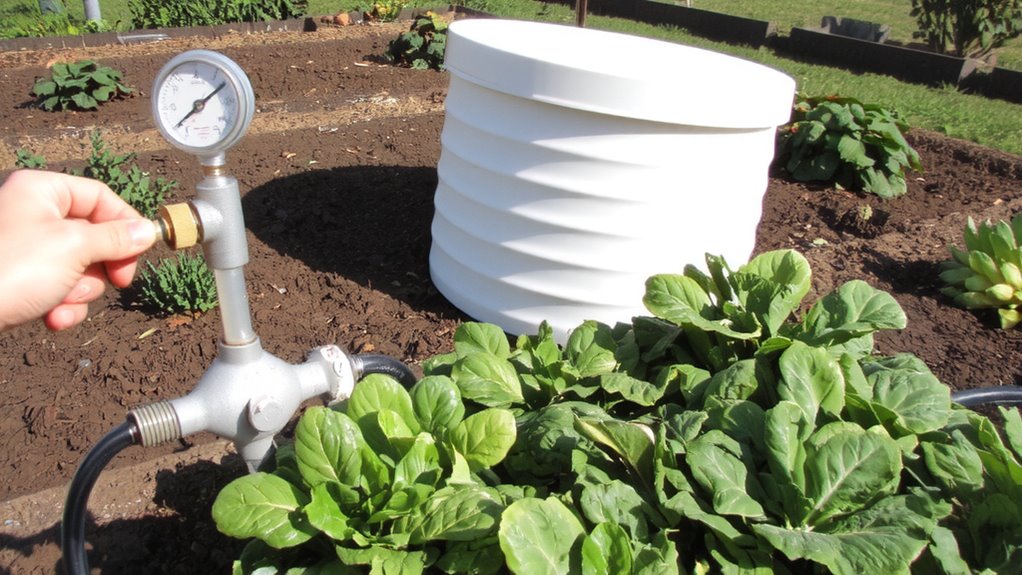
How much water does your garden actually need? It depends on evaporation rates, plant type, and soil moisture levels. Most vegetables require about 1 inch of water per week, but in hot climates, evaporation rates increase, demanding more frequent irrigation. Sandy soils drain quickly, reducing soil moisture retention, while clay holds water longer but risks runoff. You’ll need to adjust based on real conditions, not just averages. Overwatering wastes reserves and harms roots; underwatering stresses plants and reduces yield. Use a moisture meter or check soil 6 inches down-if it’s dry, it’s time to water. Consider microclimates in your yard, as sun exposure and wind affect needs. Tracking these variables helps optimize use of your stored water. Accurate calculation prevents shortages during droughts and guarantees your survival garden remains productive without dependency on unpredictable sources. Plan precisely-your resilience depends on it.
Build a Rainwater Harvesting System
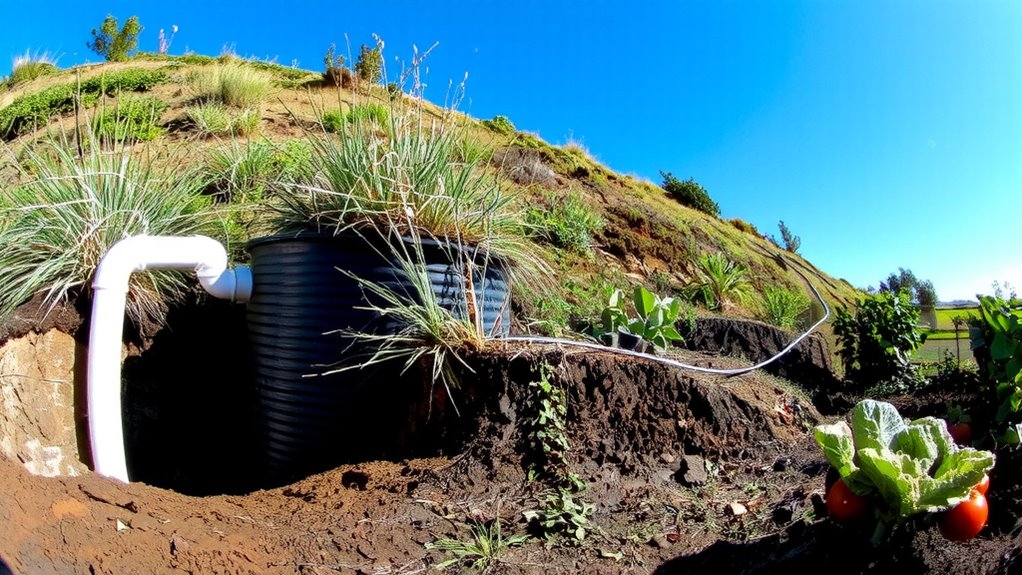
Why rely on unpredictable water sources when you can capture what falls from the sky? You can start your rainwater harvesting system by ensuring proper gutter installation. Gutters must be securely fastened and aligned to channel water efficiently from the roof to downspouts. They should be free of debris, so consider simple mesh screens to reduce clogs without overcomplicating maintenance. Direct the downspouts toward your storage setup, using downspout extenders if needed. Overflow management is critical-you need a way to safely divert excess water when your system reaches capacity. Without it, water can pool near foundations or erode soil. Install an overflow pipe near the top of your catchment point and route it away from structures. This setup requires minimal upkeep and delivers reliable water volume during dry spells-especially when paired with calculated garden needs. A reliable system begins with choosing the right survival tools for durability and efficiency.
Choose the Right Water Storage Tanks
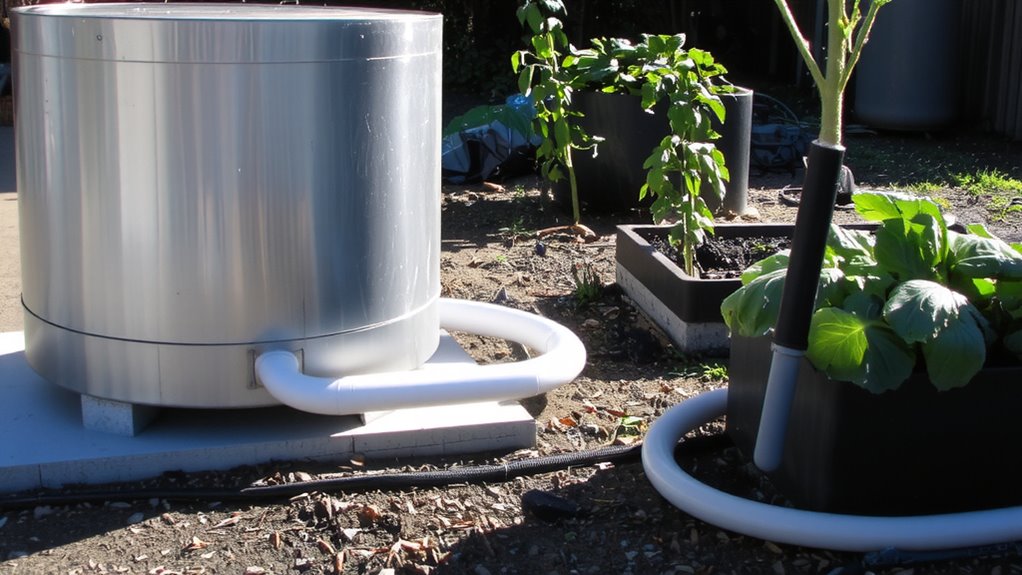
A good water storage tank balances capacity, durability, and space. You’ll want to contemplate tank materials carefully-polyethylene is common and UV-resistant, but rigid and prone to cracking in extreme cold. Fiberglass offers better insulation and doesn’t degrade in sunlight, though it’s costlier. Concrete tanks last decades and resist pests, but installation location limits their use due to weight. Place tanks on stable, level ground near your garden to reduce pumping needs. Elevated installation improves gravity-fed irrigation, but requires strong support. Avoid direct sunlight to minimize algae risk, even if that’s covered later. Compact spaces may require vertical tanks; wide areas suit cisterns. Match tank size to your rainfall and garden demand-too small wastes water, too large wastes space. Each material and placement choice affects longevity and function. Pick based on climate, layout, and long-term reliability, not price alone. For home use, consider best water storage tanks that combine durability with optimal capacity.
Keep Stored Water Clean and Safe
Clean water starts with proper tank maintenance and smart design choices. You must prioritize container sanitation to prevent algae, bacteria, and debris buildup. Rinse tanks annually with a diluted bleach solution-1 cup of unscented bleach per 5 gallons of water-and rinse thoroughly. Store containers in shaded areas to limit sunlight penetration, which reduces microbial growth. Use opaque, UV-resistant tanks to further inhibit contamination. Install a first-flush diverter in your rainwater collection system to exclude roof debris and pollutants. Pair it with basic water filtration, such as a 5-micron sediment filter, to remove particulates before storage. While finer filters like carbon or reverse osmosis improve quality, they’re often unnecessary for irrigation. Mesh pre-filters on inlets prevent clogs and prolong filter life. You won’t need sterile water for plants, but consistent container sanitation and minimal water filtration guarantee reliability and reduce system failures over time. Choose from the best water containers based on material, capacity, and intended use to ensure long-term durability and water quality.
Automate Irrigation From Your Reserve
You’ve kept your stored water clean with proper tanks, filters, and maintenance, so now it’s time to put that water to work without wasting a drop. Automating your irrigation guarantees consistent delivery and reduces human error. Timer controls let you schedule watering during cooler hours, minimizing evaporation. Sensor integration adjusts flow based on soil moisture, preventing overuse. Together, they balance efficiency with reliability.
| System Type | Power Source | Water Savings |
|---|---|---|
| Basic Timer | Battery | ~20% |
| Digital Timer | AC/Battery | ~30% |
| Smart Controller | Wi-Fi/Solar | ~40% |
| Sensor-Driven | Solar/Battery | ~50% |
Smart setups with sensor integration adapt to real conditions, but basic timer controls still offer solid gains with less complexity. Choose based on garden size and reliability needs. Both cut waste and support long-term resilience.
Secure Water Now to Survive Droughts Later
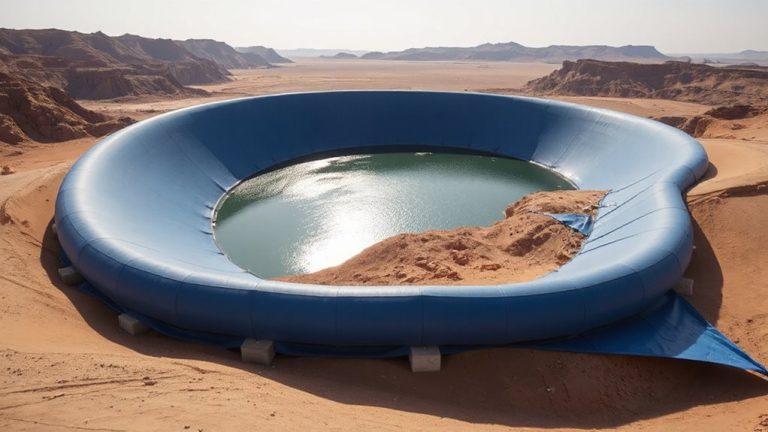
When drought hits, having water already secured makes the difference between a thriving garden and a failed harvest. You can’t rely on rainfall alone-climate patterns are shifting, and dry spells last longer. That’s where water banking comes in. Store water now in tanks, cisterns, or lined pits while sources are reliable. A 1,000-gallon storage system costs under $1,000 and lasts decades with basic maintenance. Cover it to reduce evaporation and prevent contamination. This stored supply acts as drought insurance, ensuring your plants get what they need even when taps run dry. Without it, irrigation systems fail, crops wither, and food security drops. You don’t need fancy tech-just space, containers, and a plan. Water banking isn’t speculation; it’s preparation. Treat it like emergency food storage: essential, measurable, and non-negotiable. Secure water now-you’ll need it later.
On a final note
You’ll need a reliable water reserve to keep your survival garden productive during droughts. Calculate daily needs, then install a rainwater system with durable storage tanks. Use first-flush diverters and fine mesh filters to keep water clean. Connect a gravity-fed or pump-driven drip line for efficient irrigation. This setup works consistently when tested, though tank capacity limits output during dry spells. Balance cost and volume to match your garden’s demands.