How to Harvest and Dry Thistle Down for Ultra-Light Fire-Starting Fluff
Snip ripe thistle heads in late summer when they’re brown, firm, and slightly open, revealing white pappus. Harvest midday in dry, sunny areas to guarantee low moisture. Use scissors to cut only the heads, leaving roots intact for regrowth. Dry the fluff below 95°F on a mesh screen with gentle airflow-avoid sun or ovens. Once crisp and spark-responsive, store in airtight containers. Properly dried thistle ignites fast and burns hot, outperforming cotton in flame speed; ideal for minimal-weight fire kits. More details follow on using it in harsh weather.
Notable Insights
- Harvest thistle seed heads in late summer when firm, upright, and showing white pappus with a faded grayish tint.
- Snip only mature seed heads with scissors, leaving roots intact to ensure sustainable regrowth.
- Collect midday in sunny, dry areas to maximize dryness and minimize moisture in the down.
- Dry thistle down below 95°F using passive airflow on a mesh screen, avoiding direct sun or ovens.
- Store fully dried down in airtight, fireproof containers in a cool, dark place for long-term flammability.
How to Identify Ripe Thistle Seed Heads
A ripe thistle seed head is firm to the touch and has a slightly faded, grayish tint compared to the bright green of immature heads. You’ll notice the top begins to open, revealing wisps of white pappus-the down you need. These visual cues are critical for accurate botanical identification. Waiting too long risks the seeds dispersing; too early, and the down lacks fluff and burns poorly. Look for heads standing upright with tight, spiky bracts that no longer feel sticky. The color shift and structural firmness are reliable indicators. You’re not guessing-you’re reading nature’s signals. Proper timing guarantees maximum fiber volume and fire-starting efficiency. Miss it, and you’ll waste effort on subpar material. These cues aren’t subtle. Once you’ve seen a few, you’ll spot them instantly. Trust what you see, not what you assume.
When and Where to Find Thistle for Tinder
Why do some patches of thistle burn better than others? Because timing and location matter. The best seasons to find usable thistle down are late summer to early fall, when seed heads fully ripen and fluff dries completely. If you go too early, the down stays damp and won’t catch flame well. Ideal habitats include sunny, disturbed areas-roadsides, field edges, and dry meadows-where thistles grow dense and mature evenly. Look for plants standing tall with brown, fuzzy tops; those spots yield the driest, most combustible material. Avoid shaded or damp zones-down there absorbs moisture and tangles easily. You’ll get better fluff with higher loft and faster ignition from plants in open, well-drained soil. Choose midday collection when dew burns off. This guarantees the lightest, driest tinder. Target healthy stands; skip stunted or moldy patches. A fire piston can dramatically improve ignition success when paired with high-quality thistle down, making it a reliable tool in damp conditions where fire pistons for survival excel.
How to Harvest Thistle Down Without Harming the Plant
Your best bet for harvesting thistle down without damaging the plant is to snip only the seed heads, leaving the stem and root intact. This supports sustainable harvesting by allowing the plant to regrow or reseed naturally. Use sharp scissors or pruning shears for clean cuts, reducing plant stress. Avoid pulling or uprooting, which disrupts soil and kills perennial thistles. Practice protective handling by wearing gloves to shield your hands from spines and prevent contamination of the down with oils or dirt. Harvest in dry conditions when the down is fully mature and fluffy, guaranteeing maximum loft and performance as tinder. Only take what you need-overharvesting, even with care, weakens plant populations. Target abundant patches, not isolated plants, to minimize ecological impact. This method maintains plant health and guarantees future access to reliable, high-quality fire-starting material.
How to Dry Thistle Down for Maximum Flammability
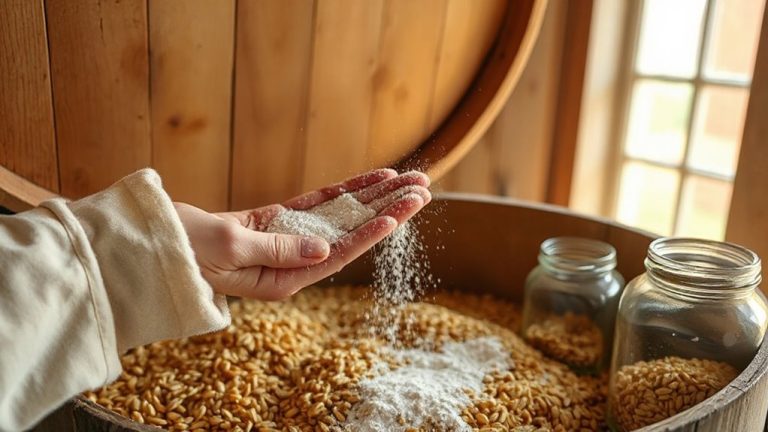
Since moisture reduces ignition efficiency, you’ll need to dry thistle down thoroughly to guarantee it catches fire quickly and burns with consistent intensity. Use a drying temperature below 95°F (35°C) to preserve the down’s delicate structure-higher heat can degrade fibers and reduce flammability. Spread the down in a thin, loose layer on a fine mesh screen to maximize exposure. Apply a passive airflow method, like a fan set on low several feet away, to circulate air without scattering the lightweight fibers. Avoid direct sunlight or enclosed ovens, as both can create uneven drying or excess humidity. Drying typically takes 6–12 hours, depending on ambient humidity. Check readiness by touch: properly dried down feels dry, fluffy, and doesn’t clump. When it separates easily and ignites instantly with a spark, it’s ready. This low-heat, steady airflow method guarantees peak combustion performance without structural damage.
How to Store Thistle Down Long Term
After drying, store thistle down in an airtight container made of glass or heavy-duty plastic to block moisture and pests. This is the most effective storage method for maintaining fluff structure and fire-starting performance. Moisture prevention is critical-exposure to humidity degrades the down quickly, reducing its ability to catch and hold flame. Keep containers in a cool, dark place, like a drawer or gear box, away from temperature swings. Avoid cloth or paper bags, as they don’t provide proper moisture prevention and allow insect access. Vacuum-sealed bags work short term but may compress the down too much, affecting loft. For long-term viability, rigid containers with rubber gaskets outperform flexible options. Proper storage methods extend usability up to two years without noticeable decline in ignitability. Check seals periodically to maintain integrity. With consistent conditions and secure containment, your thistle down stays ready when you need it most.
How to Use Thistle Down in Wet or Windy Conditions
Even when stored properly, thistle down’s real test comes in the field-especially when conditions turn wet or windy. If the down gets damp, it won’t catch easily, so keep it in fireproof containers with tight seals to maintain dryness. A small metal tin works well and adds little weight. When lighting it, use wind shielding-your body, a rock, or a fire reflector-to protect the initial flame. Don’t rely on sparks alone; pair the thistle down with a dependable ignition source like a ferro rod. It catches fast but burns quickly, so have your tinder bundle ready. In high wind, enclose the down partially to control airflow. It’s not waterproof, and exposure reduces effectiveness. Success depends on preparation and technique, not the material alone. Use it as part of a system, not a standalone solution. For even better results, combine it with other DIY fire starters known for reliability in harsh conditions.
On a final note
You can harvest thistle down quickly once you learn the timing-late summer, when heads are white and fluffy. It catches sparks reliably, even damp. Drying it fully prevents mold and improves ignite speed. Store it in a breathable cloth bag to avoid moisture buildup. In wind, pair it with larger tinder to shield the flame. It’s lightweight and free, but less durable than commercial options. Use it when gear fails.