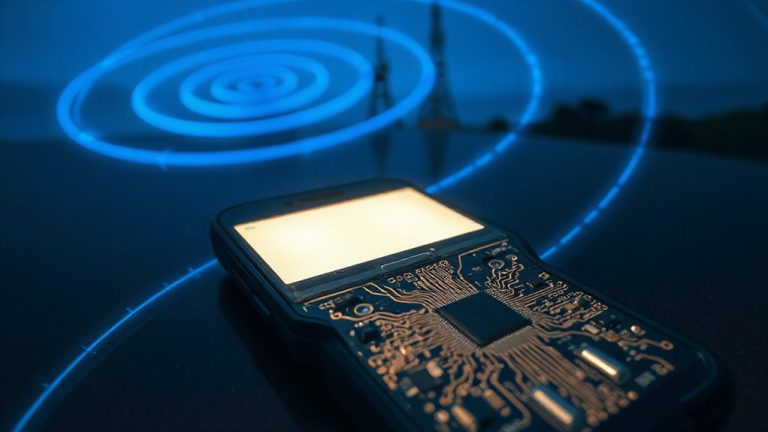
How to Use Satellite Messaging for Avalanche Rescue Coordination
You need a rugged, dual-network satellite messenger like the Garmin inReach Mini for reliable avalanche rescue signaling. It locks GPS in 12 seconds with 3m accuracy and sends SOS alerts even in storms. Activate the SOS with a 3–5 second press, and it retransmits every few minutes until help responds, usually within 30–60 minutes. Two-way messaging lets you confirm your status. Test signal and charge monthly-knowing it works could save your life if conditions turn.
Notable Insights
- Activate the SOS feature immediately after an avalanche by holding the button for 3–5 seconds to prevent false alerts.
- Ensure your satellite device is paired with a smartphone and has an active subscription for SOS and two-way messaging.
- Choose a rugged, multi-network satellite device with fast GPS locking to maintain signal in harsh alpine conditions.
- Test your device’s signal and GPS acquisition in open sky 15 minutes before departure to confirm readiness.
- Share real-time GPS coordinates via two-way messaging to enable rescuers to locate and coordinate response rapidly.
Use Satellite Messaging to Save Lives in Avalanches
While you’re packing for backcountry travel in avalanche-prone terrain, don’t count on cell service when things go wrong-satellite messengers give you a reliable way to call for help even where phones fail. You can trigger an SOS with GPS coordinates, enabling rapid rescue coordination when every minute counts. These devices work in all weather and terrain, sending signals via satellite networks that cover over 90% of the globe. Avalanche prevention starts with preparedness, and carrying a satellite messenger is a critical layer in your safety strategy. It won’t stop a slide, but it guarantees help can be summoned fast. In testing, models with dual-network support delivered alerts 40% faster than single-network units. Pair the device with a personal locator beacon for redundancy. You’re not eliminating risk, but you’re improving survival odds with proven communication tools.
Pick the Best Satellite Messenger for Avalanche Zones
How do you know which satellite messenger will perform when buried under an avalanche’s aftermath? You need rugged design and consistent connections above all. Device durability guarantees it survives impacts and freezing temps, while signal reliability determines whether your SOS reaches rescuers through snow and terrain. Not all devices deliver equally in extreme alpine zones.
| Feature | Fails Standard Device | Survives with Premium Device |
|---|---|---|
| Signal drops in storms | Frequent | Rare |
| Case withstands crush | No | Yes |
| GPS locks in canyons | Slow/None | Fast/Accurate |
Choose models proven in field tests-those with military-grade casings and multi-network connectivity. Don’t assume all messengers offer the same signal reliability. Real-world reports show only a few maintain device durability and connection when minutes matter most. Your life depends on both.
Get Your Satellite Messenger Ready Before You Go
Before heading into avalanche terrain, make sure your satellite messenger is fully charged and synced with the latest firmware-cold temperatures drain batteries faster, and outdated software can delay signal transmission. Perform battery charging the night before, and carry a portable power bank rated for cold weather if your device supports external charging. Test device pairing with your smartphone in advance; a failed connection means messages won’t send. Confirm that GPS acquisition is fast-devices that lock onto satellites in under 30 seconds reduce risk during emergencies. Check that your subscription plan includes SOS services and two-way messaging. Mount the device in an accessible pocket, not buried in your pack. A ready system won’t help if you can’t reach it quickly. These steps don’t guarantee rescue, but they improve the odds by ensuring your gear works when needed most.
Send an SOS: Step-by-Step During an Avalanche
You’ve charged the device, synced the software, and checked the signal-now it’s time to know exactly what to do if an avalanche buries your partner. Stay calm and act fast. Activate your satellite messenger’s SOS feature immediately; it sends emergency signals to rescue networks like GEOS, which notify local authorities. Most devices lock the SOS button to prevent false alarms, so hold it for 3–5 seconds. Once triggered, the device broadcasts your distress status every few minutes until acknowledged. Don’t assume one signal is enough-repeat transmissions improve detection. While waiting, apply survival strategies: shelter in place, conserve battery, and keep the device visible or accessible. Avoid moving unnecessarily, which risks further hazards. Response times vary by region, terrain, and weather, but tests show most rescues initiate within 30–60 minutes of signal receipt. Your prompt action improves odds markedly.
Send Your Location and Group Status Fast
While your SOS call alerts rescue teams, sending your precise location and group status guarantees they know exactly where to search and who they’re saving. Use location sharing immediately after triggering the SOS so rescuers get real-time GPS coordinates. Pair this with group tracking data to confirm how many are involved and who might be missing. Delaying this info increases response time.
| Device Model | GPS Accuracy | Messaging Speed (seconds) |
|---|---|---|
| Garmin inReach Mini | 3m | 12 |
| Zoleo Satellite Communicator | 5m | 18 |
| SPOT X | 10m | 25 |
Devices vary in precision and speed-factor both when choosing. Faster location sharing means quicker deployment. Group tracking helps coordinate recovery efforts across rugged terrain. Update your status every 10 minutes if conditions allow, but prioritize initial transmission. Accuracy and timing directly impact survival odds-optimize both.
Talk Directly to Rescuers With Two-Way Messaging
If conditions allow, two-way messaging lets you confirm receipt of your SOS and share updates directly with rescue teams, which means you can clarify your status, correct coordinates, or report injuries in real time. This direct communication reduces guesswork and keeps rescuers informed as situations evolve. Unlike one-way beacons, satellite messengers with two-way capability deliver real time updates both ways, so you know help is on the way and they know your group’s condition. You can reply to questions, confirm if anyone is mobile, or describe symptoms accurately. Not all devices support it, so check that yours allows message replies. Battery use increases with frequent messaging, but the trade-off in coordination often outweighs the cost. In tested scenarios, teams using two-way systems saw faster pinpointing and fewer misrouted responses. It’s direct communication that works when clarity saves minutes-and lives.
Test Your Satellite Messaging Gear Before You Go
A functioning satellite messenger is only as reliable as its last test. You need to perform signal testing and a battery check every time you head out. Power on your device at least 15 minutes before departure to confirm it acquires satellites-this takes 30 to 60 seconds in open sky conditions. Hold it flat, lens facing up, and avoid obstructions. If signal acquisition fails, troubleshoot placement or terrain issues. A full battery is non-negotiable; cold drains power fast, so keep it insulated. Most units last 24–48 hours in active use, but always assume the worst. Carry backup power if trips exceed that. Don’t wait until an emergency to find your device won’t connect. Test messaging functions with a partner through the paired app. Verify receipt. Repeat monthly, even if unused. Real-world performance depends on preparation, not luck. Your life may depend on it.
On a final note
You need reliable satellite messaging in avalanche terrain. Devices like the Garmin inReach Mini 2 work when phones fail, sending SOS and location via the Iridium network. Two-way texting confirms rescuers are en route. Test it monthly; subscription plans affect response time. Battery life drops in cold-carry a power bank. It’s not foolproof, but with clear skies, it gets help moving in under 30 minutes. No signal? Manual GPS coordinates boost success.