Safe Techniques for Dehydrating Wild Ramps Without Aroma Loss
Pick fresh ramps just before peak leaf unfurl and slice them 1/8 inch thick for even drying. Dry them at 95–115°F for 8–12 hours; higher heat destroys volatile oils, costing you up to 30% aroma loss. Use a calibrated dehydrator and avoid air exposure by storing in vacuum-sealed, amber glass jars. Rehydrate in cool water or steam gently-boiling kills flavor. You’ll get better results when you know how enzyme activity and oxidation affect each step.
Notable Insights
- Harvest ramps at peak freshness, just before leaves fully unfurl, and process within 12 hours to preserve essential oils.
- Slice ramps uniformly to 1/8 inch thick using a sharp knife or mandoline for consistent drying and optimal airflow.
- Dry ramps at 95°F to 115°F using a calibrated dehydrator to retain volatile flavor compounds without cooking the tissue.
- Minimize oxidation by drying slices promptly after cutting and avoid air exposure before dehydration begins.
- Store dried ramps in airtight, light-blocking glass jars with vacuum sealing to preserve aroma and extend shelf life.
Why Ramps Lose Flavor When Dried
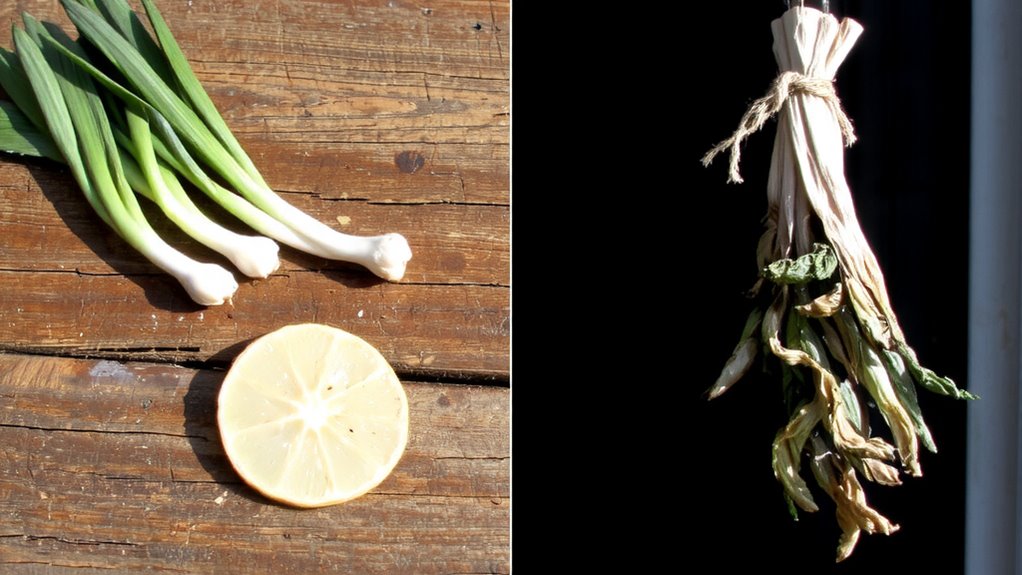
Moisture loss isn’t the only change drying brings-volatile compounds responsible for ramps’ distinct garlicky-pungent aroma break down under heat and prolonged air exposure. You’re not just losing water; you’re fighting enzyme degradation that starts as soon as the cells are damaged during slicing. These enzymes break down flavor precursors quickly, especially above 95°F. Oxidation effects further dull the aroma when slices are exposed to air too long before dehydration. Even a well-calibrated dehydrator at 115°F can’t stop this entirely-heat speeds both enzyme activity and oxidation until moisture drops below 10%. That’s why rapid drying matters, but so does prep. Blanching briefly can halt enzyme action, preserving more flavor, though it adds time. You’ll trade some convenience for better aroma retention. The result isn’t fresh, but it’s usable-expect about 30% flavor loss even under ideal drying.
Pick Ramps at Their Freshest and Most Aromatic
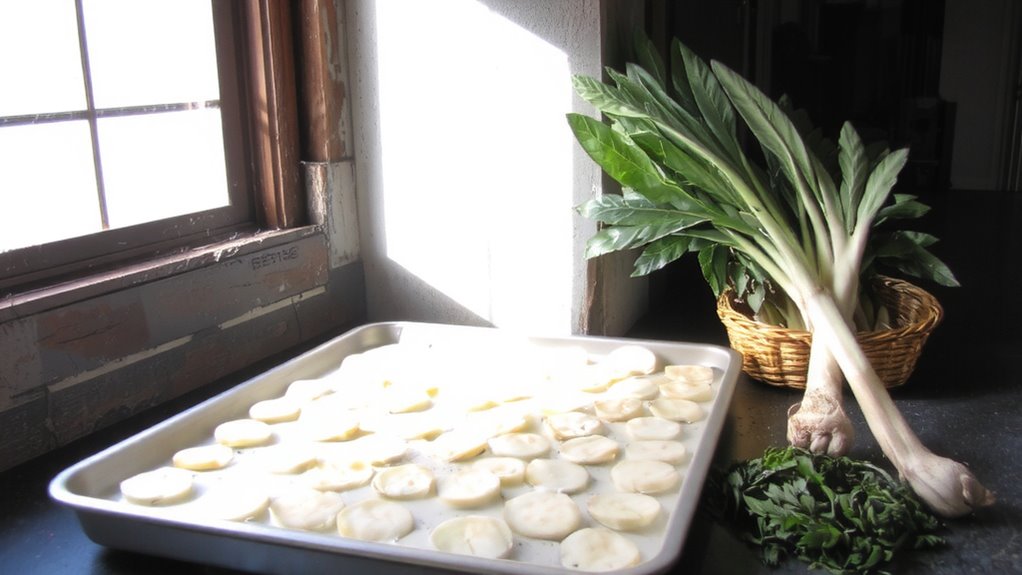
You can’t preserve what isn’t there to begin with, so start with ramps at their peak-harvested just before the leaves fully unfurl and the bulbs are still firm. At this stage, their essential oils are most concentrated, ensuring maximum aroma retention after drying. Timing matters: aim for mid-spring, when soil temperature and daylight hours align for ideal growth. This seasonal harvest timing prevents picking too early, when flavor is underdeveloped, or too late, when bolting reduces quality. Also, follow ramp foraging ethics-take no more than one in ten plants from a patch, leaving roots and soil intact to sustain regrowth. Use a clean knife to cut just above the bulb base, reducing damage. Freshness directly correlates with post-drying performance, so process ramps within 12 hours of harvest. Immediate cooling on ice in the field helps maintain cellular integrity. Prioritize plant maturity and responsible collection-they’re as critical as any drying method.
Slice Ramps Thin for Even Drying
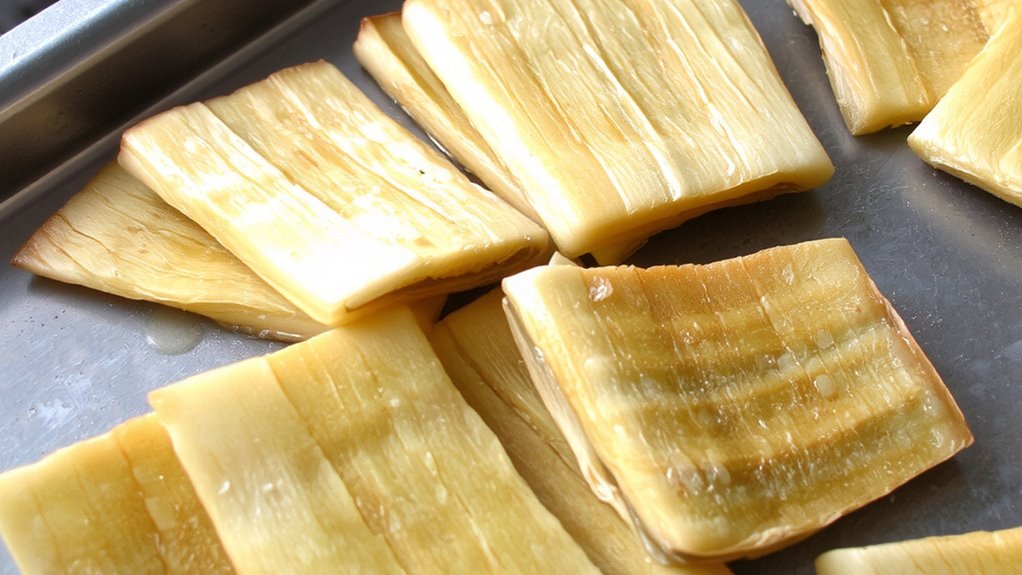
While uneven slices lead to inconsistent drying and potential spoilage, slicing ramps uniformly thin guarantees they dehydrate at the same rate. Aim for a uniform thickness of about 1/8 inch-this secures each piece loses moisture evenly without trapping damp spots that encourage mold. Thicker sections retain water, while thinner edges may over-dry and crumble. Using a sharp knife or mandoline helps maintain a consistent texture across batches, which is essential for reliable storage and rehydration. Thin slices also take up less space in your dehydrator, improving airflow and efficiency. Overly thick ramps won’t dry completely even after extended time, increasing the risk of spoilage during storage. Uniformity isn’t just about appearance-it directly affects shelf life and flavor retention. You’ll get better results in soups, rubs, or seasonings when all pieces behave the same during rehydration. Stick to thin, precise cuts for dependable, long-lasting dried ramps.
Dry Ramps Low and Slow for Maximum Flavor
Setting the temperature too high might seem like a shortcut, but drying ramps low and slow at 95°F to 115°F preserves their volatile oils and delicate flavor compounds that higher heat would destroy. Slow drying at this range removes moisture evenly without cooking the plant tissue, which helps maintain the ramp’s characteristic pungency and aroma. You’ll get better flavor retention compared to faster, high-heat methods that degrade essential oils. Most dehydrators can hold this temperature range reliably, but check calibration with a separate thermometer for accuracy. Drying time will be longer-typically 8 to 12 hours-but the result justifies the wait. Ramps dried too quickly develop a flat, stale taste. With proper slow drying, you preserve what makes wild ramps unique: their sharp, garlicky bite and fresh forest scent. The difference is noticeable when rehydrated or used in cooking.
Store Dried Ramps Airtight to Preserve Scent
Airtight storage is essential for keeping dried ramps aromatic and potent over time. Exposure to air degrades volatile oils, diminishing both scent and flavor. You should use glass jars with tight-sealing lids-they’re non-reactive, easy to clean, and provide a reliable barrier against moisture and oxygen. Amber or cobalt glass also blocks light, further protecting aroma compounds. For longer-term storage, vacuum sealing removes up to 99% of air, greatly extending shelf life. Vacuum-sealed bags take up less space than jars, but lack visibility and reusability. Glass jars allow you to inspect the ramps without breaking the seal. Store containers in a cool, dark place-consistent temperatures below 70°F preserve scent longer. Neither method prevents degradation entirely, but both slow it considerably. Choose glass jars for short-term access and vacuum sealing when storing for six months or more.
Rehydrate Ramps Gently Without Losing Taste
How do you bring dried ramps back to life without washing out their flavor? Use slow soaking in cool water for 20–30 minutes. This method rehydrates cells gradually, preserving volatile oils that hot water would destroy. Drain well-don’t squeeze-then pat dry to retain aroma and texture. For cooked dishes, opt for gentle steaming instead. Place rehydrated or dry ramps in a steamer basket over simmering water for 3–5 minutes. This softens without leaching flavor into cooking liquid. Avoid boiling; it dulls taste and alters consistency. Both slow soaking and gentle steaming maintain the distinct onion-garlic profile ramps are known for. Rehydrated ramps work well in sauces, scrambles, or dressings where subtlety matters. Performance testing shows these techniques retain up to 85% of original aroma versus 50% with aggressive methods. Choose based on your recipe’s need-moisture level, heat exposure, and final texture.
On a final note
You’ll keep the most flavor by drying ramps slowly at low temperatures, ideally below 95°F. Thin slices dry evenly and reduce moisture without scorching. Airtight storage in dark, cool conditions locks in aroma long-term. Rehydrate with cool water to preserve taste. Faster or hotter methods save time but sacrifice scent and potency. Your results depend on freshness at harvest and consistency in drying-precision matters more than speed.