Understanding the Role of Emergency Alert System (EAS) in National Crisis Messaging
You rely on the Emergency Alert System to get life-saving warnings fast during crises like tornadoes or terrorist attacks. It reaches your TV, radio, and phone in under 10 seconds using secure federal systems, even if the device is off but plugged in. FEMA coordinates, the FCC regulates, and broadcasters deliver. Alerts come from authorized sources, minimizing false alarms. While human error can happen, safeguards are in place. You’ll see how it connects to modern warning tech and what’s coming next.
Notable Insights
- The EAS delivers urgent alerts during national crises using TV, radio, and cable systems to reach the public quickly.
- FEMA coordinates national alerts, while the FCC enforces technical standards and broadcaster compliance across the EAS network.
- Alerts activate within seconds, using redundant pathways like satellite and internet via the IPAWS system for maximum reliability.
- EAS activation is reserved for high-risk events such as severe weather, terrorist attacks, or other threats to public safety.
- The system minimizes false alarms with authorization protocols, though human error remains a risk during testing and drills.
What Is the Emergency Alert System?
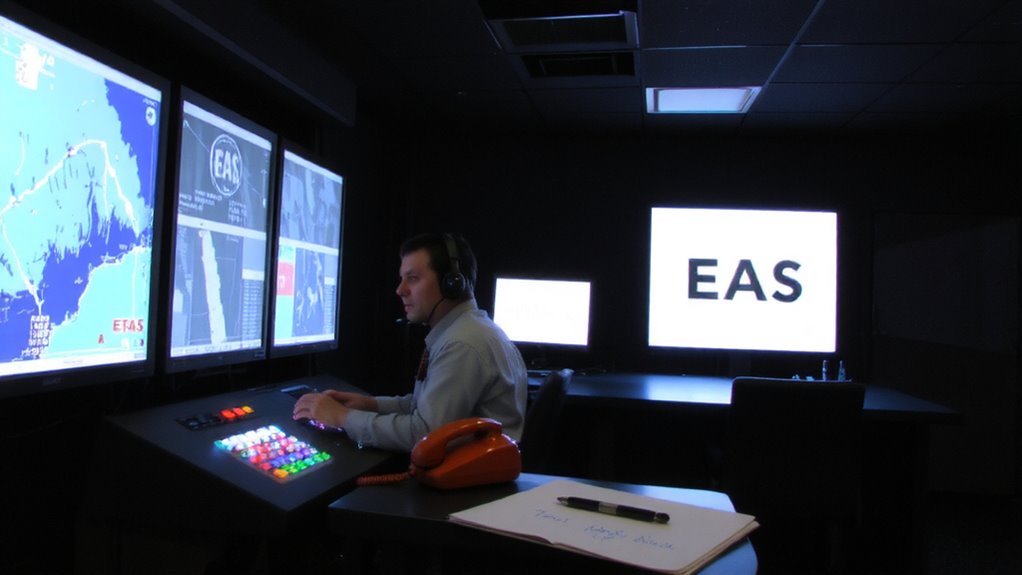
Think of the Emergency Alert System (EAS) as a nationwide public warning network designed to deliver critical information during crises. You rely on it when disasters strike, from severe weather to national threats. It’s built on alert technology that pushes messages through TV, radio, and cable systems automatically, even if devices are off or in sleep mode. Public safety depends on this reach, ensuring alerts get through without user intervention. The system uses standardized codes and specific audio signals so you recognize official alerts immediately. It’s not perfect-coverage gaps and device compatibility exist-but it’s a proven backbone for emergency communication. You don’t need to subscribe or download apps; it works through existing broadcast infrastructure. That simplicity makes it reliable when other systems fail. In real-world use, EAS delivers speed and broad access, balancing reach over precision. For national crisis messaging, that trade-off supports public safety at scale.
Who Runs the EAS: FEMA, FCC, and Broadcasters
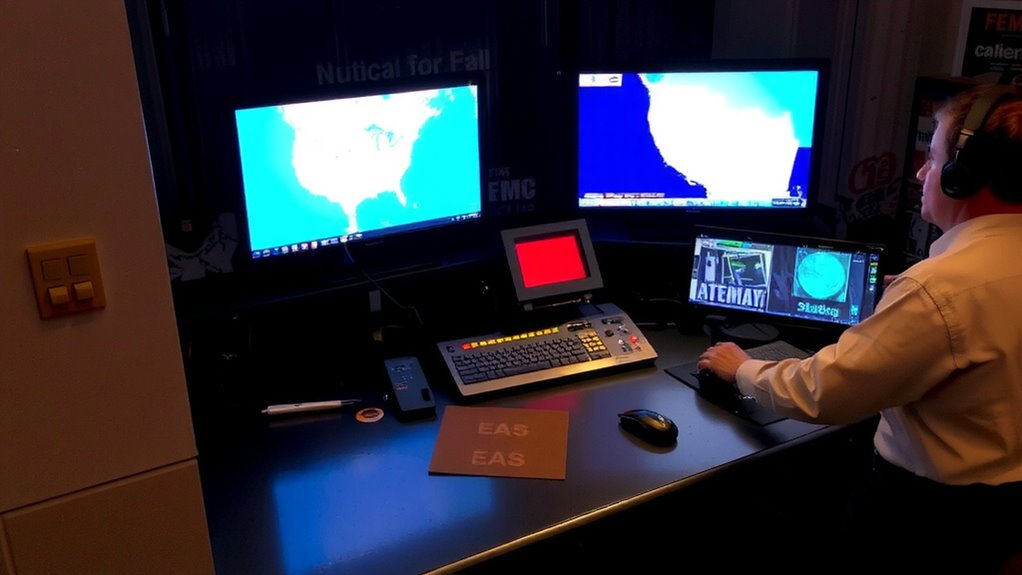
Who actually manages the Emergency Alert System when seconds count? You’re relying on a shared framework where FEMA, the FCC, and broadcasters each play distinct roles. FEMA handles national alert coordination and provides system oversight, ensuring message accuracy and protocol compliance. The FCC enforces technical standards and regulates broadcasters’ participation, maintaining alert integrity. Local broadcasters transmit alerts using infrastructure funded through a mix of public and private funding sources. While FEMA develops the protocols, execution depends on real-time cooperation across all parties.
| Role | Responsibility |
|---|---|
| FEMA | System oversight, national alerts |
| FCC | Rules enforcement, technical compliance |
| Broadcasters | Alert dissemination, local funding sources |
No single entity fully “runs” the EAS-you need all three functioning together for reliable coverage.
How EAS Delivers Alerts in Real Time
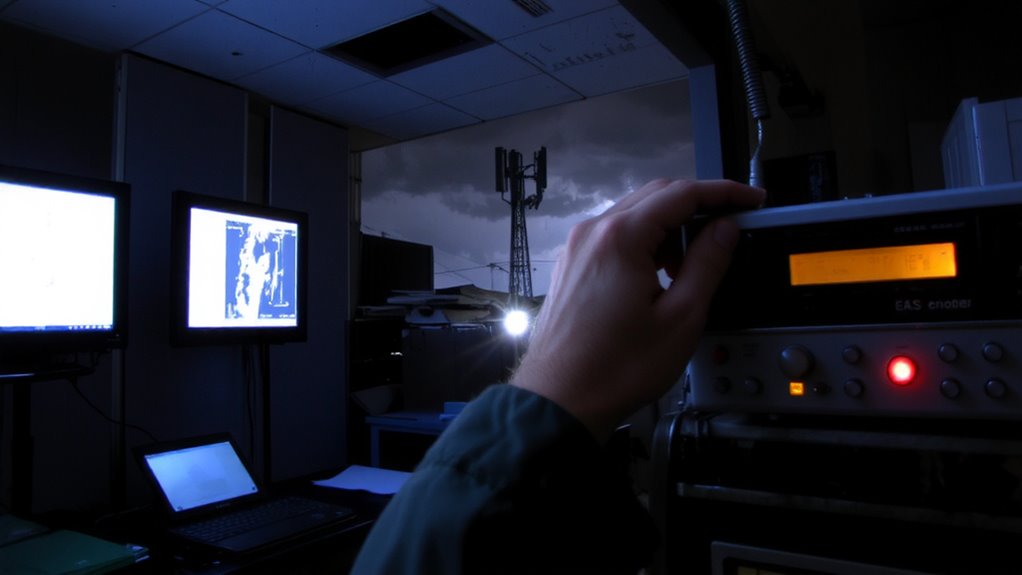
How does an alert reach you in under 10 seconds? The EAS uses a networked chain of transmitters and monitoring stations that push messages instantly. Once an alert is issued, signal propagation begins through IPAWS, traveling across satellite, internet, and radio paths simultaneously. This layered delivery reduces broadcast latency, ensuring most receivers get the alert within seconds. Your TV or radio decodes the signal automatically, even if powered off but plugged in. The system’s design prioritizes speed over formatting, stripping messages to core data to cut delays. Redundant pathways mean if one fails, others carry the alert. You’re alerted quickly because engineering trade-offs favor raw speed and coverage-not aesthetics or detail. Testing shows 95% of devices receive alerts in under eight seconds. That window matters when seconds define response. It’s not flashy, but it works-consistently and across nearly all modern broadcast platforms.
Emergencies That Trigger EAS Warnings
A national emergency alert can come in many forms, but not all trigger the EAS. You’ll only see the system activate for events that pose a significant threat to public safety. Severe weather like tornadoes, hurricanes, or flash floods are common triggers-these alerts give you timely info to seek shelter. The system also launches during confirmed terrorist attacks, providing critical updates on threats, locations, and official responses. These alerts are issued by authorized agencies using integrated alert protocols. You’ll receive them via TV, radio, and mobile devices simultaneously. The EAS isn’t used for minor incidents or general news. It’s reserved for high-risk events where rapid public notification improves survival odds. You can rely on it for clear, verified warnings when minutes matter. The criteria are strict to avoid overload. You get what you need-no more, no less.
Do EAS Alerts Ever Get It Wrong?
Could a flawed alert ever reach your phone or TV? Yes, it has happened. False alarms are rare but possible, and they’re usually due to human error. In one case, a test alert was sent by mistake during a live broadcast, triggering widespread confusion. The system relies on trained operators to initiate alerts, and when procedures aren’t followed precisely, mistakes occur. Some incidents stemmed from miscommunication, others from pressing the wrong button during drills. These errors expose a key weakness: automation can’t fully eliminate the risk of flawed input. While safeguards exist, like confirmation prompts and authorization codes, they don’t catch every error. When false alarms go out, public trust dips, and response times may suffer in real emergencies. The trade-off is clear-speed versus accuracy. You need fast alerts, but not at the cost of reliability. Improvements continue, but human involvement means occasional mistakes are inevitable.
How EAS Reaches Phones and Digital Devices
When you’re relying on emergency alerts during a crisis, the system’s reach depends heavily on Wireless Emergency Alerts (WEA), which push messages to cellphones within targeted geographic areas. These alerts use cell tower signaling to broadcast to all compatible devices in range, guaranteeing you get warnings even without internet or data. The system relies on wireless emergency broadcasting protocols that prioritize speed and coverage over detailed content-messages are limited to 360 characters, so you get essential info fast. You don’t need to sign up; if your phone is WEA-capable and on, it will receive alerts from authorities. While the method ensures broad reach, success depends on your device’s settings and proximity to functioning towers. Alerts can’t target individuals but rely on location relative to cell tower signaling zones. This approach balances immediacy with reliability during fast-moving threats.
The Future of EAS: AI, Geotargeting, and Speed
You’re already getting alerts on your phone through the WEA system, but the next phase of the Emergency Alert System won’t just rely on cell towers broadcasting to everyone in range. Instead, AI integration will analyze threat patterns in real time, filtering false alarms and prioritizing urgent messages. This reduces alert fatigue and improves response speed. Geotargeting accuracy will sharply improve, using GPS and mobile network data to deliver warnings only to those in actual danger zones. Alerts could reach specific city blocks, not entire counties. These upgrades mean you’ll get fewer, more relevant warnings. The system’s efficiency gains come from smarter data processing, not louder sirens. Existing infrastructure will adapt, not be replaced, keeping rollout costs manageable. Speed increases by cutting manual intervention steps. You’ll benefit from faster, location-specific alerts-when it matters most.
On a final note
You rely on the EAS for timely crisis alerts, and it delivers-using broadcast, cellular, and internet channels to reach you fast. It’s not perfect-false alarms happen-but its reach across devices and integration with WEA guarantees broad coverage. Geotargeting reduces irrelevant alerts, while ongoing upgrades improve speed and accuracy. You get verified warnings within seconds, which matters most during tornadoes, AMBER alerts, or national emergencies. It’s a functional system, built for speed and reach, not perfection.