Purifying Water With a Portable Distillation Device
You can purify contaminated water with a portable distillation device by boiling it and condensing the steam, removing over 99% of pathogens, heavy metals, and salts. These units weigh 2–5 pounds, produce 0.5 to 1 liter per hour, and run on common field stoves. They’re reliable with no moving parts, but need regular descaling and filter changes. Fuel efficiency and condenser design directly affect output. See how each component impacts real-world performance.
Notable Insights
- Portable distillation devices boil contaminated water, then condense steam into safe, drinkable water.
- These compact units typically produce 0.5 to 1 liter per hour using external heat sources.
- Regular descaling with vinegar or citric acid prevents mineral buildup and maintains efficiency.
- Use pre-filtered, sediment-free water to avoid clogging the boiler and vapor pathways.
- Check seals and tubing regularly; cloudy output often indicates a leak or overfilling.
What Is a Portable Distillation Device?
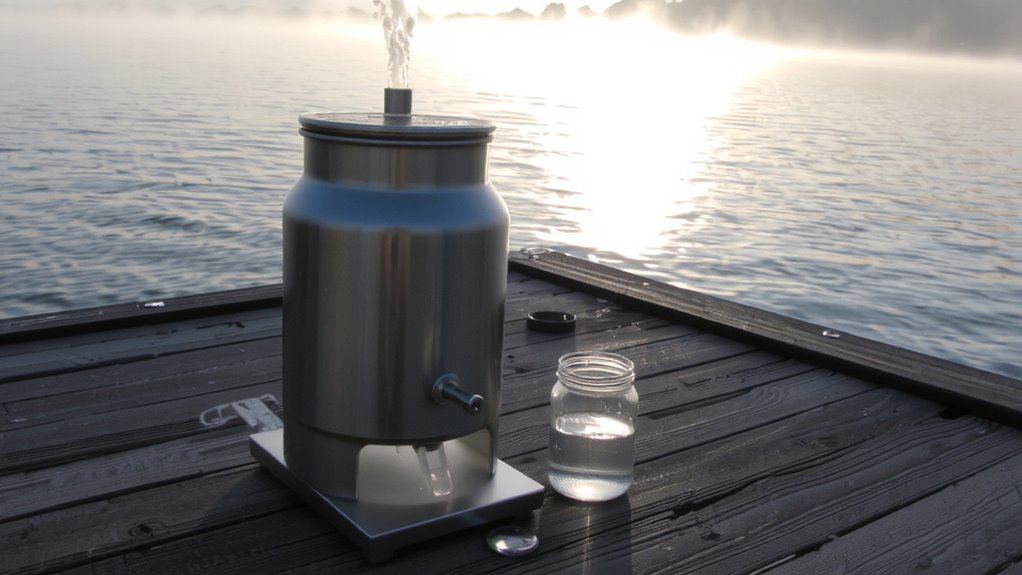
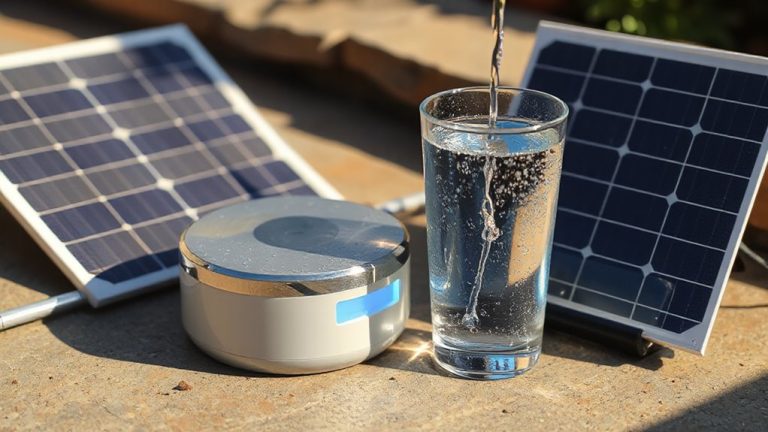
A portable distillation device is a compact tool designed to turn contaminated water into drinkable water by boiling it and then condensing the steam back into liquid form. Its portable design makes it easy to carry in a backpack or survival kit, weighing between 2–5 pounds depending on the model. You’ll find most units are built with lightweight stainless steel or heat-resistant plastic to balance durability and convenience. While effective, the device maintenance required isn’t negligible-mineral buildup from boiled water demands regular descaling, typically with vinegar or citric acid every 10–15 uses. Filters, if present, need replacement after about 50 gallons. Setup is simple: fill the chamber, apply heat (via stove, fire, or battery-powered element), and collect condensed water. Output averages 0.5 to 1 liter per hour, depending on fuel source and ambient conditions. No moving parts reduce failure risk, but proper cleaning guarantees longevity and consistent performance.
How Portable Distillation Purifies Water
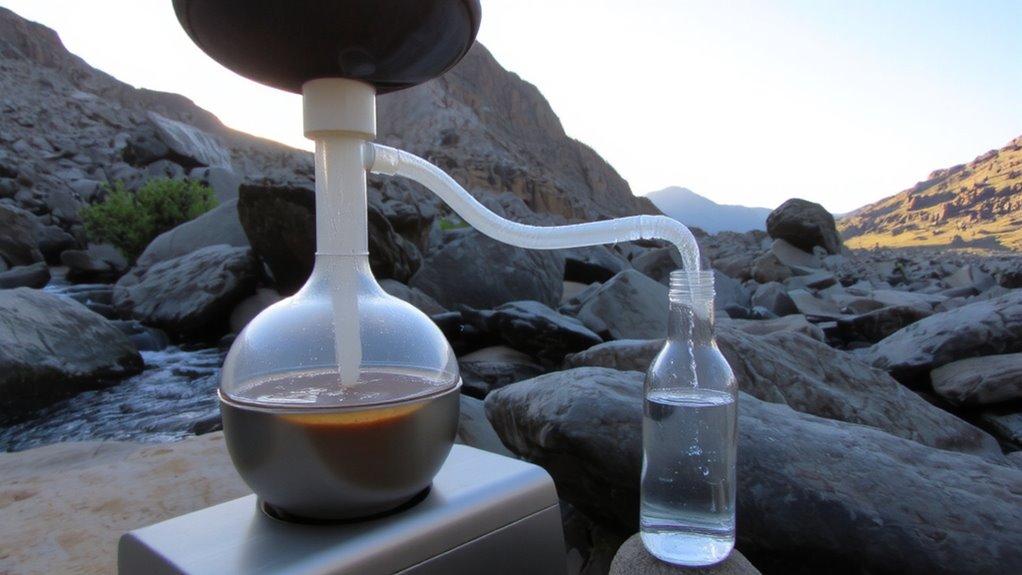
Think of distillation as water’s reset button-your portable device heats contaminated water until it boils, turning it into steam while leaving behind bacteria, viruses, heavy metals, and salts that can’t evaporate. You then rely on vapor filtration to catch any airborne contaminants before the steam moves to the condenser. This step isn’t always included, but when it is, it boosts purity, especially in chemically polluted sources. Next, condensation efficiency determines how quickly and completely the system converts vapor back into liquid water. Higher efficiency means less energy waste and more output per boil cycle. Devices with copper or aluminum coils tend to condense faster, giving you clean water in a shorter time. You’ll get around 0.5 to 1 liter per hour, depending on fuel and design. Real-world tests show that consistent condensation efficiency and proper vapor filtration are critical-if either lags, your yield drops or contamination risks rise.
Essential Gear for Field Water Distillation
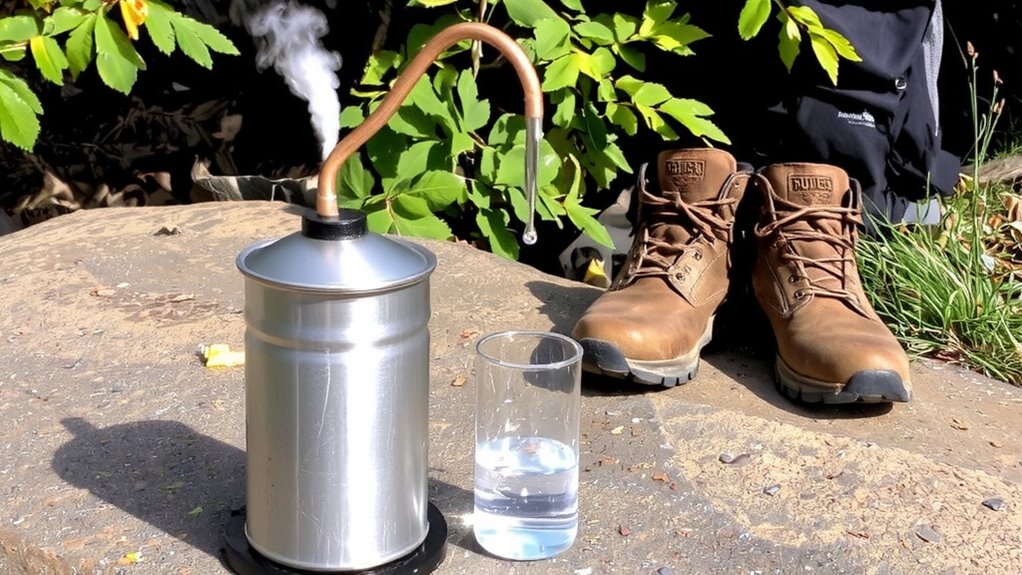
Your success hinges on the still’s core components-get these wrong, and even the cleanest source water won’t save you. A durable boiler with a clear capacity rating guarantees consistent output; models under 1 liter waste fuel, while those over 3 compromise portability. You need a condenser that cools rapidly, preferably with ambient airflow or water jacket cooling-slow condensation kills fuel efficiency. Include a separate, sealable container for water collection to prevent recontamination. Flexible silicone tubing resists kinking and allows gravity-fed output. Don’t overlook gaskets: silicone seals last longer and handle thermal stress better than rubber. A built-in thermometer near the vapor line helps monitor distillation without guesswork. All components must be field-serviceable. Weight matters-under 4 pounds is ideal-but not at the cost of material thickness. Test each piece for leaks before deployment. Poor design in any part cuts output and drains fuel faster, undermining your entire setup.
Best Heat Sources for Portable Distillation
How well your portable still performs often comes down to the heat source you choose-efficiency and control matter more than raw power. You need steady heat without wasting fuel, so flame control and fuel efficiency are critical. A well-regulated flame prevents scorching and maintains consistent distillation rates.
| Heat Source | Fuel Efficiency (mins per oz) | Flame Control |
|---|---|---|
| Butane stove | 12 | Good |
| Alcohol burner | 20 | Poor |
| Canister stove | 15 | Very Good |
| Wood flame | 8 | Fair |
Canister stoves offer the best balance-reliable output and precise adjustment. Butane works well but struggles in cold. Alcohol saves fuel but lacks control. Wood is free but inefficient and hard to regulate. Pick based on your environment and supply access.
How to Distill Water Safely in the Wild
A reliable heat source keeps your portable still running, but what matters just as much is how you use it in the field. For water safety, always position your still on stable ground away from flammable materials. Use only clear, sediment-free water-pre-filter with cloth if needed-to avoid clogging. Never leave the unit unattended during operation; temperatures can exceed 100°C, posing burn risks. Monitor the output tube to guarantee condensed water flows freely into your container. If you’re practicing 野外净化 (wilderness water purification), expect 0.5–1 liter per hour, depending on fuel and ambient conditions. Avoid plastic containers not rated for heat near the still. The distillate is safe to drink-pathogens and salts are left behind-but let it cool first. This method removes over 99% of impurities, including heavy metals and microbes. Always inspect seals and joints before setup; leaks reduce efficiency. With careful use, your still delivers consistently clean water when you need it most.
Fixing Common Distillation Problems
Why does your distillation output slow to a trickle or stop altogether? You’re likely dealing with low yield caused by insufficient heat or a clogged vapor path. Check your heat source-most portable units need steady, high temps to maintain steam flow. If the output is weak, inspect the tubing and chamber for blockages. A cloudy output usually means contaminants are bypassing condensation, possibly from cracking or poor seals. Let the unit cool, then examine all connections. Overfilling the chamber can also cause impurities to carry over, reducing clarity and safety. Make sure you’re not exceeding the max fill line. Some models struggle in cold environments, dropping efficiency by up to 40%. Pre-warm intake water when possible. Low yield isn’t always fixable-cheaper units often lack thermal retention. Invest in one with a stainless steel core if you rely on consistent results.
When to Use Portable Distillation: Emergency & Outdoor Scenarios
Where should you rely on a portable distiller when clean water isn’t guaranteed? Use it in emergencies where water scarcity threatens survival priorities. If you’re trapped after a disaster and taps run dry, a portable unit can turn contaminated runoff or urine into drinkable water. It’s heavier than filters, yes, but it removes bacteria, viruses, and chemicals-something most pumps can’t do. In remote hikes, deserts, or coastal survival scenarios, saltwater or polluted sources become viable. You’ll need fuel and time, but when rehydration means staying functional, the trade-off makes sense. Unlike chemical treatments, distillation doesn’t leave aftertaste or require waiting. Units like the Survivor series process 1 liter per hour, enough to sustain you. It’s not for daily backpacking use, but when safety trumps convenience, it delivers reliable water where you’d otherwise have none.
On a final note
You get clean water fast with a portable distillation device, boiling impure water and collecting condensed steam. It kills bacteria, removes salts, and works with any heat source. Units typically process 0.5 to 1 liter per hour, depending on fuel and conditions. Weight ranges from 1 to 3 pounds. It’s reliable in emergencies but uses more fuel than filters. You trade speed and weight for certainty in purity-worth it when safety’s non-negotiable.