Assessing Risk of Food Spoilage in Non-Refrigerated Conditions
You’re risking foodborne illness every minute perishable food sits out, since bacteria like Salmonella double every 20 minutes at room temperature. High-risk foods-chicken, milk, cooked rice-spoil fast, especially above 40°F. Moisture and neutral pH boost bacterial growth, while poor storage, like deep containers or cracked seals, speeds spoilage. Toss anything left out over two hours, or one hour above 90°F. Smart handling now prevents illness-and there’s more to know about staying safe when the power’s out.
Notable Insights
- Bacteria multiply rapidly in food left unrefrigerated, especially within the danger zone of 40°F to 140°F.
- High-risk foods like meat, dairy, and cooked grains spoil quickly at room temperature and should be discarded after four hours.
- Moisture content and neutral pH levels increase spoilage risk by promoting microbial growth in perishable foods.
- Leaving food out for over two hours (or one hour above 90°F) significantly increases safety hazards.
- Improper storage, such as using cracked containers or deep bowls, leads to uneven cooling and faster spoilage.
How Temperature and Time Cause Food Spoilage
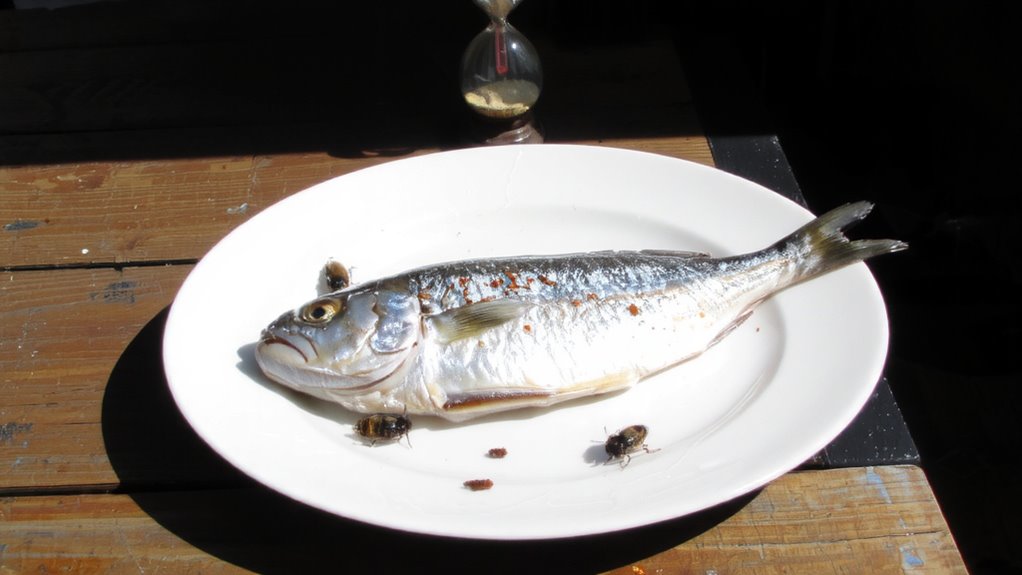
While you can’t see it happening, every minute food sits at room temperature gives bacteria a chance to multiply, and that’s where spoilage starts. Time and warmth drive both enzyme activity and microbial growth, the two main forces behind deterioration. Enzyme activity naturally breaks down nutrients, altering texture and flavor even before microbes take over. Once microbial growth kicks in, particularly from bacteria and molds, spoilage accelerates. Most pathogens thrive between 40°F and 140°F, a range commonly found at room temperature. Each hour in that zone increases risk markedly. You can’t reverse the biochemical changes, and sensory cues often lag behind actual spoilage. Cooling slows enzyme activity; refrigeration halts most microbial growth. But at room temperature, both processes proceed unchecked. Practical storage depends on understanding this progression. You’re not just fighting visible mold-you’re managing invisible biochemical reactions that compromise food safety and quality from the inside out.
Which Foods Are Most Likely to Spoil at Room Temperature
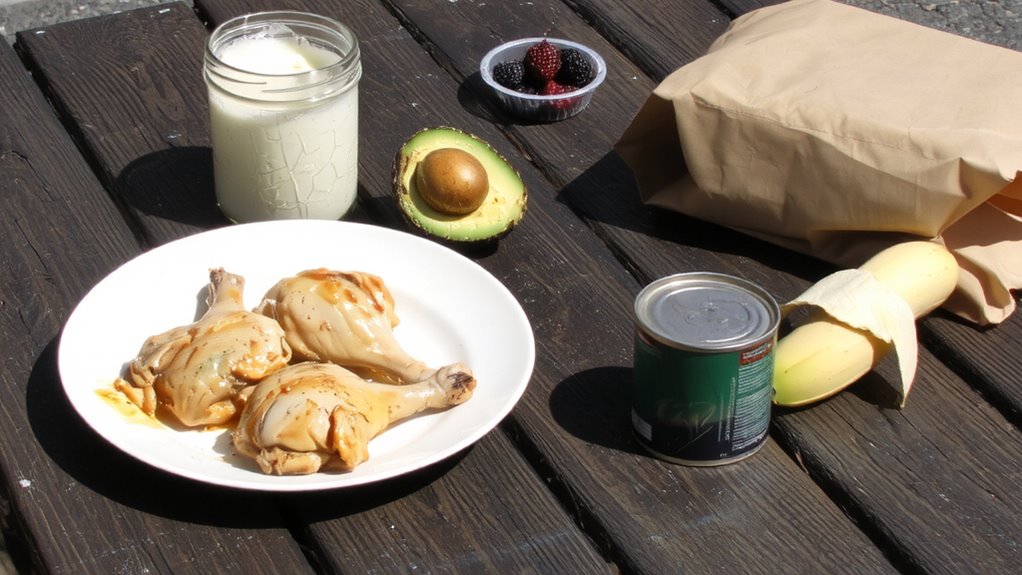
The most perishable foods at room temperature are those with high moisture, protein, or sugar content-your meat, dairy, cooked grains, and cut fruits fall into this category. Perishable proteins like chicken, beef, and eggs degrade quickly when unrefrigerated. Unpackaged dairy such as milk or cheese supports rapid bacterial growth. Cooked rice and pasta can host dangerous microbes within hours. Cut produce loses integrity fast due to exposed surfaces.
| Food Type | Spoilage Risk | Key Reason |
|---|---|---|
| Perishable proteins | High | High moisture and protein |
| Unpackaged dairy | High | Bacteria thrive in lactose |
| Cooked starches | Moderate-High | Supports mold and toxins |
You’re better off discarding any of these after four hours unrefrigerated. There’s no real advantage in pushing limits-risk outweighs reward.
Why Moisture and pH Increase Spoilage Risk
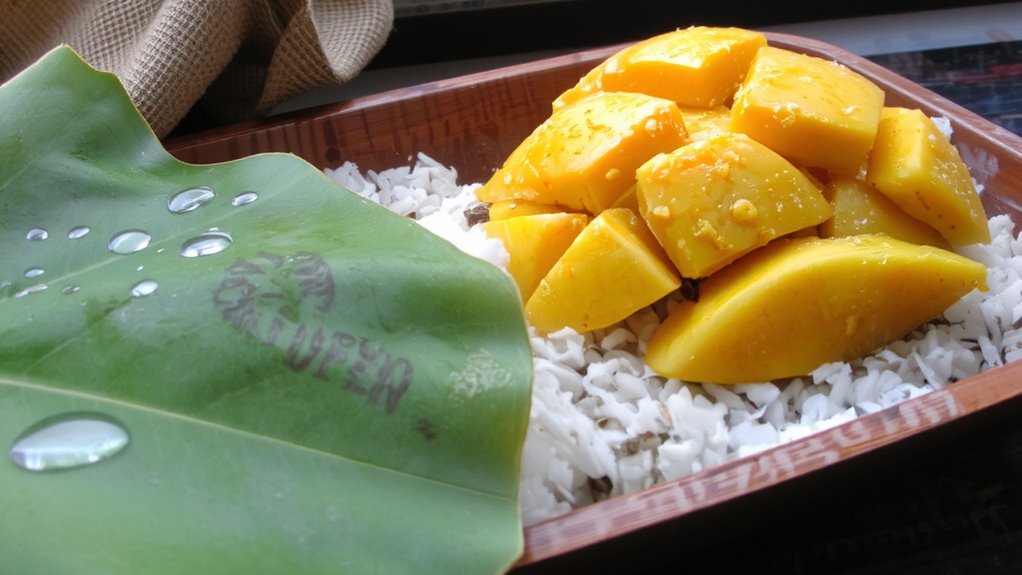
You just saw which foods spoil fastest at room temperature, and now it’s time to understand why they fail so quickly. Moisture and pH levels directly impact spoilage because they fuel enzyme activity and microbial growth. High moisture gives microbes the water they need to multiply, speeding up decay. Foods with water activity above 0.85, like cooked meats or dairy, are especially vulnerable. At the same time, pH affects which organisms thrive. Most bacteria prefer neutral pH levels (near 7), so foods like cooked vegetables or meats spoil faster than acidic ones. Low pH slows microbial growth but doesn’t stop enzyme activity, which can still degrade texture and flavor. Together, moisture and pH create conditions where spoilage processes accelerate without refrigeration. You can’t change these factors after cooking, so handling and timing matter more. Understanding this helps you judge risk better when storing food off-cool.
Common Leftover Mistakes That Cause Food to Go Bad
| Mistake | Consequence |
|---|---|
| Leaving food out >2 hours | Rapid bacterial growth |
| Reusing containers without washing | Cross contamination risks |
| Using warped or cracked containers | Improper storage containers allow leaks and odors |
| Storing in large, deep containers | Slow cooling, uneven temperatures |
How to Recognize Early Signs of Spoilage
Warning signs of spoilage often show up before food smells or tastes bad. You’ll notice subtle shifts if you pay attention. Odor changes are one of the first clues-what once smelled neutral or appetizing may develop a sour, tangy, or putrid edge. Trust your nose, but don’t wait for strong smells. Texture changes also signal trouble. Soft foods may become slimy or sticky, while dry goods can turn soggy or clump unnaturally. Meats may feel slippery; vegetables often wilt or become rubbery. These shifts mean microbes are already active. Surface mold is visible, but spoilage can progress internally. You can’t reverse these changes. Once odor changes or texture changes appear, the food’s safety has likely declined. Your best move is to discard it. Relying on appearance alone isn’t enough-combine all sensory checks. Early detection reduces risk. Don’t gamble with questionable food-when in doubt, throw it out.
Safe Food Handling for Outdoor and Warm Settings
When the temperature rises above 90°F, perishable foods enter the danger zone within just one hour, so keeping them chilled is critical. You need insulated coolers with ice packs for proper food storage-they maintain safe internal temps for hours. Reusable gel packs outperform loose ice, which melts faster and causes pooling. Keep coolers closed and shade them during outdoor cooking to reduce heat exposure. Raw meats should be stored separately to prevent cross-contamination. Use a thermometer to verify cold-hold temps stay below 40°F. During outdoor cooking, don’t leave perishables out longer than an hour. Pre-chill containers before loading. Aluminum foil traps heat and increases spoilage risk-avoid it. Instead, use sealed, shallow containers for faster cooling and easier monitoring. You’re working against time and ambient heat, so efficiency matters. Plan prep steps ahead to minimize food’s time unrefrigerated. These tactics reduce bacterial growth when refrigeration isn’t available. For extended outdoor trips, consider using a high-performance camping cooler that maintains cold temperatures for days.
What to Do With Food After a Power Outage
You’ve just weathered a power outage, and the lights are back on, but your fridge has been offline for hours. Keep the door closed; cold air escapes fast, and food warms within four hours if unopened. After that, spoilage risk rises sharply. Check each item: discard perishables like meat, dairy, and eggs if they’ve been above 40°F for over two hours. Use a thermometer, not smell or sight. Some items, like hard cheeses or bottled drinks, may be safe. Your emergency preparedness plan should include food safety kits-these have thermometers, spoilage strips, and sealable bags. They’re practical, not gimmicks. You don’t need fluff-just tools that give clear data. Real-world tests show kits reduce waste by confirming safety instead of guessing. Power outages happen. Relying on memory or hope isn’t a strategy. Be ready. Act fast. Use facts, not feelings. Consider using a freezer power failure alarm to detect outages even when you’re not home.
On a final note
You can’t rely on smell or sight alone to confirm spoilage, so track time and temperature closely. Perishable foods last just 2 hours in the danger zone (40°F–140°F). High-moisture, neutral-pH foods spoil fastest. Leftovers left out too long, even if reheated, aren’t safe. After a power outage, toss perishables over 40°F for more than 2 hours. Use coolers and ice packs in warm settings. Prevention beats detection-when in doubt, throw it out.