Purifying Water With a Hollow Fiber Membrane Filter
You use a hollow fiber membrane filter to remove 99.99% of bacteria and protozoa-like E. coli and giardia-through pores as small as 0.1 microns. It works without chemicals or power, delivering clean water fast, at 1–2 liters per minute. It won’t stop viruses, and performance drops if silt builds up, so pre-filter when needed. Backflush regularly and store dry to keep it working. A reliable pick for backpacking or emergencies, especially when paired with chemical treatment in high-risk areas. There’s more to how setup affects real-world effectiveness.
Notable Insights
- Hollow fiber filters use microscopic pores (0.1–0.3 microns) to physically trap bacteria and protozoa like E. coli and giardia.
- They purify water without chemicals, delivering clean, great-tasting water instantly with no wait time.
- These filters operate via hand pumping or gravity, requiring no batteries or external power sources.
- Flow rate declines with clogging, but performance is restored through regular backflushing with clean water.
- While effective against bacteria and protozoa, they do not remove viruses, which may require additional chemical treatment.
Understand How Hollow Fiber Filters Work
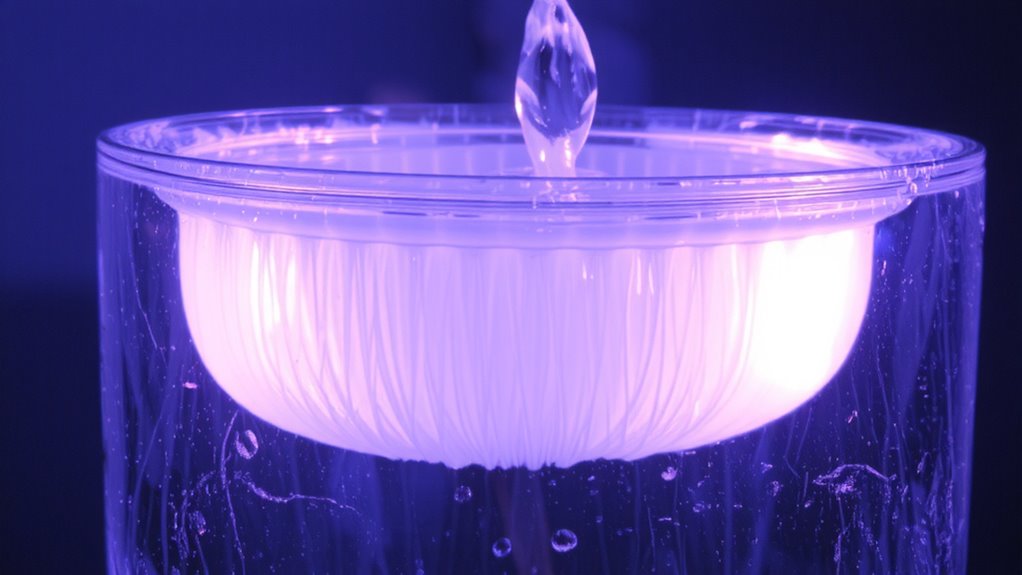
While hollow fiber filters may seem complex, they work on a simple principle: tiny hollow tubes with microscopic pores trap bacteria, protozoa, and other contaminants while letting clean water pass through. You rely on pore size-typically 0.1 to 0.3 microns-to block harmful microbes without removing minerals. This specification guarantees removal of pathogens like giardia and E. coli, but not viruses, due to their smaller size. Flow dynamics matter just as much; water moves through the fibers under pressure or suction, and efficient design maintains consistent output without clogging. You’ll notice flow rates slow if debris builds up, but backflushing restores performance. These filters handle turbid water better than many alternatives, though extreme silt can reduce lifespan. They’re light and compact, making them practical for field use. No extra chemicals or power are needed, which keeps operation simple and predictable in real-world conditions.
Leverage the Advantages of Hollow Fiber Technology
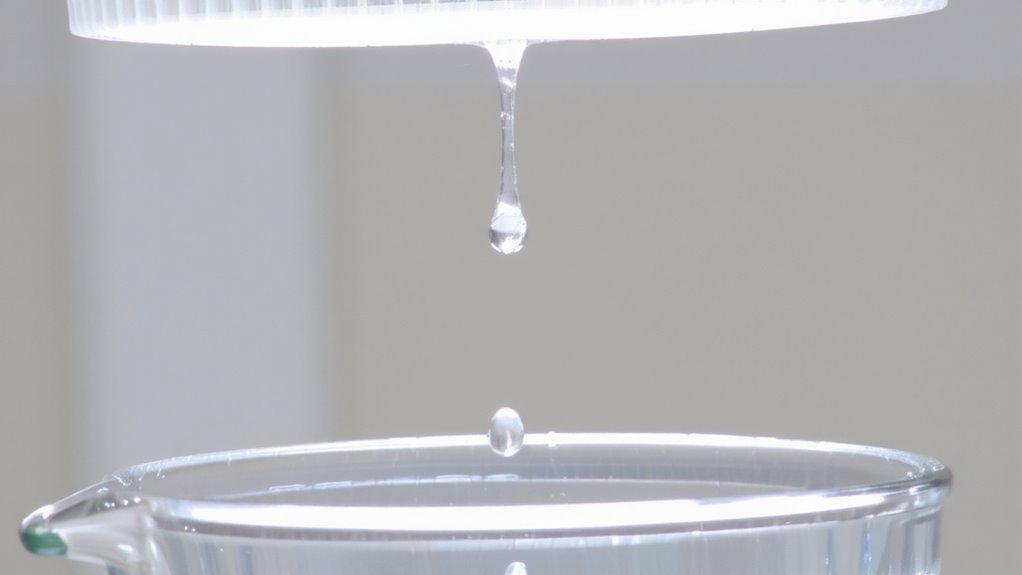
A hollow fiber membrane filter gives you reliable protection in the field, removing 99.99% of bacteria and protozoa with pore sizes between 0.1 and 0.3 microns. You’ll appreciate the portability benefits-these filters are lightweight and compact, fitting easily in a backpack or emergency kit without sacrificing performance. They require no batteries or external power, letting you purify water by hand pumping or gravity feed. That design also adds to long-term cost efficiency, since there are no replacement cartridges or ongoing supply costs. Most models handle thousands of liters before needing replacement, making them economical over time. While they don’t remove viruses or chemicals, they deliver consistent mechanical filtration where weight, durability, and operating cost matter. You can rely on them in remote locations, extreme conditions, or during extended use. Just remember to backflush periodically to maintain flow rate. For straightforward, field-tested protection, hollow fiber tech is hard to beat when portability and cost efficiency are priorities.
Compare Hollow Fiber Filters to Other Purification Methods
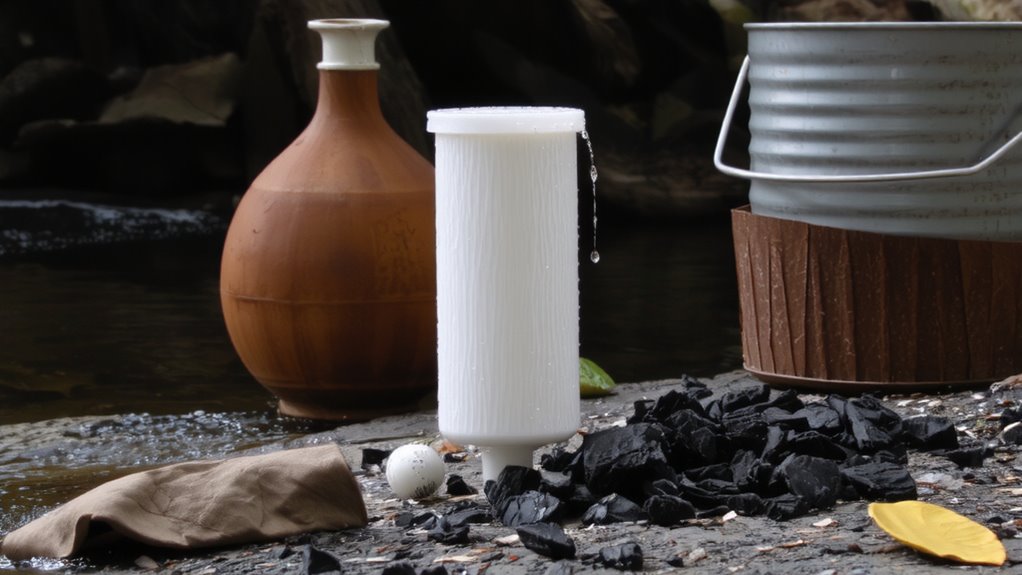
You’ve seen how hollow fiber filters deliver reliable mechanical filtration in tough conditions, but how do they stack up against other common purification methods? Compared to chemical treatment, hollow fiber filters remove pathogens physically without altering water taste or requiring wait times, though they don’t neutralize viruses like chemical treatments can. Unlike the sedimentation process, which relies on gravity and time to settle particles, hollow fiber filters actively capture fine sediments and microbes in a single pass, offering faster, more consistent results. Chemical treatments leave residuals and depend on correct dosing, while sedimentation alone won’t remove bacteria or viruses. Hollow fiber filters provide immediate, chemical-free output with minimal maintenance, but they can clog in mucky water without pre-filtering. Each method has trade-offs: chemical treatment suits long-term storage, sedimentation works for large volumes with time, but hollow fiber stands out for speed, portability, and consistent particle removal where infrastructure’s limited.
See Where Hollow Fiber Filters Excel in Real-World Use
Where do hollow fiber filters actually perform best in real-world scenarios? You’ll find them excelling in remote applications where power, weight, and reliability matter. Their compact size and gravity-driven operation make them ideal for backpackers, aid workers, and military use in off-grid locations. They filter bacteria and protozoa efficiently-no chemicals or electricity needed. In emergency filtration situations, like natural disasters or infrastructure failures, they deliver safe drinking water fast. Most models process 1–2 liters per minute, enough for small groups. They handle turbid water better than many portable options, though pre-filtering silt improves lifespan. Their main trade-off? They won’t remove viruses, so pairing with chemical treatment may be necessary in high-risk areas. Still, for immediate, dependable access to clean water where resources are limited, hollow fiber filters are a proven, field-tested choice.
Maintain Your Hollow Fiber Filter for Long-Term Performance
Though they’re built for tough conditions, hollow fiber filters won’t last long without regular care-you’ve got to clean them after each use to prevent clogging and extend membrane life. Use backwashing or flushing with clean water as your primary cleaning methods-many models support both, and combining them removes debris trapped in fibers. For heavy silt or biofilm, a mild bleach solution (1–2%) cleans effectively without damaging membranes. Always rinse thoroughly afterward. Let the filter air-dry completely before storage to prevent mold. For long-term storage tips, keep it dry and sealed in a cool, dark place-some users store it with desiccant to control moisture. Never freeze a wet filter; ice expands and ruptures fibers. Regular maintenance doubles or triples service life, letting you filter thousands of liters reliably. Neglect cuts that short.
On a final note
You get reliable filtration with hollow fiber membranes-they remove bacteria and protozoa down to 0.01 microns without chemicals. They’re lightweight and fast compared to gravity filters or chemical treatments. While they don’t kill viruses, pairing them with a UV pen covers that gap. In field tests, they handle 50,000 liters if cleaned regularly. Clogging happens in silty water, so pre-strain. For durability and flow rate, they outperform most in real survival scenarios.