Evaluating the Risk of Electrical Shock in Floodwaters
You’re at risk when floodwater covers downed power lines or submerged outlets-electricity spreads silently and can be lethal within seconds. Impurities in water boost conductivity, increasing danger even 10 feet from the source. Avoid all floodwater; rubber soles won’t fully protect you. If you feel tingling, freeze and shout for help. Cut power at the main breaker before waters rise. Knowing what to do next could save your life.
Notable Insights
- Floodwater can become energized by downed power lines or submerged electrical devices, creating invisible and lethal shock hazards.
- Impurities in floodwater like salt and chemicals increase conductivity, allowing electricity to spread farther and more easily.
- Voltage gradients form in energized water, posing danger even several feet from the electrical source.
- Submerged outlets, appliances, and damaged transformers are common sources of electrical current in flood conditions.
- Never enter floodwater; turn off power at the main breaker and watch for signs like tingling sensations or buzzing sounds.
How Floodwater Becomes Electrified
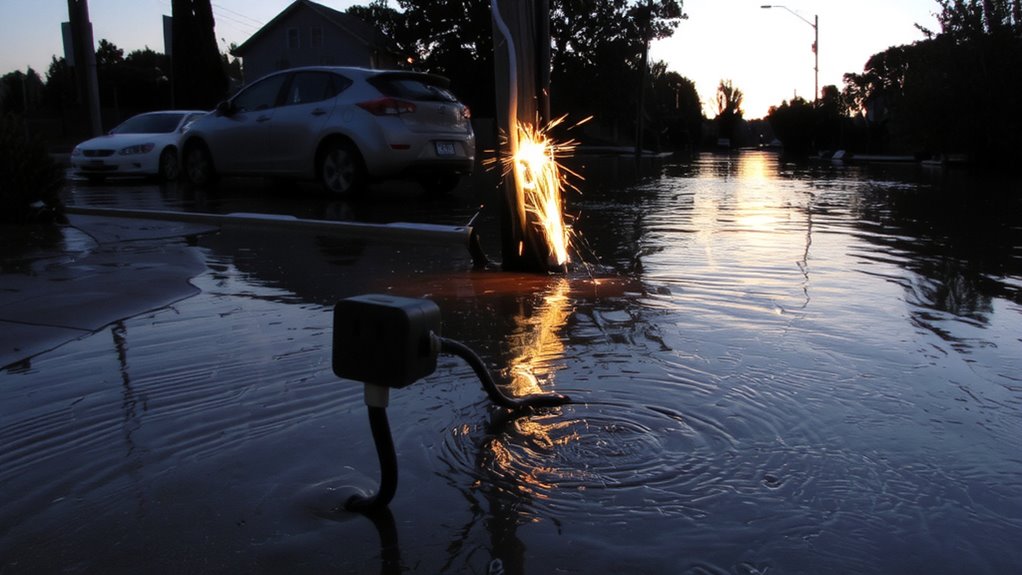
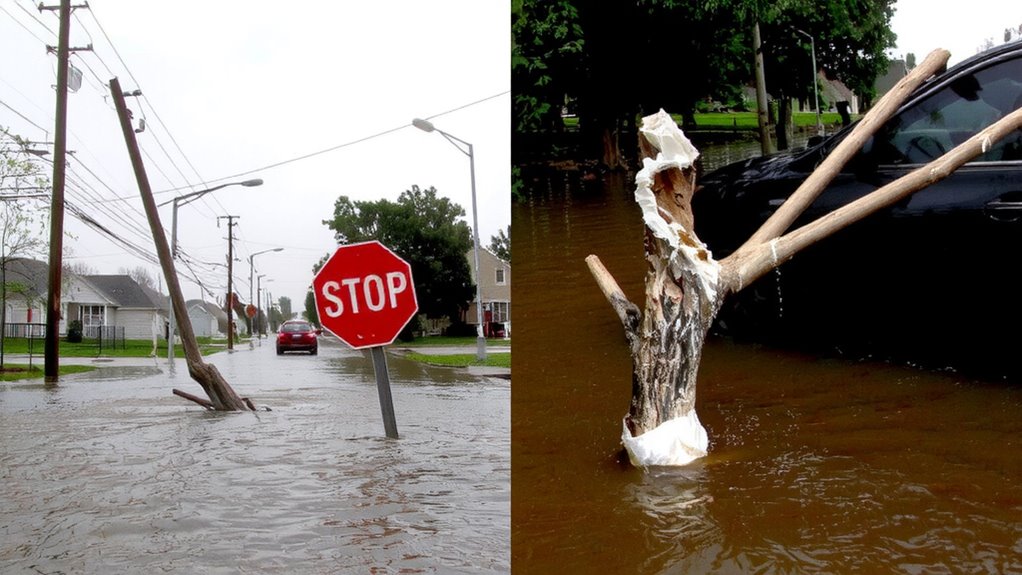
While floodwater might seem like just a messy mix of rain and runoff, it can quickly become energized when downed power lines or submerged electrical devices introduce current into the water. You’re at risk because water conductivity increases with impurities like dirt, chemicals, and salt, making floodwater an effective conductor. Once electricity enters, current dispersion spreads the charge unpredictably across the surface and through the water. You can’t see or predict the path of least resistance, so even standing a few feet away offers no guarantee of safety. Voltage gradients can form, meaning the current weakens with distance but remains dangerous. Wet clothing and shoes reduce your body’s resistance, increasing shock severity. Testing shows energized water can deliver lethal amperage at distances over 10 feet from the source. You must assume all floodwater is live. No device or gear eliminates this risk entirely-avoidance is the only reliable protection.
Common Sources of Electrical Hazards in Floods
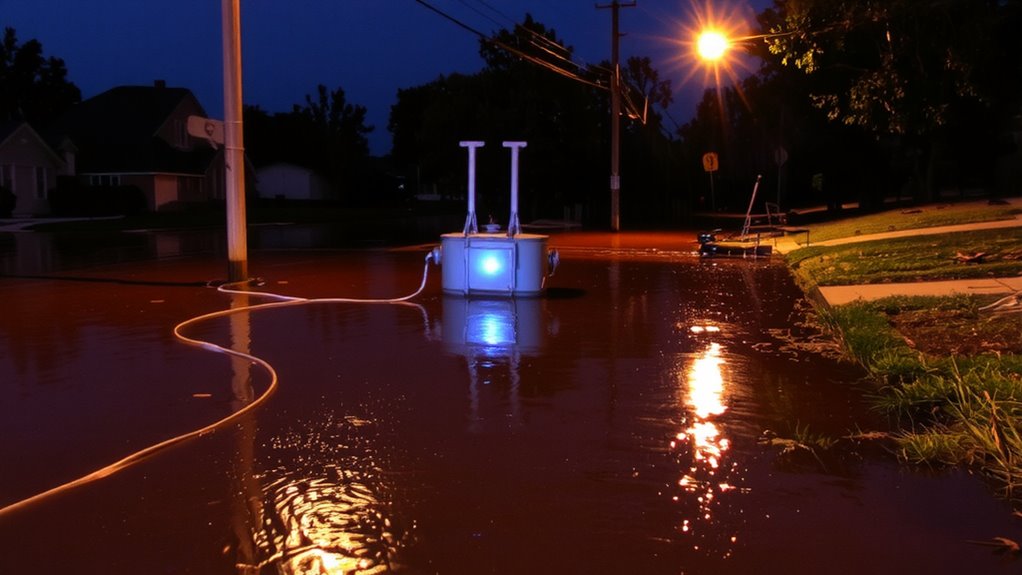
If you’re wading through floodwater, assume any nearby electrical device or system could be live-submerged outlets, extension cords, and appliances like sump pumps or refrigerators often leak current when flooded, and even low-voltage systems like doorbells or security cameras can energize water if their transformers are compromised. Damaged transformers are especially dangerous, as they can electrify large water areas without visible warning. Below are common hazard sources and their risk level:
| Source | Risk Level |
|---|---|
| Submerged outlets | High |
| Damaged transformers | Critical |
| Flooded extension cords | High |
Avoid contact with any electrical system during or after flooding. Water hides live components, and standard insulation often fails when wet. Even circuits turned off at the breaker may still carry current if backfed by a generator or compromised grid connection. Never assume a device is safe just because it’s off.
How Electricity in Water Causes Serious Injury
Electric shock in floodwater isn’t a theoretical risk-it’s a sudden, silent threat that can stop your heart before you realize something’s wrong. Water conducts electricity, and when it’s mixed with contaminants, it becomes even more efficient at carrying current through your body. If you step into electrified water, the current can trigger muscle paralysis, freezing your limbs so you can’t move or swim. This paralysis increases drowning risk, even in shallow water. The current can also disrupt your heart’s natural rhythm, leading to cardiac arrest within seconds. Unlike dry shocks, floodwater exposes more of your body, increasing the path and impact of the current. You won’t always see sparks or feel warning jolts-electricity spreads invisibly. Survival depends on immediate disengagement, but paralysis often makes that impossible. Prevention is critical because once exposed, your body’s response is out of your control. There are no reliable warning signs-only consequences.
Signs of Electrified Floodwater
You won’t always know floodwater is energized until it’s too late, but some signs can tip you off before you take that first step. Look for downed power lines near flooded areas-they’re a key indicator electricity could be leaking into the water. If you see wires sagging or sparking, assume the water is live. Submerged outlets, especially in basements or garages, also pose a serious risk since wiring may remain energized even during floods. You might not see visible sparks, but tingling sensations in the water or buzzing sounds nearby suggest danger. Avoid contact entirely if either is present. These signs don’t guarantee shock will occur, but they substantially increase risk. There’s no reliable way to test voltage in flood scenarios, so treat all standing water near electrical sources as hazardous. Prioritize caution over convenience-no amount of urgency justifies unnecessary exposure.
Immediate Safety Steps During a Flood
When floodwaters rise, your first move should be to cut power at the main breaker-doing so eliminates the risk of energized water around your home and reduces the chance of electrocution near submerged outlets or appliances. If you must leave, do it quickly but carefully. Stay calm to think clearly and act effectively. Never walk or drive through moving water-you can’t reliably judge depth or detect hidden electrical hazards. If told to evacuate immediately, follow instructions without delay. Time matters, and hesitation increases risk. Wear rubber-soled shoes if possible, but don’t rely on them for protection. Keep one hand behind your back to minimize current across the heart if accidental contact occurs. Use flashlights, not candles, to avoid sparks. Assume downed lines are live. Move to higher ground early, before water reaches doors. Preparedness and swift action are your best defenses against flood-related electrical dangers.
How to Help Someone Shocked by Floodwater
A person shocked by floodwater needs immediate, careful attention-but your safety comes first. Don’t enter the water; you could become a victim too. If power sources are nearby, assume they’re live. Use non-conductive tools like a dry wooden pole to separate the person from the source-this is a key rescue technique. Once the area is safe, check responsiveness. If they’re unresponsive and not breathing normally, start CPR if trained. Floodwater shock often affects the heart, so fast medical response is critical. Call emergency services immediately-every minute delays reduce survival chances by up to 10%. Don’t move the person unless necessary; spinal injury is possible. Keep them warm and monitor breathing until help arrives. Proper rescue techniques and prompt medical response improve outcomes markedly, but acting recklessly risks more lives. Stay calm, stay safe, and act with clear purpose.
Prevent Electrical Dangers Before a Flood
Before floodwaters rise, cutting power at the main breaker is essential-this stops live current from spreading through standing water. You should schedule regular electrical inspections to identify hazards like corroded connections or outdated components. Older homes especially benefit from wiring upgrades that meet current safety codes and better resist moisture exposure. Elevating electrical panels above expected flood levels reduces risk, but only if paired with proper grounding and weatherproof enclosures. GFCI outlets add protection but won’t stop energized floodwater if the main system remains live. Inspections catch issues early; upgrades improve resilience. Don’t rely on visual checks alone-faults can hide behind walls. Test circuit breakers monthly to confirm they trip under load. No system is flood-proof, but these steps reduce danger. You can’t control the water, but you can control how your electrical system responds. Be proactive-your safety depends on it.
On a final note
You can’t see electricity in floodwater, but it’s deadly. Stay out of flooded areas-especially near downed power lines or submerged outlets. If you must act, cut power first and wear rubber boots and gloves. Testers like non-contact voltage detectors help spot live water, but they aren’t foolproof. Your safety depends on caution, not gear. Assume all floodwater is energized. Respond fast, but smart-survival hinges on simple, correct choices, not speed or strength.