Creating a Water Reserve That Supports Extended Animal Husbandry Needs
You need to calculate your livestock’s daily water use-cattle drink 25–50 gallons, sheep and goats 1–4-and multiply by your longest dry spell, adding a 20–25% buffer for waste and peak demand. Use food-grade polyethylene or concrete tanks sized for droughts, keep them shaded and sealed to block sunlight and contaminants. Pair UV sterilization with 0.2-micron filters for cleaner water. Install elevated backup tanks for gravity-fed use during outages. Maintain the system quarterly with cleanings and water tests. There’s a proven way to guarantee it all works when the grid’s down.
Notable Insights
- Calculate daily water needs per animal type and multiply by the longest dry spell to size the reserve.
- Add a 20–25% buffer to storage capacity to cover evaporation, leaks, and peak demand periods.
- Use durable, food-grade polyethylene tanks resistant to UV, freezing, and contamination for long-term reliability.
- Install backup storage at elevated points for gravity-fed supply during power outages or system failures.
- Maintain water quality with filtration, UV sterilization, regular rotation, and quarterly testing for contaminants.
Calculate Daily Water Needs by Livestock Type
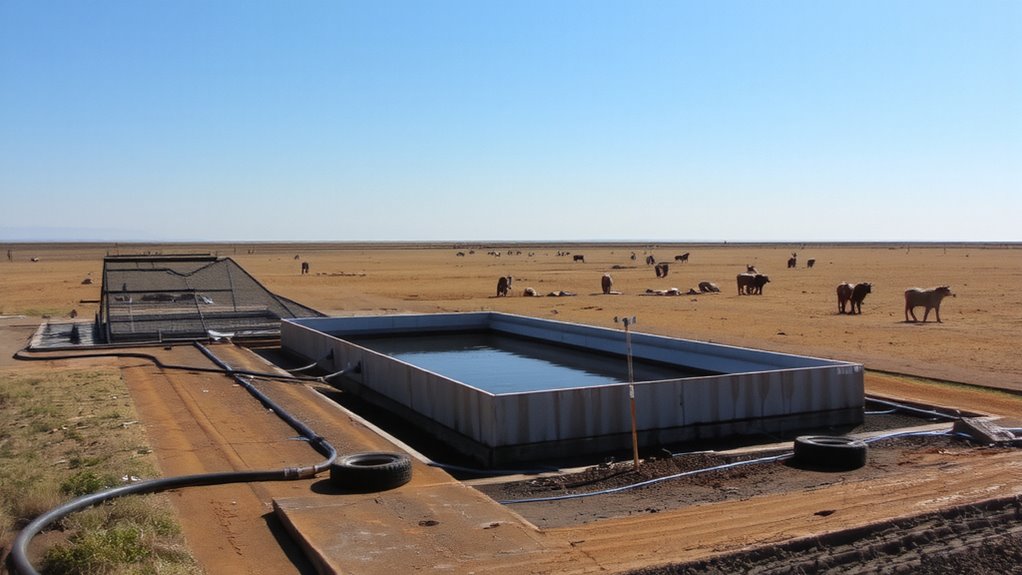
Water intake varies considerably across livestock, and knowing the exact daily needs for each type prevents shortages and optimizes herd health. Cattle typically drink 25–50 gallons per day, depending on size and lactation, while sheep and goats need 1–4 gallons. Poultry consume less per head but require consistent access. Water quality directly impacts consumption; animals avoid tainted or dirty water, which can reduce intake and hurt productivity. You must test for contaminants and guarantee clean delivery. Your feeding schedule also influences water needs-dry feed increases demand, while pasture grazing reduces it. Adjust supply according to what and when you feed. Automated drinkers with reliable flow rates work better than open troughs, minimizing waste and contamination. Monitoring daily use by species helps spot issues early. Track intake patterns closely-they reveal health and system performance faster than most indicators. Plan based on real consumption, not estimates.
Size Your Water Reserve for Drought and Peak Use
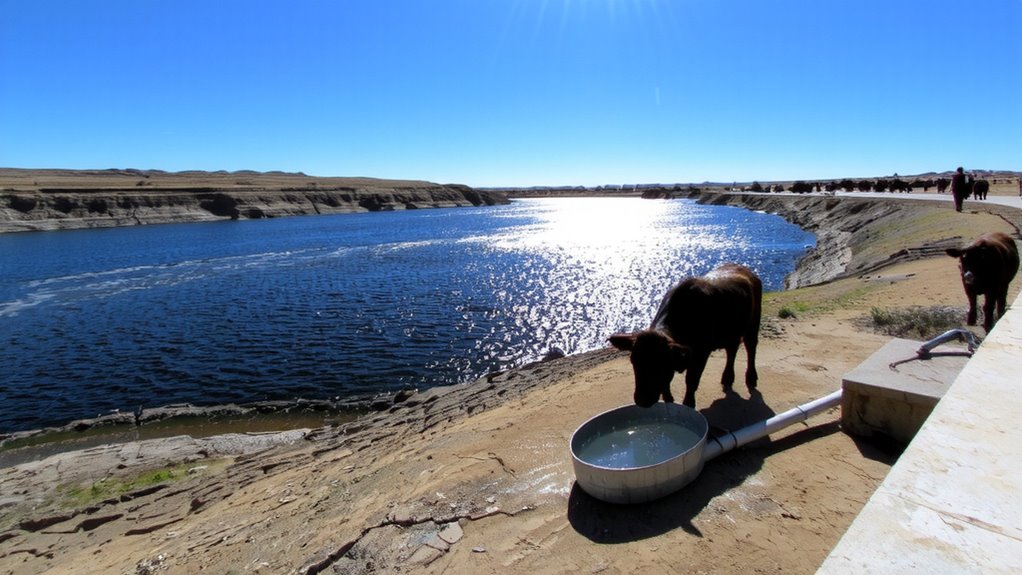
How much water will you actually need when the dry weeks stretch longer than expected? You must size your reserve to cover both drought conditions and peak demand. Start by multiplying your daily livestock needs by the longest typical dry spell in your region-this sets your minimum water capacity. If you’ve calculated 500 gallons per day for your herd and face 30-day droughts, you’ll need at least 15,000 gallons. But peak demand, like hot summer months when animals drink more and irrigation spikes, can push usage 30% higher. Plan for that. Don’t rely on average use; base your system on worst-case scenarios. A reserve sized only for normal conditions will fail when you need it most. Build in a 20–25% buffer beyond calculated peak demand to account for evaporation, leaks, or unforeseen use. Water capacity isn’t just about volume-it’s about reliability when supply is tight.
Choose the Right Water Reserve Storage System
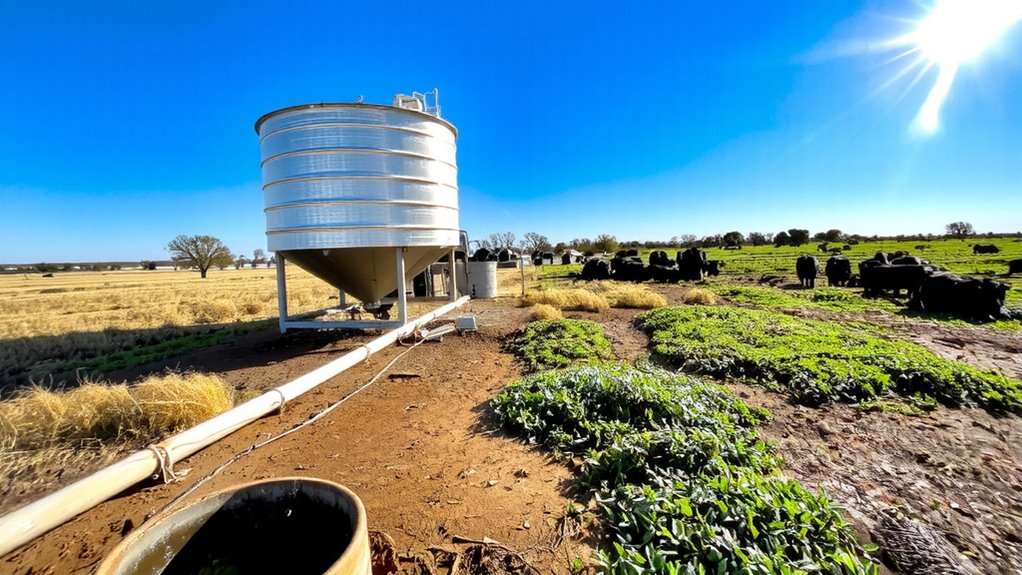
While your water needs set the baseline, the type of storage system you pick will determine whether that water stays available when you need it most. You’ll need to take into account material durability-polyethylene tanks resist cracking in freeze-thaw cycles, while concrete offers longevity but can degrade with acidic water. Metal tanks are strong but require coatings to prevent rust. Installation location affects both performance and lifespan. If you place a tank above ground, make certain the site is level and shaded to reduce UV stress and thermal expansion. Below-ground systems save space and insulate water but demand proper backfilling and drainage to avoid collapse. Elevated tanks provide gravity-fed pressure but need secure anchoring. Each option trades cost, access, and maintenance. Match the system to your site’s geography, climate, and herd size. A poorly sited durable tank fails as fast as a weak one in the wrong spot. For home use, consider best water storage tanks that balance durability, capacity, and ease of maintenance.
Prevent Algae and Contamination in Stored Water
If you’re storing water long-term, keeping it clean matters just as much as the quantity you’ve got. Algae and bacteria can ruin stored water, making it unsafe for animals. You’ll want to block sunlight-store water in opaque or buried tanks since light fuels algae growth. Use sealed containers to limit airborne contaminants. For purification, water filtration systems with 0.2-micron filters remove parasites and sediment reliably. Pair that with UV sterilization to disrupt microbe DNA-no chemicals needed. UV units work best on clear water, so pre-filtering improves results. Some systems deliver 99.99% pathogen reduction when flow rates match UV exposure time. Rotate water every six months to prevent stagnation. Even treated water degrades if left too long. These steps don’t eliminate risk completely, but they markedly reduce contamination. Consistent maintenance beats relying on any single method. Top picks in survival kits often include portable filters rated to remove bacteria and protozoa, making water filtration survival kits a dependable backup for emergency barnyard use.
Add Backup Tanks and Gravity-Fed Delivery Lines
Since power outages or pump failures can cut off water supply when you need it most, adding backup storage tanks gives you a critical safety margin-1,000 to 2,500 gallons of reserve capacity per 50 animals guarantees three to five days of reserve, depending on species and climate. Position tanks at a higher elevation so gravity flow delivers water without pumps. This setup guarantees animals still get water even during electrical failures. Use food-grade polyethylene tanks-they’re durable, UV-resistant, and easier to clean. Size your piping to 1″ or larger to maintain flow rate across distances. Valves should be manual to avoid reliance on power. Backup capacity isn’t just extra storage; it’s part of a functional failsafe. Gravity flow reduces mechanical dependencies, making your system simpler and more reliable. It won’t replace active pumping long-term, but it’ll keep livestock hydrated through short-term disruptions.
Schedule Cleanings and Inspections for Reliability
You’ve set up backup tanks and gravity-fed lines to keep water flowing during outages, but even the best system fails if clogged, corroded, or leaking. Schedule cleanings every three months to remove sediment and algae, which can impair flow and harm water quality. Inspect seals, valves, and connections during each cleaning to support early leak detection. Visible drips or damp soil near lines often signal leaks that waste thousands of gallons over time. Conduct water testing at least quarterly, checking for bacteria, nitrates, and pH levels to guarantee safety for livestock. Use simple test kits calibrated regularly for reliable results. Inspect tank interiors for rust or biofilm, especially in metal units, and replace worn gaskets promptly. A log of inspection dates, water testing results, and repairs improves traceability and highlights recurring issues. Consistent checks don’t prevent every failure, but they reduce risk and extend system life under real-world conditions. Choosing top-rated water storage containers ensures durability and contamination resistance in long-term animal watering systems.
Design a Full-Year Water System for Livestock
While seasonal changes can strain even well-built systems, planning for全年 water access means accounting for freeze-thaw cycles, dry spells, and peak demand periods all at once. You’ll need reliable water recycling to reduce waste and stretch supply, especially during droughts-capturing runoff and filtering it for reuse cuts dependency on single sources. Solar pumping makes sense in remote pastures; it runs steadily in sunny months and pairs well with battery backups or wind hybrids for winter. Install insulated, underground lines to prevent freezing, and size storage tanks to hold at least 30% more than peak use requires. Elevated tanks offer gravity-fed flow when power fails. Test pumps monthly and clean filters every two weeks under heavy use. Combine solar pumping with manual backups so animals aren’t left without. No system is maintenance-free, but with smart design, you can keep water flowing year-round without overcomplicating or overspending.
On a final note
You size the reserve based on daily needs, drought length, and peak use-overestimating slightly guarantees safety. You pick storage that balances cost, durability, and maintenance, like food-grade poly tanks or lined ponds. You prevent algae with opaque materials and regular cleanings. Backup tanks and gravity-fed lines keep water flowing during failures. You inspect every 3–6 months. This system works year-round if maintained, giving reliable access without waste or surprises.