Using Cold Smoking Techniques to Preserve Wild Foraged Salmon Safely
You’re using cold smoking to preserve wild foraged salmon by curing it with salt and sugar, then exposing it to smoke below 85°F. This method prevents spoilage while delivering firm, flavorful flesh. Keep temperatures under 70°F to limit bacterial growth, and use curing salt with sodium nitrite to stop botulism. A well-chilled, evenly brined fish guarantees consistent preservation. Proper airflow and dry surfaces matter as much as the wood type. It works-if every step stays precise. There’s more to get right than just timing.
Notable Insights
- Cold smoking preserves wild foraged salmon by infusing smoke at 68–86°F without cooking, maintaining texture and flavor.
- Promptly gut, bleed, and chill salmon to ensure freshness and prevent bacterial growth before curing.
- Use a brine with non-iodized salt, brown sugar, and optional sodium nitrite to safely cure salmon for 8–12 hours.
- Maintain smoker temperatures below 70°F with steady, thin smoke to prevent pathogen growth and ensure safety.
- Store finished product vacuum-sealed at or below 34°F, or freeze at 0°F to maximize shelf life and prevent spoilage.
Start Here: What Cold Smoking Wild Salmon Is and Why It’s Worth It
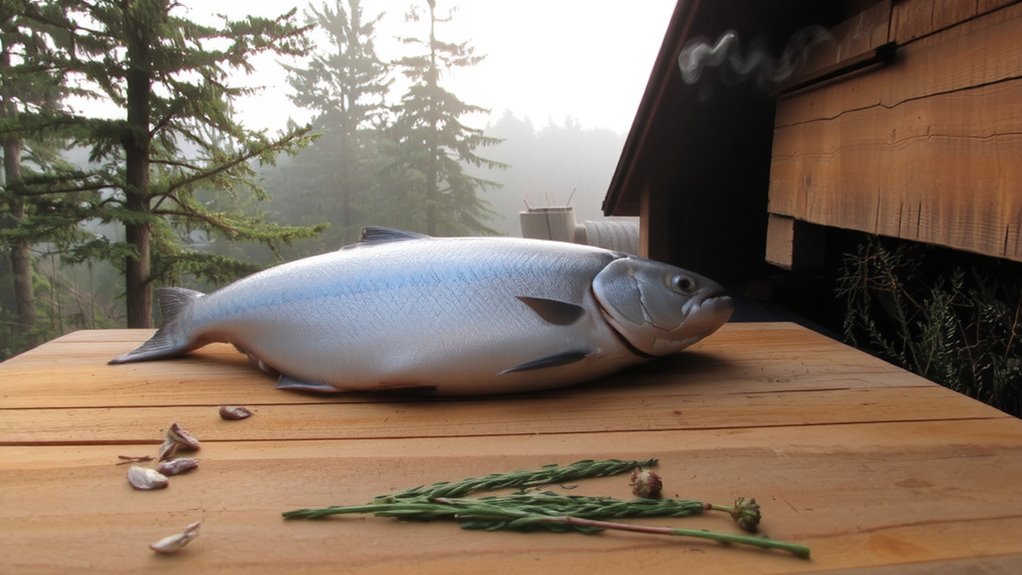
Ever wonder why cold-smoked salmon tastes so distinctively rich and silky? That’s because cold smoking preserves moisture while infusing deep flavor, typically using smoke between 68–86°F. Unlike hot smoking, it doesn’t cook the fish, leaving the flesh firm yet buttery. You’ll find this method has strong historical significance-Indigenous peoples and Nordic communities relied on it for centuries to store salmon through harsh winters. They used traditional methods: salting, air-drying, then slow smoking over wood like alder or oak. These techniques remain effective today, requiring no modern equipment. Cold smoking extends shelf life safely when done correctly, offering a preservation strategy that’s both efficient and time-tested. While it demands precision in temperature and humidity control, the payoff is high-dense protein that lasts, flavor that’s complex but not overpowering, and minimal energy input. It’s worth it if you value self-reliance and quality.
Prepare Your Fresh-Foraged Salmon for Cold Smoking
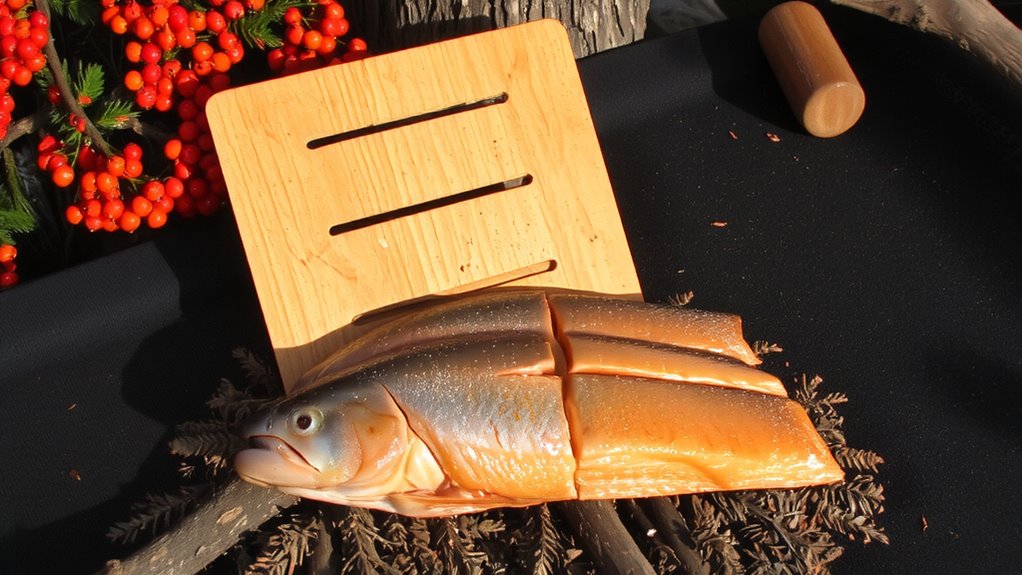
Your salmon’s quality starts the moment it’s pulled from the water-choose fish that are fresh, firm, and clean, with no off-odors or discolor destructor. Immediately gut and bleed the fish to preserve texture and safety. Rinse thoroughly in cold water, then pat dry. For fish skin prep, leave the skin on-it acts as a protective barrier during curing and smoking. Trim away damaged areas, but keep the skin intact to prevent uneven moisture loss. Cut the salmon into even-sized fillets or sides to guarantee consistent curing duration. Thicker cuts require longer exposure to the cure, so uniformity matters. Weigh the pieces to calculate cure ingredients accurately later. Chill the prepped fish on a rack over a tray, allowing air circulation, before moving to curing. This step stabilizes surface moisture and improves cure adherence. Proper prep directly affects texture and shelf life-don’t skip it.
Make a Brine That Preserves and Flavors Cold-Smoked Wild Salmon
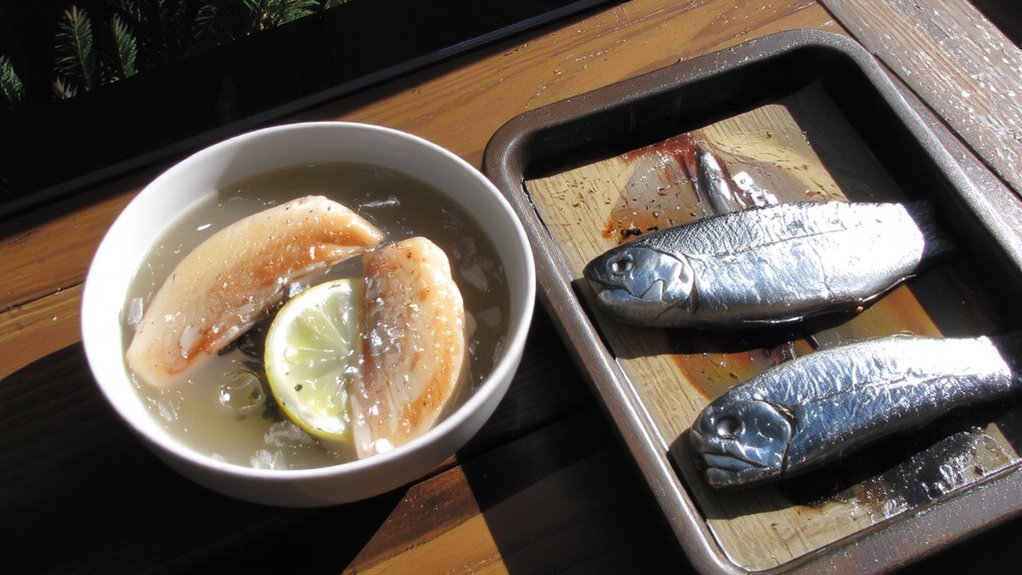
Now that the salmon is prepped and chilled, it’s time to build the brine-a step that locks in moisture, adds flavor, and helps prevent spoilage during the long smoke. Your brine composition should include 80 grams of non-iodized salt and 100 grams of brown sugar per liter of water, plus optional curing salt (sodium nitrite) at 0.25% to inhibit bacterial growth. Dissolve ingredients fully to guarantee even absorption. You can adjust sugar slightly based on salmon fat content-higher fat takes sweetness better. For flavor infusion, add crushed peppercorns, garlic, or dried dill, but keep additions minimal since cold smoking contributes most of the taste. Submerge the fish completely and refrigerate for 8–12 hours. Over-brining toughens texture; under-brining risks moisture loss. The correct balance in brine composition guarantees preservation and firmness, while mild flavor infusion complements without overpowering the salmon’s natural taste.
Set Up Your Cold Smoker Right for Wild Salmon
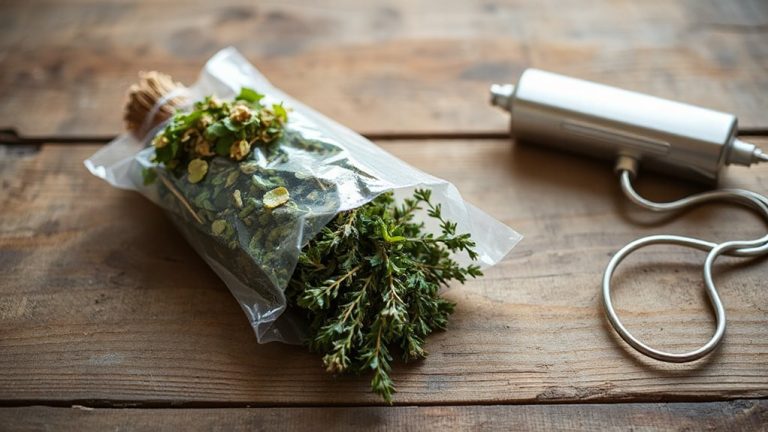
Though cold smoking requires more time than hot smoking, it preserves the salmon’s delicate texture when you keep temperatures below 85°F (29°C) throughout the process. Proper smoker placement matters-set it in a shaded, well-ventilated area away from wind gusts that disrupt smoke flow. Position the unit on a non-flammable surface, clear of vegetation. Effective airflow management guarantees consistent smoke circulation and prevents hot spots. Adjust dampers to maintain a steady draft, allowing smoke to envelop the salmon without stagnating. Use a smoker with adjustable vents for precise control. Avoid overcrowding racks; space fillets evenly to support even exposure. A thermometer helps confirm ambient stability, but don’t rely on it alone-observe smoke behavior. Thin, steady smoke indicates proper airflow. Thick, pooling smoke suggests poor ventilation. Manage intake and exhaust evenly. This setup sustains safe, efficient cold smoking over many hours.
Control Smoke and Temperature for Safe Results
Since temperature control is critical during cold smoking, keeping the chamber under 85°F (29°C) guarantees the salmon stays safe while absorbing smoke flavor. You need consistent monitoring-fluctuations undermine temperature consistency, risking spoilage. Use a reliable digital thermometer with an alarm to alert you if things drift. Smoke density matters, too: aim for a thin, steady stream of smoke, not thick billows. Heavy smoke builds creosote, which ruins taste and texture. A well-regulated smoke generator or modulated wood chip feed helps maintain this balance. Hardwoods like alder or apple deliver clean smoke at low output. Cold smoking takes hours, even days, so stable conditions are non-negotiable. Even brief spikes in heat or surges in smoke density compromise safety and quality. You’re not rushing; you’re managing an environment. Treat both temperature consistency and smoke density as measurable, controllable variables-because they are.
Avoid Botulism When Cold-Smoking Salmon
If you’re cold-smoking salmon, you’re working in the temperature range where botulism risk is real, so preventing bacterial growth isn’t optional-you have to control every variable that affects safety. *Clostridium botulinum* thrives in anaerobic conditions, exactly what you create when you vacuum-seal or tightly wrap smoked fish. Without oxygen and in temps above 38°F, this bacterium can produce deadly toxin formation. You must cure the salmon long enough with the right amount of curing salt (with sodium nitrite) to inhibit spore activation. Dry brining at 3–5% salt by weight for at least 12 hours guarantees deep penetration. Keep your smoker below 70°F at all times-if it creeps higher, you’re accelerating danger without killing pathogens. Trim and brine uniformly so no spots are under-cured. Every step either reduces risk or increases it. There’s no middle ground.
Store and Enjoy Your Cold-Smoked Wild Salmon Safely
After you’ve finished cold-smoking your salmon, store it right-because improper handling can undo all the safety work you’ve done. Proper storage means vacuum-sealing the fish and keeping it at or below 34°F. If you’re not eating it right away, freeze it at 0°F; it’ll stay safe indefinitely, though flavor longevity drops after three months. In the fridge, use it within two weeks. Don’t leave it out more than two hours. Plastic wrap or foil won’t protect it as well as vacuum sealing, so invest in a good sealer. Thaw frozen salmon slowly in the fridge, not on the counter. Slices stay fresher when cut only before serving. Proper storage keeps texture firm and taste clean. This method won’t extend shelf life beyond cold-smoked limits, but it maintains quality without risk. You’ve done the work-don’t waste it.
On a final note
You’ve prepared, brined, and cold-smoked your wild salmon correctly when temperature stays under 80°F and smoke flows steadily. Botulism risk drops with proper salting and refrigeration. Stored at or below 34°F, smoked salmon lasts up to 3 weeks or 3 months frozen. It’s safe only if processed precisely-skipping steps risks spoilage. This method preserves flavor and texture, but demands strict control. Cold smoking works, but only when done right.