Using a Candle and Gasoline Rag for Controlled Burn in Open Areas
You shouldn’t use a candle and gasoline-soaked rag for a controlled burn-gasoline vapors can ignite explosively, even 5 feet from the flame, and wind gusts over 15 mph can turn it into an uncontrolled fire in seconds. Most areas ban accelerants like gasoline due to high risk and legal penalties. Safer options like commercial fire starters or drip torches give better control with less volatility. Proper gear and conditions reduce danger, but risks remain high without training and preparation-knowing the full process makes all the difference.
Notable Insights
- Using a candle and gasoline-soaked rag for ignition is extremely hazardous due to explosive vapor risks.
- Gasoline fumes can ignite suddenly, causing flash fires even before flames reach the rag.
- Most regions ban gasoline as a fire accelerant under strict open-burn regulations.
- Wind gusts over 15 mph can spread flames rapidly, making control nearly impossible.
- Safer alternatives like commercial fire starters or drip torches offer reliable, controlled ignition with less risk.
Why This Method Is Rarely Safe (And Often Illegal)
While it might seem like a quick way to start a controlled burn, using a candle and gasoline-soaked rag is almost never safe-and it’s often against the law. You’re risking explosive ignition, as gasoline vapors can ignite suddenly and unpredictably, even from a small flame. This method gives you little control once the fire starts, increasing the chance of rapid flame spread. Most areas have strict burn regulations, and using accelerants like gasoline typically violates them. If caught, you could face serious legal consequences, including fines or criminal charges. Fire departments and environmental agencies consistently warn against this approach. Safer, legal alternatives-like drip torches or approved ignition tools-offer better control and compliance. You don’t need unreliable methods when proven, regulated tools exist. Sticking to approved practices reduces risk to you, others, and the environment while keeping you on the right side of fire safety laws.
When Weather and Terrain Reduce Fire Risk Slightly
How do conditions ever make a risky method seem less dangerous? Only slightly-and never safe. If the wind direction is steady and blowing away from vegetation or structures, it can reduce immediate flame spread. A downhill terrain slope may slow fire movement, since fire typically climbs faster than it travels downward. You’ll still face unpredictable ignition from gasoline vapors, but with low wind speeds under 5 mph and a clear buffer zone, the outdoor risk drops marginally. You’re not eliminating hazard-you’re just limiting some variables. Even with favorable wind direction and flat to negative terrain slope, fuel saturation, rag placement, and candle stability remain uncontrolled. These conditions might lower the odds of rapid escape, but they don’t change the method’s fundamental instability. Your margin for error stays razor-thin. Slight risk reduction isn’t reliability. You’re still using a volatile setup in an open environment where outcomes are hard to predict or contain.
Safer Alternatives to Gasoline and Open Flame
What if you could ignite a fire reliably without risking runaway flames? You can-by using purpose-built fire starters instead of gasoline. Commercial fire starters burn predictably, ignite with a candle or match, and won’t explode. Drip torches, fueled by diesel-kerosene mix, offer controlled ignition with less volatility than gasoline rags. Both require fire extinguishers on standby and work best under professional supervision, especially in variable conditions. Gasoline evaporates quickly, creating explosive vapor; alternatives reduce that risk markedly. Flame height and spread are easier to manage, giving you better control over burn patterns. While diesel-based tools need cleaning, their safety margin is higher. You’ll still need weather checks and clear boundaries, but the ignition phase becomes far safer. Real-world use shows fewer flare-ups and improved response time if ignition lines escape. Skip the rag and candle-choose tools designed for the job.
How to Set Up Fire Tools: With Extreme Caution
If you’re using ignition tools in high-risk environments, setting them up correctly is non-negotiable. Place your candle in a metal holder weighted to resist tipping, and keep it upwind of the gasoline-soaked rag, which should rest on non-flammable soil or gravel. Maintain at least ten feet between ignition points to improve spark control. Use a wire mesh screen around the burn zone to aid fire containment and block rolling embers. Never use accelerants near the candle. Check wind speed; over 10 mph increases spark travel and reduces control. Have a shovel and fire extinguisher rated Class B nearby, within arm’s reach. Confirm all tools are dry and functional before lighting. Even small setup flaws can compromise safety, so double-check placement, shielding, and spacing. Your margin for error is narrow-rigorous setup reduces risk more than any tool feature can.
What Goes Wrong (And How Fast It Spreads)
Though you follow every step, ignition can still escalate within seconds when conditions shift unexpectedly-wind gusts above 15 mph double flame spread rates, turning a controlled burn into a runway fire in under 30 seconds. A gasoline-soaked rag near open flame risks flash ignition, especially in low humidity where vapors ignite before you react. Once lit, rapid combustion follows, consuming fuel sources faster than anticipated. You might not notice dry grass or leaf litter nearby until flames leap 10 feet ahead. Surface fires spread at 2–5 mph under average conditions but can jump to over 10 mph with slope or wind. The candle’s small flame gives false security-it only takes one gust to carry embers 30 yards ahead, sparking spot fires. Flash ignition from pooled gasoline vapor can occur 5 feet from the original source, bypassing firebreaks. Reaction time is less than 2 seconds. Visibility drops as smoke builds, limiting escape routes. Control is lost quickly.
Emergency Gear and When to Call 911
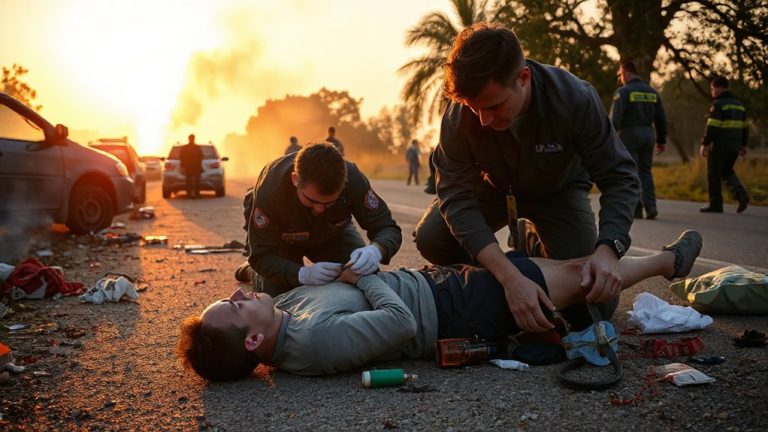
A fire extinguisher rated Class B for flammable liquids is your first line of defense, and carrying a 10-pound dry chemical model gives you about 12 seconds of active spray at a 5-to-10-foot range-enough to knock down a gasoline-fed flame if caught early. You should also keep a shovel and water bucket nearby to smother sparks. If the fire grows beyond your control, stop fighting it and follow evacuation procedures immediately. Move upwind and away from fuel sources. You’re not saving time or property if you’re injured. Call 911 the moment the fire escapes containment, especially near structures or dry vegetation. Make sure your emergency contacts have your location and activity details before you start. Rely on them if you can’t call. These steps won’t prevent every accident, but they reduce risk when seconds matter. Preparedness beats reaction. Including a best car emergency tool kit ensures you have critical supplies like flares, gloves, and a multi-tool during roadside emergencies.
On a final note
You shouldn’t use gasoline and rags for controlled burns-it’s unpredictable and often illegal. Even in calm conditions, wind shifts or dry fuel can ignite fast, spreading beyond control. Safer tools like drip torches or propane burners offer consistent flames without explosive risks. If you proceed despite the dangers, wear flame-resistant gear, keep water or a 911 call ready, and never work alone. Reality is simple: this method risks lives more than it delivers results.