Using Inflatable Liner Dams for Temporary Reservoir Construction
You’re using inflatable liner dams because they set up fast, contain water reliably, and cost less than permanent structures. They deploy in hours, need no heavy machinery, and seal tightly on cleared ground. Made from reinforced rubber or UV-stabilized PVC, they handle variable loads and harsh conditions. Just anchor securely, inflate slowly, and avoid overpressure. They’re reusable, portable, and ideal for seasonal or emergency storage. If you’re planning temporary reservoirs, the next steps clarify how site and material choices shape performance.
Notable Insights
- Inflatable liner dams use flexible, reinforced membranes to create temporary reservoirs for water storage.
- They are rapidly deployed and deflated, making them ideal for short-term or seasonal water needs.
- Proper site preparation prevents damage from sharp objects and ensures a secure ground seal.
- Anchoring systems and controlled inflation maintain structural stability under varying water loads.
- Material selection depends on climate, duration, and environmental conditions to ensure durability and compliance.
What Are Inflatable Liner Dams and How Do They Work?
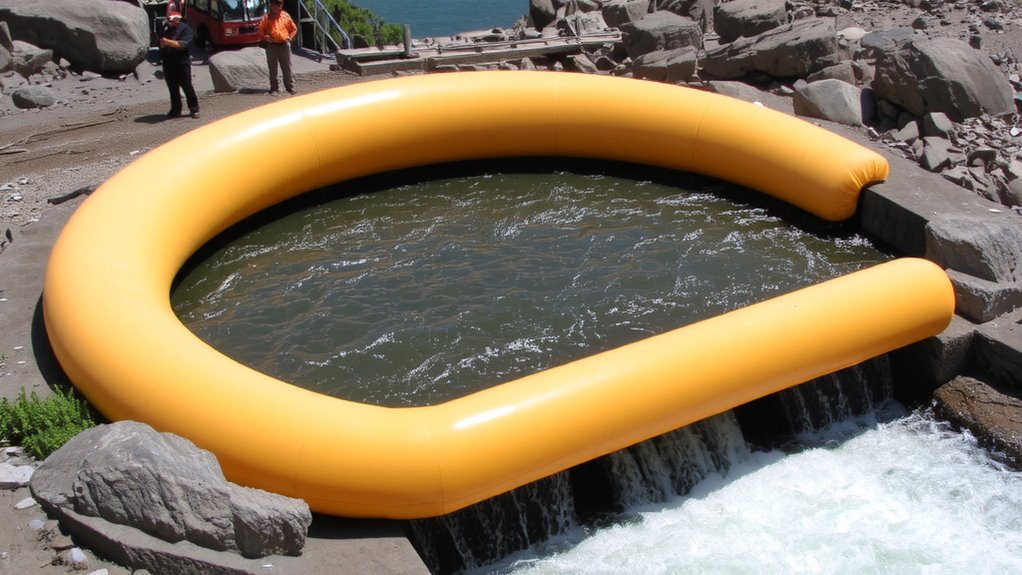
While you might not think of air-filled barriers as serious tools for water control, inflatable liner dams are engineered systems designed to hold back water using flexible membranes anchored to a reservoir’s base. You inflate them using a controlled inflation mechanism, typically with air or a water-air mix, allowing the dam to rise and form a seal against hydrostatic pressure. Material durability is critical-these liners are made from reinforced rubber or synthetic fabrics that resist punctures, UV exposure, and abrasion. They must maintain integrity under constant stress and fluctuating water levels. The inflation mechanism enables quick deployment and deflation, making them adaptable for temporary control. Anchoring prevents slippage, while seam strength matches operational demands. Though not permanent, they offer reliable performance when properly maintained. You can deflate and store them after use, minimizing long-term wear. Their effectiveness depends on correct sizing and site-specific adaptations.
Where Are Inflatable Liner Dams Commonly Used?
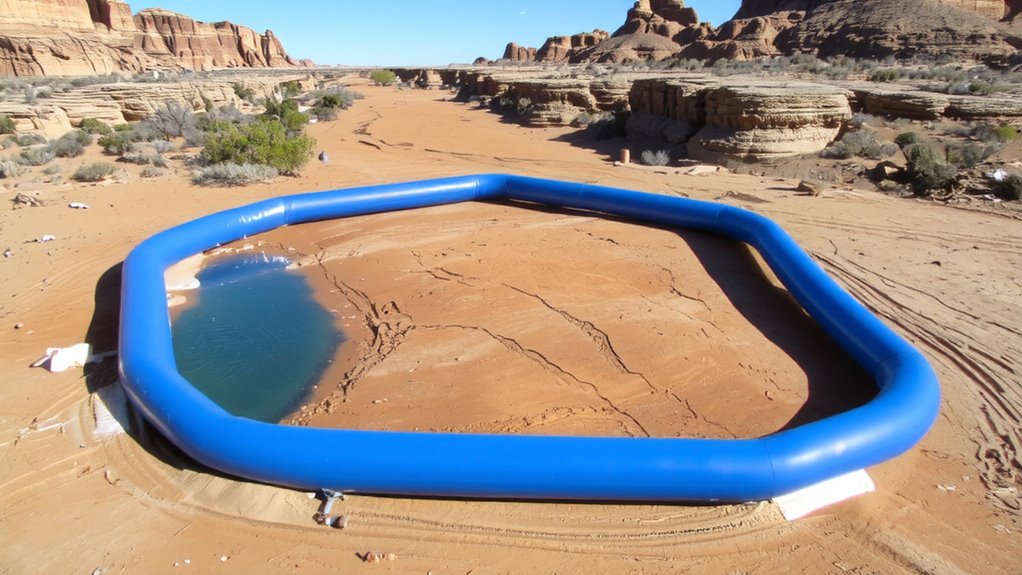
How do you decide where an inflatable liner dam makes sense? You look at temporary water needs and site conditions. These dams are ideal when you need quick deployment for agricultural irrigation or flood mitigation without permanent infrastructure.
| Application | Location Type | Primary Use |
|---|---|---|
| Agricultural irrigation | Farmland valleys | Store seasonal runoff for crops |
| Flood mitigation | Urban drainage channels | Control stormwater surges |
| Temporary reservoirs | Remote construction sites | Provide water supply during projects |
You’ll find them across rural and semi-urban areas where flexibility matters. They’re not for high-pressure, long-term storage but work well where water control is short-term and location-specific. If your goal is rapid setup and removal, and you’re managing flow for farming or flood control, inflatable liner dams fit. They seal with inflation, deflate for removal, and adapt to uneven terrain-practical solutions for targeted water management.
Benefits of Inflatable Liner Dams for Temporary Storage
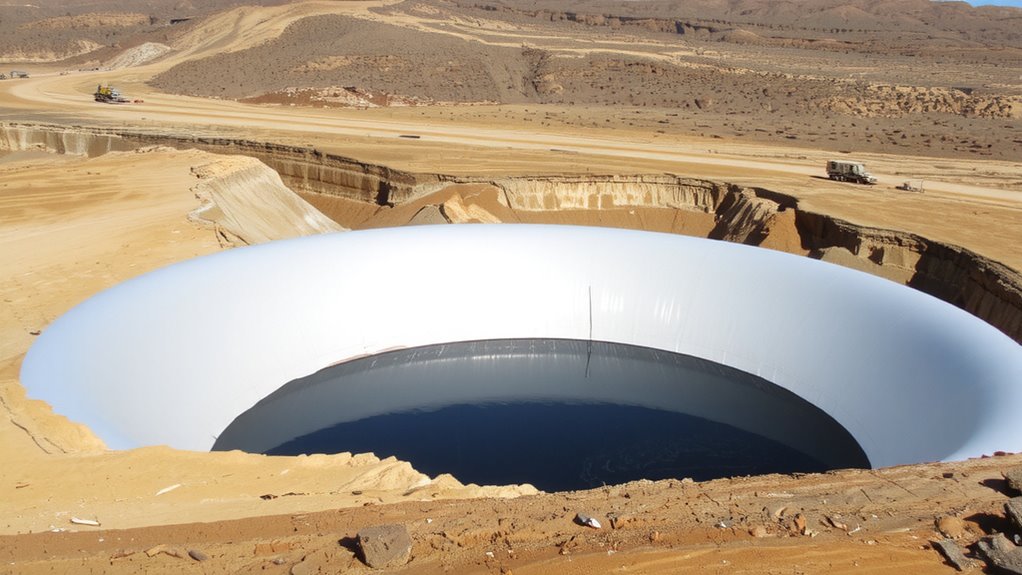
When you need a rapid, reversible solution for temporary water storage, inflatable liner dams deliver with minimal site disruption and setup time. Their rapid deployment means you can have a functional reservoir in hours, not days, using lightweight materials that don’t require heavy machinery. You’ll see real cost savings in labor, transportation, and site prep-no concrete pours or excavation. These dams are reusable and easily relocated, making them efficient for seasonal or emergency use. They seal tightly against the ground when inflated, maintaining reliable water retention without complex anchoring. While they’re not for permanent high-pressure storage, their performance in controlled, temporary situations is proven. You maintain flexibility without sacrificing control. Inspections and repairs are straightforward, reducing downtime. If you’re working on construction dewatering, environmental projects, or irrigation bypasses, this system offers a practical, field-tested option. You get predictable results with low overhead.
Setting Up an Inflatable Liner Dam: Step by Step
Since success depends on proper installation, start by inspecting the site for sharp rocks, debris, and uneven surfaces-these can damage the liner during inflation and affect seal integrity. Lay the dam flat, ensuring full contact with the ground to prevent shifting. Secure the anchor points firmly; failure here compromises material durability under pressure. Connect the inflation system and begin slowly-maintaining steady inflation control prevents overexpansion and stress on seams. Use calibrated gauges to monitor air or water input, adjusting as needed for even rise. Do not exceed the manufacturer’s pressure specs; overinflation weakens long-term performance. Check for wrinkles or twisting, which create weak zones. Once fully inflated, inspect for leaks and confirm the seal remains tight along the base. Material durability largely depends on correct setup and sustained inflation control. A well-installed liner holds pressure consistently, ensuring reliable containment throughout use.
Key Selection Factors: Site, Terrain, and Duration
A liner dam’s effectiveness hinges on matching the design to your site’s specific conditions, so you’ll need to assess ground stability, slope angle, and expected water load before choosing a model. Soft or erodible soils require anchoring systems that distribute pressure evenly to prevent shifting. Steeper slopes increase stress on the liner, demanding higher material durability to resist tears and punctures. If you’re working in harsh UV or extreme temperatures, opt for UV-stabilized PVC or reinforced rubber, which last longer under strain. Short-term projects may use lighter materials, but long durations demand robust construction to avoid failure. Consider the environmental impact-some materials aren’t recyclable and can leach chemicals if damaged. Always check local regulations. Water containment isn’t just about holding volume; it’s about reliable, safe, and responsible performance over time and terrain.
On a final note
You get solid, short-term water containment with inflatable liner dams if your site suits them. They’re lighter and faster to deploy than rigid alternatives, cutting setup time and labor. Performance depends on ground prep and anchoring-uneven terrain causes leaks. Material durability holds up under normal conditions, but sharp debris and UV exposure reduce lifespan. They work for weeks to months, not years. You trade permanence for flexibility, so choose based on project length and site control.