Using Infrared Thermometers to Monitor Cooking Temperatures of Wild Game
You can check surface temps on wild game in under a second with an infrared thermometer, but it won’t show internal doneness. Moisture, char, and shine skew results, especially on lean, variable surfaces. Hold it 6–12 inches straight on for best accuracy. It’s fast and non-contact, but limited by reflectivity and emissivity errors. Pair it with a probe thermometer to verify core temps-especially critical for safe cooking at 145°F or higher. You’ll get reliable results only when both methods agree.
Notable Insights
- Infrared thermometers measure surface temperature only and cannot confirm internal doneness of wild game.
- Surface moisture, fat, char, and reflectivity affect accuracy due to changes in emissivity.
- For reliable readings, scan dry, matte surfaces from 6–12 inches away at a perpendicular angle.
- Avoid steam, smoke, and environmental heat sources that interfere with infrared signals.
- Combine infrared with a probe thermometer to accurately monitor both surface and internal temperatures.
How Infrared Thermometers Read Game Meat Heat
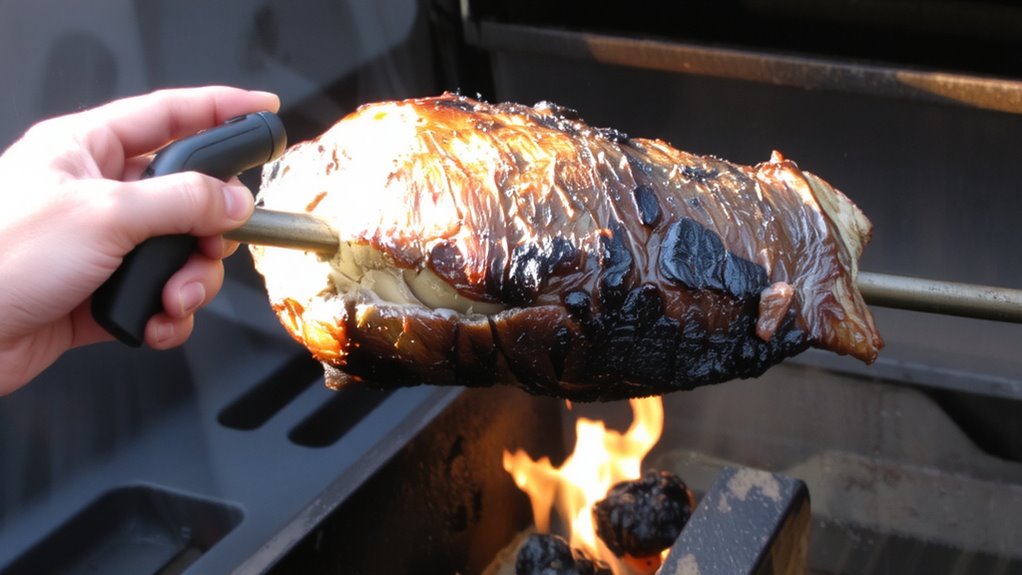
How exactly does an infrared thermometer measure the heat of wild game meat? It detects thermal radiation emitted from the meat’s surface without contact. Your reading depends heavily on two factors: emissivity variations and surface reflectivity. Most game meats have emissivity values around 0.95, but this can shift with moisture, charring, or fat content. If your thermometer assumes a fixed emissivity, you might see errors of 2–5°F. Surface reflectivity also matters-shiny or wet areas bounce off ambient IR sources like flames or sunlight, skewing results. You’ll get the most accurate readings on matte, dry surfaces. For consistent monitoring, aim perpendicular to the meat and avoid glossy spots. These devices respond in under a second, but they only read surface temperature, not internal doneness. You need to account for both emissivity variations and surface reflectivity to trust what the display shows.
Use Infrared Without Piercing the Meat
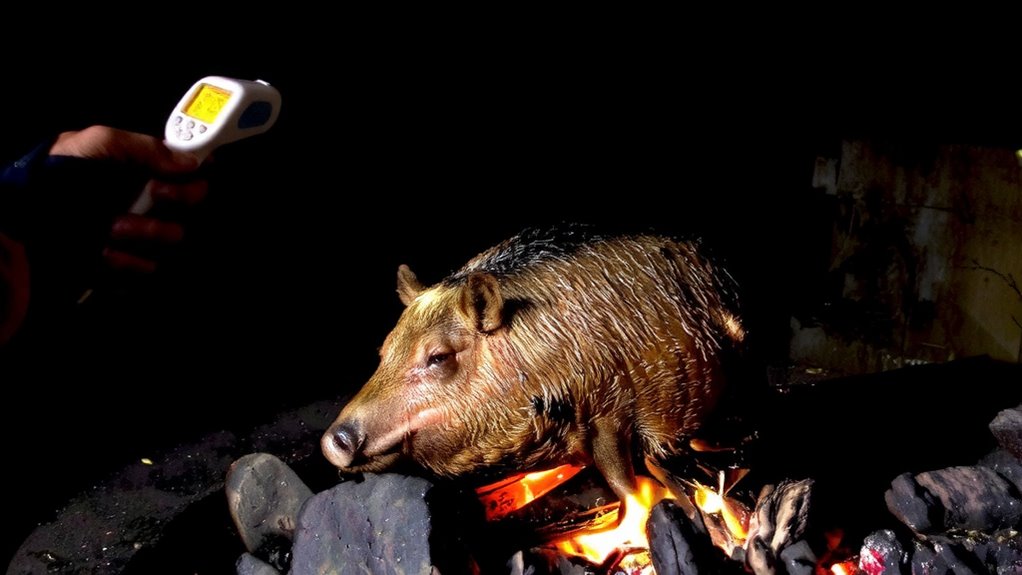
While you can’t check internal doneness with infrared alone, skipping the stab keeps meat intact and reduces contamination risk. Infrared thermometers measure surface temperature without puncturing, preserving juices and minimizing exposure to bacteria. They’re fast, typically giving readings in under a second. But surface reflection can skew results-shiny or charred spots may bounce off the laser, giving false lows. Emissivity variance between different game meats affects accuracy too; venison and wild boar emit infrared energy differently, so generic settings might misread by a few degrees. For consistent checks, aim for dull, flat areas of the meat, not glossy fat or bone. It won’t replace probe thermometers for internal checks, but it helps monitor searing or resting phases. You’ll avoid overcooking edges and track surface safety when flipping or pulling off heat. Use it as a real-time guide, not a final judge.
Scan the Surface Right: Angle and Distance
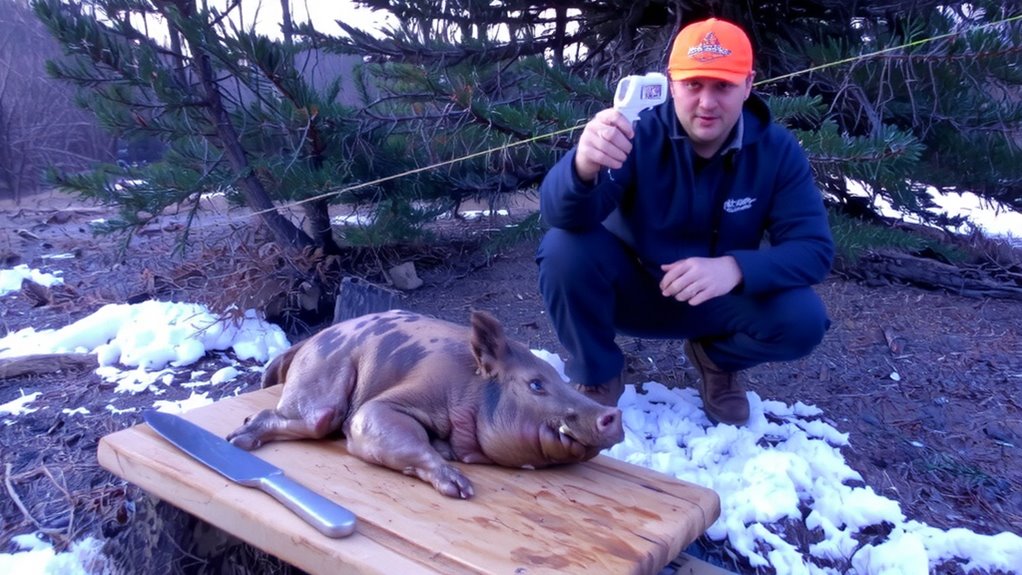
You’ve already seen how scanning without contact keeps meat safe and intact, but getting reliable readings means paying attention to how you aim the thermometer. Hold the device perpendicular to the surface-angles greater than 30 degrees skew results due to surface reflection. Stay within 6 to 12 inches, depending on your unit’s distance-to-spot ratio, to guarantee you’re measuring the intended area. Most wild game surfaces aren’t perfectly matte, so adjust the emissivity settings if your model allows it; default settings (usually 0.95) work for most cooked meats but may overestimate temp on shiny or fatty surfaces. Surface reflection from nearby heat sources, like flames or oven walls, can also distort. Keep the lens clean and steady. These factors aren’t just technical details-they impact accuracy every time you pull the trigger. Getting the angle and distance right means fewer surprises and better control.
When Infrared Gets It Wrong (And How to Compensate)
Even though infrared thermometers deliver fast surface readings, they’ll mislead if you’re not accounting for surface conditions like moisture, fat, or char. These elements alter emissivity, skewing results-especially on reflective surfaces such as shiny pans or glazed game meat. You’ll get inaccurate numbers when the thermometer can’t absorb enough infrared energy. Environmental interference from steam, smoke, or direct sunlight also disrupts readings, so take your measurement quickly and shield the lens when possible. Dust or humidity in camp kitchens can further degrade performance. To compensate, wipe surfaces dry and aim perpendicular to reduce reflection errors. Use a consistent distance-usually under 6 inches-to maintain accuracy. Matte finishes give more reliable data than glossy ones. Don’t trust a single reading; scan multiple spots to spot inconsistencies. While the tool’s fast, it’s limited by physics, not design flaws. Know those limits, and you’ll avoid dangerous assumptions.
Pair It With a Probe for True Internal Temp
Since infrared thermometers only measure surface temperature, you’ll need a probe thermometer to verify the internal doneness of wild game. Relying on surface readings alone can mislead, especially with thicker cuts or uneven heat. Using both tools gives you dual sensor fusion-surface and core data combined for better accuracy. A digital probe with a thin stem and fast response provides real time validation of meat’s internal state, ensuring precise doneness without guesswork. Pair an infrared gun for quick checks during searing and a leave-in probe for steady monitoring in the oven or on the grill. The combination compensates for each device’s limits, reducing error margins. While it adds slight complexity, the payoff is consistent, reliable results-critical when cooking lean, low-fat game that overcooks easily. Dual use doesn’t guarantee perfection, but it offers the closest approximation to true internal temperature under real cooking conditions.
Safe Cooking Temperatures for Wild Game
When cooking wild game, hitting the right internal temperature matters-it’s the difference between safe, tender meat and a risky meal. For game safety, always cook venison and other lean meats to at least 145°F, followed by a three-minute rest. Ground game should reach 160°F to eliminate pathogens. Temperature accuracy is critical-rely on a calibrated meat thermometer, not guesswork, since wild game lacks the fat that signals doneness in domestic meat. Infrared thermometers help monitor surface temps, but they don’t replace a probe for internal readings. You need both tools to avoid undercooking or drying out the meat. Misreading by even 10°F can compromise safety or texture. Consistent temperature checks guarantee reliable results, especially with dense cuts like shoulder or loin. Proper doneness isn’t about preference-it’s about preventing illness. Stay precise. Stay safe.
Pro Tips to Nail Doneness Every Time
If you want to get doneness right every time, start by using an infrared thermometer to check surface temperature before inserting a probe for internal readings-this two-step method catches misleading hot spots and gives you a clearer picture of actual meat conditions. Wild game’s lean composition means it heats unevenly, and surface temps can mislead in variable cooking environments. Account for this by verifying internal temps in multiple spots, avoiding bone and fat. Meat texture shifts quickly past 140°F, so check early and often. Let rest time stabilize temp and moisture.
| Doneness | Emotional Outcome |
|---|---|
| Rare | Anticipation, slight risk |
| Medium | Satisfaction, reliability |
| Well | Caution, dryness feared |
| Perfect | Confidence, silent pride |
Adjust for cooking environment-wind, altitude, and fuel type affect heat consistency. Meat texture reflects accuracy, not luck.
On a final note
You’ll get quick surface readings with an infrared thermometer, but it won’t replace a probe. It misses internal temps, so use both. Aim within 12 inches at a 90-degree angle for accuracy. Searing hides doneness, so check multiple spots. For safety, confirm game reaches 160°F internally, 145°F for whole muscle with 3-minute rest. Infrared helps monitor pan or grill spots, but don’t trust it alone-pairing tools gives the full picture.