Communication Breakdowns in Disasters: Alternative Methods and Tools for Staying Connected
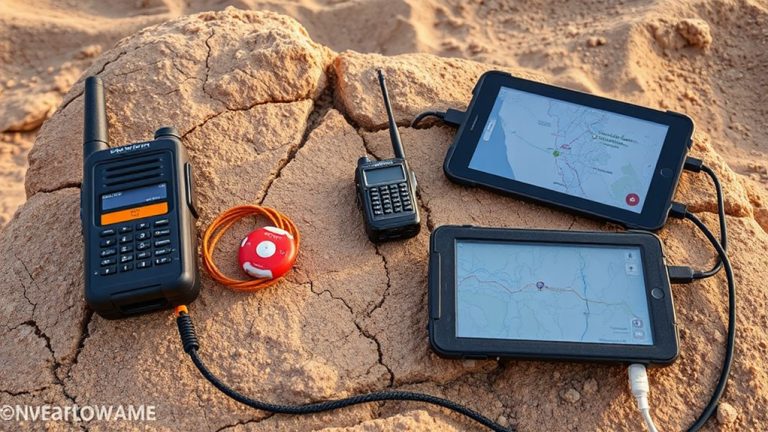
When cell service fails during disasters, satellite phones like the Iridium 9555 work globally without towers, though they need a clear sky and offer 4–8 hours of battery life. Two-way radios let you coordinate locally for up to 10 miles, especially with repeaters, but require channel discipline. Signal mirrors and message boards work without power, but need line of sight or proximity. You’ll also want a plan using out-of-area contacts and practiced check-ins-knowing what comes next could save your day.
Notable Insights
- Satellite phones enable emergency communication during cell outages by connecting via orbiting satellites instead of ground towers.
- Most cell towers lose power within hours, making backup-dependent devices like satellite phones or hand-crank radios critical for sustained connectivity.
- Two-way radios support local group coordination with reliable short-range communication when cellular networks fail.
- Signal mirrors and message boards provide simple, battery-free methods to convey location or status during daylight or in fixed locations.
- Regular testing and maintenance of communication tools ensure functionality during emergencies when reliable connection is most needed.
Why Cell Service Fails During Disasters
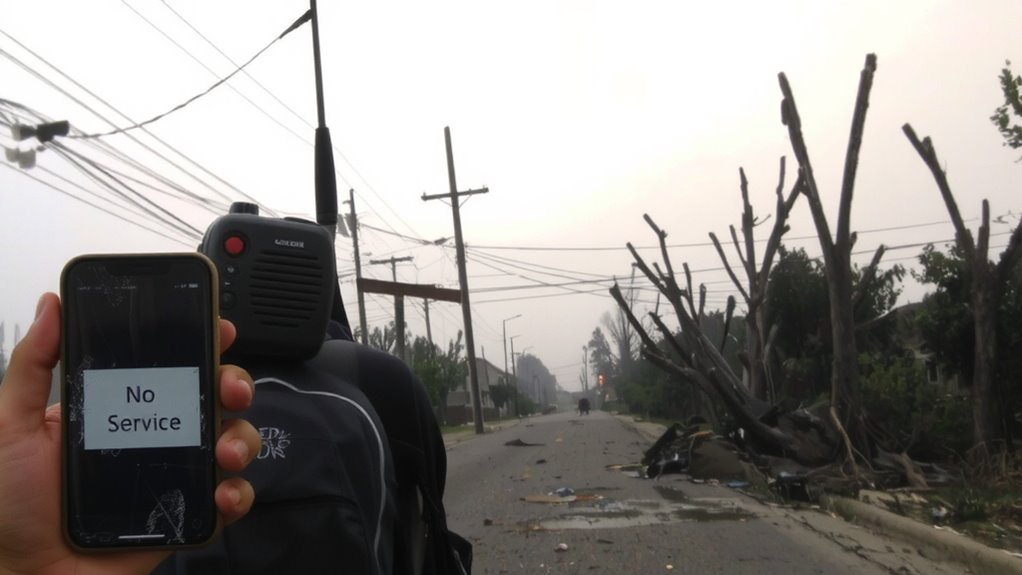
When the power grid goes down during a disaster, cell towers often stop working because most aren’t equipped with backup power long enough to last more than a few hours. You’re likely to lose service quickly when that happens. Even if some towers stay online, network congestion kicks in as everyone tries to call or text at once, overwhelming the system. Towers can’t handle the spike, so connections drop or won’t go through. Infrastructure damage from storms, fires, or quakes makes it worse-towers get destroyed, fiber lines break, and repairs take time. Without functioning towers or clear signal paths, your phone becomes useless, even with full battery. You can’t rely on standard service when both power and physical network components fail. That’s why understanding cell network limitations matters. Planning around them gives you a better shot at staying connected when regular communication vanishes.
Use Satellite Phones When Networks Go Down
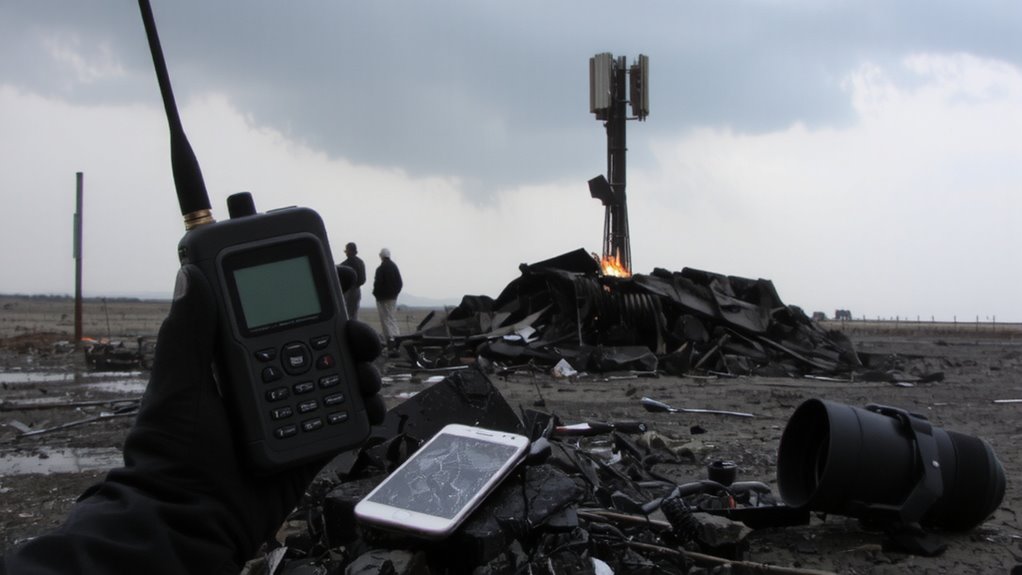
If you’re caught in a disaster where cell networks have failed, a satellite phone can keep you connected when nothing else works. Unlike regular phones, it relies on satellite coverage, linking directly to orbiting satellites rather than ground towers. This means you can make calls from remote areas or during widespread outages. Most models support emergency dialing, allowing direct contact with rescue services even without a SIM card. Units like the Iridium 9555 offer global coverage and operate in extreme temperatures, though they require a clear view of the sky. Battery life averages 4–8 hours of talk time, and service plans vary by provider. While bulkier than cellphones and requiring extra cost for minutes, their reliability in critical situations justifies the trade-offs. A satellite phone won’t replace your cell, but when networks collapse, it becomes your most dependable lifeline. Top satellite phone picks include models with global connectivity and durable designs ideal for emergency use.
Communicate Locally With Two-Way Radios
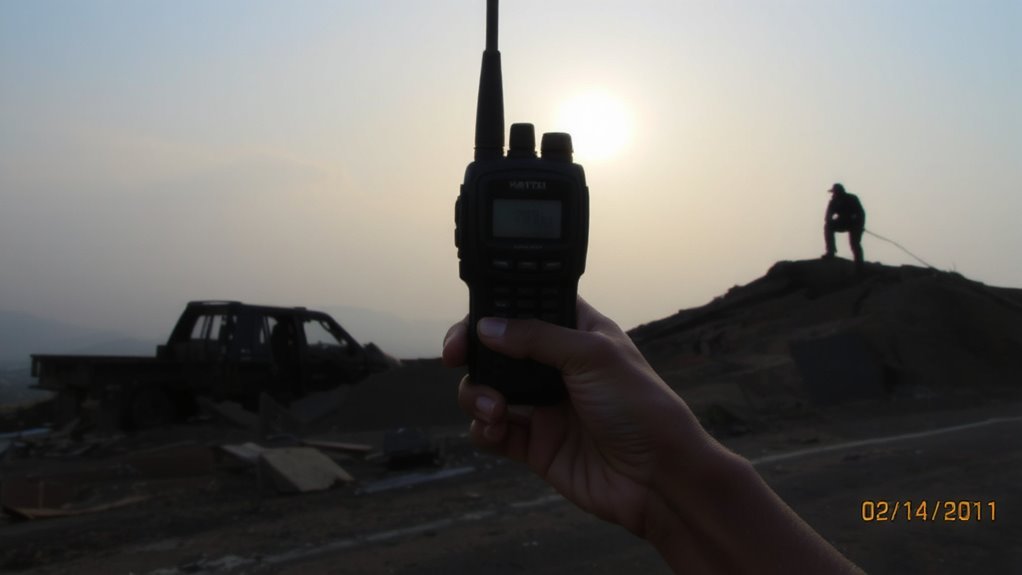
A handful of two-way radios can keep your group connected during local emergencies when cell service fails. Models with 5-watt output and FRS/GMRRS compatibility typically reach 2–5 miles in urban areas and up to 10 miles in open terrain. For better performance, use signal boosting techniques like external antennas or repeater access where available. Stick to designated channels and avoid constant chatter-this is basic radio etiquette and prevents congestion. Keep transmissions brief and clear, especially during coordination. Some units include NOAA weather alerts and waterproofing, useful in real emergencies. While not foolproof, they’re more reliable than phones when towers are down. Range drops markedly in dense buildings or hilly areas, so test beforehand. Invest in rechargeable batteries or hand-crank models for extended outages. Two-way radios work best when everyone follows the same protocols and understands their limits. For reliable options suited to different adventures, consider checking out the best 2-way radios.
Signal Mirrors, Message Boards, and Other Low-Tech Lifelines
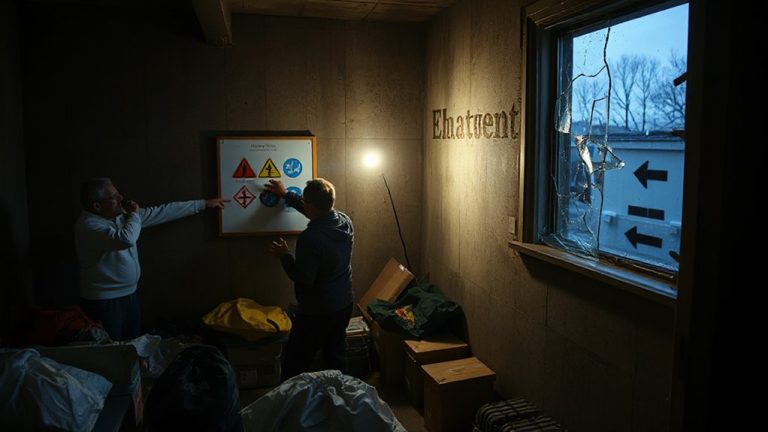
Signal mirrors, message boards, and similar low-tech tools won’t replace radios or phones, but they’re reliable backups when electronics fail. A signal mirror uses reflection to send sunlight over 10 miles, making it effective for daylight rescue-just aim the reflection at aircraft or distant responders. It requires no battery and weighs ounces, but it only works with direct sun and line of sight. Message boards allow simple message posting at shelters or homes, using dry-erase or chalk surfaces to share locations or status updates. They’re reusable, visible, and easy to read, but only help those who physically pass by. Both tools lack range and privacy, yet they perform when power and networks vanish. You’ll trade speed for dependability, but in blackouts or remote zones, that trade-off often makes sense. Keep them in your kit. For reliable performance, choose a best emergency signaling mirror with a sighting hole and retroreflector system.
Create Your Family’s Emergency Communication Plan
Your family’s safety hinges on clear communication when disasters strike and normal channels fail. You need a plan that assigns clear family roles, so everyone knows their responsibilities-like who checks on relatives or carries emergency supplies. Designate primary and backup meeting points, both near home and farther away, in case evacuation is necessary or you can’t return. Practice how to reach each other if cell networks are down, using out-of-area contacts as message relays. Write the plan down and keep copies accessible, including one in your emergency kit. Account for kids, elderly members, and pets. A well-structured plan reduces confusion, speeds response, and increases survival odds during crises. Relying on improvisation risks delay and separation. This approach costs nothing but improves resilience markedly.
Test and Maintain Your Emergency Tools
Don’t wait for a blackout or evacuation order to find out your flashlight won’t turn on or your radio only picks up static. Tool reliability depends on regular testing and simple upkeep. Check batteries every three months, even if unused-alkaline cells leak; lithium lasts longer but costs more. Replace them annually, or sooner if voltage drops below 90% of rated output. For hand-crank radios and flashlights, verify power conversion efficiency: most generate usable charge after 2 minutes of cranking, but output varies. Inspect seals and casings for moisture or cracks every six months. Follow manufacturer maintenance schedules, but adjust based on local conditions-humidity, temperature swings, and dust increase wear. Test all tools quarterly: confirm signal reception, light brightness, and charging function. Keep a log. Real-world performance during drills reveals flaws hype hides. A working tool today beats a broken promise tomorrow. Your safety hinges on what actually works, not what’s advertised.
On a final note
You won’t always have cell service when disaster hits. Satellite phones work globally but cost more and require clear skies. Two-way radios are reliable up to several miles, especially in open areas. Low-tech tools like signal mirrors or message boards don’t need power and can get the job done. Test your tools regularly. A solid plan beats any single gadget. Combine methods based on range, power needs, and terrain for dependable communication.