High Altitude Survival: Adjustments Above 8,000 Feet
You’ll need to adjust fast-lower oxygen above 8,000 feet slows thinking and cuts endurance. Headaches, nausea, or dizziness mean altitude sickness could be setting in; descend at least 1,000 feet if symptoms worsen. Breathe rhythmically, pace steadily, and stay hydrated-aim for 3–4 liters daily-even if you’re not thirsty. Wet clothing raises hypothermia risk, so avoid cotton and layer with merino or synthetics. A reliable outer shell like Pertex Shield offers solid protection without overheating. GPS and map checks keep you on track in whiteouts. Smart choices here don’t just help-they’ll be what keeps you moving safely through thin air.
Notable Insights
- Reduce pace and use rhythmic breathing to maintain oxygen intake and prevent exhaustion at high elevations.
- Descend immediately at signs of altitude sickness, especially confusion or walking difficulties, to prevent life-threatening complications.
- Prioritize hydration with 3–4 liters of water daily, drinking regularly even without thirst to combat dry air and rapid fluid loss.
- Wear moisture-wicking thermal layers and breathable windproof shells to stay dry and retain body heat in cold, variable conditions.
- Use GPS, map, and compass together to navigate accurately, as cognitive decline and whiteouts increase disorientation risk.
How High Altitude Impacts Your Body and Mind
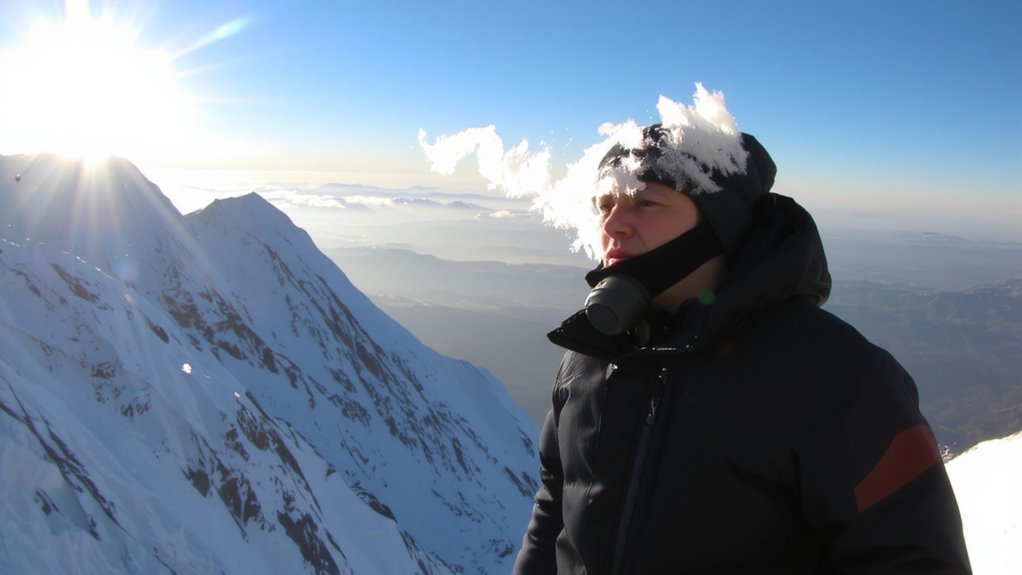
When you climb above 8,000 feet, your body starts struggling to get enough oxygen, and that affects both your physical performance and mental clarity. Oxygen saturation in your blood drops, impairing muscle function and endurance. At this altitude, even simple tasks feel harder, and recovery slows. You’ll notice cognitive decline within hours-focus slips, reaction times lag, and decision-making weakens. These effects increase steadily above 10,000 feet, especially without acclimatization. Portable pulse oximeters show oxygen saturation falling below 90%, a clear indicator of physiological stress. In survival scenarios, that mental fog can lead to critical errors. Physical tools matter less if your mind can’t direct them properly. Acclimatization over 2–3 days helps, but it’s not always possible. You must assume reduced capacity and plan accordingly. Rely on routine actions, clear checklists, and avoid complex judgments until lower.
Spot Altitude Sickness Before It Gets Dangerous
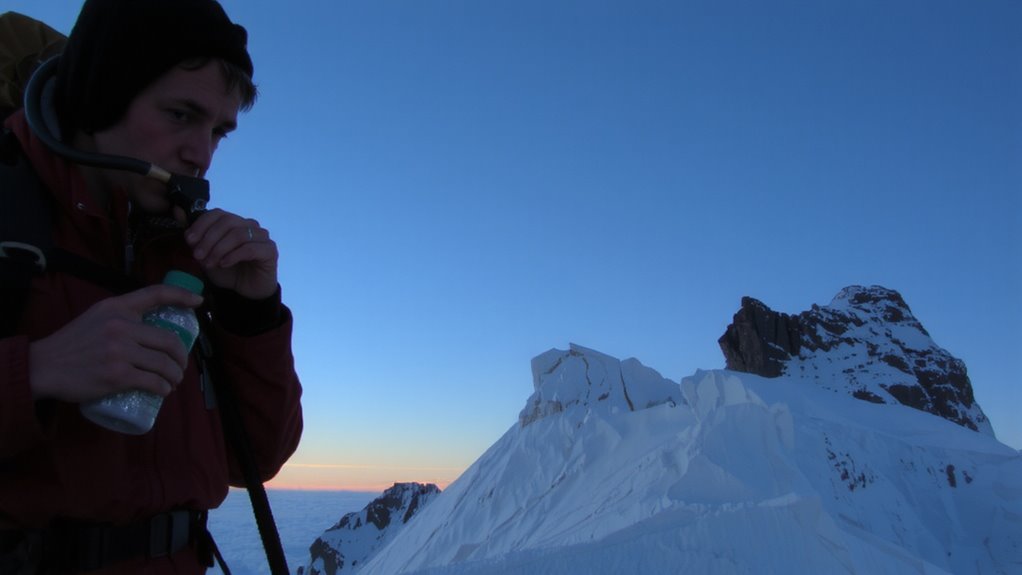
How do you know when headache and fatigue are more than just tough conditions? You watch for early symptoms like nausea, dizziness, and shortness of breath that don’t fade after rest. These aren’t just signs of exertion-they could mean altitude sickness is setting in. If confusion or trouble walking appears, the condition is worsening. Recognizing these signals early gives you time to act before it becomes critical. Immediate descent by at least 1,000 feet is the most effective step. Oxygen supplementation helps if available. Delaying action risks severe complications. Your emergency response plan must include communication tools and evacuation routes. Ignoring symptoms increases danger. Monitor yourself and others closely above 8,000 feet. Altitude doesn’t warn twice-respond early, respond fast. Survival depends on recognizing the difference between strain and sickness.
Breathe and Move Efficiently at High Altitude
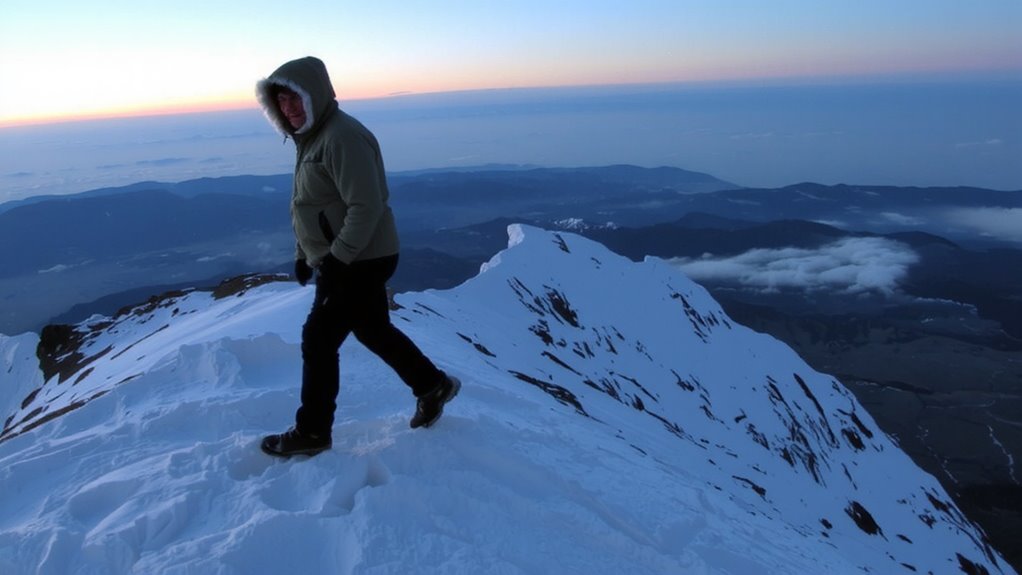
Why do some people adapt quickly while others struggle at 10,000 feet? Your body’s oxygen efficiency plays a key role. At high altitudes, air contains less oxygen, so your breathing rate increases to compensate. You can’t change the atmosphere, but you can improve how you use what’s available. Focus on deep, rhythmic breathing to maximize oxygen intake. Start slow and maintain steady pacing strategies-even if you feel strong. Overexertion too soon leads to fatigue and altitude issues. Walk at a pace where you can speak in short phrases without gasping. This isn’t about toughness; it’s about sustainable effort. Efficient movement reduces strain on your cardiovascular system. Test these methods in gradual ascents before committing to steep climbs. Proper pacing doesn’t slow you down-it prevents collapse and keeps you moving forward reliably.
Stay Warm in Shifting Mountain Weather
What good is a lightweight jacket if it soaks through on your second mile? It won’t keep you warm when temperatures drop and winds pick up. In shifting mountain weather, staying dry matters as much as staying insulated. Relying on cotton or non-breathable synthetics leads to moisture buildup, increasing hypothermia risk. Instead, use thermal layers made from merino wool or synthetic blends-they retain heat even when damp. Always top them with a shell that offers wind protection and water resistance without sacrificing breathability. Gore-Tex and similar membranes work, but they’re heavy and costly; simpler options like Pertex Shield deliver adequate defense for less weight. Adjust layers before you feel cold-waiting too long reduces effectiveness. Your system should balance warmth, moisture control, and mobility. No single piece beats a well-coordinated system tested in real alpine conditions.
Hydrate and Fuel Your Body for High-Altitude Survival
You’re managing your layers to stay dry and maintain core warmth, but even the best insulation won’t help if your body lacks fuel or hydration-especially above 8,000 feet, where altitude accelerates fluid loss and suppresses appetite. You need at least 3–4 liters of water daily; dehydration reduces oxygen efficiency, impairing stamina and judgment. Sipping won’t cut it-drink consistently, even if you’re not thirsty. Your body absorbs nutrients less effectively at elevation, so eat small, frequent meals with balanced carbs, protein, and fat to support nutrient absorption. High-calorie, easily digestible foods like nuts, dried fruit, and energy bars deliver sustained energy. Avoid heavy fats if nausea sets in. Fueling every 30–60 minutes during exertion maintains blood sugar and preserves muscle. You’ll adapt faster if you prioritize calories and fluids early. Oxygen efficiency improves slightly with acclimatization, but only if you consistently hydrate and feed your system what it needs.
Navigate Storms and Whiteouts Safely
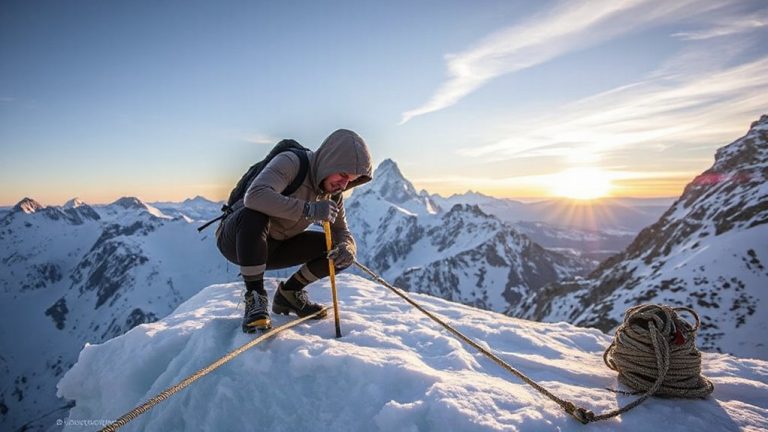
How do you keep your bearings when the world disappears in a whiteout? You rely on navigation tools that don’t depend on sight. GPS units with fully charged batteries and preloaded routes are essential, but you should also carry a topographic map and compass as backups-electronics can fail in extreme cold. Visibility risks make it easy to drift off course, even on familiar terrain, so periodic position checks are critical before the storm fully sets in. Traveling with a tether or rope between team members reduces separation risks. Staying calm and stopping to reassess prevents poor decisions. If disoriented, don’t push forward. Hunker down, mark your location, and wait for improved visibility. Relying solely on memory or landmarks fails in whiteouts. Effective navigation under these conditions depends on disciplined tool use, not instinct. A high-quality hiking compass ensures reliable directional accuracy even when technology fails.
Build a Real-Time Survival Plan for Thin Air
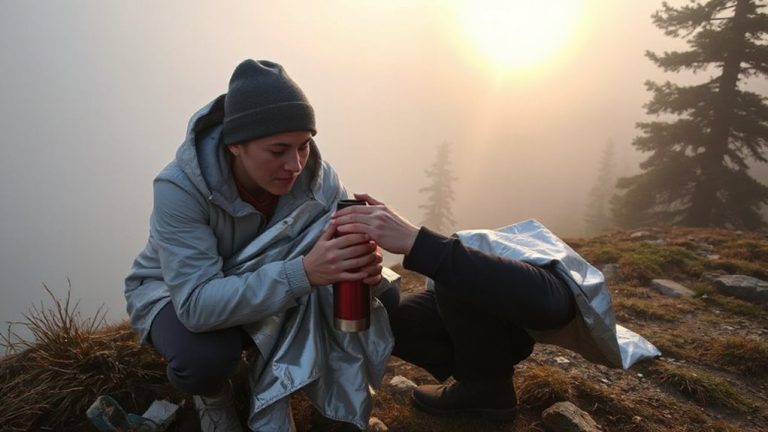
When the air gets thin, your body starts working against you-every step takes more out of you, and poor decisions come faster. You need a real-time survival plan that prioritizes oxygen management and quick access to emergency shelter. Monitor your respiratory rate and pulse; above 8,000 feet, symptoms of hypoxia appear faster, especially if you ascend more than 1,000 feet per day. Carry a portable oxygen supply-2 liters per minute at rest delays cognitive decline by up to 40%. But oxygen alone isn’t enough. Deploy a lightweight, windproof emergency shelter within 10 minutes of detecting worsening symptoms. A 2.5-pound bivy with thermal reflectivity maintains core temperature 8–10°F higher than exposed conditions. Pair gradual movement with hourly checks. If coordination drops or confusion sets in, stop, shelter, and stabilize before proceeding. Adjust plans using real data, not guesswork.
On a final note
You need less oxygen up here, so your body works harder with less margin for error. Acclimatize over 3–5 days to cut altitude sickness risk by up to 50%. Use pulse oximeters to monitor saturation-keep it above 90%. Layer synthetic insulation; down fails when wet. Drink 3–4 liters daily-dehydration impairs oxygen delivery. Avoid alcohol; it worsens symptoms. Fixed ropes and GPS beat instincts in whiteouts. Test gear at elevation beforehand. Simple, reliable tools outperform complex ones in thin air.