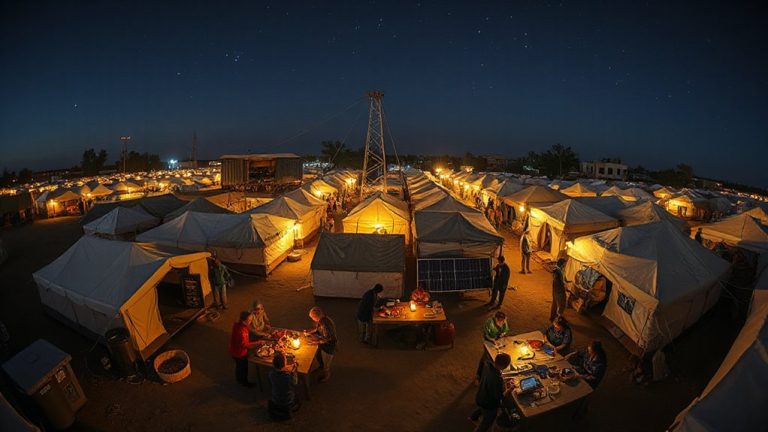
Desert Survival Tactics: Staying Cool, Hydrated, and Safe in Extreme Heat
Wear loose, reflective clothing and SPF 30+ sunscreen every two hours-reapply after sweating. Use lotion over spray for even coverage in wind. Travel between 4 a.m. and 10 a.m. or after 6 p.m. to avoid 140°F midday surfaces. Sip 1–2 cups of water hourly, but don’t chug-balance with salt. Build shade fast with a poncho and reflective materials. Watch for dizziness or confusion-early heat illness signs. Move smart to stay safe. More critical details follow.
Notable Insights
- Apply SPF 30+ broad-spectrum sunscreen every two hours and reapply after sweating to maintain protection.
- Travel during early morning or late evening to avoid peak heat when surface temperatures exceed 140°F.
- Sip 1–2 cups of water per hour to match sweat loss without risking water intoxication.
- Build shade quickly using tarps, space blankets, or ponchos to reduce heat exposure within the first hour.
- Watch for dizziness, nausea, or hot dry skin-signs of heat illness requiring immediate action.
Shield Your Body From the Sun First
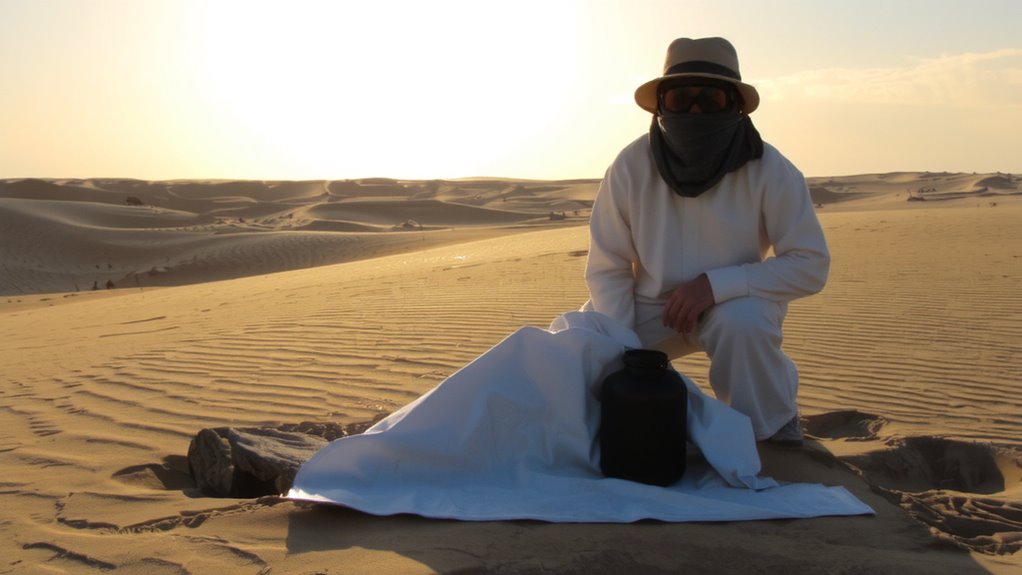
Sun exposure is the first threat you need to beat in the desert. You lose protection fast under intense UV radiation, and heat stress starts with skin damage. Sunscreen application every two hours is non-negotiable-use SPF 30 or higher with broad-spectrum coverage, and reapply after sweating. Lotions work better than sprays in wind, providing measurable, consistent coverage. Reflective clothing offers continuous defense; aluminized or white fabrics reduce radiant heat absorption by up to 80% compared to dark materials. A loose long-sleeve shirt and wide-brimmed hat add protection without trapping heat if made from breathable, moisture-wicking fabric. Together, sunscreen application and reflective clothing reduce skin temperature and delay dehydration. You can’t eliminate sun risk, but you can limit its impact with proven, repeatable methods. Relying on shade or behavior alone isn’t enough-barrier protection delivers measurable gains when survival depends on margin.
Travel During the Coolest Parts of the Day
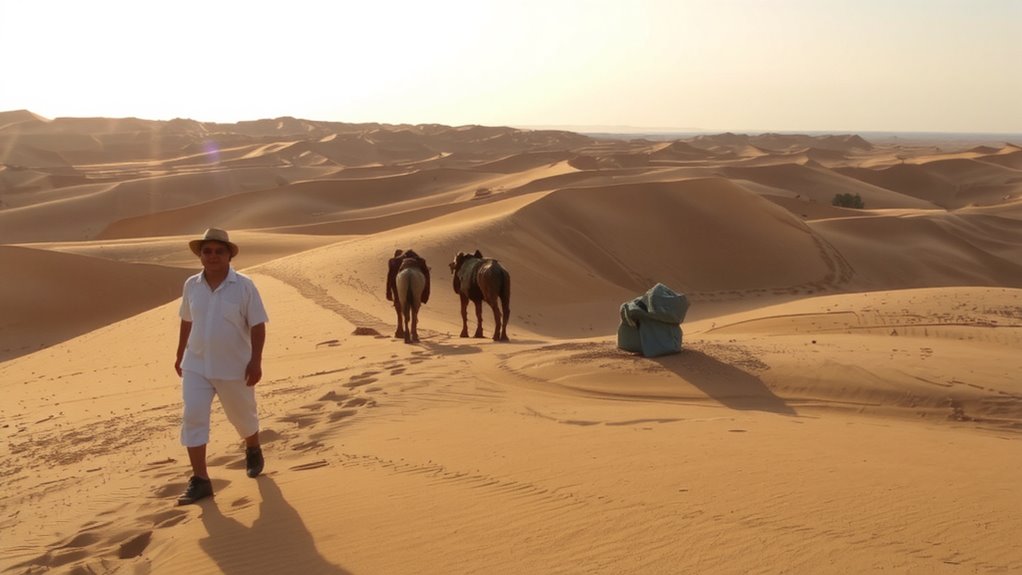
You’ve protected your skin, but timing your movement matters just as much. Travel during early mornings and late evenings when temperatures are 20–30°F lower than midday. Between 4 a.m. and 10 a.m., the desert absorbs less solar radiation, reducing heat stress. After 6 p.m., surfaces begin releasing stored heat, making movement more tolerable. You’ll lose 25–40% less water through sweat during these windows. Midday travel increases risk of heat exhaustion, even with shade and clothing. Early mornings allow better visibility and cooler footing for hiking. Late evenings suit navigation by starlight or headlamp. Planning routes around these periods improves endurance and decision-making. Rest in shade during peak heat. Most desert fatalities occur between 11 a.m. and 4 p.m., when surface temps exceed 140°F. Adjusting your schedule doesn’t add gear or weight, but it cuts core temperature rise by up to 2°F. It’s the most effective timing strategy with zero cost. A reliable best camping lighter can be crucial for starting warning fires or boiling water during cool-weather travel.
Drink Enough Water: But Not Too Much
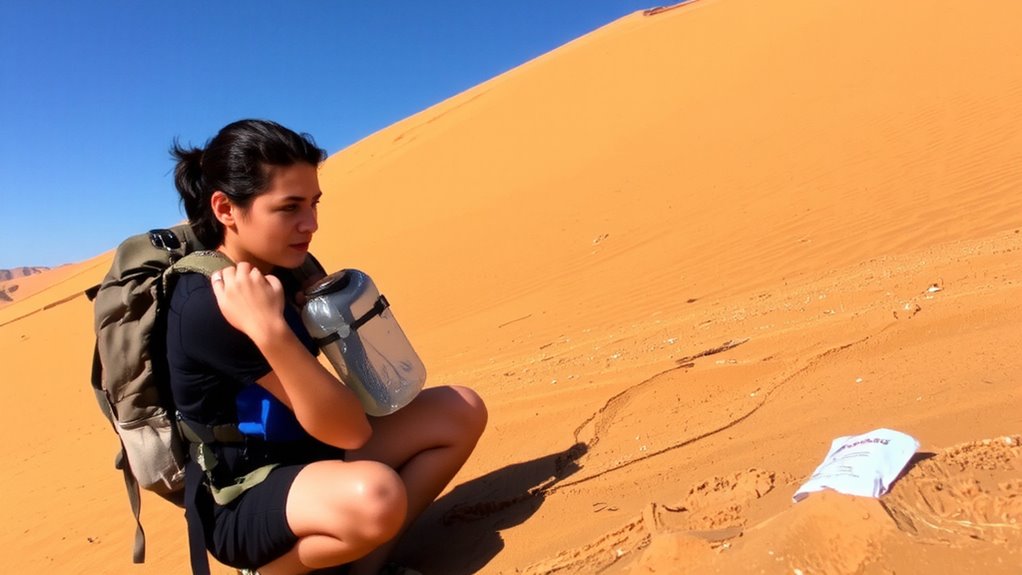
While staying hydrated is critical in the desert, drinking too much too quickly can be just as dangerous as not drinking enough. You face real water intoxication risks if you gulp large amounts rapidly, especially without food or salt intake. This dilutes sodium levels and leads to electrolyte imbalance dangers like nausea, confusion, or seizures. Sip steadily-about 1–2 cups per hour in extreme heat-to match sweat loss without overwhelming your system. Avoid chugging even when thirsty. Using a reliable survival water purifier ensures you have access to safe drinking water without relying on uncertain sources.
Make and Find Shade Fast
Staying hydrated only works if you minimize heat gain, and that means getting out of direct sunlight quickly. Shade reduces ambient temperature by 15–25°F, cutting heat stress. Use any available cover-rocks, vegetation, or dunes-positioning yourself on the leeward side where shade lasts longer. If no natural shade exists, build improvised shelters using tarps, space blankets, or clothing. Angle them low to maximize coverage. Position reflective surfaces like mirrors, foil, or vehicle panels to deflect sunlight away from your body and shelter. These materials reduce radiant heat by up to 90% when used correctly. A poncho rigged at 30 degrees with a reflective windshield cover underneath creates effective shelter in under 10 minutes. Improvised setups won’t last all day but buy critical cooling time. Prioritize shade within the first hour of exposure-delay increases risk fast.
Spot Heat Illness Early
If you’re active in extreme heat, recognizing the early signs of heat illness can mean the difference between managing symptoms and facing a medical emergency. You might notice heavy sweating at first, but as dehydration signs like dry mouth, dizziness, or dark urine appear, your body is struggling. Stop and assess. If you feel nauseous, have a rapid pulse, or your skin turns hot and dry, you could be nearing heat stroke. Mental confusion or fainting means immediate cooling and help are critical. Heat stroke isn’t just overheating-it’s a life-threatening condition with a core temperature above 104°F. Don’t wait. Early detection gives you time to rehydrate, rest in shade, and prevent escalation. Monitoring your condition every 30 minutes in extreme heat improves response speed. Knowing these signals doesn’t rely on gear-it’s awareness, consistency, and action that matter most.
Move Wisely to Conserve Energy
Pacing yourself in the desert isn’t just smart-it’s how you stay out of real trouble once heat starts taking its toll. You burn energy fast in extreme heat, and overexertion spikes core temperature. To conserve stamina and hydration, pace yourself with steady, slow steps. Every unnecessary movement increases sweat loss and fatigue. Avoid sprinting or brisk hiking, even if feeling strong early on-short bursts deplete water and glycogen stores too quickly. Stick to shaded, north-facing slopes when possible and rest during peak heat. Walking at 1.5 to 2 mph maintains progress without overloading your system. Shade breaks every 45–60 minutes help regulate body heat. You’ll go farther and safer by moving deliberately. Efficiency beats speed every time out here. Conserve energy, and you keep your margin for error.
On a final note
You stay cooler when you block direct sun and move during dawn or dusk. Hydrate every few hours, but overdrinking risks hyponatremia. A lightweight tarp shades faster than natural cover. Recognize early cramps or dizziness-they signal heat illness. Move slow; each pound saved cuts energy use by 5%. Tested gear like wide-brim hats and 3-liter hydration bladders perform reliably. Trade weight for comfort only after verifying survival needs are met.