Fire Safety 101: Mastering the Art of Lighting and Maintaining a Fire in Any Condition
Pick a spot at least 15 feet from tents and trees, on bare dirt or sand, and use a fire ring or pit to contain flames. Start with cotton balls soaked in petroleum or dry birch bark-they ignite even when damp. Use a ferro rod or butane torch for reliable sparks in rain. Build a log cabin structure with dense wood on the windward side to block gusts. Douse thoroughly with water, stir the ashes, and add more water until cool-never rely on sand. Your next step reveals how to cook safely without risking a flare-up.
Notable Insights
- Choose a fire location at least 15 feet from tents and trees on bare, level ground to minimize fire risk.
- Use reliable, waterproof tinder like petroleum-soaked cotton balls or birch bark to ensure ignition in wet conditions.
- Shield your fire setup with a poncho or windbreak and use windproof lighters or ferro rods in rain, wind, or snow.
- Build a compact log cabin structure with dense wood on the windward side for stability and wind resistance.
- Extinguish fires completely by dousing, stirring, and reapplying water until cool to the touch and steam-free.
Choose a Safe Spot for Your Campfire
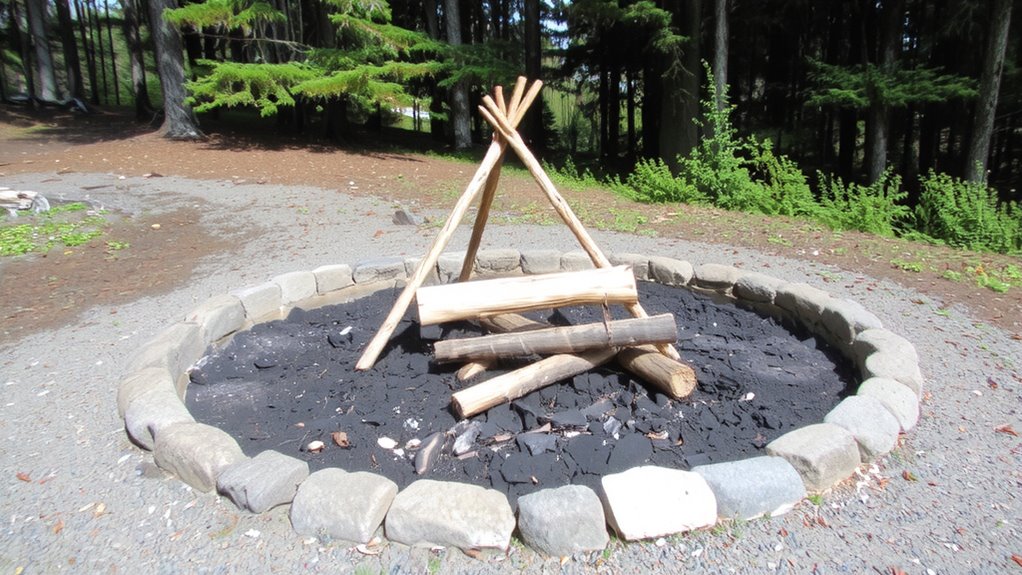
Pick a spot at least 15 feet away from tents, trees, and overhanging branches to reduce fire risk. Your fire location must allow for containment and airflow while minimizing accidental spread. Avoid dry grass or leaf litter-these ignite easily and spread flames quickly. Choose a bare, level ground surface like dirt, sand, or stone, which limits heat transfer and stabilizes the fire. A flat surface prevents rolling embers and keeps logs from shifting. If available, use a fire ring or dig a small pit to further contain heat and debris. Always check local regulations-some areas require designated fire pans or prohibit open flames. Wind exposure matters; natural windbreaks help, but don’t place the fire near flammable barriers. The ground surface under and around your fire location should be clear of roots, rocks that may crack from heat, and moisture-trapping debris. These choices reduce hazards and improve control. Having reliable tools on hand, such as a fire-starting kit, can make ignition safer and more efficient in challenging conditions.
Collect Dry Tinder and Fuel in Wet Weather
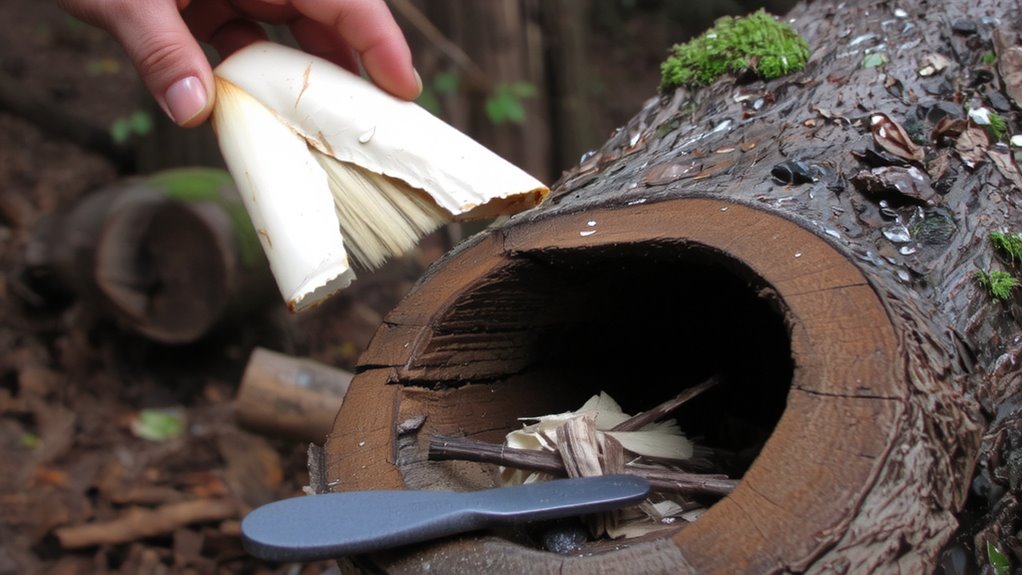
| Material | Ease of Use | Reliability in Wet Conditions |
|---|---|---|
| Birch bark | High | High (if sheltered) |
| Cotton ball + petroleum | Very High | Very High |
| Dry grass nest | Low | Moderate (needs protection) |
| Wood shavings | Moderate | High (from dry inner layers) |
| Commercial tinder cubes | High | High (with waterproof storage) |
When selecting reliable ignition tools for harsh environments, consider the performance of best survival fire starters as highlighted in expert reviews.
Start a Fire in Rain, Wind, or Snow
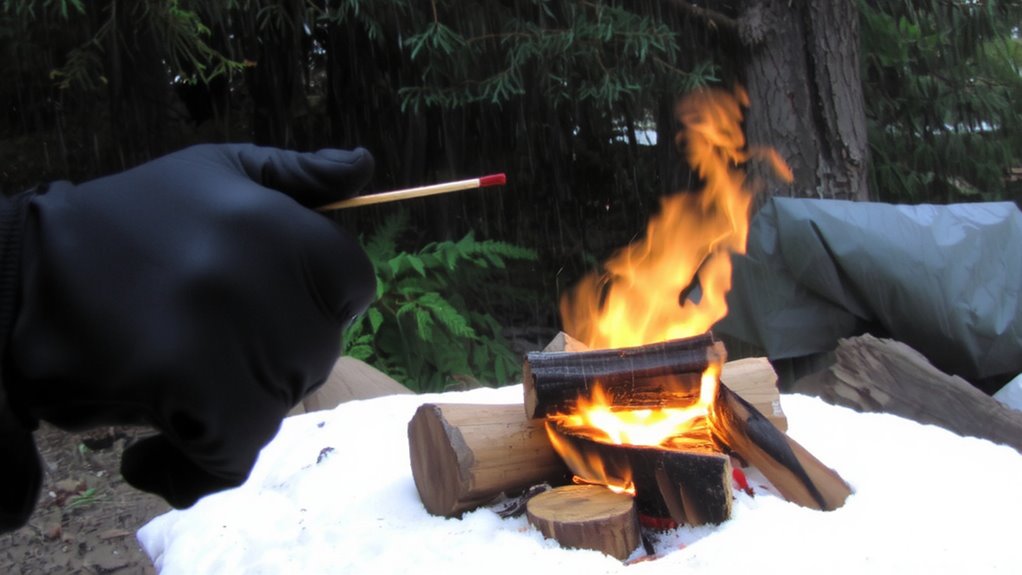
Even when the weather turns against you, starting a fire in rain, wind, or snow is possible if you protect your materials and use reliable ignition sources. Fire ignition fails most often due to damp tinder or poor technique, not lack of fuel. Use lighters with windproof flames or ferro rods over matches-they offer better moisture resistance and consistent spark output in wet conditions. Shield your setup with a poncho or natural windbreak while preparing the site. Keep tinder and ignition tools in a sealed pocket until use; even treated cotton or petroleum jellies need protection from prolonged exposure. A small, hot flame from a butane torch can ignite damp materials where others fail, though it consumes fuel quickly. Prioritize immediate flame continuity-once lit, feed the fire gradually. Your success depends more on preparation and material management than gear quality alone. Moisture resistance in gear helps, but technique determines outcome. Consider using natural fire starters for dependable, eco-friendly ignition even in damp conditions.
Build a Stable, Windproof Fire Structure
When wind threatens to extinguish your flame or scatter heat, building a stable fire structure becomes critical to maintaining warmth and function. You need fire design that balances airflow and protection. The log cabin structure works best-stack tinder and kindling in a square, crisscrossing layers for structural stability. It resists wind while allowing oxygen flow. Use dry, dense wood on the windward side as a natural shield. Keep the core compact; a small, tight base burns hotter and lasts longer. Avoid tall, loose piles-they catch wind and collapse. If using rocks, place them on the windward side to block gusts without restricting airflow. A pyramid or lean-to design can also work, but only if anchored well. Structural stability means your fire stays contained and efficient. Poor fire design leads to wasted fuel and cold exposure. Build smart: protect the base, control airflow, and maintain consistent burn.
Keep Your Fire Burning Safely in Storms
You already know how to build a fire that stands up to wind, but storms bring more than just gusts-they add rain, shifting conditions, and constant moisture that can kill even a well-structured flame. Proper storm positioning is critical: place your fire near a natural windbreak like a rock or dense tree line, but not so close that debris falls into the flames. Angle the fire lay to deflect rain, and keep fuel stacked uphill to stay dry. Fire insulation starts with a base-use a thick layer of dry gravel or green logs to lift the tinder off wet ground. This barrier reduces moisture transfer and improves burn efficiency. Use compact, hot-burning fires over wide ones; they’re easier to shield with a tarp or emergency blanket if needed. You’ll maintain steady heat without constant refueling. Real-world tests show insulated, well-positioned fires last twice as long in heavy rain. Adapt early-you can’t wait until the fire’s out.
Put Out Your Fire Completely and Correctly
Safety starts with ashes-cool, wet, and lifeless. You can’t assume your fire is out just because flames are gone. Embers hide in ash and reignite when ignored. For effective fire extinguishing, douse the fire with water slowly, ensuring it penetrates all layers. Stir the remains with a stick or shovel, exposing hot spots, then add more water. Repeat until steam stops and materials are cool to the touch. This method beats sand or dirt, which trap heat. Proper ash disposal matters just as much. Never place warm ashes in plastic or leave them near flammables. Store them in a metal container with a lid, away from wind and vegetation. If no container’s available, scatter cold ash widely, avoiding trails or dry grass. Cold, damp ash won’t spark. Your responsibility ends only when every particle meets that standard-no sooner.
Prevent Accidents and Wildfires While Camp Cooking
Even though camp cooking seems straightforward, a single lapse can spark a wildfire or cause serious injury-especially in dry, windy conditions. You must maintain constant cooking supervision; leaving a fire unattended for even a few minutes increases risk markedly. Use proper fire containment: ring your fire with rocks or a metal fire pan, and keep it at least 10 feet from tents, gear, and vegetation. Never build a fire on windy days when embers can travel. Choose a stove for cooking when possible-it’s more controllable and reduces fire spread risk. If using a fire, keep it small and manageable. Have water, sand, or a shovel ready to extinguish it fast. Check local fire bans before starting any flame. Your awareness directly affects safety. With solid fire containment and active cooking supervision, you reduce hazards effectively. Practice these steps every time.
On a final note
You now know how to light and maintain a fire safely in any weather. Choose dry tinder, build a stable structure, and shield flames from wind or rain. Keep the fire contained and never leave it unattended. Always extinguish it completely with water or dirt until cool to the touch. These steps prevent accidents and wildfires. They work consistently across environments, tested in rain, snow, and wind. Simple, reliable methods beat gear gimmicks every time.