Using a Homemade Paracord Bracelet as a Multifunctional Tool for Various Survival Situations
You can rely on a homemade paracord bracelet when survival demands versatility. Made from Type III 550 cord, it holds up to 550 pounds and gives you 8–10 feet of durable outer sheath. Unravel it to access seven inner strands, useful as fishing line or thread. Frayed fibers ignite easily as tinder, and the hollow braid aids DIY water filters. Wearing one adds negligible weight, yet it multiplies your options-especially when you know how to put every inch to use.
Notable Insights
- A paracord bracelet provides up to 10 feet of durable cordage for shelter building, securing gear, or lashing in emergencies.
- Inner strands can be separated for use as fishing line, sewing thread, or small repairs due to their strength and thin profile.
- Frayed fibers from the ends serve as effective tinder to ignite fires when other materials are unavailable.
- The hollow braid can be incorporated into a DIY water filter using charcoal, sand, and cloth for emergency purification.
- Wearing multiple bracelets increases accessible cordage over 100 feet without added bulk, enhancing survival resource availability.
What Makes a Paracord Bracelet a Survival Essential
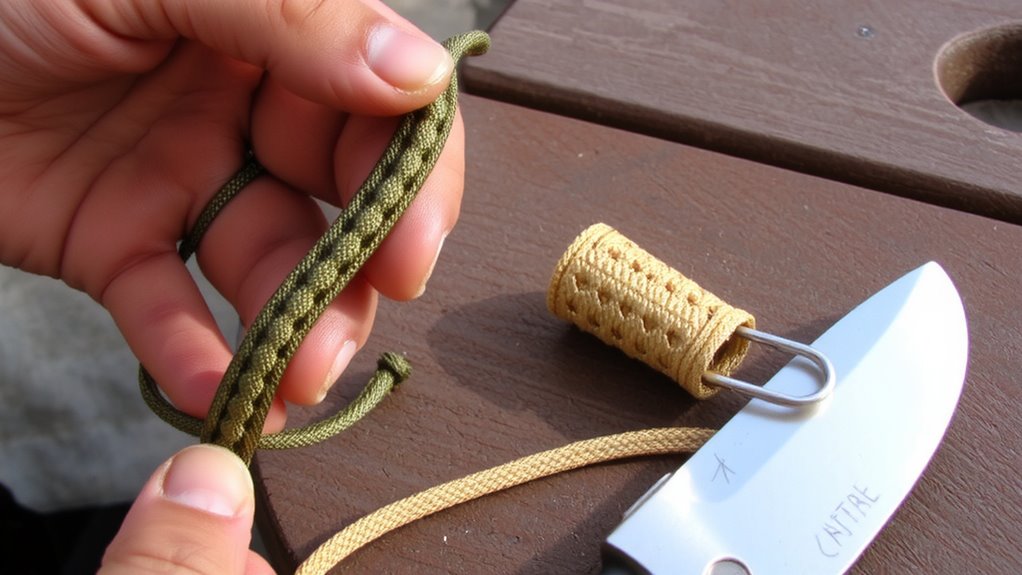
While it might seem like just a piece of gear you weave during downtime, a paracord bracelet earns its spot in survival kits because it’s compact, reliable, and packs real utility. You can unravel it to get roughly 8–10 feet of strong cordage, useful for securing shelters or gear. The inner strands work as emergency thread or fishing line. If you carry a fire starter, the lint-like fibers from frayed ends ignite quickly, catching sparks from ferro rods. In a pinch, you can use the hollow braid as part of a DIY water filter by stuffing it with charcoal, sand, and cloth to help remove debris. It won’t replace a proper filter, but it’s better than drinking untreated water. The bracelet adds minimal weight and cost, yet expands your toolkit. It’s no magic fix, but combined with basic skills, it proves practical when options are limited. Choosing the right type of cordage ensures durability and performance, making best survival paracord picks a key consideration for preparedness.
What Type of Paracord Is Best for a Survival Bracelet?
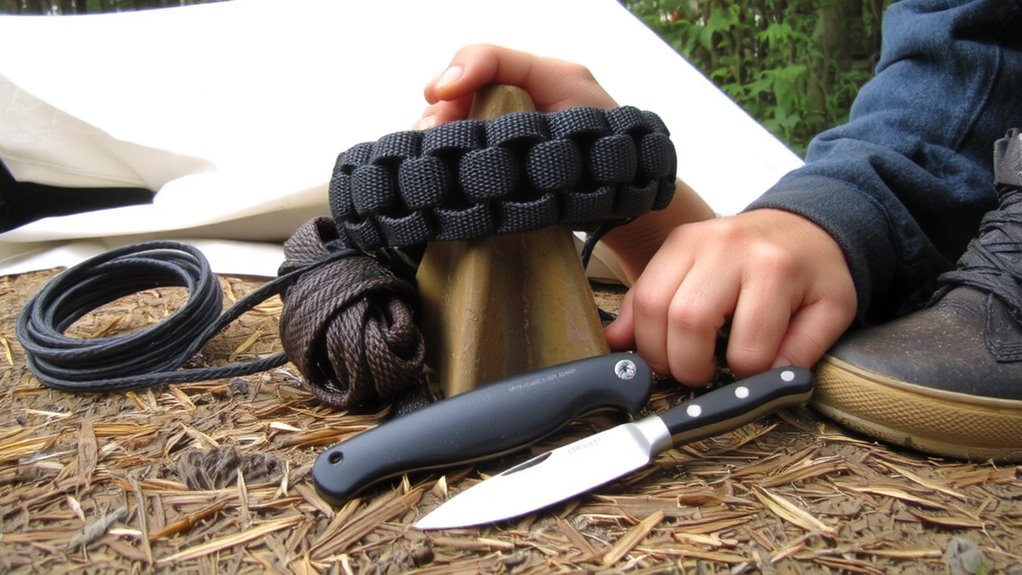
You already know a paracord bracelet can help when things go sideways-whether you need cordage for a shelter, floss for a tooth, or tinder for a fire. For survival use, type III paracord is your best bet. It has a minimum breaking strength of 550 pounds, which most brands meet or exceed under durability tests. The inner core contains seven to nine braided nylon strands, giving you versatile thread or string when unraveled. Look for jackets tightly woven to resist fraying and cores that pull out smoothly. Paracord is made from nylon, a material naturally resistant to rot and UV damage, and it performs reliably even when wet-confirming its status as a waterproof material. Some cheaper cords use inferior nylon or looser weaves, which reduce strength and water resistance. Stick with reputable brands that publish test data. This guarantees consistent performance when you’re counting on it most. Based on extensive testing, the best paracord picks deliver reliable strength and durability for survival applications.
How to Make a Paracord Bracelet (Step-by-Step)
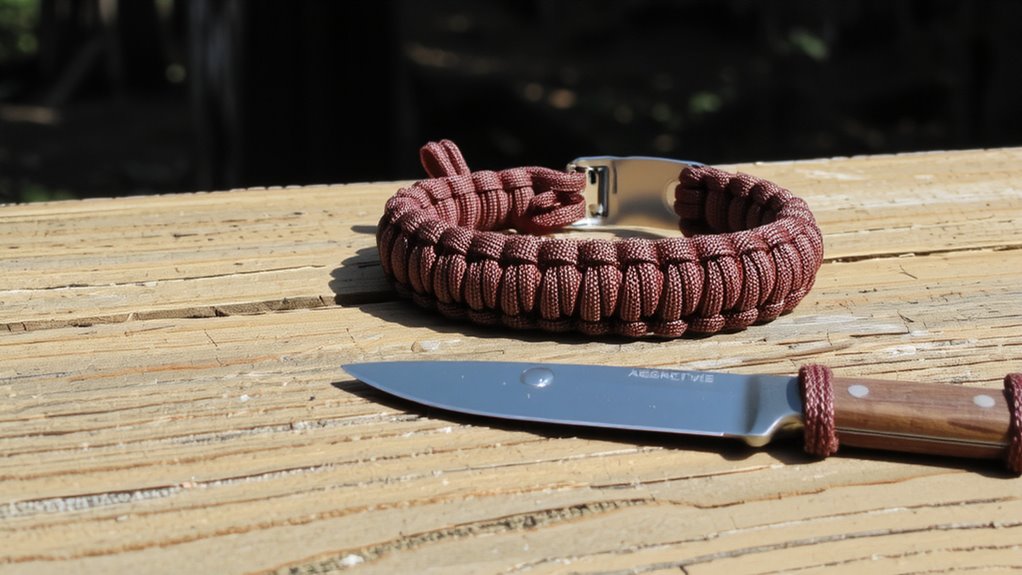
If you’re setting out to make a paracord bracelet that’ll hold up when needed, start with the right materials and a simple cobra weave-it’s strong, compact, and won’t unravel under stress. You’ll need a 6-foot length of 550 paracord and a side-release buckle. Attach the cord to the buckle using a lark’s head knot, then begin the cobra weave across both sides. This basic knot technique creates a durable, consistent pattern that’s easy to learn and repair. Stick to symmetrical weaving patterns to guarantee even tension and avoid weak spots. Each inch of bracelet yields about 1 foot of usable cord. Practice consistent tightness-too loose and it snags, too tight and it’s hard to unwind later. With just a few feet of paracord and the right knot techniques, you’ll have a reliable, lightweight survival tool that fits on your wrist and works when tested.
How One Paracord Bracelet Gives You 100+ Feet of Rope
A single paracord bracelet made with 6 feet of 550-pound test cord doesn’t sound like much, but once unraveled, it yields about 6 feet of usable inner strands-just one bracelet won’t get you close to 100 feet. However, paracord unraveling multiple bracelets changes that. Each standard bracelet uses roughly 6 feet of outer sheath and contains 7 inner strands, all of which can be separated and used individually. With a typical Bracelet length of 8 inches, stacking ten gives you over 60 feet of outer material alone. Factor in the inner strands, and ten bracelets can surpass 100 feet of combined cordage. You’re not limited to one bracelet, and carrying several is lightweight and practical. In survival situations, this adds up fast. More Bracelet length means more stored cord-you decide how much to carry based on need. Paracord unraveling is slow but reliable, giving you functional rope when it counts.
7 Real Survival Scenarios Where Your Bracelet Saves the Day
That 100 feet of cord from several paracord bracelets isn’t just a number-it’s usable line when gear fails or situations turn. You can use it for shelter building when your tarp stakes snap; the inner strands secure poles and anchor corners. It holds under tension and resists fraying, making it reliable in wet or windy conditions. Need food? Unravel some for fishing line-the thin inner threads are nearly invisible in water and strong enough to catch small fish. It won’t replace heavy gear, but it fills gaps when you’re low on options. You trade bulk for portability, strength for versatility. In real scenarios-lost, injured, or stranded-those 100 feet bridge the gap between risk and recovery. It’s not magic, just functional redundancy. You carry it as insurance, not a guarantee. When systems fail, you deploy what works. Paracord does, if you know how.
5 Life Hacks Using Your Paracord Bracelet
Why carry extra gear when your wrist already holds a multitool in disguise? Your paracord bracelet offers immediate access to 8–10 feet of durable 550-lb test cord. Need a fishing snare? Unravel the outer sheath to create small loops for catching fish in shallow streams. For shelter setup, use the full-length core to secure tarps or tie branches together-its tensile strength guarantees stability. The compact design doesn’t add bulk, yet delivers under strain better than utility string. Below are five verified uses:
| Use Case | Material Used |
|---|---|
| Fishing snare | Inner strands |
| Shelter setup | Full 550 cord |
| Gear repair | Outer sheath |
| Lashing tools | Core + sheath combined |
| Bootlace replacement | Single inner strand |
Each function starts with a quick unwind-no special tools needed. It’s lightweight, always on hand, and tested in field conditions.
A top-rated survival bracelet can withstand extreme environments and still perform reliably when needed most, making best survival bracelets a critical consideration for preparedness.
When (and How) to Cut Your Paracord Bracelet in an Emergency
If you’re in a situation where you need strong cordage fast, cutting your paracord bracelet is a practical move-just make sure it’s truly necessary. Emergency cutting should only happen when no other cordage is available and the task demands durability, like securing a shelter or stabilizing an injury. Use a sharp knife or multitool to slice cleanly through the outer sheath; this avoids fraying and preserves strength. Don’t tear or pull it off-clean cuts save time and material. Once cut, you’ll have about 3 to 4 feet of usable paracord, depending on wrist size. Consider strategic unbraiding the inner strands to extend length for lighter tasks like suturing or fishing line. You lose the bracelet, but gain critical resources. Trade-offs are clear: convenience versus survival utility. Keep this option for genuine need, not minor fixes.
On a final note
You’ve got 100+ feet of 550-pound-test cord on your wrist. It won’t replace a full survival kit, but it handles small repairs, secures gear, or makes a shelter when you need it. The paracord bracelet is compact, reliable, and always available. Cutting it sacrifices form for function-only do it when the situation demands. Not flashy, just practical. One well-made bracelet can pull its weight in real emergencies.