How to Blanch and Freeze Wild Ramps for Long-Term Safe Storage
Clean and trim ramps, then blanch them for exactly 90 seconds to lock in flavor and stop enzyme-driven spoilage. Drop them into an ice bath immediately to halt cooking and preserve texture. Dry thoroughly, portion into usable amounts, and vacuum seal or use airtight containers with cling film pressed on the surface. Store at 0°F for up to 8 months with minimal quality loss. You’ll get the full routine, step by step.
Notable Insights
- Clean wild ramps thoroughly under cool water and trim root ends and damaged leaves before blanching.
- Blanch ramps in boiling water for exactly 90 seconds to preserve texture and deactivate spoilage-causing enzymes.
- Immediately plunge blanched ramps into an ice bath at or below 40°F to halt cooking and retain firmness.
- Dry ramps completely and package in airtight, vacuum-sealed bags or with cling film to prevent freezer burn.
- Label portions with dates and freeze at 0°F for up to 8 months for peak flavor and quality retention.
Why Blanch Wild Ramps for Long-Lasting Flavor
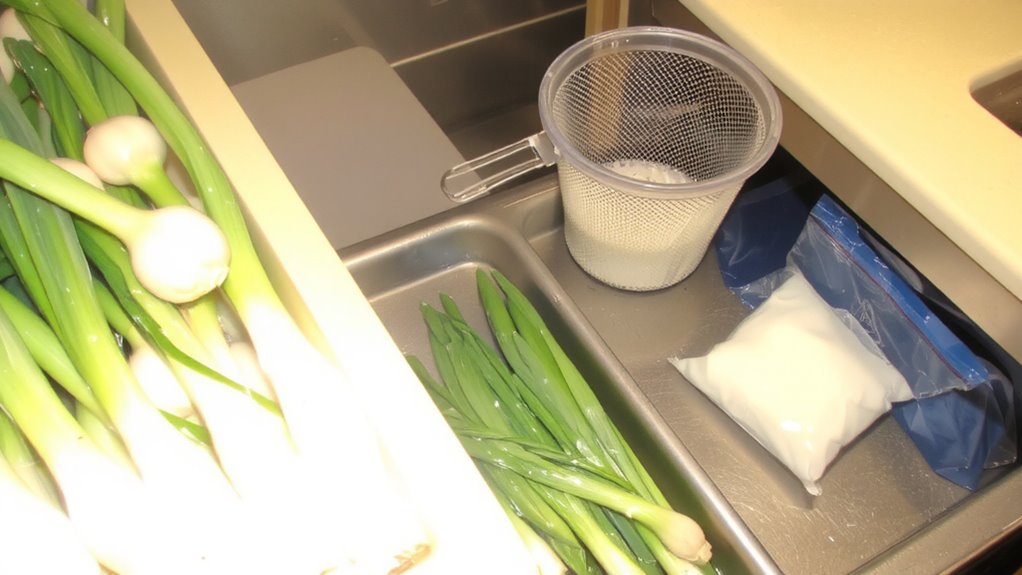
Although blanching might seem like an extra step, it’s essential if you want to lock in the fresh, garlicky-onion flavor of wild ramps for months. You’re after long-term flavor preservation, and blanching delivers it by halting spoilage processes fast. The brief heat exposure stops enzymatic activity that would otherwise degrade taste, color, and texture during freezer storage. This process guarantees enzyme deactivation, which is critical-without it, frozen ramps lose their quality within weeks. You’ll notice the difference when you cook them later: properly blanched ramps retain their bright character and firmness. Skipping this step risks a muted, off-flavor even at stable freezer temperatures. It takes under three minutes, yet directly impacts shelf life and sensory quality. For reliable results in taste and texture retention, blanching isn’t optional-it’s the baseline standard for effective ramp preservation.
Clean and Trim Wild Ramps for Best Results
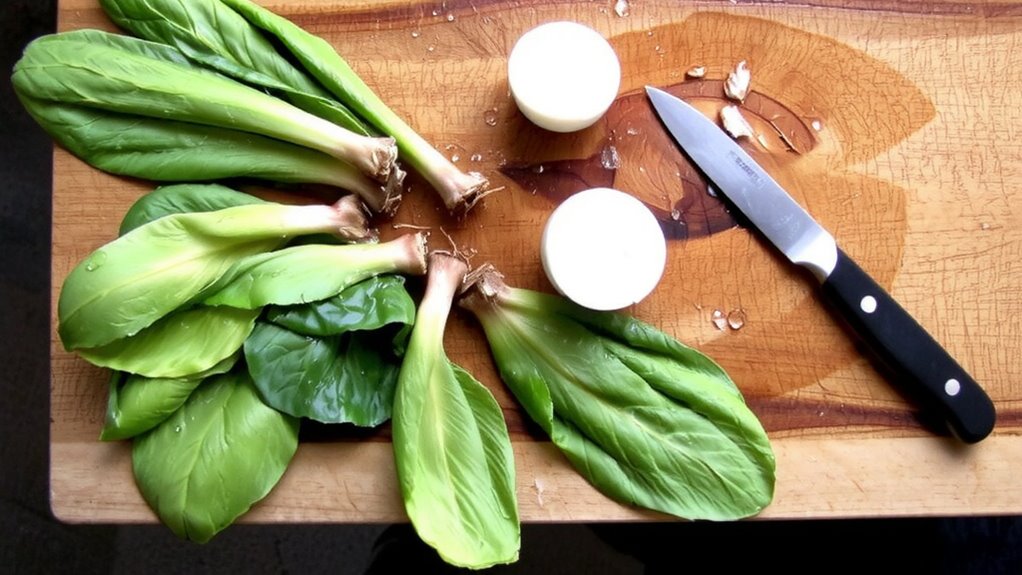
Start by rinsing the ramps under cool running water to remove dirt and debris, since they’re foraged from wooded areas where soil and mulch cling to the roots and leaves. Gently scrub the bulbs and stems, then pat the greens dry with a clean towel or use a salad spinner to minimize moisture. Trim off the stringy root ends and any slimy or discolored parts of the leaves. For best quality, clean ramps soon after harvest, as delayed cleaning can degrade flavor and texture. Harvest timing affects cleanliness-ramps gathered early in spring often carry less debris and reflect favorable soil conditions with lower moisture. Cleaning is more difficult during wet seasons when muddy soil sticks easily. Proper trimming guarantees only edible, clean portions remain, reducing waste and improving storage outcomes. This step doesn’t preserve ramps but prepares them effectively for the next stage.
Blanch Wild Ramps for Optimal Texture
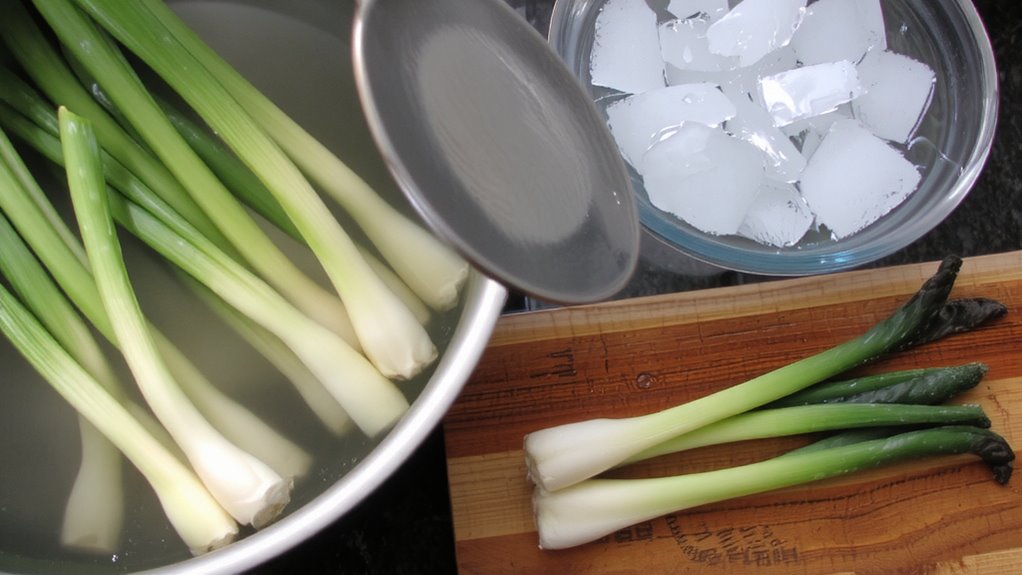
You’ve cleaned and trimmed the ramps, so now it’s time to blanch them to lock in texture and color. Skipping this step risks rapid dehydration and uneven cooking when you later use them. Blanching halts enzyme activity that degrades flavor and firmness. Use boiling water for exactly 90 seconds-less risks undercooking, more invites mushiness.
| Factor | Effect |
|---|---|
| Too short | Uneven cooking, texture loss |
| Too long | Rapid dehydration, soft texture |
| Precise timing | Firm bite, color retention |
This balance guarantees you preserve structure without sacrificing safety. You’re not cooking them fully-just preparing for freezing. The time specification matters because wild ramps are more delicate than cultivated greens. Follow the 90-second rule consistently across batches for reliable results every time. It’s a small step with measurable impact on final quality.
Cool Quickly in an Ice Bath
Once you pull the ramps from the boiling water, getting them into an ice bath right away stops the cooking process and preserves the crisp texture you just locked in. You need an ice bath at or below 40°F-this ice temperature guarantees rapid cooling and prevents bacterial growth. Submerge the ramps fully to achieve effective water shock, which halts enzyme activity that can degrade flavor and texture. Use a large bowl with equal parts ice and water, and stir gently to disperse heat evenly. Don’t skimp on the ice; weak baths won’t cool fast enough. Most batches take 2–3 minutes to reach core stability. If the water warms above 45°F, add more ice. Proper chilling maintains quality without over-softening. Skipping this step risks mushiness and nutrient loss. It’s a small effort with measurable results-crisp, vibrant ramps ready for freezing. Water shock isn’t dramatic, but done right, it’s essential for long-term storage success.
Package and Freeze Wild Ramps Properly
Airtight packaging is non-negotiable when freezing wild ramps-any exposure to air leads to freezer burn and flavor degradation over time. For best results, use vacuum sealing; it removes nearly all air and offers superior freezer burn prevention compared to standard methods. If you don’t own a vacuum sealer, press cling film directly onto the ramps inside a rigid container, then seal the lid to limit air contact. Portion the ramps in usable quantities before packaging so you don’t have to thaw excess later. Label each package with the date-wild ramps hold peak quality for 6 to 8 months when stored at 0°F (-18°C). While vacuum sealing performs slightly better over extended storage, heavy-duty freezer bags with the air manually squeezed out work adequately for shorter periods. Avoid overfilling containers to allow space for minor expansion. Consistent temperature and proper sealing are the key variables in successful long-term ramp storage.
Cook With Frozen Wild Ramps: No Thawing Needed
While frozen wild ramps can be thawed before use, it’s usually unnecessary and may compromise texture. You can add them directly to hot pans, ovens, or pots, preserving their structure and maximizing flavor retention. Cooking methods like sautéing, roasting, or boiling work effectively with frozen ramps-no adjustment needed beyond slightly extended cook times. Their moisture content is predictable, so they integrate into dishes without sogginess when applied correctly. High-heat applications perform best, sealing in aroma and taste. You’ll notice minimal difference in final flavor compared to fresh, provided they were blanched properly pre-freeze. Skipping thawing also reduces oxidation risk, maintaining quality. For soups, stir-fries, and casseroles, toss them in frozen. This approach streamlines prep, saves time, and guarantees consistent results. It’s a practical method backed by performance, not preference. Just monitor doneness, as frozen greens cook faster than raw but slower than thawed.
On a final note
You’ve preserved peak flavor by blanching and freezing wild ramps correctly. This method locks in color, texture, and taste for up to 10 months. Frozen ramps cook straight from the bag-no thawing needed. You sacrifice minimal texture for major convenience. It’s a reliable, tested approach that outperforms drying or refrigerating. For long-term use, this process delivers consistent, measurable results you can count on season after season.