Making Edible Insect Soup: Nutritious Protein Sources Found in Nature
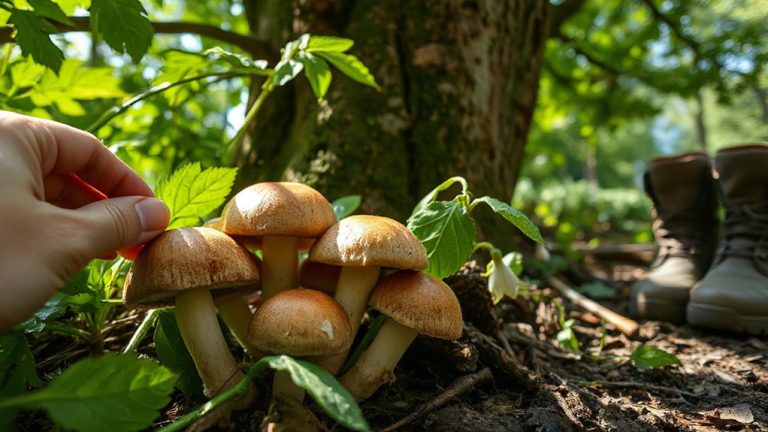
You’re getting high-quality protein, B vitamins, iron, and essential fats when you add farmed crickets, mealworms, or silkworm pupae to your soup. These insects convert feed to protein up to 12 times more efficiently than cattle and need far less water and land. Use pre-cooked, freeze-dried bugs from trusted suppliers to guarantee safety and texture. Rehydrate in hot broth for 10 minutes or use powdered form for easy mixing. Roasting cuts any off-putting taste. They absorb flavors well, work in place of minced meat, and deliver around 20 grams of protein per cup of cricket powder. You’ll find they’re a practical, sustainable choice once you see how they perform in real meals.
Notable Insights
- Edible insects like crickets and mealworms provide high-quality protein, B vitamins, iron, and essential fatty acids.
- Crickets contain 60–70% protein by dry weight and rehydrate quickly in hot broth for soups.
- Mealworms and silkworm pupae add rich flavor and absorb seasonings, enhancing soup taste and nutrition.
- Farmed insects are safe when sourced from reliable suppliers and cooked to 165°F (74°C).
- Insect soups can be made sustainably using freeze-dried insects, reducing environmental impact versus traditional meats.
What Makes Insects Great Soup Protein
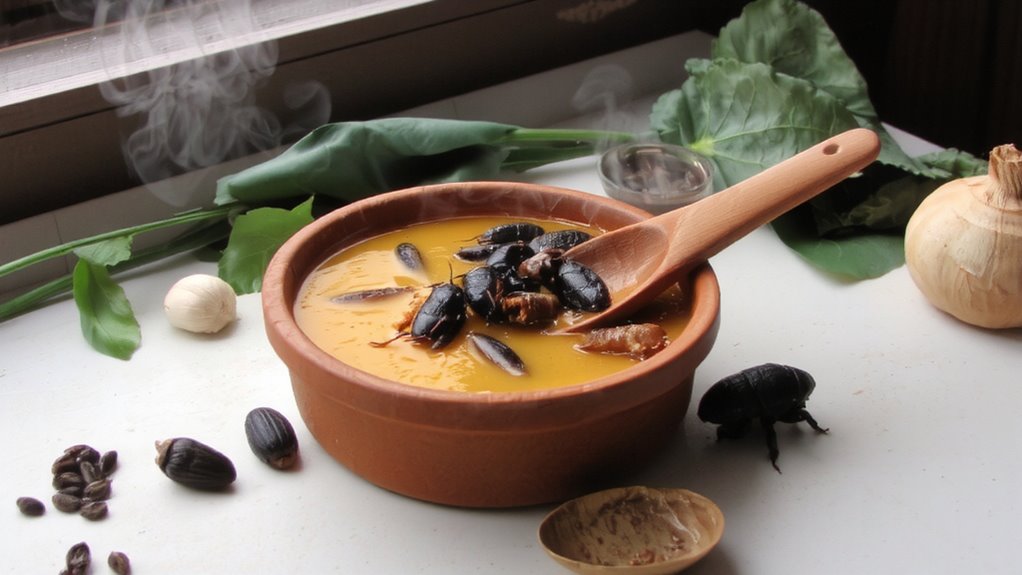
You’ve heard about the protein, but nutritional density is where insects really stand out in soup. You’re not just getting amino acids-you’re getting B vitamins, iron, zinc, and essential fatty acids, all in a small package. When you use insects, every spoonful delivers more usable nutrients per gram than most conventional meats. And unlike livestock, insects require far less water, land, and feed, making sustainable sourcing a practical reality, not just a buzzword. Crickets and mealworms convert feed to protein efficiently-up to 12 times better than cattle. That means lower environmental cost per bowl. They integrate easily into broths without overpowering flavor, blending rather than standing out. You won’t need large quantities to meet protein targets. Most soups use under 30 grams of dried insects per serving, which rehydrates well and retains structure. For long-term nutrition planning, that efficiency matters. You’re trading bulk for potency, and gaining sustainability by default.
Best Insects for Soup and Where to Buy Them
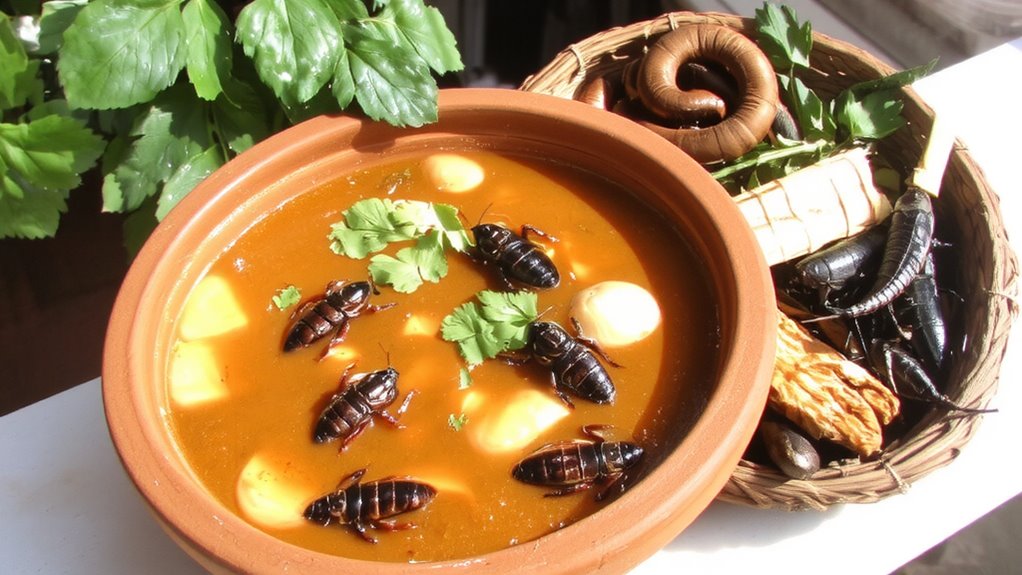
While not all edible insects work well in soup, crickets, mealworms, and silkworm pupae stand out for their texture, neutral flavor, and nutrient profile. You’ll find crickets high in protein (around 60–70% by dry weight) with a slightly nutty taste that supports diverse flavor pairing, from miso to herb broths. Mealworms offer a softer bite and absorb surrounding flavors well, making them practical for hearty stews. Silkworm pupae add richness, with a fatty acid profile that enhances broth depth. For reliable insect sourcing, choose suppliers that provide lab-tested, farmed insects-brands like Exo, Jimini’s, or Entomo Farms ship pre-cooked, freeze-dried options online. Avoid wild harvesting unless you’re certain of species safety and environmental contamination. Always check packaging for processing details and allergen disclosure. These insects integrate smoothly into soups when rehydrated or simmered briefly. Your choice depends on texture preference and how neutrally you need them to perform in the final dish.
How to Cook Edible Insects Safely at Home
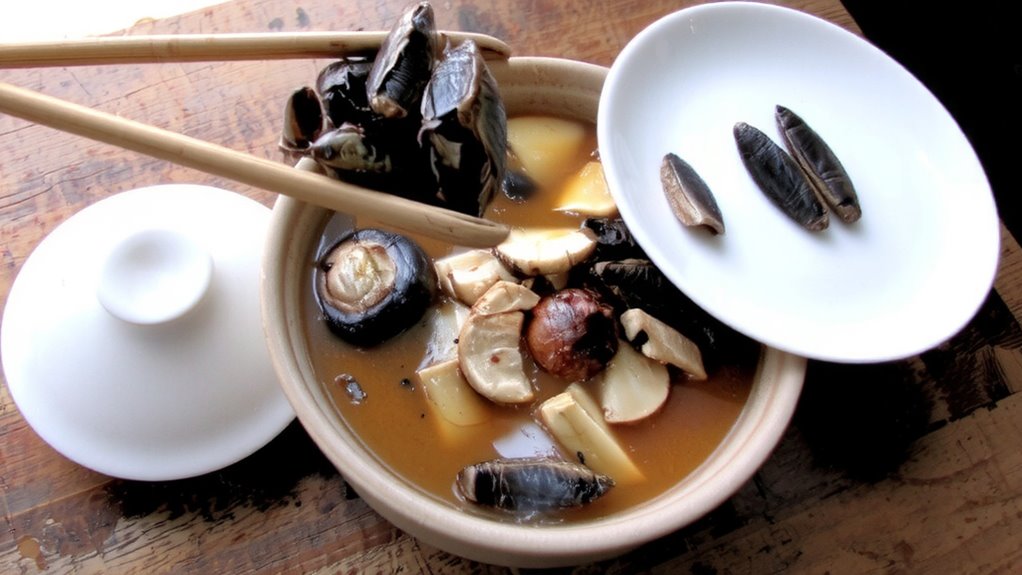
Since proper preparation minimizes health risks, always start by verifying your insects are sourced from a reputable supplier that follows food safety standards-farmed, not wild-caught. Wild insects may carry pesticides or parasites, so reliable sourcing is non-negotiable. Once you have them, check for signs of spoilage like off smells or discoloration. For food safety, cook insects thoroughly-most need to reach an internal temperature of 165°F (74°C) to kill pathogens. Roasting, boiling, or sautéing works well. If you’re not using them right away, guarantee proper storage: keep dried insects in airtight containers in a cool, dark place, or freeze live or fresh ones immediately. Proper storage prevents mold and extends shelf life up to six months. Avoid moisture-it ruins texture and promotes bacterial growth. Handling and cooking with clean tools and surfaces reduces contamination risk. Treat edible insects like any perishable protein.
Easy Edible Insect Soup Recipes to Try Tonight
Though soups can vary in complexity, making one with edible insects is just as straightforward as preparing a broth with any other protein. You can use pre-roasted crickets or mealworms, which rehydrate in under 10 minutes in hot broth. Add them to a base of vegetable or chicken stock with onions, garlic, carrots, and simmer for 15 minutes. One cup of cricket powder adds about 20 grams of protein per serving without overpowering the taste. Flavor experimentation works well here-try cumin and chili for a spicy kick or coconut milk and lemongrass for Thai influence. Recipe creativity allows you to substitute insects for minced meat in almost any soup. They absorb surrounding flavors efficiently, minimizing odd aftertastes. Use dried or frozen insects to extend shelf life. These recipes are scalable, require common kitchen tools, and align with sustainable sourcing. Minimal prep time supports weeknight use.
Solving Taste, Safety, and Stigma Concerns
If you’re worried about flavor, start with roasted insects-they’re milder and less likely to clash with familiar seasonings, so your soup won’t taste “buggy.” Most edible insects, like crickets and mealworms, are safe to eat when sourced from reputable suppliers who follow food safety standards, meaning they’re raised in controlled environments free from harmful pathogens. You can improve acceptability through flavor enhancement, like blending them into broths or using herbs and spices. Cultural perception plays a big role in hesitation, but many cultures worldwide already consume insects without issue. Shifting your mindset reduces stigma. Cooking thoroughly also eliminates risks and alters texture, making them less noticeable. Pre-cooked or powdered forms integrate easily into soups. You’re not just trying something new-you’re using a sustainable, high-protein ingredient proven in survival and daily diets alike. It’s practical nutrition without compromise.
On a final note
You get solid nutrition from insect soup without the environmental cost of traditional meat. Crickets and mealworms add protein and texture, work in most broths, and cook safely after freeze-killing and roasting. They’re available online or at specialty stores. Some people hesitate at eating bugs, but seasoning helps. Cooking eliminates pathogens. It’s a practical survival protein if you need efficiency over comfort. Try small batches first. Know the source and prep steps.