Comparing the Efficacy of Various Cooking Fuel Types for Long-Term Survival Scenarios
You’ll want a fuel that balances efficiency, shelf life, and output over months. Propane gives instant heat and precise control, but tanks can leak over time. Wood is abundant but moisture-heavy and smoky. Charcoal burns steady and hot, yet it degrades if damp. Alcohol and canned heat are safe and stable, but low on energy. For lasting resilience, combining fuels gives you adaptability-something a single option can’t offer when conditions change.
Notable Insights
- Propane offers high energy density and precise flame control, making it ideal for efficient cooking in mobile or long-term survival scenarios.
- Dry hardwood provides abundant, renewable heat but requires proper seasoning and smoke management to ensure safety and efficiency.
- Charcoal delivers steady, predictable heat with low smoke output, suitable for prolonged cooking when stored in airtight, moisture-free conditions.
- Alcohol and canned heat are stable, low-maintenance fuels that support short-duration cooking but lack the energy density for high-heat or extended use.
- Fuel blending and dual-fuel stoves increase resilience by extending runtime and adapting to fuel availability in prolonged survival situations.
Why Long-Term Survival Demands Smarter Fuel Choices
While you might get by early on with whatever fuel you have on hand, long-term survival means stretching each resource as far as possible-and that starts with choosing fuels that balance efficiency, availability, and burn quality. Fuel scarcity will eventually force you to rely on what you can consistently access, so prioritizing high energy density makes sense. Fuels like propane and white gas deliver more heat per ounce than alternatives, letting you cook faster with less stored volume. That efficiency reduces trips to resupply and minimizes weight in your stockpile. But energy density alone isn’t enough-reliability matters when conditions worsen. Some fuels degrade or fail in cold weather, limiting real-world usability. You’ll need to weigh energy density against storage life, ignition ease, and safety. Smart fuel choices aren’t about preference; they’re about sustaining output with minimal input over months or years. Plan accordingly. A reliable option for consistent performance in diverse conditions is a top emergency cooking stove designed for long-term preparedness.
Wood as Survival Fuel: Abundant But Unpredictable
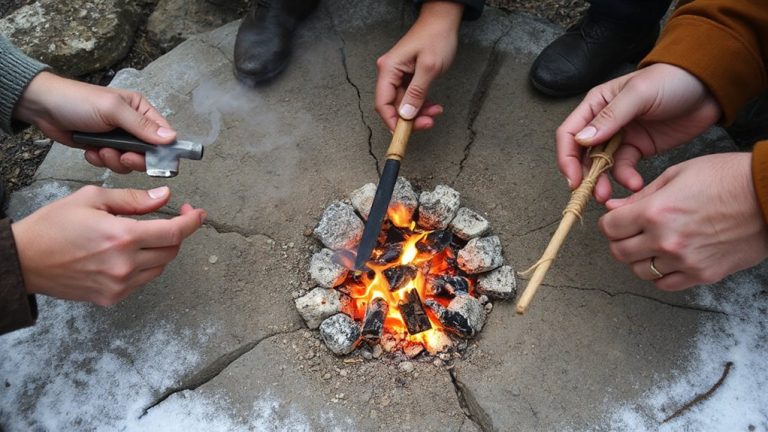
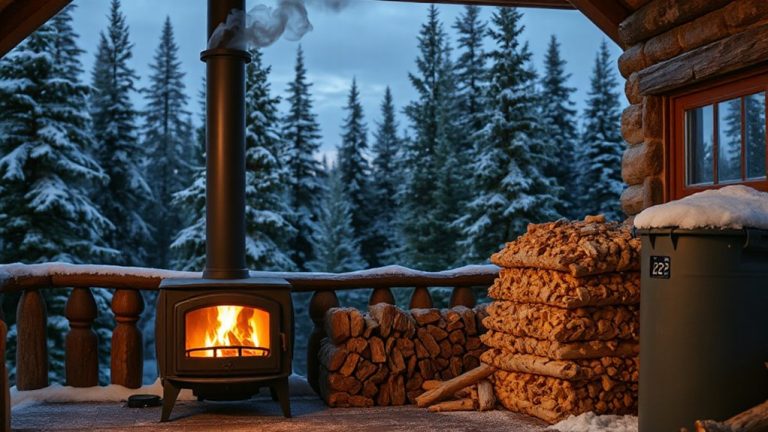
You can’t always count on store-bought fuel staying available, which pushes you toward what’s already around-like wood. It’s often plentiful in rural or forested areas, making it a go-to early in survival scenarios. But its moisture content varies, affecting burn efficiency-dry hardwood burns hotter and cleaner than green softwood. You’ll need to manage smoke carefully; thick smoke reveals your position and irritates lungs. Use tight-fitting stoves or lean-to reflectors to improve heat delivery and reduce output. Wind and rain hinder ignition, so protecting your fire structure matters. Ember preservation helps restart fires quickly-bank coals overnight under ash or use a self-insulating nest. Fuel size impacts control; small splits offer better flame adjustment. While wood is renewable, carrying extra weight isn’t practical. You’ll balance effort, cover, and warmth daily. It’s reliable only if you adapt constantly. For sustained cooking efficiency, consider a wood-burning cook stove designed for portable, high-efficiency performance.
Charcoal: Steady Cooking Heat, Limited Shelf Life
If you need consistent heat for cooking without constant tending, charcoal’s your best bet-burning hotter and steadier than wood, with less smoke once lit. It offers reliable heat retention, maintaining stable temperatures ideal for simmering or searing. Burn duration is predictable, typically lasting 2–4 hours per load, depending on lump size and airflow. You can adjust the intensity easily by controlling vents or adding more briquettes. Charcoal stores well in dry conditions, but moisture exposure degrades performance over time. It won’t spoil like perishable fuels, but its shelf life is limited-wet or damp charcoal won’t ignite cleanly. Unlike wood, it produces minimal creosote, reducing chimney buildup. Still, you’ll need airtight storage to preserve efficiency. It’s heavier than some alternatives, weighing about 20 pounds per standard bag, and requires careful handling to avoid breakage. For long-term use, rotate stock regularly. A reliable option for long-term preparedness is a survival stove designed to maximize fuel efficiency and portability.
Propane Survival Fuel: Portable but Perishable
When stored properly, propane delivers reliable, high-output heat with minimal effort-igniting instantly and maintaining consistent flame control for boiling, frying, or baking. You’ll appreciate how propane pairs perfectly with portable stoves, giving you flexibility and fast setup whether you’re in a bug-out vehicle or a remote camp. These stoves are lightweight, easy to operate, and widely available, making propane a go-to for mobile scenarios. But don’t ignore its drawbacks-propane tanks degrade over time, and though the gas itself doesn’t expire, fuel degradation in the system can occur due to valve leaks or regulator issues. Long-term storage risks pressure loss or tank corrosion, especially in humid or extreme conditions. You also face weight and size challenges when carrying spare tanks. While propane offers strong, instant heat, its perishable nature under poor storage means you must inspect tanks regularly and rotate stock if planning extended preparedness. It’s efficient but demands maintenance.
Alcohol Fuels: Safe and Stable, Low Cooking Power
Though alcohol fuels won’t boil water as fast as propane, they offer a simple and dependable option for low-heat cooking in survival settings. You’ll find them easy to store and transport, with minimal flammability risk compared to pressurized gases. There’s no need for special containers or tools-just pour and ignite. Their low energy density means you’ll use more fuel for the same task, so plan accordingly. Burn times are longer, and heat output is modest, making them better suited for simmering or warming than rapid boiling. Ethanol or methanol burns cleanly, leaving little residue, and spills don’t pose an explosion hazard. In windy or exposed conditions, the flame can be hard to maintain. While the flammability risk is lower, open flames still require caution. Alcohol fuels won’t replace high-output needs, but their stability and safety make them a practical backup when energy density isn’t the priority.
Canned Heat: Long-Lasting Simplicity for Survival
Since you need a reliable heat source that’s easy to use and store, canned heat delivers a practical solution for survival cooking. Each can typically burns for 2 to 6 hours, offering predictable heat retention without maintenance. You get slow, steady warmth ideal for simmering or keeping food hot over time. Flame control is limited-you can’t adjust it-but that simplicity reduces failure points. Most cans ignite with a match and run until fuel is spent, requiring no pumps, filters, or prep. They’re lightweight, stackable, and won’t leak, making storage and transport straightforward. In real-world tests, a single 13-ounce can heats a meal for two in about 20 minutes under ideal conditions. Performance drops in wind or cold unless shielded. While not suited for rapid boiling or high-heat searing, canned heat excels in durability and ease when power and fuel options are scarce.
Mix Fuels for Survival Efficiency
If you’re relying on just one type of fuel in a prolonged survival scenario, you’re increasing your risk of running out or facing conditions where that fuel underperforms. Fuel blending lets you combine types-like pairing alcohol with wood or propane with solid fuels-so you adapt when supplies dwindle or weather shifts. It’s not about convenience; it’s about energy optimization, making the most of what’s available. For example, alcohol burns cleanly but produces low heat; wood is abundant but needs dry conditions. Mixing them balances efficiency and reliability. Real-world tests show blended approaches extend cooking runtime by 20–40% compared to single fuels. You’ll also reduce dependency on stores or resupply. Practical setups include dual-fuel stoves or layered combustion systems. There’s a learning curve-each combo behaves differently-but the payoff is resilience. You’re not hedging; you’re planning. And in survival, planning beats luck.
On a final note
You’ll need reliable fuel that balances burn time, storage, and availability. Wood is accessible but moisture-dependent and inconsistent. Charcoal offers steady heat but degrades over time. Propane delivers high output but leaks and tanks don’t last. Alcohol fuels are safe and stable, yet slow-cooking. Canned heat lasts years and requires no maintenance. For resilience, combine canned heat for storage and wood for abundance. No single fuel wins-your survival depends on adaptation.