Essential Techniques for Finding and Filtering Rainwater in Wilderness Areas
You’re safest collecting rainwater-it’s cleaner than lakes or rivers and needs less filtering. Use a tarp strung between trees to catch runoff fast, or line a natural basin with plastic. Filter through sand and charcoal in a bottle to remove debris and odor, but don’t rely on it to kill germs. Pair with a portable filter (good for 1,000 liters) or chlorine dioxide tablets to destroy pathogens. Avoid contaminated surfaces and assume pooled water is unsafe. There’s more to get right if you want it truly safe.
Notable Insights
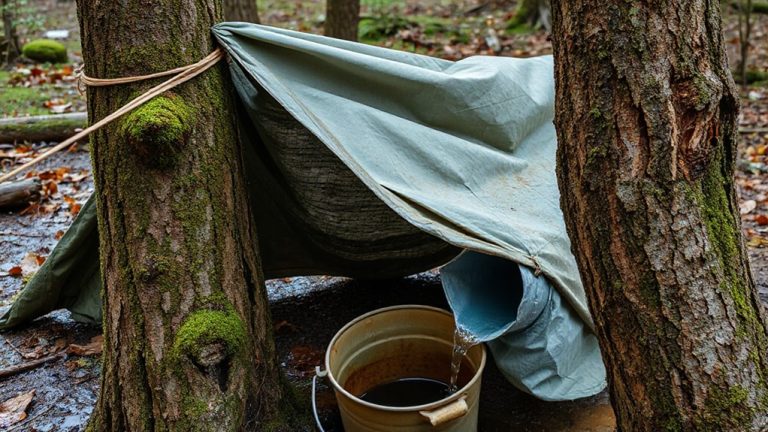
- Collect rainwater using a tarp rigged between trees to channel runoff into clean containers quickly and effectively.
- Line natural basins with plastic or leaves to reduce seepage when collecting rainwater in the absence of tarps.
- Use a layered DIY filter with sand, charcoal, and cloth to improve clarity, but never rely on it alone to make water safe.
- Always purify filtered rainwater using portable filters or purification tablets to eliminate bacteria, viruses, and protozoa.
- Avoid collecting rainwater that has pooled on the ground or run off contaminated surfaces to prevent exposure to toxins and pathogens.
Why Rainwater Beats Other Wild Sources
While rivers and lakes might seem like obvious choices, rainwater’s often your best bet in the wild because it’s naturally distilled and usually free of pathogens. You’re minimizing disease risk right from the start, since rainwater hasn’t picked up bacteria, parasites, or pollutants yet. Most surface water sources carry high contamination levels, especially downstream from wildlife or human activity. Rainwater, when collected cleanly, offers superior water purity-even before filtering. That doesn’t mean it’s always safe; it can pick up airborne contaminants or microbes from collection surfaces. But compared to stagnant ponds or sediment-heavy streams, rainwater starts cleaner and requires less processing. You’ll save time and filtration effort, reducing reliance on heavy equipment or chemical treatments. In survival scenarios where weight and efficiency matter, prioritizing rainwater lowers your odds of illness. It’s not foolproof, but with basic precautions, it’s your most reliable wild source when measured by safety, simplicity, and consistency. Pairing rainwater collection with a high-quality survival water filtration kit ensures maximum protection against any post-collection contamination.
Collect Rainwater Using Tarps or Natural Basins
If you’ve got a tarp, use it to catch rain directly-it’s one of the most efficient ways to gather clean water in the wild. Proper tarp positioning maximizes runoff into your container; angle it tightly between trees with the lowest point over a bucket or basin. Even a slight slope works if you secure the corners well. For natural basins, use leaves, plastic, or a ground cloth as basin lining to reduce contamination and prevent seepage. These methods don’t purify water, but they collect it fast when rain’s falling. For best results, choose a durable canvas tarps option that resists tearing and withstands prolonged exposure to the elements.
| Condition | Tarp Collection | Natural Basin |
|---|---|---|
| Speed | Fast | Slow |
| Purity | High (if clean) | Low to medium |
| Setup | 5–10 mins | 10–15 mins |
| Reliability | Consistent | Variable |
| Materials Needed | 1 tarp, cordage | Lining, digging tool |
Filter Rainwater With Sand, Charcoal, and Cloth
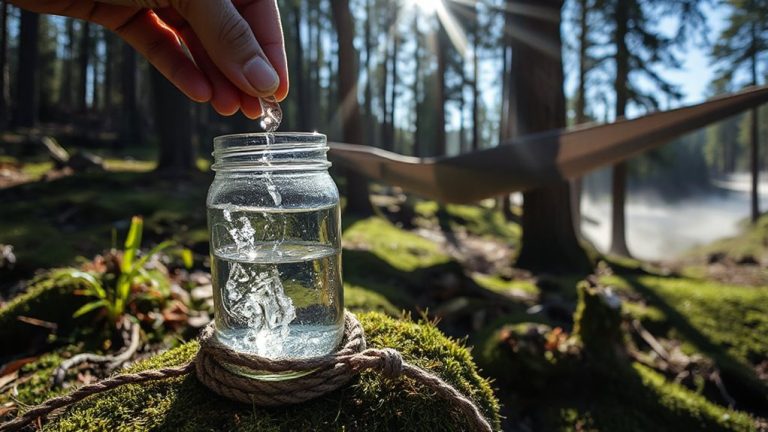
A simple filter made from sand, charcoal, and cloth can reduce debris and some contaminants from collected rainwater. You can build one using a plastic bottle or hollow log lined with cloth to catch large particles. Layer coarse cloth at the bottom, then add fine sand layers-about 2–3 inches-to trap smaller sediment. Above that, use crushed charcoal for charcoal filtration, which helps remove odors and some chemicals. Top it off with another cloth to prevent stirring during pouring. Pour water slowly to avoid disturbing the layers. This method won’t make water safe to drink on its own, but it improves clarity and reduces particulates. Sand layers are effective for physical filtration, while charcoal filtration offers limited chemical adsorption. It’s lightweight, uses natural materials, and works in emergencies, but requires careful assembly to avoid channeling or clogging. For added safety, consider using a water purifying straw as a final filtration step before drinking.
Purify With a Portable Filter or Purification Tablets
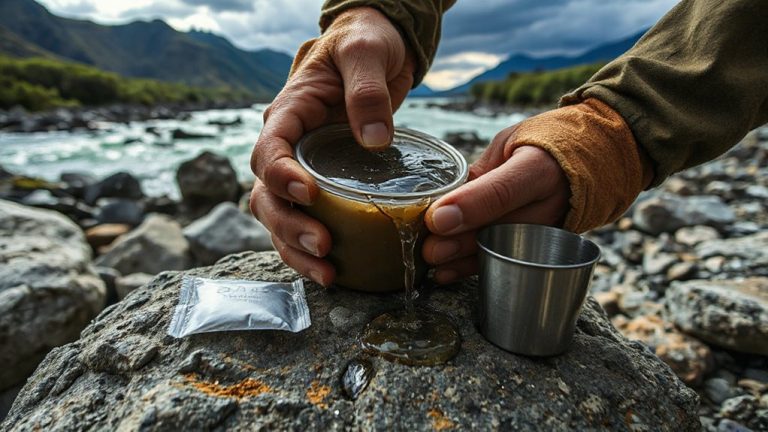
A portable water filter or purification tablets can effectively make rainwater safe to drink when used correctly. A good filter removes 99.99% of bacteria and protozoa, directly improving water quality in the field. Most filters weigh under 10 ounces and handle at least 1,000 liters before replacement. They work fast-about one liter per minute-but can clog if sediment isn’t pre-filtered. Purification tablets, like those with chlorine dioxide, kill viruses too, which most portable filters don’t. Tablets take 30 minutes to four hours but weigh nearly nothing. Both are essential for emergency preparedness, fitting easily in a pack. Your choice depends on weight, time, and pathogen risk. Filters suit ongoing use; tablets are better backups. Using either correctly guarantees safer hydration when clean water isn’t available.
Don’t Drink Rainwater: 5 Deadly Mistakes to Avoid
You’ve got the tools to clean rainwater, but having a filter or tablets doesn’t mean every drop you collect is safe. Avoid these 5 deadly mistakes in the wild.
| Mistake | Risk | Solution |
|---|---|---|
| Drinking water from polluted surfaces | Contaminated runoff dangers | Use only clean catchment surfaces like tarps |
| Ignoring weather history | Acid rain risks | Check regional air quality; avoid after heavy pollution events |
| Collecting pooled ground water | Bacterial and chemical exposure | Gather mid-storm air-fall, not puddles |
Acid rain risks alter pH and leach toxins into collection. Contaminated runoff dangers include oil, feces, or pesticides from rocks, roofs, or soil. Filters won’t remove heavy metals or chemicals. Tablets kill germs but don’t neutralize pollutants. Always assess your source-no purification fixes poor judgment.
On a final note
You can rely on rainwater if you collect it cleanly and filter it properly. Use a tarp or natural basin to avoid ground contamination, then strain through cloth, sand, and charcoal to remove debris. Always purify with a portable filter or tablets-never skip this step. Avoid common mistakes like drinking directly from catchment surfaces or ignoring windborne pollutants. Simple tools work, but they only deliver safe water when used in sequence. Your survival depends on consistency, not gear.