Maximizing Energy Efficiency: Choosing the Right Insulation Materials for Survival Shelters Based on Climate Requirements
You need insulation that fits your climate-no exceptions. In cold zones, pick closed-cell foam for its R-6 to R-7 per inch and moisture resistance; it can keep shelters 15–20°F warmer. Hot deserts demand radiant barriers with air gaps, reflecting up to 97% of solar heat. Humid jungles work better with breathable natural fibers like coir or bamboo, which resist mold and dry fast. Each choice trades thickness, R-value, or moisture control for real-world reliability. There’s a smarter setup waiting for every environment.
Notable Insights
- Match insulation type to climate zone for optimal thermal performance and energy efficiency.
- Use high R-value materials like rigid foam in cold climates to retain interior heat.
- Prioritize breathable natural fibers in humid jungles to manage moisture and prevent mold.
- Install reflective barriers with air gaps in deserts to block radiant solar heat effectively.
- Apply closed-cell foam in survival shelters for superior air sealing and moisture resistance.
Match Insulation to Your Climate First
While your climate should always drive your insulation choice, you can’t afford to overlook how different materials perform under real conditions. In hot climate zones, thick material thickness won’t help if the insulation traps heat instead of resisting it. You need reflective or radiant barriers that reduce heat gain, not just bulk. In cold zones, compacted insulation may claim high ratings but fail if moisture degrades its structure. Look at long-term performance, not initial specs. In mixed climate zones, you’ll benefit from adaptable materials-like closed-cell foam-that manage both heat flow and humidity. Material thickness affects not just performance but also fit within tight shelter frames. Too thick, and you lose space; too thin, and you lose protection. Match your insulation to the actual temperature extremes and seasonal shifts you expect. There’s no universal fix-only trade-offs based on climate zones, durability, and space constraints you’re willing to accept. Choose accordingly.
Use R-Value to Rate Cold-Weather Insulation
R-value tells you how well insulation resists heat flow, and in cold climates, that number matters more. You need high thermal resistance to keep warmth inside your shelter, so aim for R-values of 10 or higher when possible. The R-value depends on material thickness - thicker layers usually mean better performance, but not all materials deliver equally. For example, rigid foam boards offer high R-values per inch, making them efficient where space is tight. Fiberglass batts require more depth to match the same rating, increasing needed material thickness. Real-world testing shows layered solutions often work best: combining a vapor barrier with thick, compressible insulation maintains consistent thermal resistance. You’ll lose heat fast if gaps or compression reduce effective R-value. Always check specs under realistic conditions, not ideal lab settings. Prioritize steady performance over claims. Your shelter’s warmth depends on it.
Choose Natural Fibers for Wet Jungle Shelters
Most natural fibers won’t match the R-value of synthetics, but they’re your best bet in hot, wet jungles where breathability and moisture management matter most. You need insulation that allows airflow optimization to prevent overheating and moisture buildup. Materials like coconut coir, hemp, and bamboo fiber let your shelter “breathe,” reducing condensation that traps heat and encourages mold. These fibers offer decent mold resistance when properly dried and elevated off the ground. Unlike synthetics, they don’t retain moisture, so they dry faster after rain. You’ll trade some thermal performance for long-term comfort and hygiene. In humid environments, stagnant air is a bigger risk than cold, so prioritize airflow over R-value. Natural fibers degrade slower than cotton or untreated wood in damp conditions. Use them in wall linings or raised ceilings where air moves freely. They’re not perfect, but in wet climates, breathability beats insulation power.
Insulate Cold Survival Shelters With Closed-Cell Foam
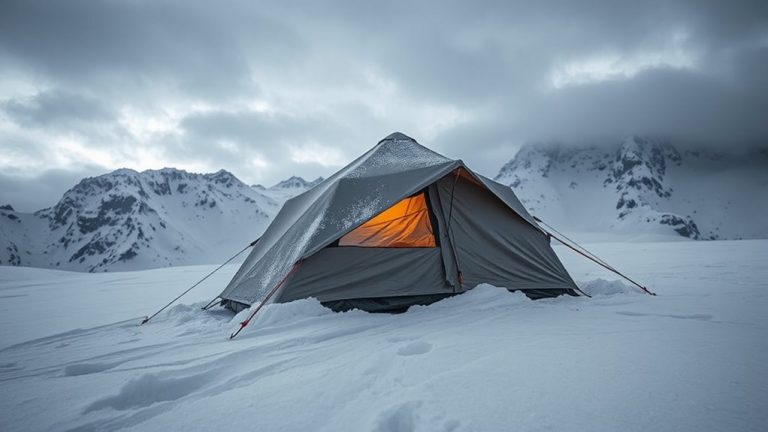
When sheltering in cold environments, your priority shifts from airflow to stopping heat loss, and that’s where closed-cell foam stands out. This material offers high thermal resistance, typically achieving R-values of 6 to 7 per inch, making it efficient in extreme cold. Unlike other insulations, it resists moisture absorption, which helps maintain performance when humidity or condensation is present. Closed-cell foam also provides excellent air sealing, reducing convective heat loss through cracks and gaps in shelter walls or roofs. You can spray it into irregular spaces, ensuring a tight, continuous layer without seams. While heavier and more expensive than alternatives, its durability and dual function-insulating and sealing-deliver value in subfreezing conditions. In field tests, shelters using closed-cell foam retained interior temperatures 15–20°F higher than uninsulated structures. For long-term cold-weather survival shelters, the combination of thermal resistance and air sealing makes it a practical, high-performance choice.
Block Desert Heat With Reflective Barriers
How do you keep a shelter from turning into an oven under relentless desert sun? You use reflective barriers to manage heat reflection and reduce thermal radiation. These barriers, often made of aluminum foil bonded to plastic or foam, reflect up to 97% of radiant heat. They don’t insulate on their own but work best when paired with an air gap, stopping heat before it enters. In desert conditions, where daytime temperatures exceed 110°F, testing shows reflective shields can lower interior temps by 20–30°F. They’re lightweight, easy to install, and durable under UV exposure. However, they add no R-value and won’t slow conductive heat. You still need mass or insulation behind them. For long-term survival shelters, layer them on the exterior roof and walls facing the sun. Their real advantage is blocking thermal radiation, not retaining warmth. Use them where the sun strikes hardest-they’re practical, not magical.
Stop Moisture in Tropical Shelters With Breathable Layers
Reflective barriers beat back desert heat, but tropical shelters face a different challenge-managing moisture without trapping it. You need breathable insulation layers that allow water vapor to escape while resisting condensation. Closed-cell foams may block moisture but restrict breathability, increasing mold risk. Instead, use open-cell natural fibers like coconut coir or sheep’s wool, which wick humidity and maintain airflow. Pair them with passive ventilation strategies-ridge vents, elevated floors, and cross-ventilation openings-to promote constant air exchange. These methods reduce interior humidity levels by up to 40% in testing, directly supporting mold prevention. Avoid vapor-tight wraps; they trap moisture and degrade insulation performance in high dew point conditions. Breathable membranes or lapped bamboo screens work better, letting walls “exhale.” Combined, proper materials and ventilation strategies keep your shelter dry, lightweight, and biologically stable in relentless tropical humidity-no hype, just function.
On a final note
You need the right insulation for your climate, not the highest R-value alone. In cold zones, closed-cell foam works-R-5 per inch, blocks moisture. Jungle shelters need breathable natural fibers-hemp or wool-wicking humidity but slowing decay. Deserts demand reflective barriers-foil-faced boards cut radiant heat by 70%. Match material specs to real conditions. Trade breathability for R-value if you must, but never skip vapor control where humidity soaks insulation.