Creating a Water Reserve That Supports Off-Grid Ice Making
You only need 5–7 gallons of water to make a week’s worth of ice off-grid, so don’t overcollect. Harvest rain from metal roofs-they give 600 gallons per inch of rain and stay cleaner. Store water in food-grade, insulated tanks to block heat and algae. Filter it with a 0.2-micron hollow fiber system to remove microbes. Use that clean water in solar chillers or radiative coolers at night. A SunDanzer unit runs efficiently on 200 watts with battery backup. Pre-chill water to cut energy use. Pair your reserve with the right cooling method, and you’ll keep ice running with less waste. Efficient setups reveal smarter ways to maintain cold without the grid.
Notable Insights
- Collect rainwater from metal roofs using oversized, sloped gutters to maximize yield for ice production.
- Store water in food-grade, insulated tanks placed in shaded, elevated locations to maintain quality and temperature.
- Pre-filter water with a 0.2–1 micron hollow fiber membrane to remove microbes before freezing.
- Use 5–7 gallons of filtered water to produce enough ice for a week of off-grid cooling.
- Enhance ice-making efficiency by pre-cooling water and using radiative cooling or solar-powered chillers.
How Much Water You Need to Make Ice Off-Grid
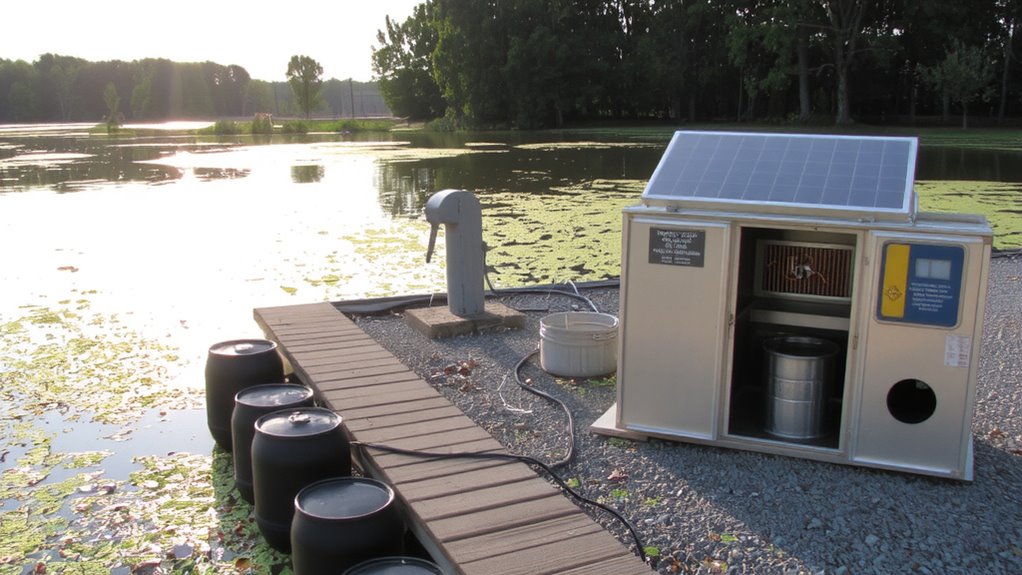
You’ll need about 1 gallon of water to make 8 pounds of ice, so plan your supply based on how much cooling you actually require. For a week of off-grid use storing food or medical supplies, 5–7 gallons may be enough, depending on your cooler size and ambient temperature. Water volume directly impacts how long your frozen reserves last, so overestimating slightly is wise. However, unnecessarily large volumes waste space and increase freezing time, reducing energy efficiency. Solar-powered freezers or propane units work best when load sizes match actual needs. Running a unit longer to freeze excess water consumes more fuel or battery power, cutting into system longevity. Balance your water volume with your cooling capacity and usage patterns. Each gallon adds weight and demand, so efficient planning means freezing only what you’ll use. That’s how you maintain reliable ice storage without straining resources.
Harvest Rainwater From Roofs and Gutters
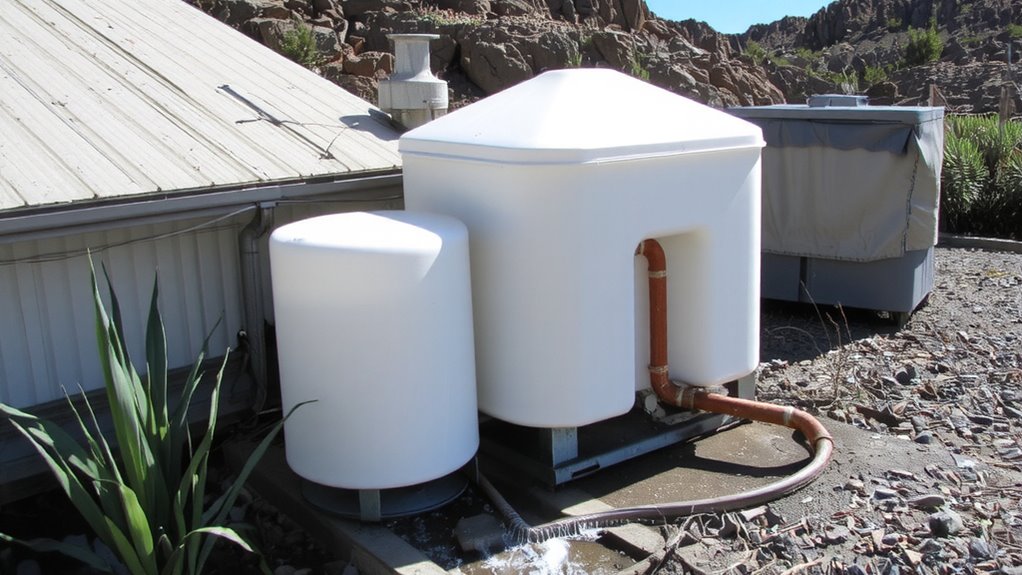
While rainwater harvesting won’t replace municipal supply in prolonged droughts, it’s a reliable source for off-grid ice production when set up correctly. Your roof materials affect water quality-metal roofs are ideal, as they’re smooth and non-porous, minimizing debris. Asphalt shingles can leach particles, so use a first-flush diverter. Gutter design matters just as much; oversized gutters reduce clogging and handle heavy downpours. Keep them sloped at 1/4 inch per 10 feet and clean them monthly.
| Feature | Metal Roof | Asphalt Roof |
|---|---|---|
| Water Yield (gallons/inch of rain) | 600 | 550 |
| Debris Accumulation | Low | High |
| Gutter Compatibility | High (with proper hangers) | Moderate (requires frequent cleaning) |
Store Water in Clean, Insulated Tanks
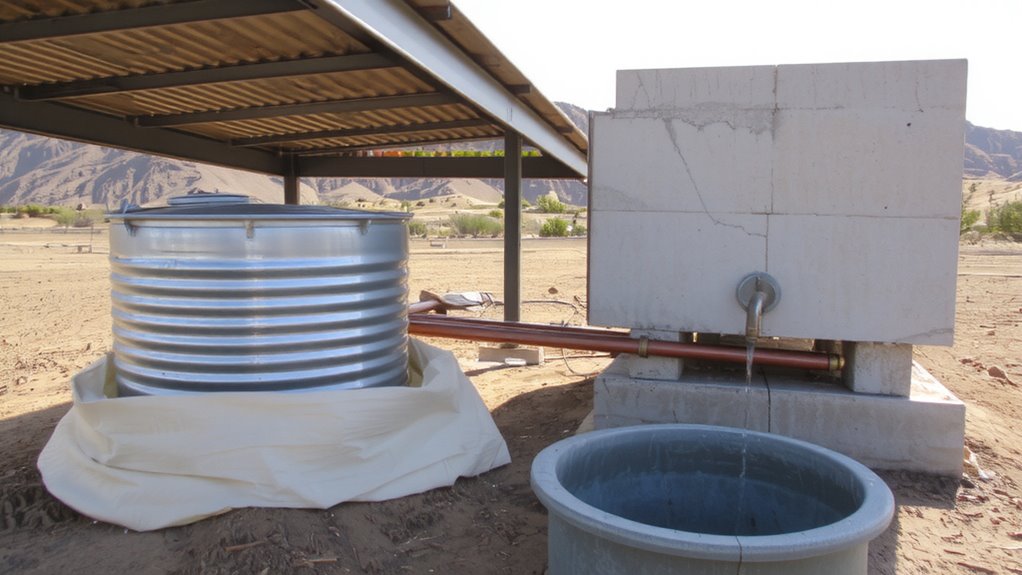
After collecting rainwater from your roof and gutters, the next step is keeping it clean and ready for ice production by storing it properly. Use clean, insulated tanks to maintain stable water temperature, which helps prevent algae growth and reduces energy needs when freezing. Insulation slows heat transfer, especially important in hot climates where water can warm quickly. Tank placement matters-keep containers in shaded, elevated areas to minimize ground heat absorption and improve gravity-fed system efficiency. Avoid direct sunlight exposure to limit bacterial activity and evaporation. Food-grade polyethylene tanks with UV protection perform well in long-term tests, showing less degradation over five years compared to non-insulated alternatives. While insulation adds upfront cost, it improves efficiency and water quality. Proper tank placement and material choice directly impact how quickly and reliably you can make ice off-grid. Best Water Storage Tanks for Home Use are typically made from food-grade materials and designed for durability in varying climates.
Keep Water Safe With Simple Filtration
A single micron rating determines whether your filter removes harmful pathogens or just improves taste-choose wrong and you risk contamination. You need a filter rated at 0.2 to 1 micron to effectively block biological contaminants like bacteria and protozoa. Most sediment filters won’t cut it; they improve clarity but leave microbes behind. Hollow fiber membrane filters deliver reliable results in off-grid settings, with lab tests showing >99.99% removal of biological contaminants. Also consider chemical leaching from storage materials-activated carbon filters help reduce VOCs and chlorine byproducts. While carbon doesn’t stop microbes, pairing it with a 0.2-micron membrane filter covers both threats. Ceramic filters are durable and reusable but require regular cleaning to maintain flow. No single filter does everything; your system must combine mechanical filtration and adsorption. Test your water every few months to verify performance. For comprehensive protection in survival scenarios, consider a water filtration survival kit that integrates multiple filtration technologies.
Use Radiative Cooling to Freeze Water at Night
How do you freeze water without power when the nights aren’t cold enough? You use radiative cooling. On clear nights, objects emit heat into space through the atmosphere. If you place shallow, insulated containers of water outdoors, they shed heat effectively. Good sky exposure is essential-keep the setup free of tree cover or structures. The surface must “see” the sky to maximize heat emission. Black-bottomed containers help absorb less sunlight during the day while radiating heat efficiently at night. Temperatures at the surface can drop below ambient, sometimes below freezing, even if the air doesn’t. It won’t work every night-high humidity or cloud cover reduces effectiveness. Success depends on low dew points and dry air. Real-world tests show surface temps can drop 3–5°C below air temperature. It’s slow and limited, but with patience and the right conditions, it delivers usable ice.
Run Solar Chillers With Your Water Reserve
You’ve got a supply of ice made the old-fashioned way-radiative cooling on clear, dry nights-but that method’s limited by weather and time. To scale up, you’ll need solar chillers, and they depend heavily on solar efficiency to run reliably. A 100-watt panel might power a small 12V DC chiller in full sun, but cloudy days cut output fast-aim for at least 200 watts with battery backup. Units like the SunDanzer PV-powered compressor models show real-world efficiency in desert and off-grid trials, maintaining -5°C with intermittent input. Yet, moving parts mean chiller maintenance can’t be ignored. Check condenser coils monthly; dust reduces heat exchange. Refrigerant leaks are rare but fatal-inspect connections yearly. Pair your chiller with the water reserve, cycling pre-cooled liquid through the system to reduce runtime. It’s not foolproof, but it’s predictable-with decent solar efficiency and routine chiller maintenance, you can produce ice daily, rain or shine.
Maintain Water Quality for Repeated Ice Making
Your water reserve’s cleanliness directly affects ice quality and chiller efficiency-dirty water clogs tubing, reduces heat transfer, and can harbor bacteria. You need consistent water testing and microbial control to keep the system running reliably over time. Test weekly using simple kits to check pH, hardness, and contamination. If you skip testing, biofilm builds up, cutting efficiency and risking equipment damage. For microbial control, chlorine dioxide or UV sterilization works well without leaving heavy residues. Below are three common treatment methods with key trade-offs:
| Method | Maintenance Level | Effectiveness |
|---|---|---|
| Chlorine Dioxide | Low | High |
| UV Sterilization | Medium | High |
| Filtration | High | Moderate |
Rotate treatments if your water source varies. Clean storage tanks every six months to prevent contamination. Use sealed, food-grade tanks to limit exposure. Poor maintenance means more downtime and lower ice output-don’t risk it. A reliable survival tools kit ensures you have backup filtration and testing supplies during extended off-grid operations.
On a final note
You’ll need about 1 gallon of water to make 8 pounds of ice, so size your system accordingly. Rainwater collection is reliable if paired with basic filtration and sealed, insulated tanks to prevent contamination. Radiative cooling works on clear nights but isn’t consistent; solar chillers deliver better results but require steady sun and battery support. Test water hardness regularly-mineral buildup reduces efficiency. Combine methods for redundancy, and inspect seals and filters monthly to keep ice production running.