Falsifying Trail Markers to Confuse Potential Followers in Wilderness Areas
You might trust trail markers, but some are flipped or faked by vandals to mislead hikers-often locals seeking control or thrill. These altered signs steer you off route, increasing risks of injury, exposure, or costly rescues. Real markers follow consistent colors, materials, and placement; deviations suggest tampering. Always cross-check with a map and compass. Spotting fake signs early keeps you safe-and knowing what to look for reveals even more ways to stay found.
Notable Insights
- Falsifying trail markers involves altering or creating signs to mislead hikers and obscure one’s path in remote areas.
- Perpetrators often flip, relocate, or fabricate signs using materials that mimic official markers to appear credible.
- Motives include evading detection, asserting control over terrain, or isolating areas for personal use.
- Fake markers exploit hikers’ trust in trail systems, increasing risks of injury, exposure, and rescue complications.
- Tampering with trail signs is a criminal offense that can result in fines, felony charges, and permanent legal records.
Who Changes Trail Markers and Why
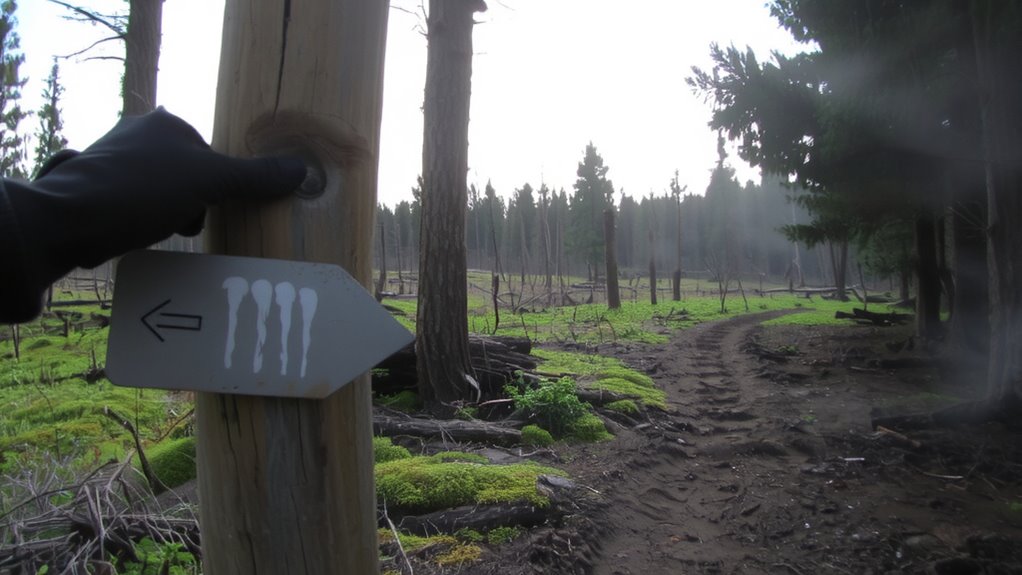
Why would someone alter trail markers? You might encounter changed signs due to vandalism, territorial behavior, or misguided pranks. Motive analysis shows most acts stem from a desire to control access or express defiance. Some perpetrators seek attention; others aim to isolate areas for personal use. Perpetrator profiles often include locals familiar with the terrain, though disoriented hikers rarely do so intentionally. These individuals typically have basic outdoor knowledge but lack respect for trail systems. You should assume alterations aren’t random-each has intent behind it. Whether driven by ego, confusion, or malice, the result undermines trail integrity. You can’t rely solely on markers in remote zones. Carry maps, know the route, and verify signs against known waypoints. Awareness reduces risk. Trail alterations reflect human behavior more than navigation failure-anticipate them, prepare accordingly, and stay alert to inconsistencies.
How Fake Trail Signs Endanger Hikers
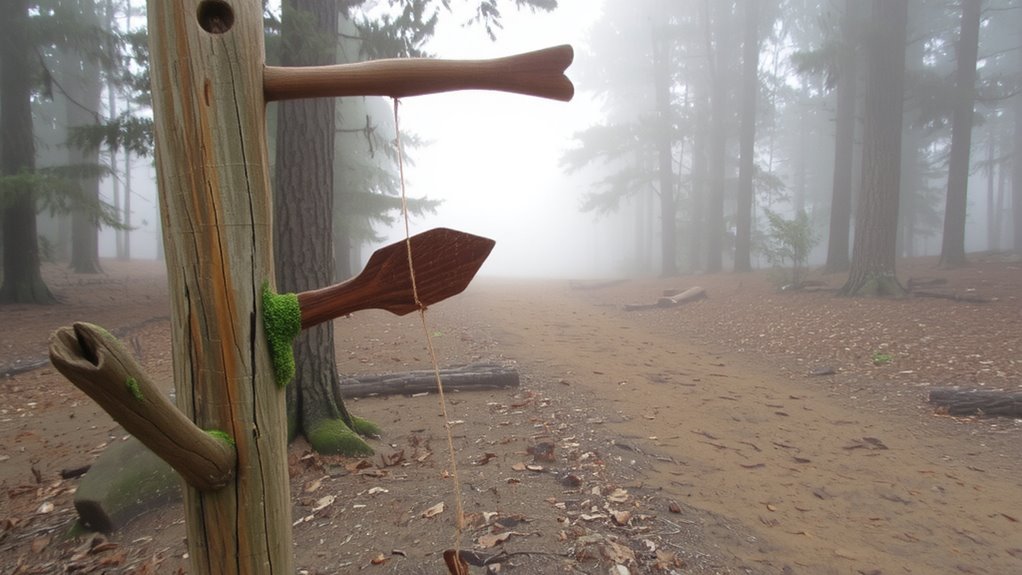
Fake trail signs put you at real risk, and the danger starts the moment you trust them. You might follow a false route, lose your way, and waste energy retracing steps. Terrain becomes more hazardous, especially in bad weather or low light, increasing emergency risks. If you’re injured or stranded, every hour lost deepens the threat. Search parties deploy only after someone reports you missing, which can take hours or days. That delay cuts into survival time, particularly in extreme cold or heat. False signs mislead rescuers too, as teams may search incorrect areas. You’re more exposed, further from help, and harder to locate. These signs don’t just confuse-they extend response times and elevate danger. Your navigation tools may not catch the error until it’s too late. Staying found means verifying signs against maps and GPS. Assuming a trail is marked correctly is a risk not worth taking.
How Vandalized Signs Trick Hikers
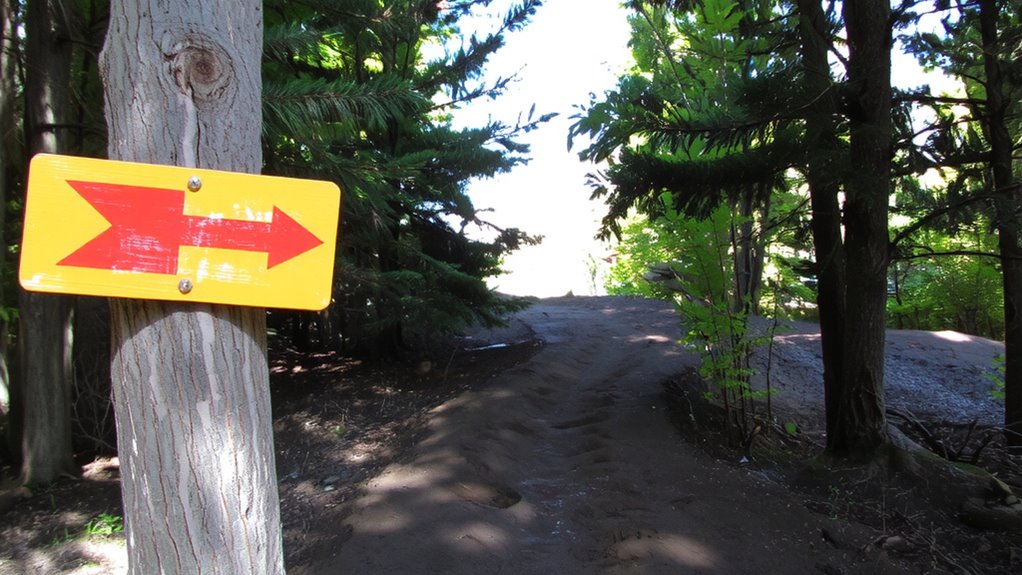
How do vandals turn a simple walk in the woods into a survival test? They rely on trail confusion through marker deception. You see a signpost pointing left, so you follow it-except someone flipped it overnight. Now you’re off-course, your map doesn’t match, and daylight’s fading. These altered signs look legitimate, giving false confidence. A painted arrow may direct you toward steep drop-offs or unmarked terrain. Trail confusion isn’t accidental; it’s the predictable result of deliberate sabotage. Marker deception works because hikers trust infrastructure. When signs lie, navigation tools like compasses and GPS become critical, but not all carry them. Even experienced hikers can waste hours retracing steps. The damage isn’t just time lost-it’s increased exposure, dwindling supplies, and rising risk. Simple acts of vandalism create cascading failures in backcountry safety, turning routine hikes into unplanned survival scenarios.
Legal Consequences of Sign Tampering
While you might think flipping a trail sign is just a prank, it’s actually a crime with serious penalties in most jurisdictions. You could face steep fines, often ranging from hundreds to thousands of dollars, depending on the location and damage caused. Many parks and protected areas treat sign tampering as a misdemeanor, but if your actions lead to injury or costly rescues, prosecution can escalate to felony charges. Law enforcement takes these acts seriously because false markings endanger lives. Rangers use surveillance, witness reports, and GPS data to track down vandals. Even if you’re not caught immediately, records of past incidents can resurface. The legal system doesn’t distinguish between “just a joke” and deliberate deception-both lead to prosecution. You’re not just risking fines; you’re inviting criminal charges that stay on your record, affecting future travel, employment, and outdoor privileges.
How to Spot a Doctored Trail Marker
A suspicious trail marker might save you time on the map, but it could also lead you dangerously off course. You should check marker colors carefully-official trails use standardized hues, so a red blaze where blue should be is a red flag. Look for material inconsistencies; real markers are usually metal or durable plastic, while fake ones might be mismatched tape, painted rock, or scrap wood. Natural wear matters, too-new-looking marks on aged trails are suspect. If adjacent markers differ in size, shape, or fastening method, someone likely tampered with them. Consistency across trail segments is key; deviations without clear reason suggest interference. Trust established signage over isolated, out-of-place additions. When in doubt, cross-reference with your map and compass. These checks take seconds but prevent costly errors. Stay alert-your safety depends on noticing small anomalies others overlook.
Signs You’re Off Route (And What to Do)
You’ve checked the blazes, verified the materials, and ruled out tampering-yet something still feels off. That gut sense might be right. Unfamiliar terrain, missing junctions, or inconsistent distances suggest you’re off route. False alarms happen-like mistaking game trails for paths-but ignoring them increases risk. If streams appear too wide or ridgelines don’t match your map, you’ve likely taken wrong turns. Stop. Don’t push forward assuming the trail will correct. Retrace your steps to the last confirmed point. Use your compass and map to verify direction; GPS devices help but can fail. Note landmarks before moving. Backtrack calmly. Regaining known ground beats wandering farther into uncertainty. Staying put may be better if disorientation persists. Mark your location visibly, but avoid altering natural features. Wait for clear bearings. Trusting data over instinct prevents deeper misdirection. Persistent mismatches mean you’re not on the intended path-act before resources dwindle.
Essential Habits to Stay on Track
If you’re relying solely on memory or chance, you’re already at a disadvantage-staying found starts with routine navigation checks every half-mile or at trail junctions, where errors compound quickly. You should practice map reading every time you pass a landmark or change direction, confirming your position against visible terrain. Good route planning isn’t just about choosing the shortest path; it’s about identifying reliable checkpoints like streams, ridgelines, or clearings you can trust even if markers are tampered with. Carry a topographic map and compass and use them together-GPS devices fail. Check bearings frequently, especially in dense forest or fog. Avoid unmarked side trails. Trust your map, not painted blazes or cairns, which can be falsified. Consistent habits reduce risk more than any single tool. You won’t always see the danger before it’s too late.
On a final note
You can’t rely solely on trail markers-they’re easily faked or vandalized. Always carry a map and compass, and know how to use them. GPS devices help but depend on batteries and signal. If a sign seems off-wrong color, loose, or newly placed-trust your navigation tools over it. Staying found means verifying your position regularly. Confusion costs time and energy; preparation prevents it. Skill and backup tools are your best safeguards.