Pairing GPS Devices With External Antennas for Better Signal in Valleys
You lose GPS signal in deep valleys because terrain and trees block satellite access. An external antenna mounted above obstructions restores reliable reception by capturing stronger, clearer signals. Active helical antennas with RHCP and high gain perform best in rugged terrain. They resist multipath errors and lock onto satellites faster. Short cable runs and proper placement away from metal improve results. Test for consistent sky view and low drift over time-your setup’s accuracy depends on it. See how each choice affects performance in real conditions.
Notable Insights
- Use active helical antennas to boost GPS signal reception in deep valleys with heavy obstructions.
- Ensure the antenna has right-hand circular polarization (RHCP) for optimal compatibility with GPS satellite signals.
- Mount the external antenna above terrain and foliage to maintain a clear line of sight to satellites.
- Keep coaxial cable runs short and away from electronic noise sources to preserve signal integrity.
- Test the paired system with prolonged tracking to verify consistent satellite lock and signal stability.
Why GPS Signals Fail in Valleys
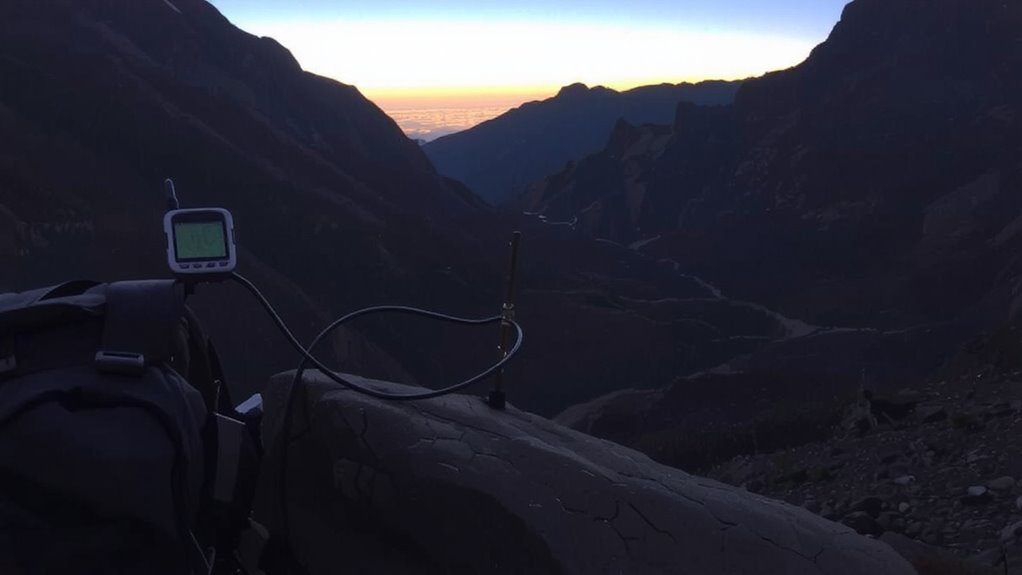
When you’re traversing through deep valleys, your GPS might lose signal simply because terrain blocks the satellites’ line of sight. Signal obstruction from steep canyon walls or dense foliage prevents the device from locking onto enough satellites for an accurate fix. Tall rock formations reflect or absorb signals, leaving your unit struggling to maintain position. Even when some reception occurs, atmospheric interference-like ionospheric delays or weather-related disturbances-can degrade timing data, reducing accuracy. These natural barriers don’t just weaken signals; they introduce timing errors that compromise location precision. You’ll notice your GPS lagging or jumping positions as it recalculates with incomplete data. Valleys amplify these issues due to limited sky visibility, increasing reliance on already compromised signals. While your device may still function intermittently, consistent navigation becomes unreliable. Understanding these environmental limitations helps explain why GPS performance drops in rugged terrain, independent of device quality.
How External Antennas Fix Weak Reception
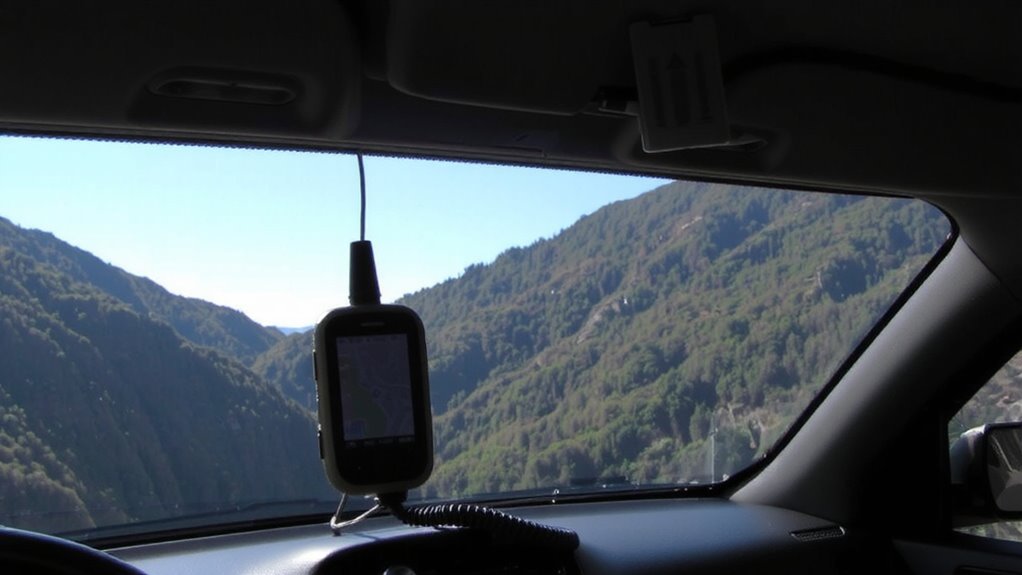
Though terrain can block GPS signals, an external antenna helps by placing the receiver outside obstructions, giving you a clearer line of sight to satellites. You’ll get stronger reception because the antenna captures signals before they’re weakened by walls, rock, or dense foliage. It reduces signal interference from nearby electronics or metal structures, especially when mounted away from the device. External antennas also minimize atmospheric distortion by locking onto more satellites, improving accuracy. You’ll notice fewer dropouts and faster lock times, even in deep valleys. While no system eliminates all signal loss, lifting the antenna above ground-level clutter gives you a measurable edge. You’re not adding power-you’re improving placement. That simple shift boosts reliability when navigation matters most.
Types of GPS External Antennas
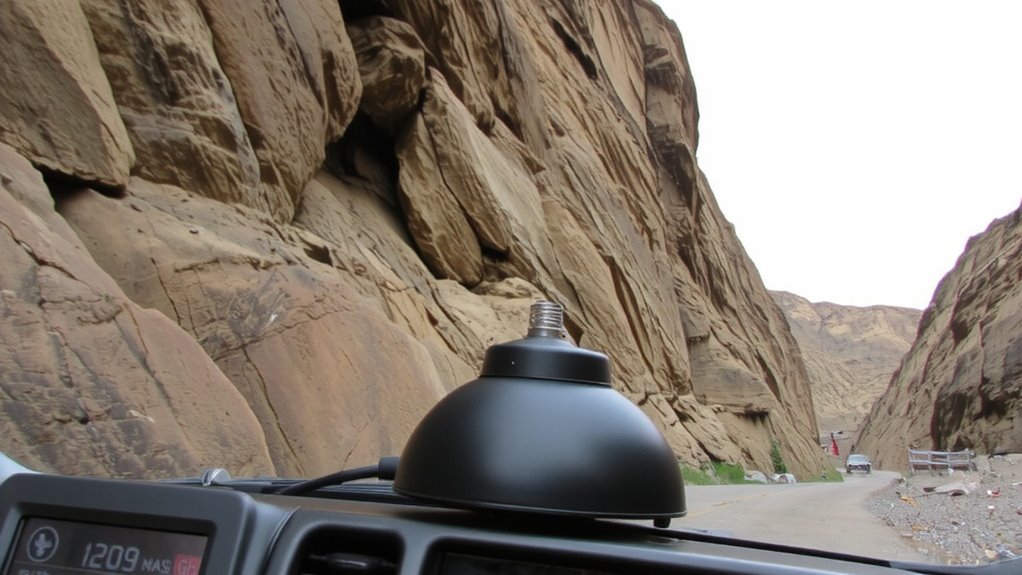
A good external GPS antenna isn’t about brand names or flashy specs-it’s about picking the right type for your environment and setup. You’ll mostly encounter passive and active antennas; active ones amplify the signal, helping reduce signal attenuation in deep valleys or dense tree cover. Passive antennas are simpler and don’t need power, but they’re prone to losing strength over longer cable runs. Antenna polarization matters too-GPS satellites use right-hand circular polarization (RHCP), so your antenna must match it to receive signals efficiently. Mismatched polarization can drop accuracy fast. Patch antennas offer wide coverage and solid performance in open terrain, while helical types provide stronger directionality and better rejection of multipath signals. For rugged durability and consistent sky access, your choice should hinge on real-world conditions, not marketing claims.
Choose the Right Antenna for Your GPS
You’ve seen the types-passive, active, patch, helical-each with clear strengths depending on where and how you use your GPS. If you’re in deep valleys, an active helical antenna usually performs better due to higher gain and superior rejection of multipath signals. Passive antennas work fine in open areas but struggle where signal frequency penetration is critical. Match the antenna’s frequency range to your GPS-most modern units use L1 (1575.42 MHz), but some support L2 or L5 bands for greater precision. Antenna polarization matters, too: GPS signals are right-hand circularly polarized, so your antenna must match that to receive efficiently. A mismatch cuts signal strength noticeably. Patch antennas offer wider coverage but less gain; helical types give stronger directional reception. In rugged terrain, that gain helps maintain lock. Choose based on where you travel, not specs alone. Your environment dictates the best fit. For hikers relying on consistent navigation, pairing your device with the best GPS devices for hiking can significantly enhance overall performance and reliability.
Install Your External Antenna Correctly
How well does your external antenna perform when it’s not mounted right? Not very. Poor placement introduces signal interference and ruins antenna alignment, cutting accuracy and lock speed. You need a clear view of the sky-metal roofs, walls, or nearby electronics will degrade performance. Mount the antenna where it has an unobstructed line of sight to satellites, preferably on a roof or high exterior surface. Keep the cable run short and away from power lines to reduce noise. Magnetic mounts work well on vehicles, but make certain the base is flat and metal for a solid ground plane. If you’re in a rugged environment, secure the antenna firmly-vibration and movement can misalign it over time. Proper installation doesn’t guarantee perfection, but it eliminates common, fixable issues that undermine GPS reliability in valleys.
Test and Improve Your GPS Signal
What’s the point of a high-gain antenna if you don’t verify the signal it’s actually delivering? You need to test performance in real conditions. Use your GPS device’s signal strength meter to check satellite lock and accuracy. Signal interference from terrain, buildings, or electromagnetic sources can still degrade reception, even with a good antenna. Move to open areas and compare readings before and after installation. Atmospheric delay affects timing signals, especially during storms or high humidity, reducing positional accuracy by several meters. Run continuous tracking tests over 24 hours to spot inconsistencies. If signal drops occur, recheck antenna placement-higher or more central mounting often helps. You’ll likely see improved satellite acquisition, but don’t assume peak performance automatically. Fine-tune positioning, then retest. Real gains show in stable fix counts and reduced position drift. Test, adjust, repeat until results meet your accuracy needs.
On a final note
You’ll get stronger GPS signals in valleys by pairing your device with an external antenna. Active antennas amplify weak signals, while passive ones reposition reception for better line-of-sight. Placement matters-mount high and clear of obstructions. Use low-loss coax cables to minimize signal degradation. Testing shows signal gain improves lock speed and accuracy. Not all antennas work with all devices, so check compatibility. It’s a practical fix, not magic-just physics and smart setup.