Understanding Frostbite Risks in Cold Weather Environments
You can get frostbite in under 5 minutes when wind chill drops below -20°F, especially on exposed skin. Cold reduces blood flow to extremities, and wind accelerates heat loss, increasing risk fast. Watch for numbness, pale or waxy skin-early signs mean trouble. Fingers, toes, ears, and face are most vulnerable. Wear moisture-wicking layers, avoid cotton, and keep skin covered. If symptoms appear, rewarm gently with warm (not hot) water. Rubbing or direct heat damages tissue. Persistent numbness or blisters means it’s time to act-know what comes next.
Notable Insights
- Frostbite occurs when skin and tissues freeze due to cold exposure, especially when blood flow to extremities is reduced.
- Wind chill significantly increases frostbite risk by accelerating heat loss, making skin freeze faster than air temperature alone suggests.
- Early signs include tingling, numbness, and skin discoloration, which may progress quickly without immediate attention.
- Fingers, toes, ears, nose, and cheeks are most vulnerable due to reduced circulation in cold conditions.
- Prevent frostbite by wearing layered, moisture-wicking clothing, covering exposed skin, and rewarming affected areas gently if needed.
What Causes Frostbite?
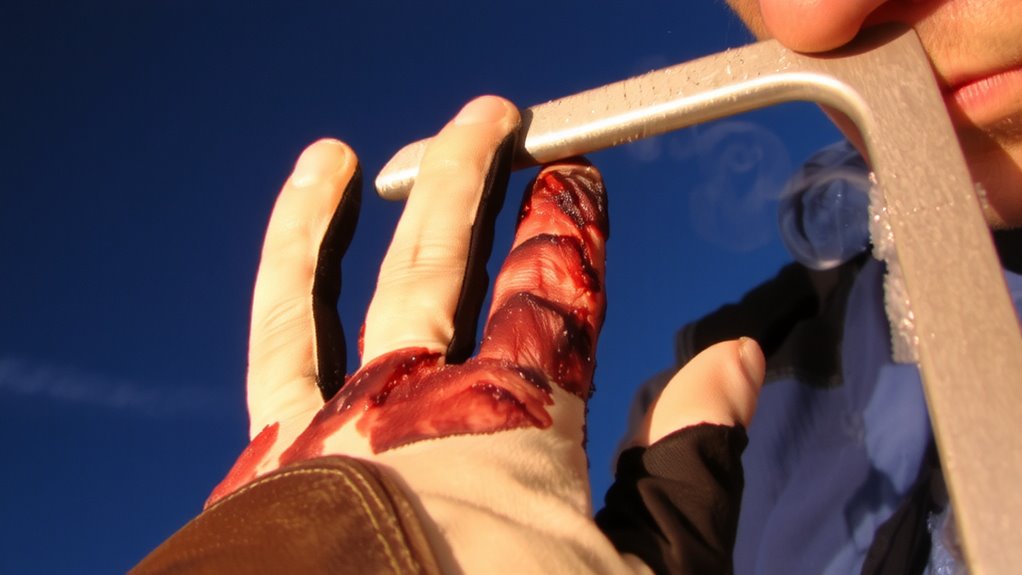
When the temperature drops below freezing, your skin and underlying tissues can start to freeze, and that’s when frostbite sets in. Your body prioritizes warmth for essential organs, reducing blood flow to extremities like fingers and toes. A lower metabolic rate means less internal heat production, increasing your risk. You need adequate clothing insulation to compensate. Insufficient layers or damp gear reduces thermal protection, letting heat escape faster than your body can replace it. High-quality insulation traps air close to your skin, slowing heat loss. But if your metabolic rate can’t match the demand, even good clothing won’t fully protect you. Staying dry, wearing moisture-wicking base layers, and adding insulated outerwear improves your odds. You must balance activity levels to sustain heat without sweating excessively. Real-world testing shows that users in subzero conditions who maintain movement and wear proper insulation report fewer cold injuries. Clothing choice and body heat production are measurable, critical factors.
How Wind Chill Makes Frostbite Faster
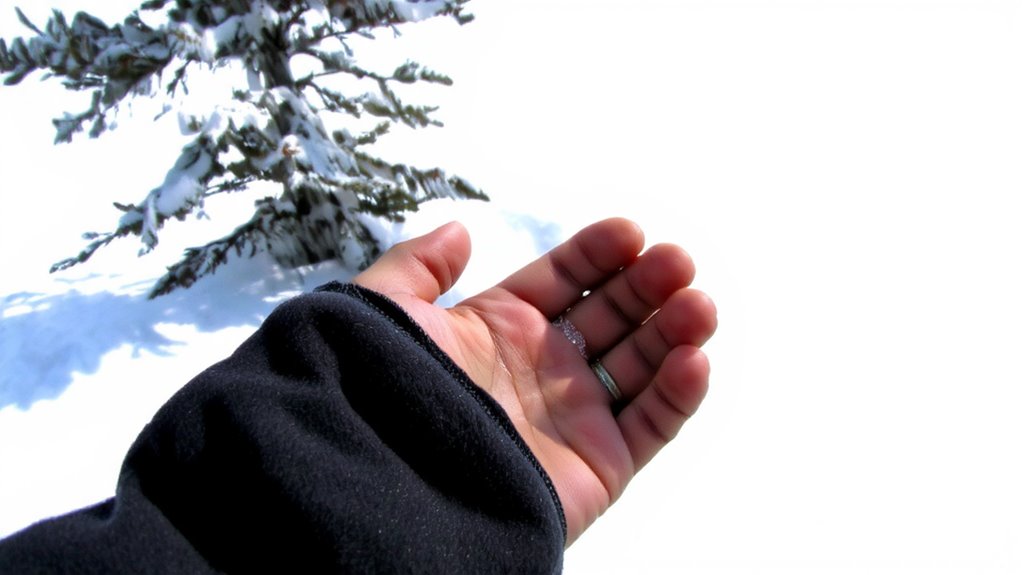
You already know cold temperatures can freeze skin and tissue, especially when your body pulls heat from extremities to protect core organs. But wind chill makes it worse-fast. Wind velocity strips away your body’s insulating warmth, accelerating heat loss. What feels like -10°F due to wind chill isn’t just discomfort; it shortens safe cold exposure time considerably.
| Air Temp (°F) | Wind Speed (mph) | Time to Frostbite |
|---|---|---|
| 0 | 15 | ~30 minutes |
| -10 | 20 | ~10 minutes |
| -20 | 25 | ~5 minutes |
| -30 | 30 | ~2 minutes |
| -40 | 35 | ~1 minute |
Higher wind velocity means rapid cooling. You can’t rely on air temperature alone-factor in wind to judge real risk. Extended cold exposure under these conditions is dangerous, even with protective gear.
First Signs of Frostbite: Numbness and Skin Changes
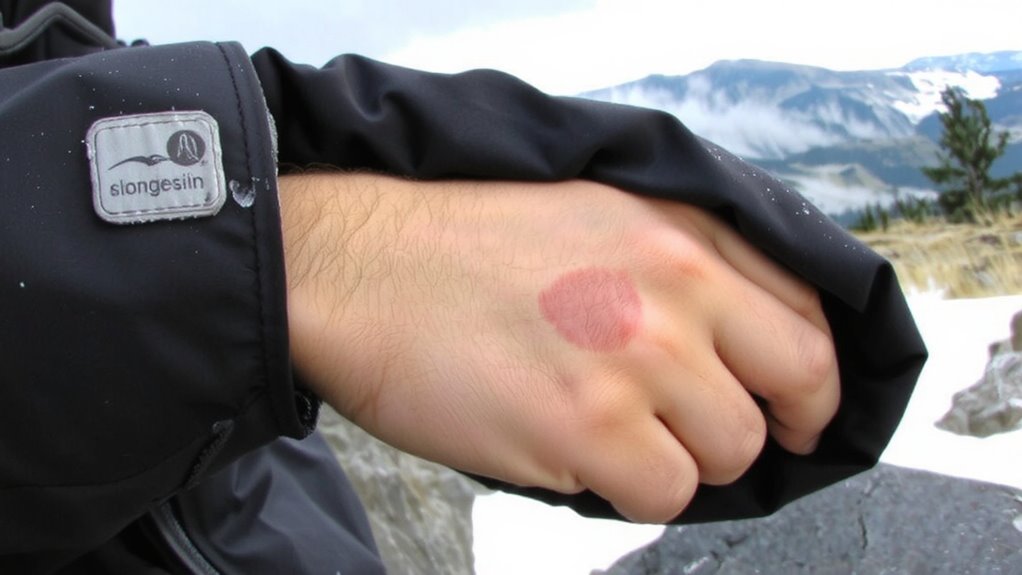
Though cold alone can damage tissue, frostbite’s early warnings are more subtle-numbness and skin changes are your first indicators. You’ll notice tingling that fades to numbness, signaling nerve impairment from freezing temperatures. This numbness often masks pain, making early detection even more critical. Check exposed skin frequently, as skin discoloration typically follows-your skin may turn red, then pale or waxy gray. These visual cues mean tissue is cooling rapidly and could freeze. Early detection gives you time to seek warmth before permanent damage occurs. Don’t wait for blisters or blackened skin; those are later stages. React as soon as sensation shifts or you see discoloration. Rewarming slowly with skin-to-skin contact or warm (not hot) water helps. Frostbite progression varies by wind chill and clothing, but recognizing numbness and skin discoloration drastically reduces risk.
Which Body Parts Are Most at Risk for Frostbite?
The most vulnerable body parts to frostbite are those farthest from the heart and most frequently exposed-fingers, toes, ears, nose, and cheeks. Your extremities face high risk due to reduced blood flow in cold conditions, making extremity exposure a critical concern during prolonged outdoor activity. Gloves, insulated socks, and proper footwear help, but tight gear restricts circulation and increases danger. You’re also dealing with facial vulnerability since exposed skin cools quickly, especially at wind chill below -15°C. A balaclava or face mask reduces heat loss, but eye protection and breathable layers matter just as much. Frostbite onset can occur in under 30 minutes under extreme conditions, so monitoring these zones is essential. Prevention hinges on regular checks and covering high-risk areas before symptoms appear. You can’t rely on sensation alone-numbness means damage may already be happening.
How to Prevent Frostbite in Cold Weather
When temperatures drop below freezing and wind chill accelerates heat loss, staying protected means dressing in layers that work together to retain warmth without trapping moisture. You need moisture-wicking base layers, insulating mid-layers, and windproof outer shells-this combination makes your protective clothing effective. Avoid cotton; it holds sweat and increases frostbite risk. Cover all exposed skin, especially ears, nose, and fingers. Your activity timing matters-avoid prolonged exposure during peak cold hours, typically early morning or late at night. Schedule outdoor tasks for midday when temperatures are higher. Stay active to maintain circulation, but don’t overexert and sweat heavily. Check the weather forecast daily, noting wind chill values, since they determine real cold exposure. You can’t change the environment, but smart layering and smart activity timing reduce risk substantially. Prevention relies on consistency, not luck.
First Aid for Frostbite: What to Do Immediately
If you suspect frostbite, act fast because every minute increases tissue damage. Move to a warm area immediately and remove wet clothing. Avoid rubbing or massaging the affected area-this can cause further injury. Rewarming techniques should begin only if refreezing is unlikely. Use warm (not hot) water around 104–107.6°F (40–42°C) for 15–30 minutes until skin softens and sensation returns. Avoid direct heat sources like fire or heating pads, which can burn numb skin. One of the most common medical misconceptions is using snow to clean or cool frostbitten tissue-this worsens damage. Don’t let the person walk on frostbitten feet unless absolutely necessary. Keep the area elevated to reduce swelling. Proper rewarming can reduce long-term harm, but effectiveness depends on timing, temperature control, and avoiding harmful myths.
When to Seek Emergency Care for Frostbite
How quickly should you head to the ER when frostbite strikes? Immediately, if you notice emergency symptoms or signs of severe damage. Frostbite can lead to serious medical complications if not treated promptly. Don’t wait-act when skin stays numb or turns white or gray, doesn’t improve with warming, or develops blisters.
| Symptom | Action Required |
|---|---|
| Numbness that persists | Seek help now |
| Skin color change (white/gray) | Go to ER |
| Blisters after warming | Emergency care |
| Pain with swelling | Medical evaluation |
| Hard, waxy skin texture | Immediate treatment |
Delay increases the risk of long-term damage. Recognizing these emergency symptoms early improves outcomes. You can manage mild cases with first aid, but deeper frostbite requires professional care to prevent complications.
On a final note
You’re at risk when skin exposure drops below freezing, especially with wind chill accelerating frostbite. Your hands, feet, ears, and face are most vulnerable. Watch for numbness and pale or waxy skin-they’re early warnings. Layer properly, cover all skin, and stay dry. If symptoms start, warm the area slowly with body heat or warm water. Don’t rub. Seek emergency care if skin stays numb or turns hard or blistered. Prevention beats treatment every time.