Purifying River Water With Solar Disinfection in Remote Jungle Environments
Use clear 1–2 liter PET bottles to purify river water in the jungle-UV-A rays deactivate pathogens when exposed to direct sunlight for at least 6 hours. Fill bottles 3/4 full, shake to oxygenate, then top off and seal. Place on a reflective surface to boost heat absorption. Effectiveness drops with cloudy skies or turbid water. Combine UV and thermal action above 50°C for best results. It won’t remove chemicals or particles, so pre-filter if needed. Other methods work when sunlight isn’t reliable.
Notable Insights
- Use clear PET bottles to maximize UV-A penetration for effective solar disinfection in jungle settings.
- Pre-filter river water through cloth to remove debris and improve sunlight transmission.
- Shake filled bottles for 30 seconds to oxygenate water, enhancing solar microbial inactivation.
- Place bottles on reflective surfaces in direct sunlight for at least 6 hours when clear or up to 48 hours if overcast.
- Combine UV exposure with heat by using dark surfaces to boost disinfection in tropical jungle conditions.
How Solar Disinfection Cleans Jungle River Water
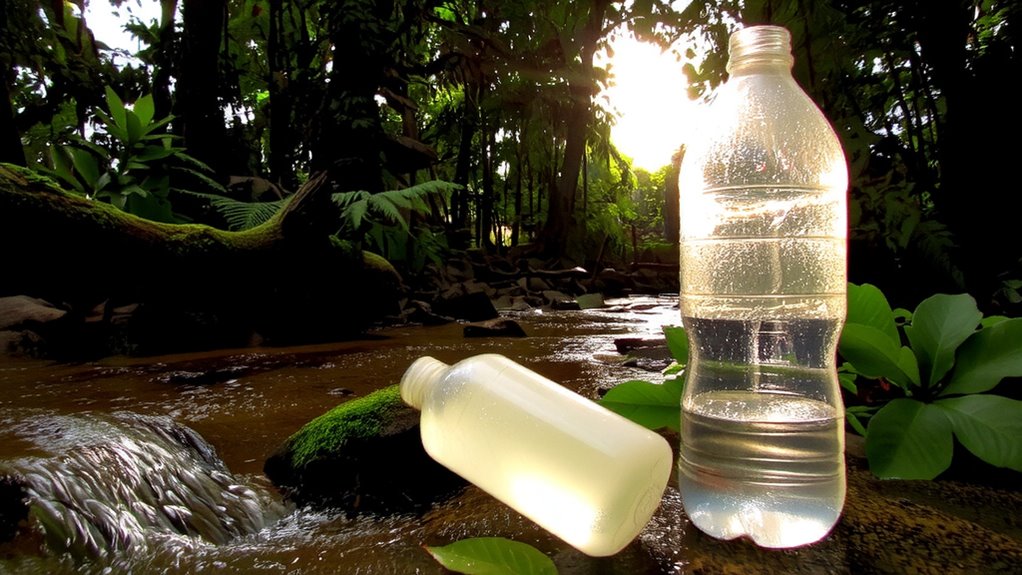
What if the water you found deep in the jungle could be made safe without chemicals or complex gear? Solar disinfection does exactly that by using sunlight to reduce microbial load in clear water. You need good water clarity, meaning the water must be free of sediment and visible particles, so sunlight penetrates evenly. If the water’s murky, let it settle or filter it through cloth first. Then pour it into a clear PET bottle and leave it in direct sun for at least six hours. UV-A rays disrupt pathogens’ DNA, while heat further suppresses survival. This method cuts down bacteria, viruses, and protozoa markedly, but only works with low-turbidity water. It won’t remove chemicals or heavy metals. Still, for jungle travel where supplies are limited, it’s a practical, reliable backup that’s been field-tested across tropical regions. It’s lightweight, costs nothing, and requires no fuel.
How UV Rays and Heat Purify River Water Naturally
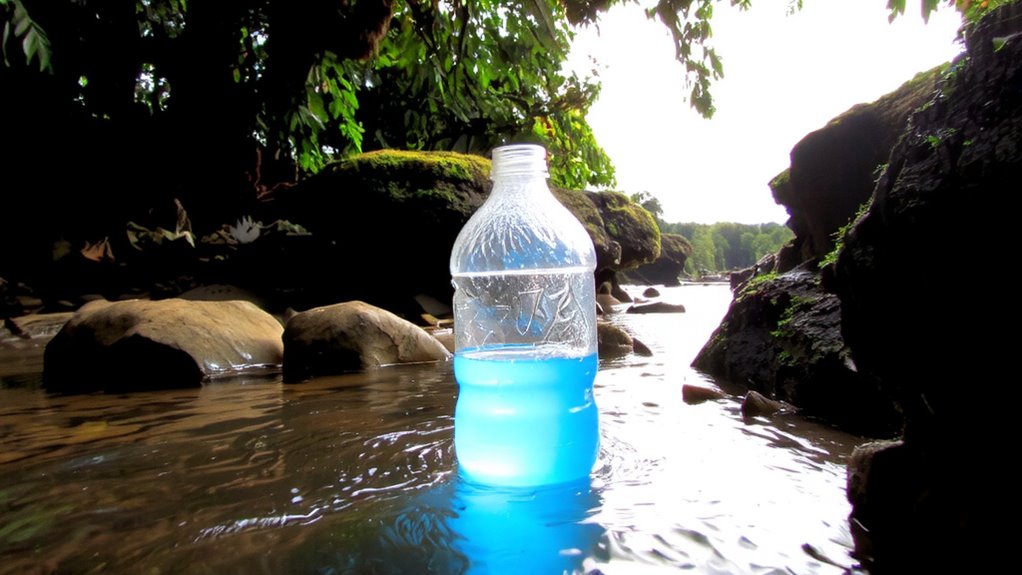
When sunlight hits a clear bottle of river water, two natural forces-UV radiation and heat-work together to neutralize harmful microbes. You rely on UV exposure to damage pathogens’ DNA, preventing them from reproducing. This process starts within minutes, especially under strong, direct sunlight. At the same time, thermal inactivation occurs as the water heats up, typically above 50°C (122°F), weakening or killing additional organisms. The combined effect is more effective than either factor alone. Clear PET bottles maximize UV penetration, while dark surfaces underneath boost heat absorption. Full disinfection usually takes 6 hours in sunny conditions or up to two days when cloudy. You’ll see best results when water is pre-filtered to reduce turbidity. UV exposure won’t remove chemicals, and thermal inactivation depends on ambient temperature, so success varies by climate and container choice. These limits mean you must assess local conditions carefully.
A Step-by-Step Guide to Solar Water Disinfection
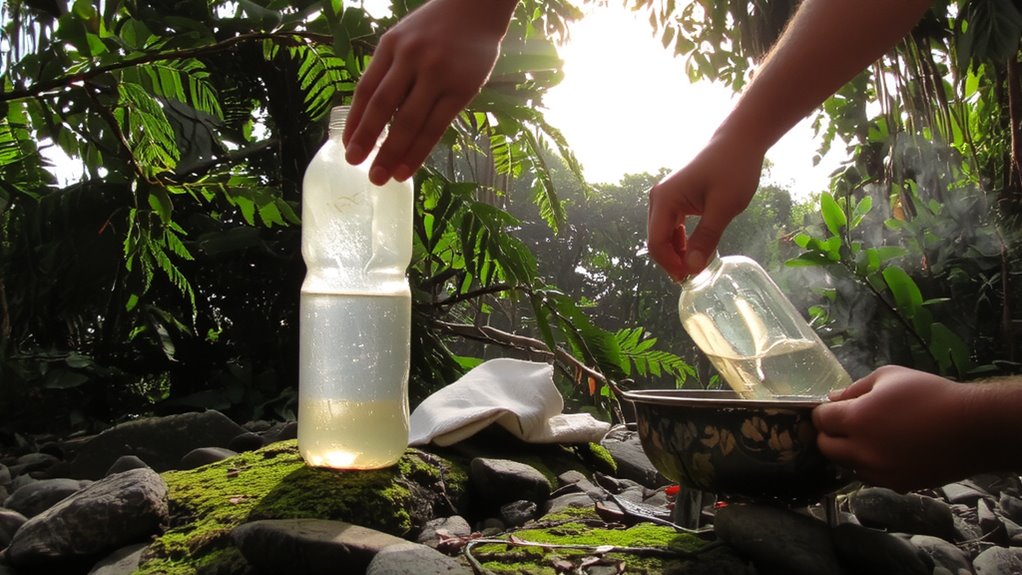
You’ve seen how UV rays and heat work together to neutralize pathogens in river water, making sunlight a viable disinfection tool under the right conditions. Start by filtering out large particles using a cloth. Then, pour the water into a clear bottle with minimal UV-blocking properties-avoid containers that leave chemical residues. Fill it no more than 3/4 full, shake for 30 seconds to oxygenate, then top off and seal. Lay it on a reflective surface, like a metal sheet, under direct sun for at least six hours (or two sunny days if cloudy). This method doesn’t remove chemicals, so prior water testing is critical if contamination is suspected. It’s simple, low-cost, and effective against microbes-but only when exposure is sufficient and the source isn’t chemically polluted. Know its limits before relying on it.
Best Bottles and Containers for Jungle Solar Treatment
A clear PET plastic bottle between 1 and 2 liters works best for solar disinfection in the jungle, since it balances UV transmission, durability, and ease of handling. You need high material transparency so UV-A rays penetrate effectively-cloudy or colored plastics block critical wavelengths. Glass jars transmit UV well but lack container durability, risking breakage on rough trails. Polycarbonate and PVC containers don’t work; they absorb UV light, reducing germicidal effect. Standard soda or water bottles made from PET are ideal-they’re lightweight, widely available, and withstand jungle heat without deforming. Avoid scratched or old bottles, as surface damage scatters UV light. If reusing bottles, rinse them thoroughly but don’t remove labels completely-small text has negligible impact. Larger containers slow heating and UV penetration, lowering efficiency. Stick to 1–2 liter sizes for reliable results. They’re easy to fill, seal, and lay flat on reflective surfaces under direct sun.
When Solar Disinfection Fails (And What to Do Instead)
Even with the right 1–2 liter PET bottle and full sun exposure, solar disinfection doesn’t guarantee safe drinking water every time. Heavy cloud cover or short daylight hours reduces UV and thermal effectiveness, leaving pathogens active. If the bottle has scratches or isn’t clear PET, disinfection weakens-this counts as equipment failure. Also, turbid water shields microbes, increasing the risk of water contamination. You’ll need a backup. Boiling is reliable: one minute at a rolling boil kills all pathogens. If fuel’s limited, use chemical treatments like chlorine dioxide tablets-they work in cloudy or cold water. Always pre-filter visibly dirty water using a cloth or portable filter to reduce particle load. These methods don’t rely on sunlight, so they’re more consistent in dense canopy or rainy conditions. Plan for failure: carry one alternative method at minimum. Relying solely on solar puts you at avoidable risk.
Solar vs. Other Jungle Water Filters: Which Wins?
While sunlight’s free and filters require gear, solar disinfection isn’t always the most reliable choice in the jungle, especially when clouds linger or water’s murky. Water clarity is critical-SODIS only works with clear water since particles shield microbes from UV rays. If you’ve got silt or organic matter, you’ll need to pre-filter, adding steps and time. Portable filters, like hollow fiber models, work regardless of cloud cover and handle turbid water on the fly. They’re faster, typically purifying a liter in under a minute. Solar needs 6+ hours of strong sun, and even then, container color matters-clear PET bottles are recommended; colored or tinted ones reduce UV penetration, weakening effectiveness. Filters have a higher upfront cost and can clog, but they offer consistent output. Solar’s lightweight and cheap, but dependent. For reliability across conditions, modern filters usually win.
Field-Tested Tips for Reliable Solar-Purified Water
How do you make solar disinfection work when failure isn’t an option? Start by ensuring water clarity-turbid water blocks UV penetration, reducing effectiveness. If the water’s cloudy, pre-filter it through a cloth or fine mesh to improve clarity. Sediment handling matters because settled particles can shield pathogens from sunlight. Use clear, PET bottles no larger than 2 liters; larger volumes risk incomplete exposure. Position bottles on a reflective surface like aluminum foil to boost UV intensity. Expose them to direct sunlight for at least 6 hours in full sun, or 48 hours if overcast. You can’t disinfect if the water’s murky, so prioritize clarity over speed. Rotate bottles if possible for even exposure. This method works reliably when you follow these field-proven steps-no special gear, just disciplined attention to light, time, and sediment handling.
On a final note
You’ll get safe water in the jungle with solar disinfection if the sun’s strong and water’s clear. It takes 6 hours of direct sunlight in UV-transparent bottles-polycarbonate or PET work best. It doesn’t remove debris or chemicals, and it fails when skies are overcast. For consistent results in variable conditions, pair it with a mechanical filter. It’s lightweight and costs little, but relies on environment. Know its limits.