Evaluating the Risk of Well Contamination From Septic Leach Fields
Your well can get contaminated if your septic leach field is too close or poorly maintained, especially in sandy or fractured bedrock soils where contaminants move fast. Heavy rain or clay soils reduce filtration, and shallow wells under 100 feet are at higher risk. Keep at least 50–200 feet between the well and leach field, depending on soil. Test yearly for bacteria and nitrates. Fix system issues early-you’ll see how small steps greatly cut your contamination risk.
Notable Insights
- Maintain at least 50 feet between septic leach fields and wells, with greater distances recommended for sandy or fractured bedrock soils.
- High soil permeability, such as in sandy or fractured bedrock, increases contamination risk by allowing rapid movement of bacteria and nitrates.
- Shallow wells less than 100 feet deep are more vulnerable due to reduced natural filtration of contaminants.
- Signs of contamination include foul odors, cloudy water, unusual taste, or changes in color or clarity.
- Test well water annually for bacteria and nitrates, and maintain septic systems with regular inspections and pumping.
How Septic Leach Fields Can Contaminate Your Well
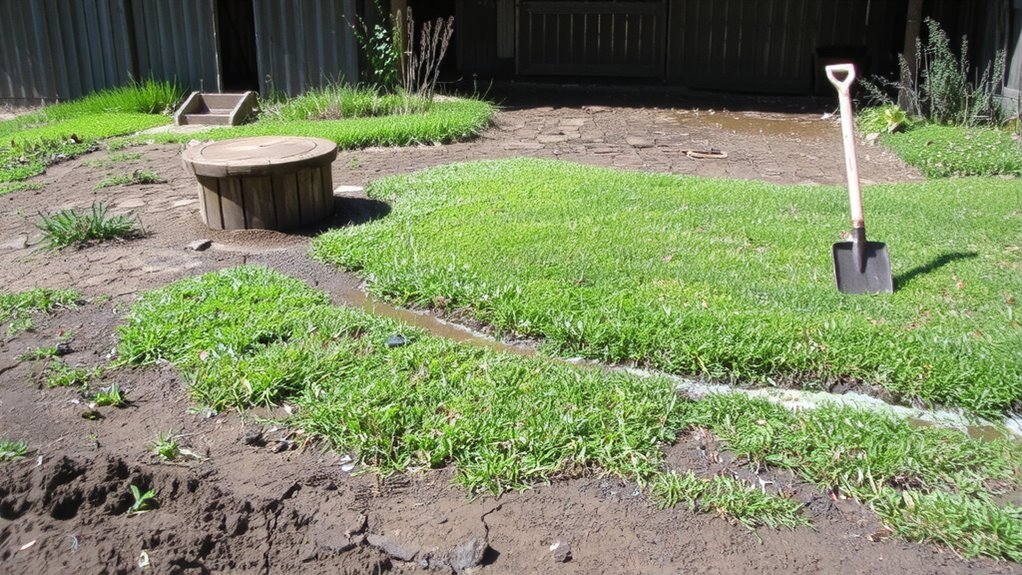
While your septic leach field does its job breaking down waste, it can still put your well at risk if it’s too close or poorly maintained. If the soil becomes oversaturated, it can’t properly filter effluent, increasing the chance contaminated water reaches your well. Soil saturation often happens in clay-heavy or poorly draining areas, especially after heavy rain. When your system is overloaded-say, from too much water use in a short time-it pushes more effluent than the ground can absorb. That excess can pool or move sideways, potentially carrying bacteria and nitrates toward your well. Even a well-functioning system isn’t safe if spacing is inadequate. Most codes require at least 50 feet between leach fields and wells, but longer distances reduce risk further. Regular maintenance and mindful water use help prevent system overload and keep your drinking water protected.
Key Factors That Increase Contamination Risk
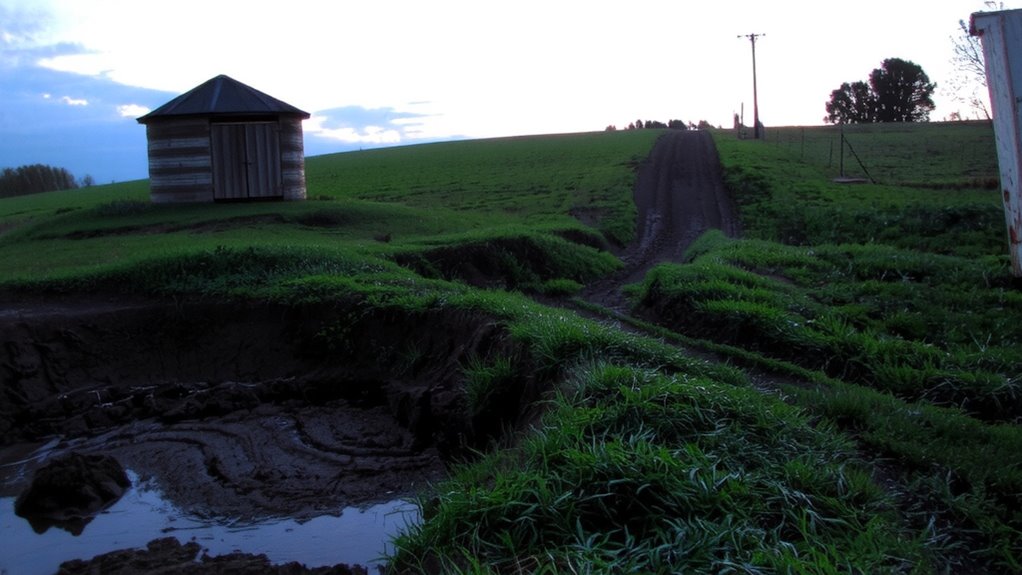
If your leach field is on sandy or fractured bedrock soil, you’re at higher risk because those soils filter contaminants poorly. High soil permeability allows sewage to move quickly, carrying bacteria and nitrates toward your well before natural processes can break them down. The shallower your well depth, the more vulnerable you are-shallow wells lack sufficient natural filtration and sit closer to contaminant pathways. Older or poorly maintained septic systems compound this risk, especially if drain lines are failing or clogged. You can’t change your soil type, but knowing your soil permeability helps assess threat levels. If your well is less than 100 feet deep and downgradient from the leach field, contamination likelihood increases markedly. Site-specific factors like heavy rainfall or frequent system overuse also speed up contaminant transport. These conditions don’t guarantee contamination, but they reduce safety margins.
How Far Should a Well Be From a Septic System?
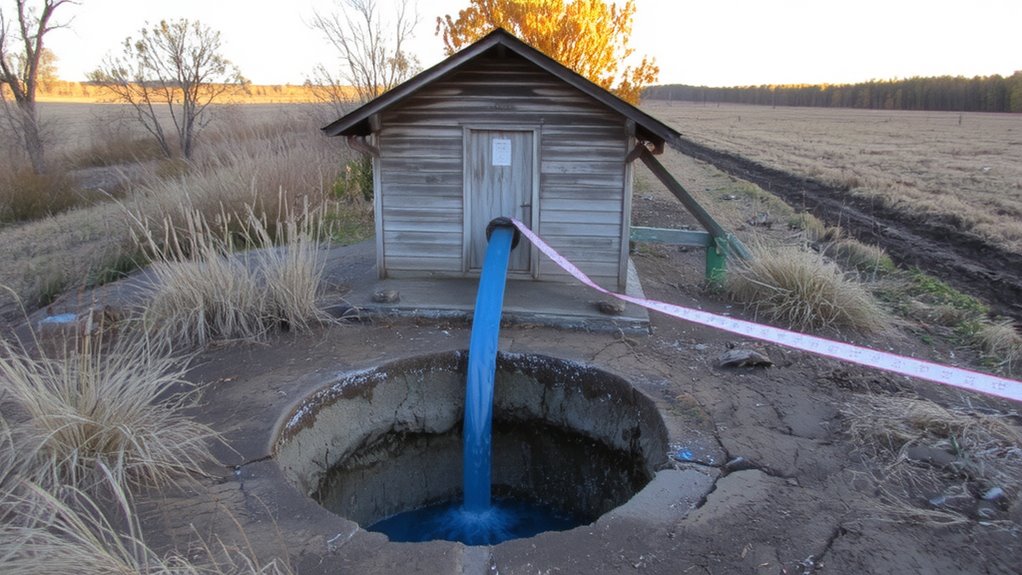
Most health departments recommend placing your well at least 50 feet away from your septic system’s leach field, as this distance provides a basic buffer to reduce contamination risk. But well placement isn’t just about distance-it also depends on soil permeability. Sandy soils allow faster contaminant movement, meaning you’ll need greater separation. Clay soils slow flow, offering more natural filtration. Here’s how these variables interact:
| Soil Permeability | Recommended Distance | Reason |
|---|---|---|
| High (sandy) | 100 feet | Fast flow increases contamination risk |
| Moderate | 75 feet | Balanced filtration and flow |
| Low (clay) | 50 feet | Slow movement allows natural treatment |
| Fractured bedrock | 200+ feet | Bypasses natural filtration, high risk |
Adjust based on local regulations and site-specific conditions.
Common Signs Your Well Water Is Contaminated
How would you know if something’s off with your well water? Start by checking for a foul odor-especially a rotten egg smell, which often signals hydrogen sulfide or bacterial contamination from nearby septic leach fields. If your water has a musty or sewage-like scent, that’s another red flag. Look closely: a cloudy appearance means suspended particles or microbial growth may be present. Don’t ignore changes in clarity or color-even slight haziness can indicate infiltration. Taste matters too, but avoid deliberate sampling if contamination is suspected. Discoloration, metallic flavor, or foaming aren’t normal. These signs don’t confirm specific pollutants, but they suggest your well isn’t isolated from septic runoff. Visual and sensory cues are early warnings. Act when you notice persistent off-odors or turbidity. Waiting could risk health. These symptoms mean it’s time to investigate possible septic system influence.
Testing Your Well for Bacteria and Nitrates
You’ve noticed the smell, seen the cloudiness, or detected an odd taste-those signs point to possible contamination, but they can’t tell you what’s actually in your water. Only proper sample collection and lab testing can do that. For accurate results, test for bacteria and nitrates annually, especially if you live near septic leach fields. Use a certified lab; they follow strict protocols for laboratory analysis. Collect samples as directed to avoid false results.
| Contaminant | Health Risk | Detection Method |
|---|---|---|
| Coliform bacteria | Indicator of sewage or fecal contamination | Lab culture test |
| E. coli | Causes gastrointestinal illness | Membrane filtration |
| Nitrate | Risk to infants and pregnant individuals | Colorimetric analysis |
| Total coliform | Suggests pathway for pathogens | Presence/absence test |
| Nitrite | Forms harmful compounds in water | Ion chromatography |
Follow kit instructions carefully during sample collection. Avoid touching the inside of the container. Ship samples promptly.
Practical Steps to Protect Your Well From Septic Runoff
Even if your septic system is functioning properly, runoff can still carry contaminants toward your well, especially in sandy or fractured soils where lateral movement is faster. You need to take proactive steps to minimize risk. Keep your septic tank at least 50 feet from the well, and make certain surface water drains away from both. Slope landscaping to divert rainwater and runoff. Conduct regular system inspection annually to catch leaks or clogs early. Pump your tank every 3–5 years, depending on household size. For well maintenance, seal the well casing properly and install a vermin-proof cap. Test water yearly, even if no issues are apparent. These measures won’t guarantee 100% protection, but they substantially reduce contamination risk. Prevention is more effective-and cheaper-than remediation.
On a final note
You can reduce contamination risk by placing your well at least 50 feet from the septic leach field, though 100 feet is better in sandy or porous soils. Test your well annually for coliform bacteria and nitrates-they’re clear indicators of septic impact. Poor drainage or cracked pipes increase risks, so maintain your system. Even well-built setups can fail over time, so vigilance matters more than initial design.