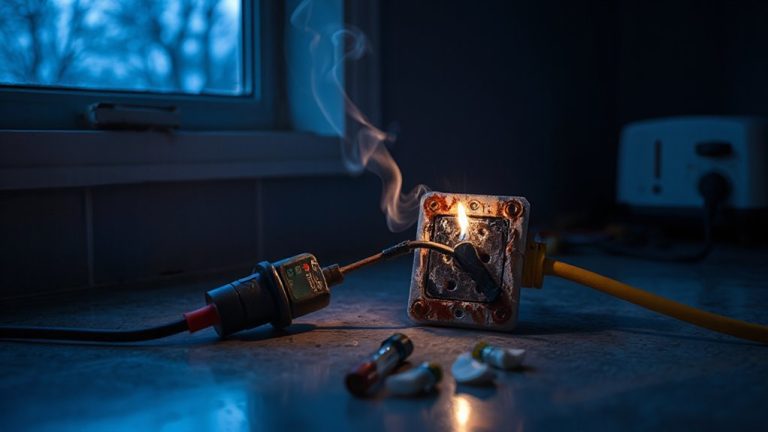
Evaluating the Risk of Electrical Fire From Extension Cords
You’re risking fire if you overload an extension cord beyond its amp rating-most handle only 13–15 amps. Frayed insulation, warm plugs, or discoloration mean danger. Using the wrong cord length or type increases resistance and heat. Don’t run cords near heat sources or damp floors. A loose fit or sparking outlet can ignite nearby materials fast. Over time, wear degrades safety even without obvious signs. Choosing the right cord cuts risk, but permanent wiring fixes the root problem.
Notable Insights
- Overloading extension cords beyond their amperage rating generates heat, increasing fire risk.
- Frayed or damaged insulation exposes wires, raising the chance of sparks or short circuits.
- Using cords near heat sources degrades insulation, making shorts and fires more likely.
- Loose plugs or warm cords during use indicate arcing and dangerous overheating.
- Indoor cords used outdoors or in damp areas risk shock, corrosion, and electrical failure.
How Extension Cords Cause Electrical Fires
While it might seem harmless to plug in a few devices, overloading an extension cord is one of the easiest ways to generate dangerous heat. You exceed the cord’s rated capacity when you connect high-wattage appliances, and that leads to overheating. Most standard cords handle 13 to 15 amps; surpass that, and internal wires can overheat quickly. Faulty insulation accelerates the risk, exposing live conductors and increasing the chance of short circuits. If you’re using a cord with damaged prongs, the connection becomes unstable, creating arcing and hotspots at the outlet. These conditions don’t just reduce efficiency-they create ignition points. Even brief use under such faults raises fire risk. Cords aren’t designed for continuous high-load operation. Using them beyond intended limits, especially with existing wear like frayed coatings or bent prongs, compromises safety. You need to match load demands to cord specifications every time-no exceptions.
Signs Your Extension Cord Is a Fire Hazard
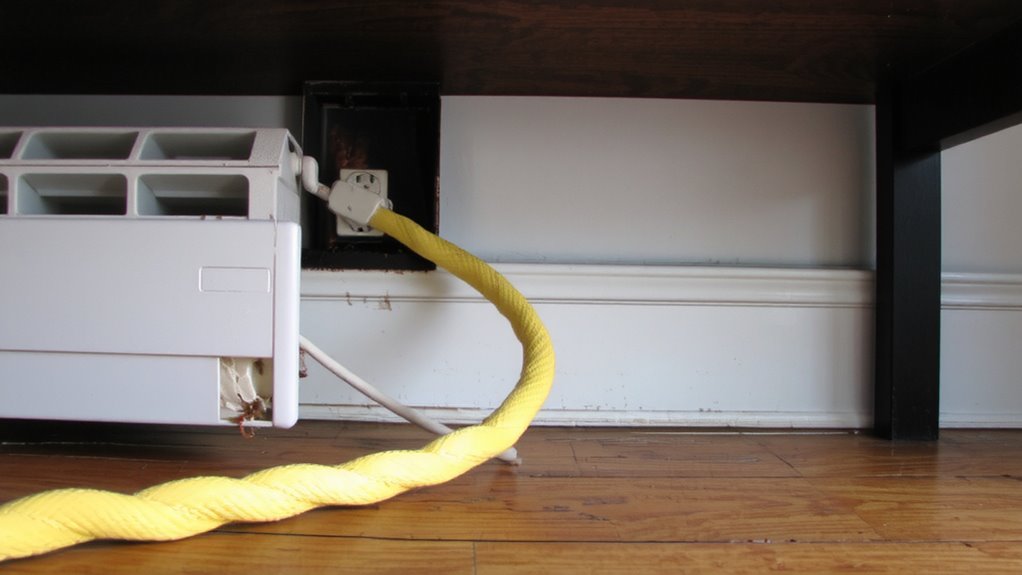
Heat, discoloration, or a burning smell near the cord means trouble-you’re looking at clear signs of overheating. These symptoms suggest the cord can’t handle the load, increasing fire risk. You should also check for frayed insulation, which exposes wires and raises the chance of sparks or short circuits. If the insulation feels brittle or you see visible wear, it’s time to replace the cord. Loose connections at plugs or outlets create arcing, generating heat that can ignite nearby materials. Wiggling the plug shouldn’t result in intermittent power or flickering lights-if it does, the connection is compromised. Damaged prongs or outlets that don’t hold the plug firmly contribute to this issue. Cords that feel warm during normal use aren’t working safely. Each of these signs signals failure under standard conditions, not extreme ones. Replace faulty cords promptly to maintain safety.
Pick the Right Extension Cord for Your Device
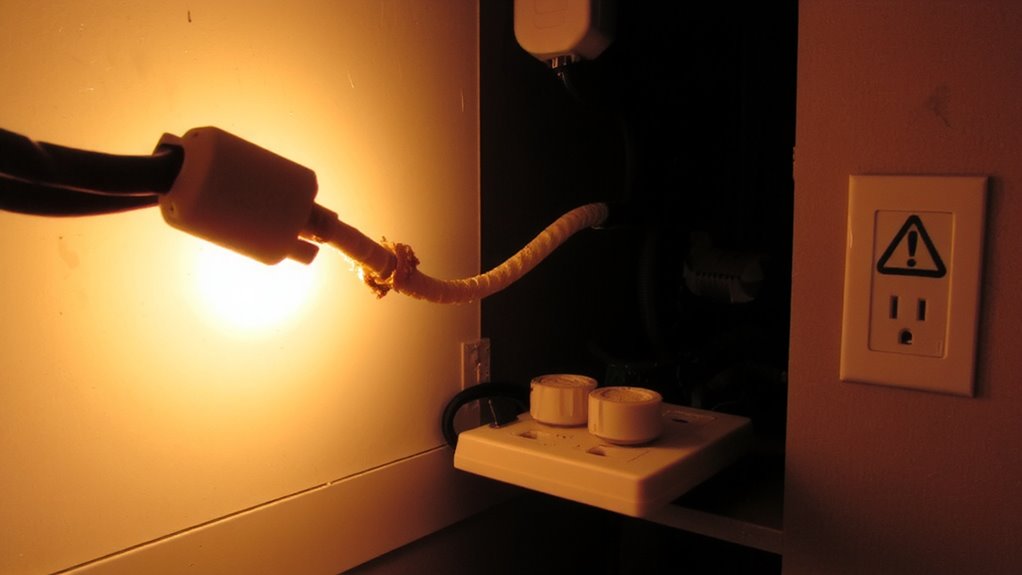
A single wrong choice in extension cord specs can overload circuits or create fire hazards, so matching the cord to your device’s power needs is essential. Choose cord length based on distance-too long increases resistance; too short strains connections. Check plug type to guarantee compatibility with both outlet and device. Using the wrong plug type risks poor contact or overheating. Below is a quick guide:
| Device Type | Cord Length | Plug Type |
|---|---|---|
| Laptop or lamp | Up to 6 ft | 2-prong polarized |
| Refrigerator | 6–10 ft | 3-prong grounded |
| Power tools | 10–15 ft | 3-prong heavy-duty |
Selecting the right cord prevents excessive voltage drop and guarantees safe operation. Always verify your device’s amperage and match it to the cord’s rating. Shorter cords work fine for low-power devices. Longer runs need heavier gauges.
Why Overloading One Extension Cord Is Dangerous
You picked the right cord for your device-now don’t ruin it by plugging in too many things. Overloading one extension cord stresses the wiring beyond its capacity, creating excess heat. That heat builds up fast, especially if the cord’s gauge isn’t designed for high draw. Most household cords aren’t built to handle multiple high-watt devices at once. When they’re pushed too hard, a circuit overload occurs, tripping the breaker-or worse, failing silently. That failure raises fire risk. A sudden power surge can follow, especially under load stress, damaging connected electronics or igniting nearby materials. You might not see it happen, but internal wire damage accumulates over time. Even cords rated for heavy use have limits. Plug in too much, and you exceed them. There’s no warning until it’s too late. Keep loads within the cord’s rated capacity. One device per high-draw use is safest.
Keep Extension Cords Away From Heat and Water
That garage heater’s cord doesn’t know it’s meant to last-run it across a damp floor or too close to a hot surface, and the risk shifts fast. Heat exposure degrades insulation over time, increasing the chance of short circuits. Water contact raises the risk of shock or shorting, especially with worn jackets. You can’t rely on the cord’s outer layer to protect forever, especially in harsh environments.
| Condition | Risk Level | Result |
|---|---|---|
| Near heater duct | High | Insulation melts, exposing wires |
| Across wet garage floor | High | Risk of shock, corrosion |
| Under rug near radiator | Moderate | Heat exposure weakens jacket |
Keep cords dry and routed away from radiators, stoves, or direct sunlight. Even temporary use near water or heat accumulates damage. Inspect for stiffness or cracking-those are signs of wear from heat exposure or water contact.
Safer Alternatives to Extension Cords
Just because extension cords are convenient doesn’t mean they’re the best long-term solution, especially when heat, moisture, or heavy loads are involved. You’re better off installing additional outlets where needed, so devices run directly from the wall. Hardwired solutions eliminate tripping hazards and reduce wear. If you must use cords, choose heavy-duty models rated for your load and environment, and practice proper storage by coiling loosely to prevent insulation damage. Never staple or nail them in place. Regular inspection helps catch fraying, cracked plugs, or overheating signs early. Look for discoloration or warm spots during use. Surge-protected power strips offer short-term flexibility but aren’t substitutes for permanent wiring. They wear out over time and can fail silently. You’ll need to replace them every few years or after major surges. Relying on cords long-term increases risk, even with precautions.
On a final note
You can prevent extension cord fires by picking the right gauge and length for your device’s wattage. Overloading, fraying, or running cords under rugs raises risk. These cords aren’t for permanent use-replace damaged ones immediately. Keep them dry and away from heat. For lasting setups, install extra outlets. It’s safer and meets code. Using power strips with surge protection helps, but doesn’t eliminate poor habits. Check labels. Follow limits. Stay safe.