Using UV Light Pens to Sanitize Water in Clear Plastic Bottles
You can use a UV pen to sanitize water in clear plastic bottles by stirring the water for 60–90 seconds, ensuring the UV-C light destroys bacteria, viruses, and protozoa. It only works in clear, still water-turbidity blocks the light. The bulb lasts 8,000–10,000 uses but loses power over time. A cracked housing or weak battery can cause failure. Look for a compact, stainless steel design with IP67 waterproofing. More details on performance limits and safety follow.
Notable Insights
- UV light pens sanitize water by disrupting DNA of microbes using UV-C light in clear plastic bottles.
- Ensure water is clear and still for effective UV penetration; pre-filter if cloudy or turbid.
- One 60–90 second treatment cycle typically disinfects up to one liter of water.
- Never look at the active UV-C light to avoid eye damage, even if inside a bottle.
- Replace the pen if the bulb exceeds 8,000 to 10,000 uses, as germicidal power declines over time.
How UV Pens Purify Water in Seconds
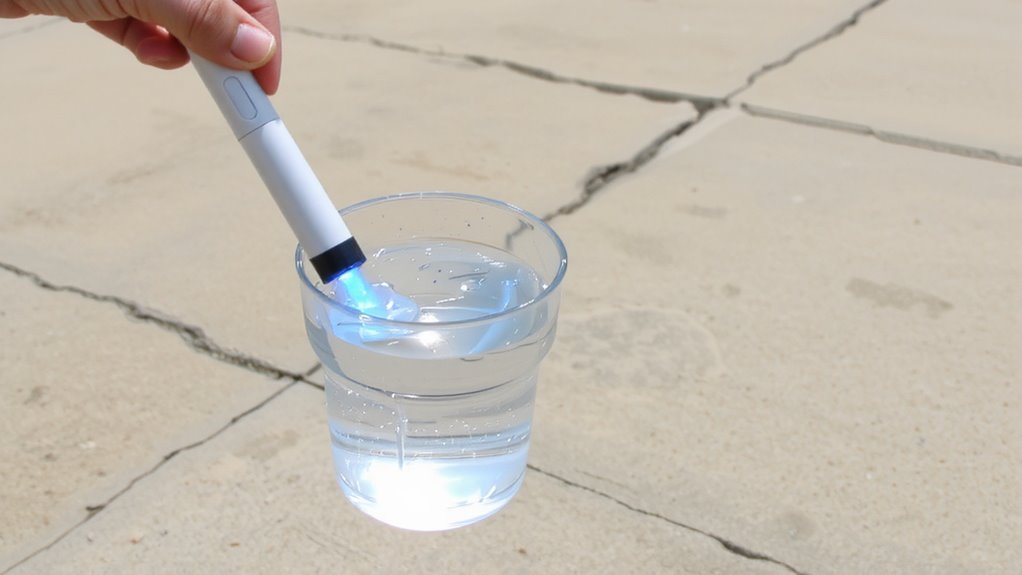
UV light pens clean water fast-often in under 90 seconds-by disrupting the DNA of bacteria, viruses, and protozoa so they can’t reproduce or make you sick. This is the core of the UV mechanism: short-wavelength ultraviolet-C light penetrates microorganisms and breaks their genetic material. It doesn’t remove particles or chemicals, but it stops pathogens effectively. Purification speed depends on water clarity and volume-turbid water slows it down, requiring pre-filtering. Most pens require slow stirring for 60–90 seconds in one-liter bottles. Battery life limits repeated use; some models give 50–100 cycles per charge. UV pens work best with clear, still water in transparent containers. They’re lightweight and fast compared to boiling or chemicals, but they won’t improve taste or chemical safety. You still need clean-looking water for reliable results.
How to Sanitize Bottle Water With a UV Pen
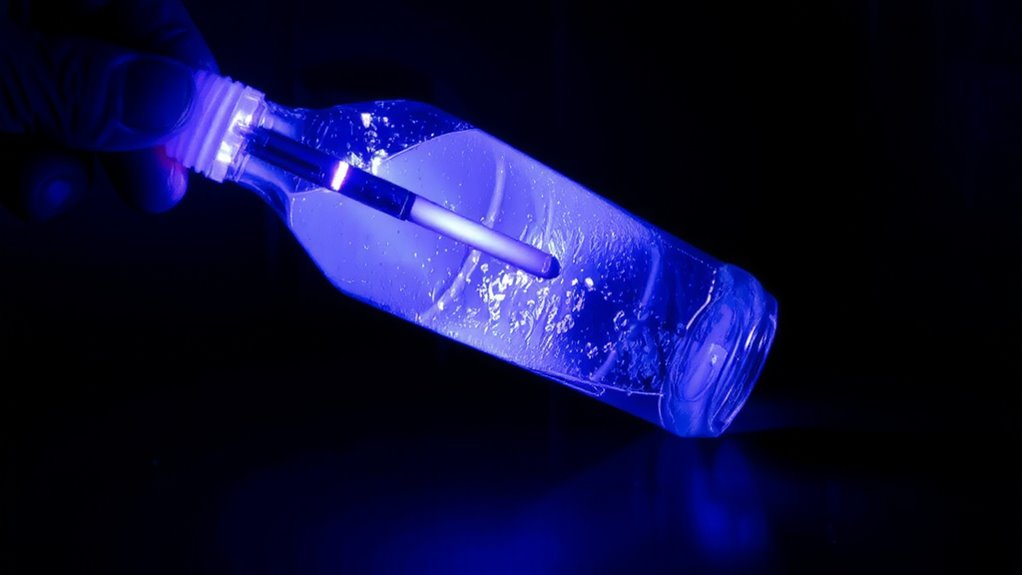
Ever wonder how to quickly make suspect water safe when you’re off the grid? A UV pen can do it in about 90 seconds, but only if you follow the steps right. First, fill a clear plastic bottle-any cloudiness hurts water clarity and blocks UV light. Shake the bottle if sediment’s visible, then let it settle. Remove the cap and insert the UV pen fully. Turn it on and stir slowly for the full cycle. Avoid scratching the quartz sleeve to maintain pen durability.
| Step | Action | Why It Matters |
|---|---|---|
| 1 | Use clear water | Poor clarity reduces UV penetration |
| 2 | Stir 90 seconds | Guarantees full microbial exposure |
| 3 | Clean pen after | Protects bulb and extends durability |
When UV Pens Fail (and What to Do)
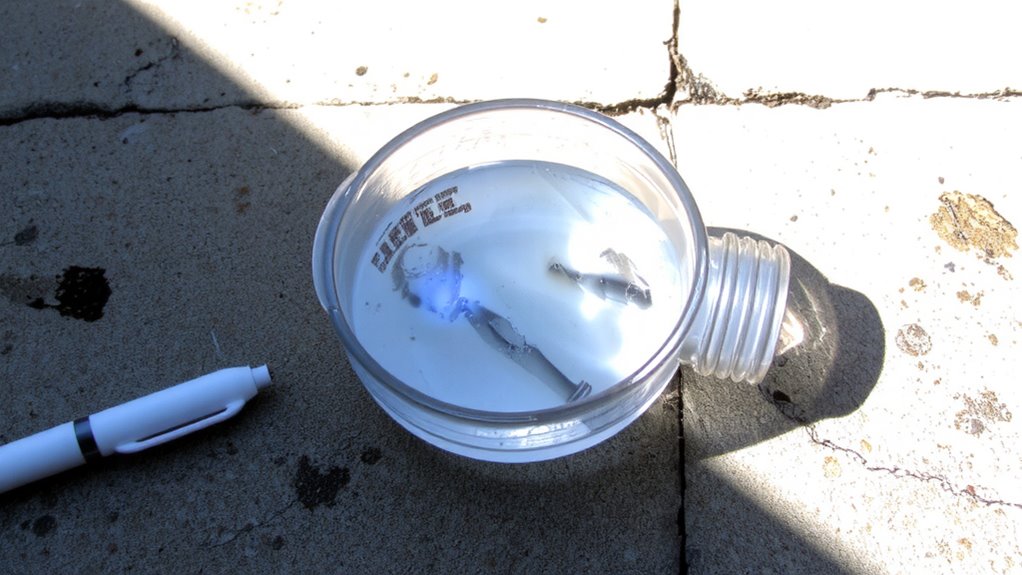
Why do some UV pens fail when you need them most? It often comes down to device malfunction or unnoticed bulb degradation. Over time, the UV-C bulb loses intensity, reducing germicidal power-even if the pen still glows blue. Most bulbs last 8,000 to 10,000 uses; beyond that, sanitation drops below safe levels. A cracked housing or water-damaged circuitry can also trigger sudden failure. If your pen stops working mid-use, check the battery first-weak power often mimics malfunction. If it’s not the battery, assume the bulb has degraded. You can’t repair it, so replace the unit. Always carry a backup purification method-like chemical tablets-when relying on UV pens in remote areas. Don’t wait for total failure; track usage and replace bulbs or pens proactively to maintain water safety.
Best UV Pen Features for Bottle Use
You’ll want a UV pen that fits securely inside standard water bottles, typically 20–32 oz, without requiring awkward angling or leaving untreated zones. Look for a compact design with a straight, rigid shaft that reaches the bottom without bending. A lower-profile emitter head ensures more even exposure, especially in narrow bottles. Pen durability matters-choose one with a protective sleeve or rugged casing to survive drops and travel. Models with IP67 or higher waterproofing handle moisture better and last longer. For reliable sanitation, guarantee your water is clear; UV light can’t penetrate cloudy or murky water effectively. Water clarity directly affects disinfection-turbid water shields pathogens from exposure. Stainless steel housings resist corrosion better than plastic. A battery life of at least 30–50 uses per charge balances convenience and field use. Check cycle testing data; brands publishing such specs usually offer more dependable performance. Prioritize consistency over flashy features.
Avoid These UV Pen Safety Mistakes
How confident are you that your UV pen isn’t exposing you to harm while sanitizing water? You shouldn’t assume safety just because it’s small. Never look directly at the UV-C light-exposure can damage your eyes. Always use eye protection if you’re nearby during operation, especially in reflective environments. Don’t run the pen continuously for more than the manufacturer’s recommended time; extended use risks device overheating, which degrades performance and lifespan. Let it cool between cycles. Avoid sealing it inside insulated containers while active-trapped heat increases overheating likelihood. Check for vents or heat-dissipation design features before buying. Don’t use damaged units or ones with cracked casings. UV pens are effective when handled right, but skipping safety steps increases risk. Follow usage guidelines precisely-your safety depends on it, not the device’s marketing claims.
On a final note
You get fast, chemical-free disinfection with UV pens, but only in clear, sediment-free water. They kill bacteria and viruses in about 90 seconds, effective when used right. Battery life matters-most last 8,000 uses. They won’t filter particles or work in cloudy liquids. For reliable results, pre-filter if needed and stir during treatment. Not foolproof, but practical when weight and speed count. Know their limits.