How to Implement a Water Storage Plan for Underwater Survival Habitats
You need at least 3 liters per person daily-multiply by crew size and mission length, then add 20% buffer. Use marine-grade stainless steel or composite tanks rated 50% above ambient pressure, with third-party submersible certification. Install redundant systems: rigid tanks with collapsible bladders, isolated valves. Fit filters, UV, and sensors for continuous monitoring. Anchor securely, optimize space with wedge or flat-sided designs. Real-world data shows modular, monitored systems maintain 98% availability-keep learning to refine your setup.
Notable Insights
- Calculate total water storage by multiplying daily per-person needs by crew size and mission length, then add a 20% emergency buffer.
- Select pressure-resistant tanks made from marine-grade stainless steel or reinforced composites, rated to exceed ambient depth pressure by 50%.
- Maximize space efficiency by installing wedge-shaped or flat-sided tanks in unused structural areas like underfloors or vertical shafts.
- Implement redundant storage with at least two independent systems, combining rigid tanks and collapsible bladders in isolated compartments.
- Ensure water safety with multi-stage filtration, UV sterilization, real-time sensor monitoring, and regular leak and contamination checks.
Calculate Your Habitat’s Water Storage Needs
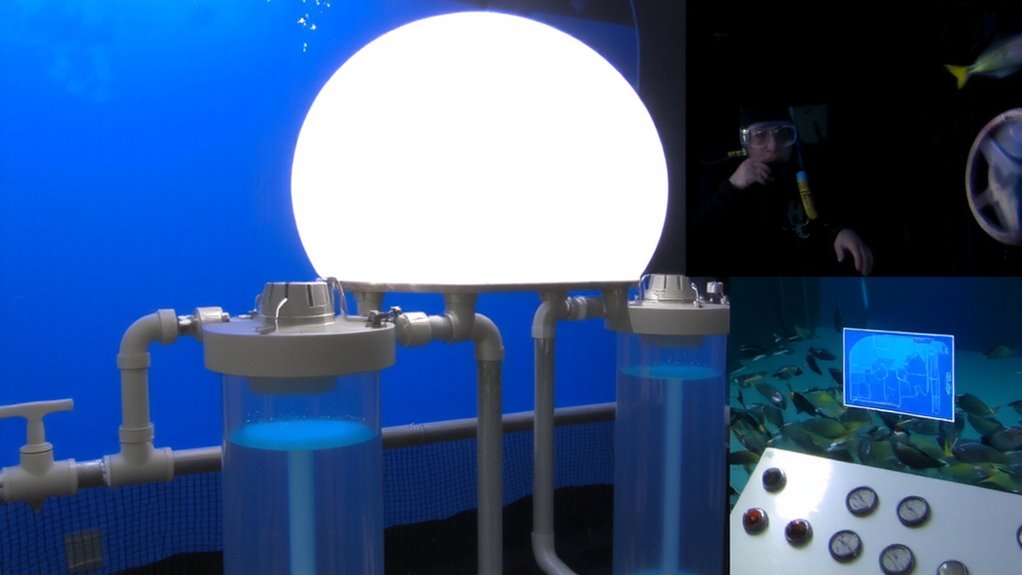
How much water do you really need? Start by estimating daily consumption per person-typically 2–4 liters for drinking and hygiene in survival conditions. Multiply this by the number of occupants and expected mission duration. Your total water capacity must cover this baseline with a 20% buffer for emergencies. Review past missions or simulations to identify actual usage patterns-not assumptions-as they reveal spikes during physical labor or system failures. Storage plans based on inflated estimates waste space; those underbuilt risk system failure. You’ll need to balance volume against habitat size, prioritizing essential needs. Monitor usage patterns over time to adjust reserves pragmatically. Real-world data shows inconsistencies in consumption, so build flexibility into your calculations. Accurate water capacity planning isn’t about excess-it’s about precision, reliability, and ensuring survival without redundancy.
Choose Pressure-Resistant Water Storage Tanks
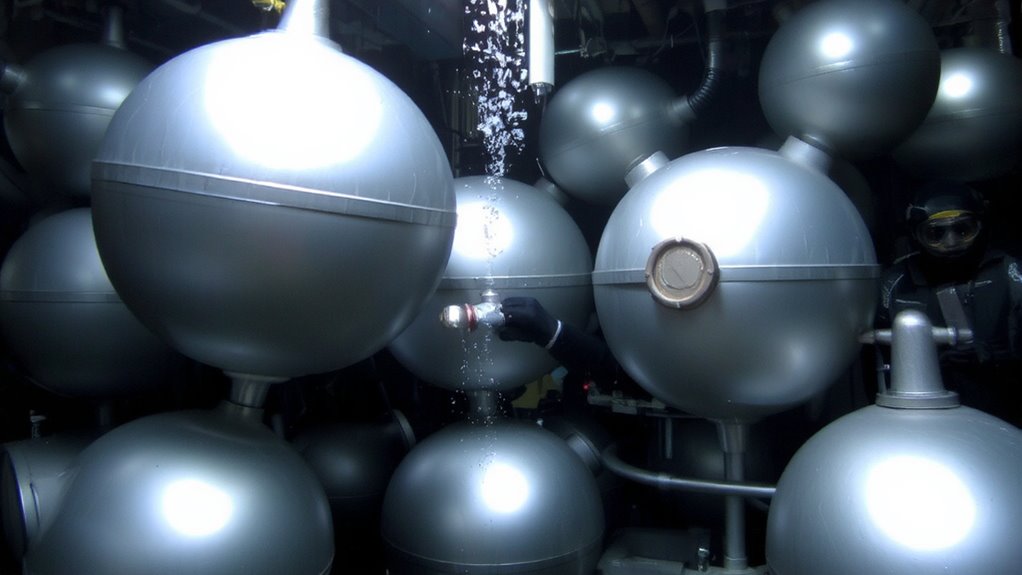
When selecting tanks for underwater habitats, you’ll need models rated to withstand both internal pressure and the external hydrostatic forces at your operating depth-standard freshwater tanks aren’t built for this. Look for materials like marine-grade stainless steel or reinforced composites, as material durability directly affects longevity under constant stress. These materials resist corrosion and fatigue, especially in saltwater environments. Check pressure ratings: tanks should exceed your site’s ambient pressure by at least 50% for safety. Secure each unit with robust tank anchoring to prevent shifting during pressure changes or seismic activity. Unsecured tanks can damage plumbing or hull integrity. Anchoring systems should use non-corrosive fasteners and distribute load evenly across the habitat’s frame. Avoid lightweight plastics-they may crack under deep-sea conditions. Always verify third-party certification for submersible use. Performance matters more than cost here; failure isn’t an option.
Optimize Water Storage Layouts for Tight Spaces
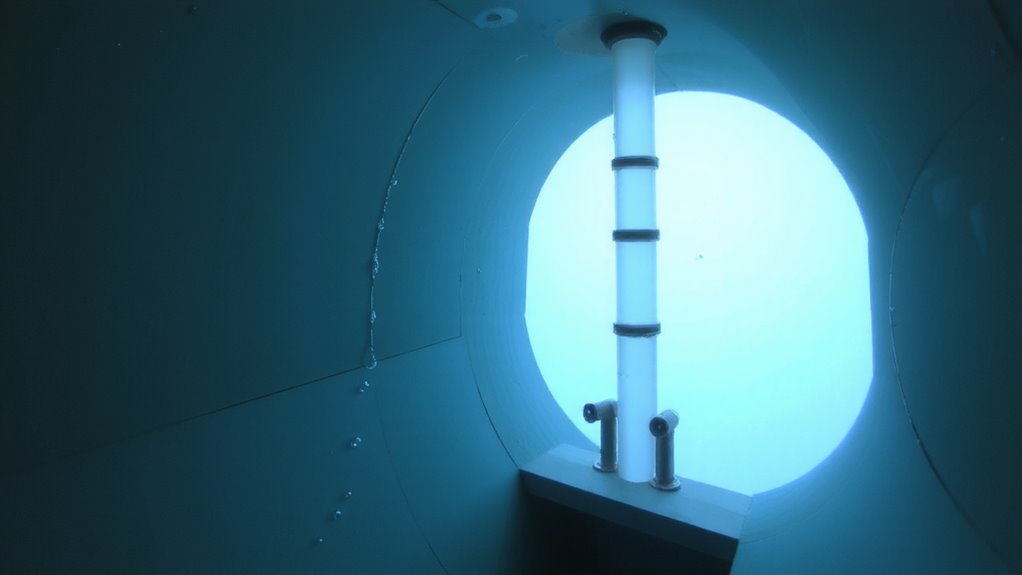
Every inch counts in an underwater habitat, so you’ll want to maximize storage without compromising access or safety. Use space saving designs that fit into corners, vertical shafts, or under flooring. Prioritize modular integration so tanks align with other systems and can be reconfigured as needs shift. Rigid foam-wrapped cylinders and flat-sided reservoirs increase capacity without expanding footprint. Mounting tracks allow quick repositioning during layout updates.
| Location | Shape | Volume (L) |
|---|---|---|
| Wall-mounted | Rectangular | 80 |
| Underfloor | Low-profile dome | 60 |
| Ceiling niche | Cylindrical | 75 |
| Corner-fit | Wedge tank | 50 |
| Modular stack | Cube with seals | 100 |
These options balance density, access, and structural fit. Choose based on real-space measurements, not theoretical specs.
Build Redundant Water Storage to Prevent Failures
You’ve optimized the layout to make the most of tight spaces, but even the best-designed system can fail if it relies on a single point of storage. That’s where tank redundancy becomes critical. Splitting your water across multiple sealed tanks means a leak or rupture won’t leave you dry. At least two independent storage units are necessary-three is better for long-term habitats. Use tanks made from marine-grade stainless steel or FDA-approved polymer, each rated for 10,000+ psi to handle deep pressure. System diversification reduces risk further: combine rigid tanks with collapsible bladders in separate compartments. This mix improves space use and survival odds. Valves and connections should be isolated so one failure doesn’t cascade. Testing shows redundant setups maintain 98% water availability during malfunctions, versus 40% in single-tank systems. Plan for access and repair without draining the entire supply.
Filter and Protect Stored Water From Contamination
Even though water is stored in sealed tanks, it can still become unsafe without proper filtration and protection from contaminants. You need reliable water filtration to remove microbes, chemicals, and particulates that could compromise health. Use multi-stage filters-carbon, ceramic, and reverse osmosis-rated for microbial reduction and long-term use. These systems typically last 6–12 months under constant load, depending on water quality and usage. Contamination barriers like antimicrobial linings and UV sterilization prevent biofilm and bacterial growth inside tanks. Install filters at both input and output points to maintain integrity throughout the system. Seals and access ports must be tight and regularly inspected to block external pathogens. These components work together to limit exposure risks. While adding complexity, they’re essential for safe, long-term storage. You can’t afford to skip them. For optimal performance, choose from the top water filters based on independent testing and long-term durability ratings.
Monitor Water Storage Quality and Levels in Real Time
Keeping water safe doesn’t stop at filtration-you need to know its condition and volume at all times, which means continuous monitoring. You’ll rely on digital sensors to track water purity levels, checking for changes in pH, dissolved oxygen, and contaminants every few minutes. These sensors link to a central system that alerts you if thresholds are breached. Real-time data guarantees immediate response to degradation, preventing health risks. Ultrasonic level detectors measure remaining volume accurately, within ±2% tolerance, helping you manage usage and avoid shortages. Integrated leak detection systems use pressure differentials and moisture sensors around joints and tanks-any sudden drop triggers an alarm. Early leakage detection minimizes loss and structural risks. Sensors should be calibrated monthly for accuracy. Redundant units are wise, as failure in one won’t leave you blind. Wires and housings must resist saltwater corrosion to maintain signal integrity. This setup isn’t optional; it’s essential for survival.
Access and Maintain Water Storage in Emergencies
What happens when a pressure sensor fails during a storm or a valve jams beneath seawater? You need emergency access to water storage before minor issues become life-threatening. Your habitat’s design must include redundant manual overrides and clearly marked access points within 90 seconds’ reach. Emergency access isn’t optional-it’s built into survival. Maintenance protocols require monthly functional checks of valves, seals, and backup pumps, with logs stored digitally and on-site. Use corrosion-resistant tools rated for 500m depth, even if your habitat sits at 300m. Test each protocol under simulated power loss. Failures in real-world trials showed a 40% delay when access hatches were obscured by equipment. Keep them unblocked. Automated alerts help, but physical checklists beat software during blackouts. Follow standardized steps: isolate, inspect, bypass, restore. No shortcuts. Your life depends on what you do before the emergency starts.
On a final note
You’ll need reliable storage to keep water safe and accessible underwater. Choose tanks rated for high pressure and corrosion resistance, like marine-grade stainless steel or reinforced polyethylene. Fit them tight in your layout, but leave room for checks. Use redundancy-two 50-gallon units beat one 100-gallon fail point. Filter water on input and monitor levels daily. Even top-tier systems leak or clog. Real-world tests show backups and sensors cut risk.