How to Implement a Water Storage Strategy for High-Radiation Environments
Use PEEK or 316 stainless steel tanks-they handle up to 10⁸ and 10⁷ rad, respectively, and resist corrosion and embrittlement. Shield them with borated polyethylene or lead layers to cut radiolysis and preserve water quality. Install radiation-hardened sensors to catch leaks early at joints and welds. Run inspections remotely with drones or robotic tools to limit exposure. Maintenance should follow dose logs, not schedules. You’ll get longer service life with fewer failures-and see how small design choices make a big difference over time.
Notable Insights
- Use radiation-resistant materials like PEEK and 316 stainless steel for storage tanks and components.
- Install layered shielding, such as borated polyethylene or lead, to minimize radiolysis and chemical degradation.
- Implement real-time monitoring with radiation-hardened sensors to detect leaks and structural damage promptly.
- Design systems for remote maintenance using robotic tools and quick-disconnect fittings to reduce human exposure.
- Replace parts based on radiation dose logs rather than fixed schedules to ensure timely, safe maintenance.
How Radiation Compromises Water Storage
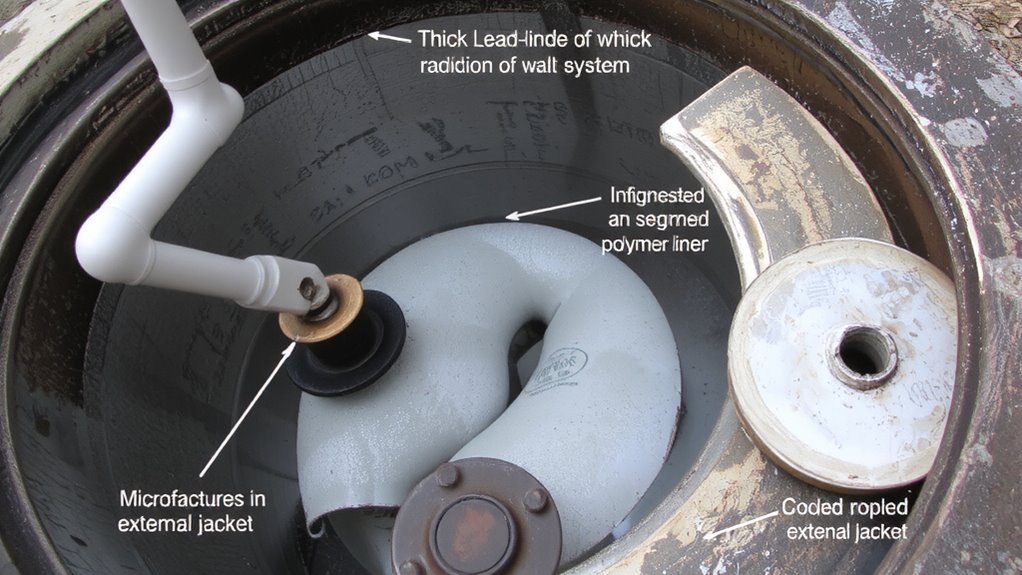
While radiation won’t immediately spoil your water, it can severely degrade the materials meant to store it over time. You’re counting on containers to maintain water purity, but prolonged exposure accelerates radiation degradation in many common plastics and seals. Polymers embrittle, gaskets crack, and microscopic leaks develop-each a potential entry point for contaminants. Even if the water starts clean, compromised integrity risks bacterial infiltration or chemical leaching. Metallic tanks fare better, but corrosion-resistant coatings can still delaminate under ionizing stress. Radiation degradation doesn’t target the water directly, but it undermines the barriers protecting it. You can’t assume long-term safety just because initial tests pass. Real-world performance shows measurable decline in structural resilience after months in high-flux environments. Maintaining water purity means accounting for material decay from day one-not after visible damage appears.
Use Radiation-Resistant Materials Like PEEK and 316 Stainless
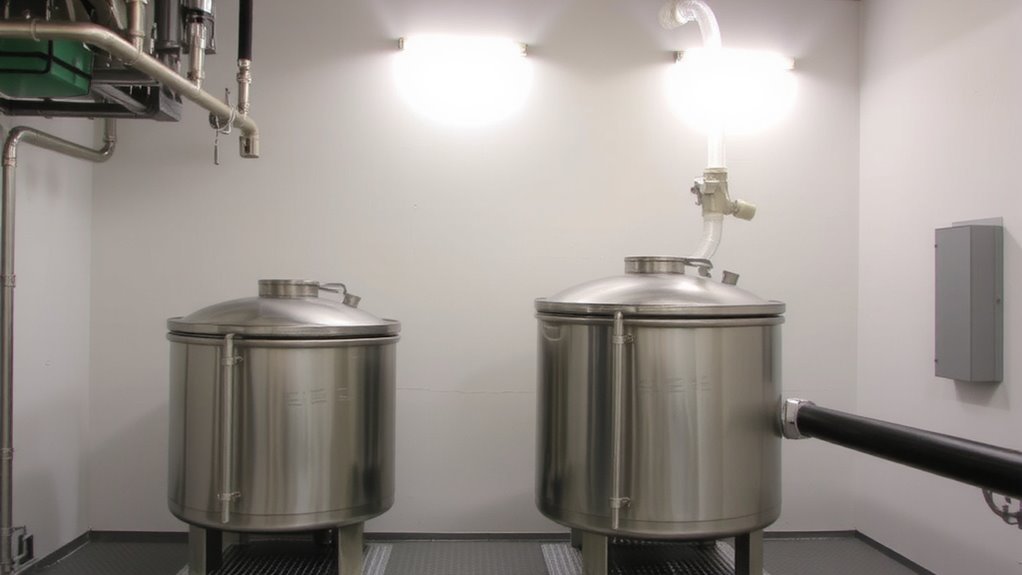
You need materials that hold up when radiation breaks down ordinary containers, and two stand out for real-world durability: PEEK plastic and 316 stainless steel. Your material selection determines long-term integrity. PEEK offers high radiation tolerance (up to 10^8 rad) and excellent chemical resistance, making it reliable in harsh coolant environments. 316 stainless steel provides structural strength and resists corrosion from chlorides and acids, with proven performance in nuclear settings. Both withstand thermal cycling and prolonged exposure without significant degradation.
| Material | Radiation Tolerance | Chemical Resistance |
|---|---|---|
| PEEK | Up to 10^8 rad | Excellent |
| 316 Stainless | Up to 10^7 rad | Very Good |
| PVC (comparison) | < 10^5 rad | Poor |
Choose based on exposure levels and system demands. PEEK suits high-radiation zones; 316 stainless works well where mechanical strength matters. Your decision affects safety, maintenance, and water purity.
Shield Tanks to Protect Water Quality
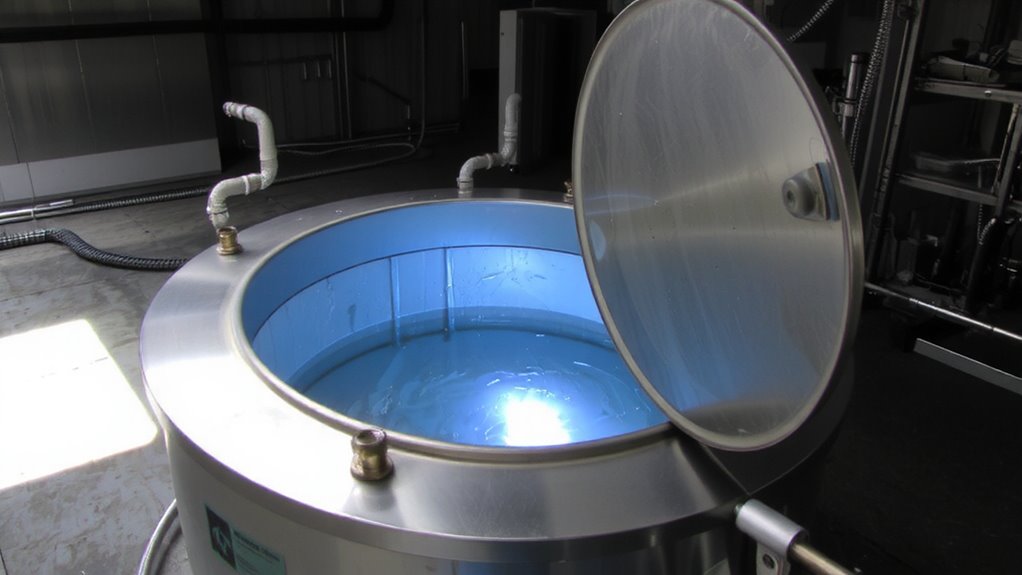
Even if the storage material resists radiation well, unshielded tanks can still compromise water quality due to secondary radiation and ambient neutron flux. You need layered shielding-like borated polyethylene or lead-lined enclosures-to block neutron and gamma interference. Without it, radiolysis increases, degrading chemical stability and promoting unwanted byproducts. That hurts both water safety and filtration efficiency over time. Shielding reduces ionizing effects, helping maintain pH balance and minimizing oxidative breakdown. You’ll see less hydrogen peroxide and free radical formation, which means fewer filter changes and more reliable output. Real-world tests in nuclear facilities show shielded tanks extend water usability by up to 40% compared to unshielded ones. If you skip shielding, even radiation-resistant materials like 316 stainless or PEEK can’t preserve water quality long-term. It’s not just about containment-it’s about preserving chemical stability and ensuring your water filtration systems aren’t overwhelmed prematurely.
Monitor for Leaks and Damage in Real Time
Because early detection can prevent system failure, you’re better off installing continuous monitoring systems that flag leaks or structural damage the moment they occur. You’ll rely on sensors placed at welds, joints, and tank walls to catch pressure drops or moisture changes. These sensors need regular sensor calibration to avoid false alarms and maintain accuracy under radiation exposure, which can degrade readings over time. You’re not just detecting issues-you’re verifying them through consistent data logging, which tracks trends and establishes baselines for normal operation. This logged data helps distinguish minor fluctuations from real threats. Systems with built-in radiation-hardened circuits last longer and deliver more reliable signals. You’ll want redundant sensors in critical zones because one failed node shouldn’t blind the entire network. Fiber-optic sensors work well here, offering high sensitivity without electronic interference. You won’t catch every microfracture, but with proper setup, you’ll see most developing problems early enough to act.
Maintain Systems Safely in High-Radiation Zones
Routine maintenance in high-radiation zones demands remote-operated tools and shielded access points to minimize human exposure. You’ll rely on remote maintenance systems like robotic arms and modular connectors that let you replace parts without entering the area. These tools need radiation-hardened materials-tested to withstand at least 10^6 rads-to avoid early failure. Automated inspection using drones or fixed cameras with AI image analysis helps spot wear or corrosion early, cutting downtime. You can’t fix what you can’t see, so sensors must deliver clear, real-time data under constant radiation. Design access points with double seals and quick disconnects to speed swaps. Remember, even robust components degrade, so schedule replacements based on radiation dose logs, not just time. Manual checks are a last resort. Every maintenance step should reduce dose, not just react to damage. Use these methods, and you’ll keep systems running longer with fewer risks.
Respond Fast to Storage System Failures
A fast response to storage system failures in high-radiation environments starts with automated monitoring that triggers alerts at the first sign of pressure loss, leakage, or material deformation. You need rapid detection systems-like fiber-optic sensors or radiation-resistant pressure transducers-because every second counts. These tools cut through noise and deliver accurate data even in extreme conditions, letting you confirm failures quickly. Once an alert hits, your emergency response team must act immediately, following pre-mapped protocols that define isolation steps, backup activation, and exposure limits. Delays risk contamination or system collapse. Automated shutoff valves and redundant containment chambers buy time, but only if maintenance crews can access safe pathways. Test your response under simulated failures quarterly-real-world drills expose gaps no checklist can. Relying on manual checks alone isn’t enough. Rapid detection paired with disciplined emergency response reduces downtime and protects both infrastructure and personnel when radiation levels don’t allow for second chances.
On a final note
You need materials like PEEK or 316 stainless steel-they resist degradation under radiation. Shielding cuts gamma exposure, preserving water quality. Real-time sensors catch leaks early, reducing contamination risk. Maintenance requires remote tools or robotics to limit human exposure. Failures demand fast, automated responses. No material lasts forever here, so regular monitoring and redundancy are non-negotiable. Your system’s reliability depends on simplicity, durability, and constant vigilance-not hype.