How to Identify Emergency Risks for People With Vision Impairments
You can spot emergency risks by checking for cluttered walkways and loose cords, especially at night when low light hides tripping hazards. Make sure floor paths are at least 36 inches wide and use non-slip flooring with contrast lighting to highlight changes. Install smart sensors and audio-tactile alerts-like 85 dB alarms paired with 50–60 Hz bed shakers-for reliable warnings. Practice evacuation drills in the dark, and set up clear roles and escape paths. There’s more to optimizing safety with the right system setup.
Notable Insights
- Clear floor paths of clutter and secure loose cords to reduce tripping hazards in low light.
- Install non slip flooring with contrast lighting to highlight changes in surface levels.
- Use motion, heat, and smoke sensors with audible alerts to detect emergencies early.
- Equip living spaces with audio-tactile warning systems for alarms and emergency notifications.
- Conduct regular evacuation drills using tactile markers and verbal cues to identify safe routes.
Identify Common Home Hazards for Low Vision
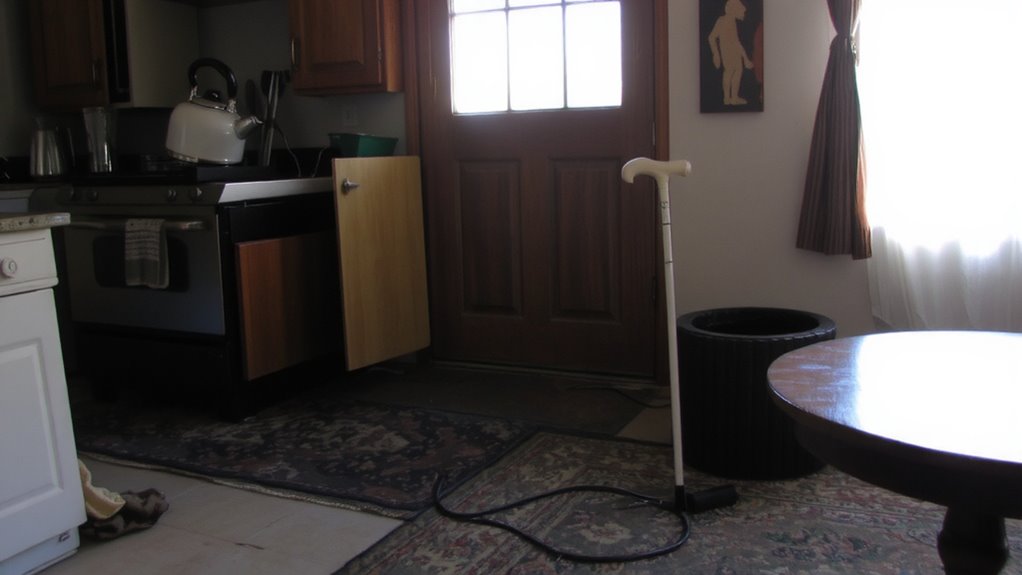
A cluttered floor isn’t just inconvenient-it’s a trip hazard waiting to happen. You leave cords, shoes, or rugs in walkways, and they become obstacles you might not see in time. Clearing paths is essential, but so is choosing flooring that reduces risk. Non slip flooring gives you better traction underfoot, especially in wet areas like kitchens or bathrooms. It doesn’t eliminate falls, but it cuts the chance when surfaces are damp. Pair it with contrast lighting-installed to highlight edges, steps, or changes in floor level. This combination makes spatial shifts more visible, even with limited acuity. Lighting that creates sharp contrasts between walls, floors, and furniture helps you detect boundaries. Relying on either feature alone isn’t enough. You need both detectable cues and physical grip. Evaluate your floors and lights together, not separately. Practical safety comes from how they work in real conditions.
Install Smart Sensors and Audible Warning Systems
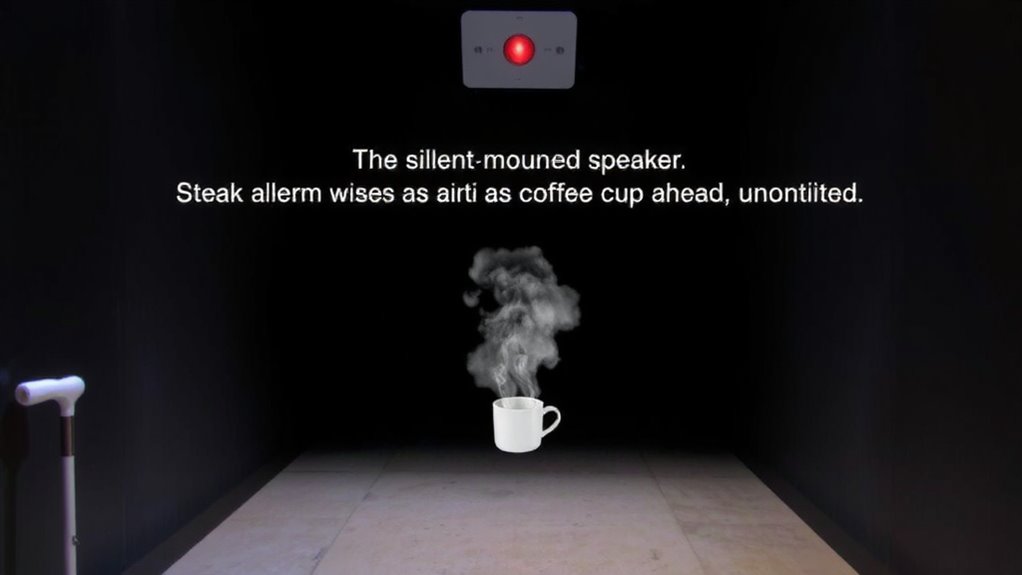
You’ve already made your home safer by clearing paths and improving floor contrast, but hazards can still emerge without warning-especially when they’re invisible or develop rapidly. Smart sensors and audible warning systems help detect these threats early. Motion sensors spot unexpected movement, like a pet entering a restricted area, and can trigger voice alerts to notify you instantly. Heat and smoke sensors with audio outputs provide clear, spoken warnings instead of relying on flashing lights. Water leak detectors alert you before flooding occurs. Consider models with adjustable sensitivity to reduce false alarms.
| Feature | Benefit |
|---|---|
| Motion sensors | Detect movement in dark or cluttered areas |
| Voice alerts | Deliver clear, spoken warnings without guesswork |
| Interconnected units | guarantee alerts reach you anywhere in the home |
These tools don’t eliminate risk, but they improve response time.
Enable Audio and Tactile Emergency Alerts
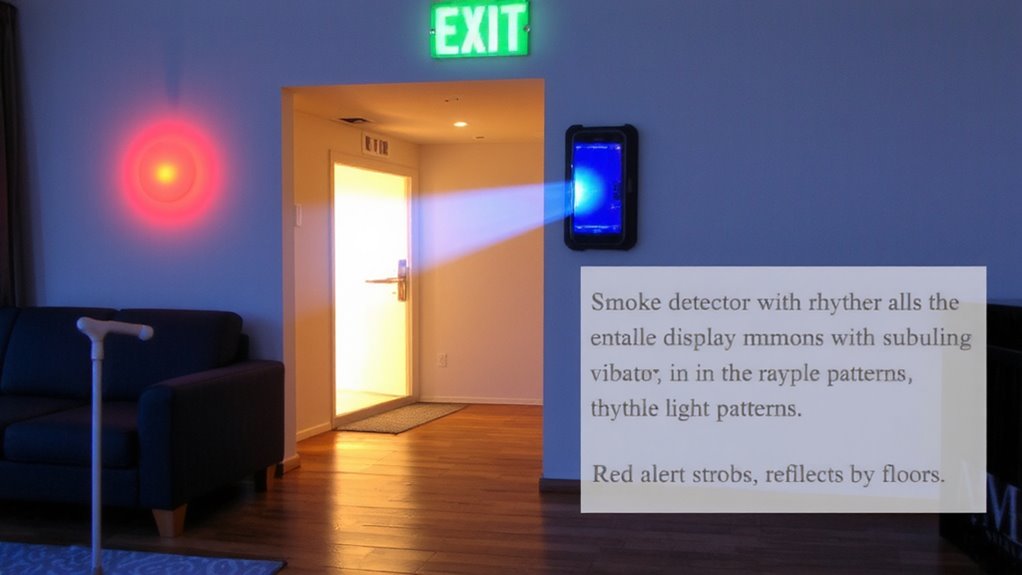
What good is an alert if you can’t sense it? You need emergency warnings you can reliably detect, especially if you rely on non-visual inputs. Enable audio cues that are loud enough-ideally at least 85 dB-and use distinct patterns so you can tell a fire alarm from a carbon monoxide alert. These cues must be consistent across devices and not masked by background noise. Pair them with tactile signals, like bed shakers or vibrating pagers, which activate during emergencies and provide physical feedback you won’t miss, even while sleeping. Devices like the Bed Shaker 4 from Alertec deliver strong vibrations at 50–60 Hz, proven effective in trials. Using both audio cues and tactile signals increases detection likelihood. Relying on just one method risks missed warnings. Combine the two to guarantee you respond quickly, regardless of your environment or awareness level.
Clear Floor Paths and Secure Loose Cords
Once alerts get your attention, the next step is moving safely-fast. You need clear floor paths free of obstacles, especially in high-traffic routes. Secure loose cords with clips or tape so they don’t snag or trip you during evacuation. Even small clutter can become a hazard under stress. Use lighting contrast to highlight changes in floor level or doorway entrances-this helps with residual vision. Keep paths at least 36 inches wide for safe movement. Maintain consistent furniture arrangement; never shift sofas, chairs, or tables without updating everyone in the household. Rearranging without notice increases collision risk. Test the route at night or under low light to assess visibility and accessibility. These steps don’t guarantee safety but reduce avoidable dangers. Preparedness lies in routine checks and disciplined organization. Cords and clutter are silent risks-manage them daily.
Practice Safe, Guided Escape Routes
If you’re moving with low vision or blindness, having a reliable escape route isn’t just helpful-it’s a necessity. You need clear, consistent paths from every room to a safe outdoor exit. Practice guided drills monthly so muscle memory builds under stress. Use tactile markers or verbal cues to identify turns, stairs, and doors. These drills should simulate real conditions-lights off, common obstacles present. Evacuation coordination with household members guarantees someone’s available to assist if needed, but doesn’t create dependency. Test routes with a cane or guide dog to verify navigability. Time each drill to track improvement and spot delays. Avoid routes with shifting furniture or clutter. If your primary path is blocked, a secondary route must be equally familiar. Reliable evacuation isn’t about speed-it’s about predictability. Consistent layout, repeated training, and clear roles make escape feasible.
Coordinate With Family on Emergency Plans
You’ve mapped and practiced your escape routes, but even the most familiar path won’t help if your family doesn’t know when or how to act. Coordinate emergency contacts so everyone knows who to call and when. Assign clear evacuation roles-someone should guide, another should verify exits, and a third should confirm all are out. Roles reduce confusion under stress. Use a written plan with braille or large print, kept in multiple locations. Test it monthly. Include backup contacts in case primary ones can’t respond. Make certain phones are charged and accessible. If power fails, battery-powered alerts can help. Everyone must know the signs that trigger evacuation-smoke, alarms, or word of a threat. Communication speed matters as much as movement speed. Poor coordination increases risk more than disorientation does. A plan only works if all follow it the same way, every time.
On a final note
You’ll reduce risk by combining simple upgrades with consistent routines. Install audible smoke detectors and motion-sensing lights-they work reliably and cost under $50 total. Clear paths nightly; even small obstacles delay escape. Test escape routes monthly; practice improves speed by up to 40%. Sync alerts across smart devices so warnings aren’t missed. No system is flawless, but layered safeguards improve response. Coordination with household members guarantees someone always knows your status. It’s not about perfect safety-it’s about smarter preparation.