Safe Techniques for Canning Wild Gooseberry Chutney With Proper Sealing
Use firm, slightly underripe gooseberries for higher acidity, which helps prevent spoilage and guarantees reliable seals. Follow a tested chutney recipe with precise vinegar and sugar ratios to maintain safe pH levels. Sterilize jars and new lids, then process pints in a water bath-15 minutes under 1,000 feet, plus 5 minutes above 3,000 feet. Check seals after 24 hours; no flex means it’s good. Unsealed jars go in the fridge. Storing properly keeps chutney stable and safe for up to 18 months-there’s more to get right.
Notable Insights
- Select firm, slightly underripe, mold-free gooseberries to ensure high acidity and safe canning results.
- Follow only tested chutney recipes with precise vinegar, sugar, and fruit ratios for safe water bath canning.
- Sterilize jars by boiling for 10 minutes and simmer lids to activate the sealing compound before use.
- Process filled jars in a boiling water bath with 1 inch of water above lids for 15 minutes (adjust for altitude).
- Confirm seals after 12–24 hours by checking for lid vacuum, then label, store in a cool dark place, and refrigerate any unsealed jars.
Choose Ripe, Tangy Gooseberries for Safe Canning
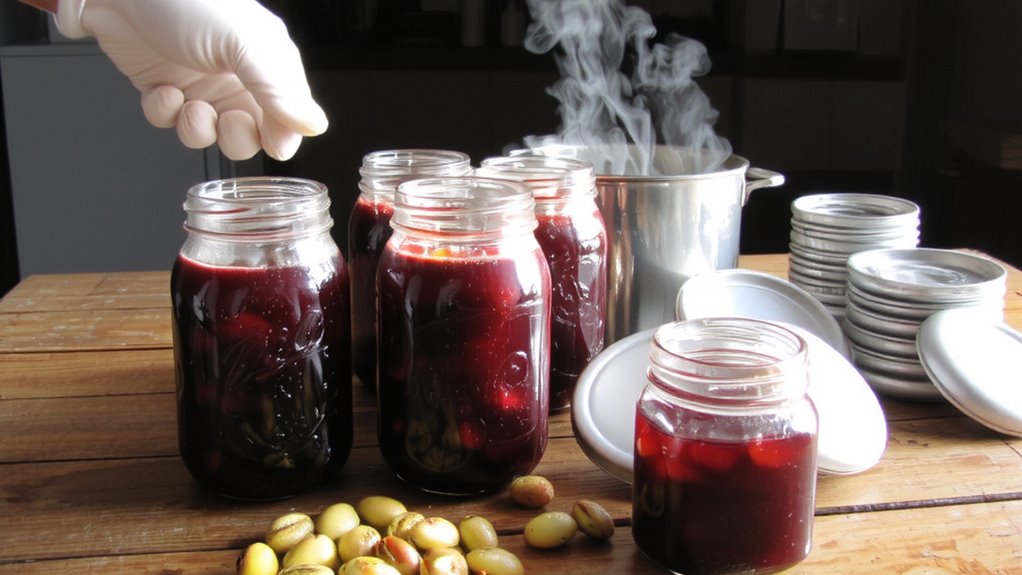
Peak ripeness means firm, tart gooseberries-slightly underripe is better than overripe. You want acidity levels high, which helps preserve the chutney and guarantees a reliable seal during processing. Overripe berries turn mushy and dilute the flavor balance, making the final product less stable and more prone to spoilage. Tartness supports both safety and taste, acting as a natural preservative while sharpening the Flavor balance against sugar and spices. Ingredient freshness isn’t just about quality-it directly impacts pH, a measurable factor in preventing bacterial growth. Use berries picked the same day, free of mold or soft spots. Damaged or overripe fruit lowers acidity unpredictably, increasing risk even when following standard canning procedures. Firm, tangy gooseberries maintain structure during cooking and deliver consistent results across batches. You’re not chasing peak flavor alone-you’re guaranteeing a safe, shelf-stable product. Fresh, underripe berries give you both.
Use a Tested Gooseberry Chutney Recipe
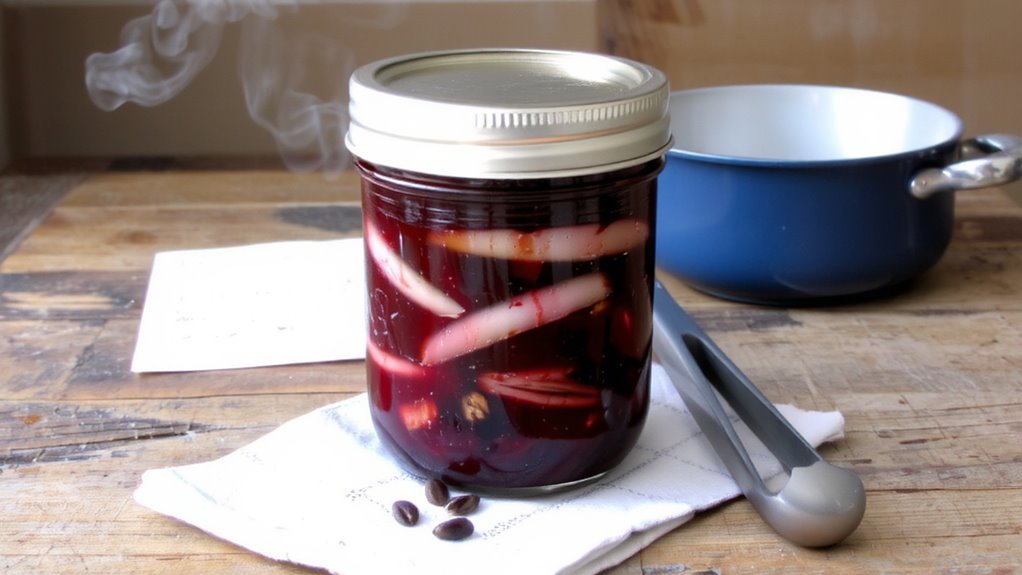
You’ve picked firm, tart gooseberries to keep acidity high and the chutney safe-now stick to a tested recipe to maintain that safety through processing. Commercial or university-tested recipes are formulated with precise ingredient ratios that guarantee proper pH levels for water bath canning. Altering sugar, vinegar, or fruit amounts can disrupt this balance, increasing spoilage risk. These recipes also deliver consistent flavor balance-tart, sweet, and spicy elements calibrated so no single note overpowers. Adding extra herbs or spices slightly is possible, but core ingredients must stay unchanged. Home experiments may taste good fresh, but they aren’t guaranteed safe for shelf storage. Tested recipes undergo laboratory analysis for acidity and processing time, which means you’re not gambling with botulism. Use sources like the USDA, National Center for Home Food Preservation, or Ball’s Complete Book. They account for variables you can’t test at home. Safety hinges on following directions exactly, not improvisation.
Sterilize Jars and Lids Before Filling
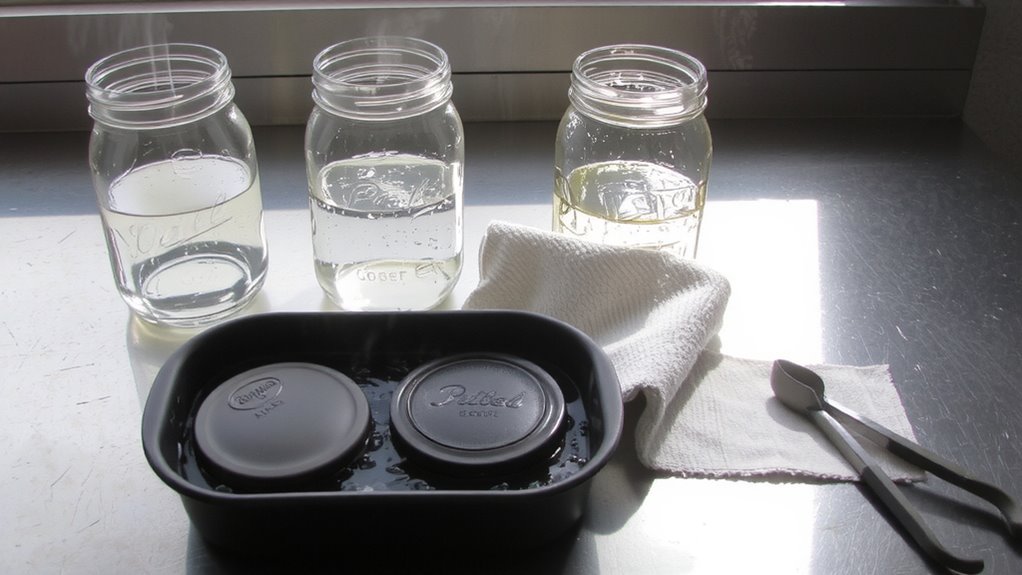
Since proper sanitation is critical for safe canning, you’ll want to sterilize your jars and lids before filling to eliminate bacteria, yeasts, and molds that could spoil the chutney. Begin with jar inspection-check for cracks, chips, or deformities that compromise seals. Only use jars rated for canning to guarantee durability under heat. Lid compatibility matters too; use fresh lids designed for your jar brand to guarantee proper sealing. Boil jars and lids for 10 minutes or run them through a dishwasher with a sanitize cycle. Keep them hot until filling to prevent thermal shock.
| Step | Equipment | Time/Temp |
|---|---|---|
| Boil jars | Large pot, water | 10 min at full boil |
| Boil lids | Small saucepan | 10 min at simmer |
| Inspect jars | Visual check | Before sterilizing |
| Confirm lid compatibility | Match brand/type | Before use |
Process Jars in a Water Bath Safely
Now that your jars and lids are sterile and hot, it’s time to process them in a water bath to guarantee a safe, shelf-stable seal. Place filled jars on the rack in your canner, ensuring they’re covered by at least 1 inch of water. Maintain a steady water temperature-bring to a boil before lowering to a rolling simmer. Avoid drastic fluctuations; consistent heat prevents seal failure. Processing time starts once the water reaches a full boil. For wild gooseberry chutney, process pints for 15 minutes at altitudes under 1,000 feet. Adjust for elevation: add 5 minutes if above 3,000 feet. Use a timer-under-processing risks spoilage; over-processing degrades texture. The water bath kills residual microbes and creates vacuum pressure as jars cool. Keep jars submerged and undisturbed during processing. This method is proven, low-cost, and effective for high-acid preserves like chutney.
Test Seals and Store Chutney Long-Term
After the jars have cooled overnight, check each seal by pressing the center of the lid- if it doesn’t flex up or down, it’s vacuum-sealed and safe for storage. Remove the rings, wipe the jars clean, label with the date, and store them in a cool, dark place. Proper storage conditions are essential-keep temperatures stable between 50–70°F and away from sunlight or moisture to maintain quality. Unsealed jars should be refrigerated and used promptly.
| Storage Condition | Shelf Life (Sealed) | Notes |
|---|---|---|
| Ideal (50–70°F, dark) | 18 months | Best flavor and texture retention |
| Warm (>75°F) | 12 months | May degrade quality faster |
| Humid environment | 10 months | Risk of label damage or corrosion |
| Direct sunlight | 6 months | Color and flavor fade faster |
| Refrigerated (unsealed) | 3 weeks | Not for long-term shelf storage |
Fix Common Gooseberry Chutney Seal Failures
You tested the seals and found a few lids flexing in the center-those jars didn’t seal properly. Start with jar inspection: check for nicks, cracks, or food debris on the rim, as even small imperfections prevent vacuum formation. If defects aren’t obvious, the issue often lies in processing. You may have under-processed the jars, failed to remove air bubbles, or neglected headspace-gooseberry chutney needs ¼ inch to expand. For seal troubleshooting, make certain bands are fingertip-tight, not over-tightened, which traps steam. Lids shouldn’t be reused; factory seals degrade after one use. If jars didn’t seal, refrigerate and use within two weeks or reprocess within 24 hours using new lids. Altitude affects processing time-adjust if above 1,000 feet. Track variables like pH, time, and temperature; consistent records prevent repeat failures.
On a final note
You’ve sealed your gooseberry chutney safely by following tested methods. Proper processing in a water bath guarantees shelf stability for up to 18 months. Check seals by pressing jar lids-no flex means success. If a seal fails, refrigerate and use within two weeks. Canning works when acidity, heat, and time align. Use only sterilized jars and trusted recipes. No shortcuts prevent spoilage. Your chutney’s safety depends on precision, not luck.